When it comes to wainscoting and beadboard styles, the key point to understand is that they are not two completely separate categories. Wainscoting is a broader wall-treatment category, while beadboard is one specific style that can be used as wainsc
In fact, wainscoting is a general term that encompasses a variety of different styles, and beadboard is just one of them. The most recognizable version is made with planks with small beads on the edges, but there are also variations with flat panels, raised panels, board and batten, picture-frame moldings, and others.
Now, once you realize how easy it is to differentiate between beadboard and wainscoting in general, it becomes simpler to pick the materials for your home. Remember that there are several factors to consider: a style (like raised, flat, board and batten, etc.), wood or other material, height, and finish.
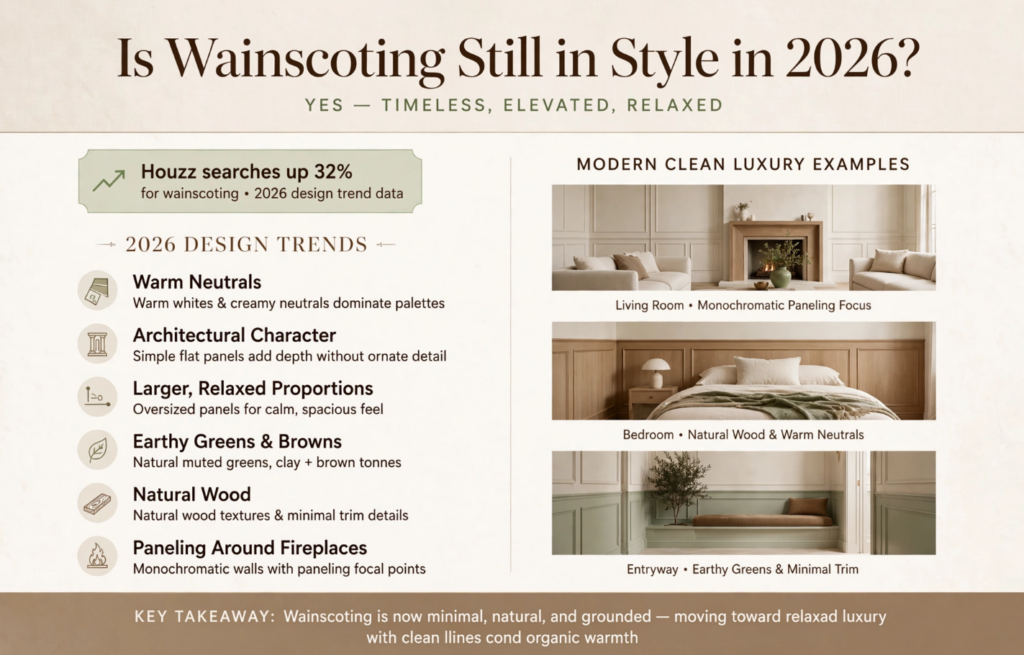
Another common misconception is that wainscoting has gone out of style. According to Houzz’s 2026 Emerging Summer Trends Report , searches for the term “wainscoting” rose by 32% year-over-year, and the current design trends lean toward warm neutrals, clean lines, custom touches, and intentional use of paneling.
If you’re looking for more ways to update your space, explore our guide to Decorating Ideas for the Home: 25 Stylish Ways to Refresh Every Room for simple ideas that work across different rooms and decorating styles.
Wainscoting vs. Beadboard: The Simple Difference
Think of it as categories and subcategories.
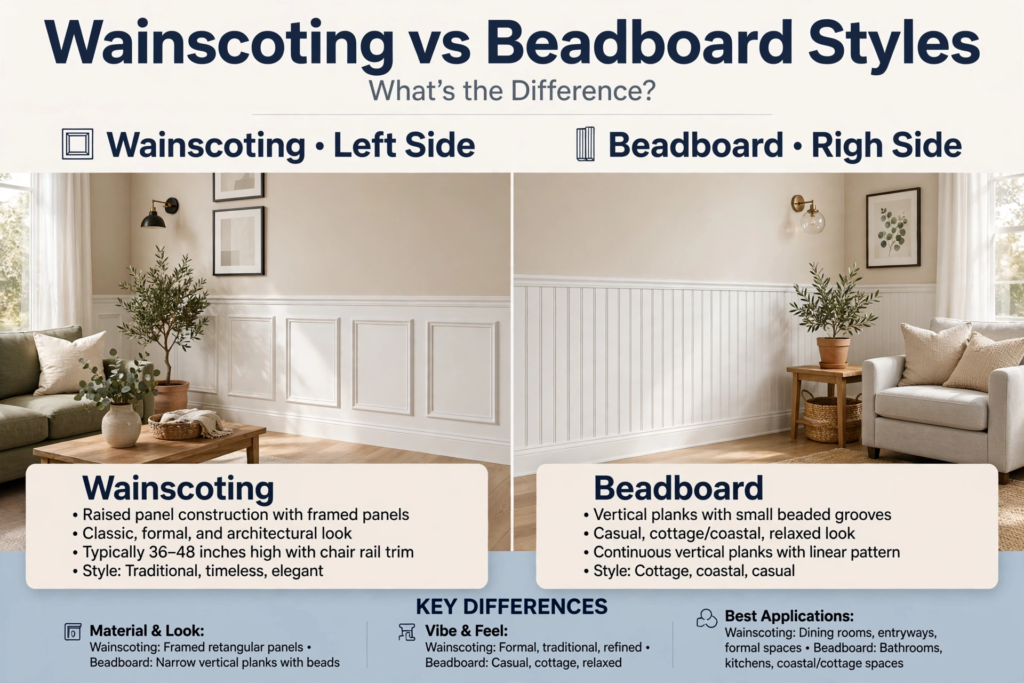
Wainscoting is a general category of decorative paneling or boards, typically applied to some portion of an interior wall (usually the bottom half) and available in a variety of patterns and materials.
Beadboard is a specific type of wainscoting that consists of a series of narrow, vertical boards or panels with evenly spaced grooves and bead-like edges. It can be installed as a lower portion of a wall, but it can also be used to completely cover a wall or ceiling.
So:
Wainscoting = the wall category
Beadboard = just one style of it (that distinctive grooved pattern)
Similarly, raised panel, flat panel, board and batten, and picture-frame molding can all be used as types of wainscoting.
This classification is consistent with current home-design sources, including Apartment Therapy, This Old House, and newer guides to wainscoting.
If you’re refreshing a bedroom wall, explore our guide to What to Put Above a Bed: 20 Stylish Ideas for inspiration on creating a balanced and finished look.
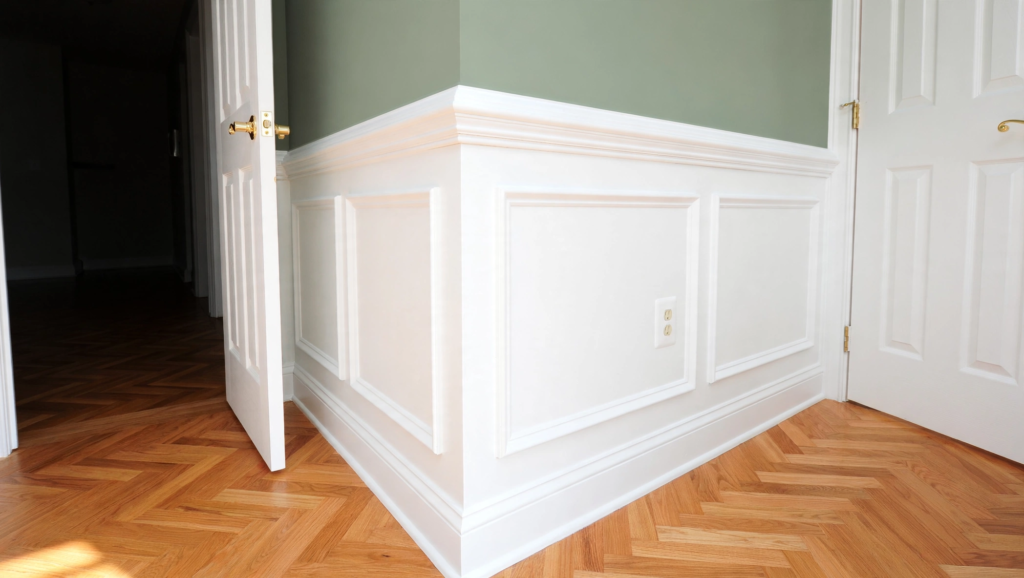
What Is Wainscoting?
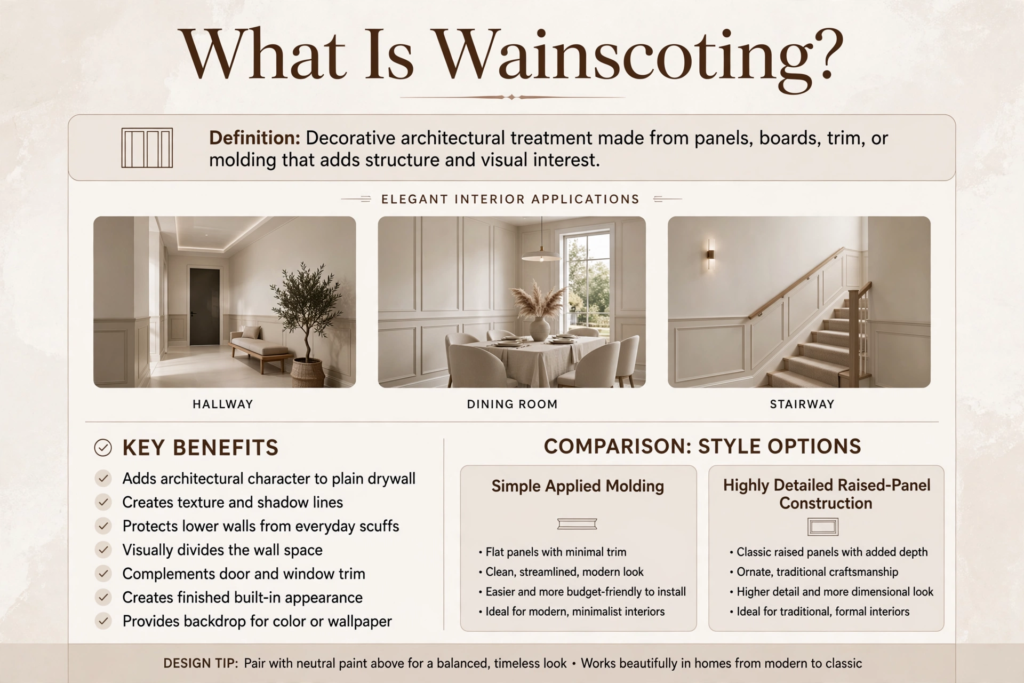
Wainscoting is a decorative architectural treatment made from panels, boards, trim, or molding that adds structure and visual interest to a wall.
Traditionally, it served practical purposes as well as decorative ones. Lower walls in hallways, dining rooms, stairways, kitchens, and other high-traffic areas could take plenty of abuse, so a protective layer of woodwork helped shield the wall.
Today, the decorative role is often just as important.
Wainscoting can:
- Add architectural character to plain drywall
- Create texture and shadow lines
- Protect lower walls from everyday scuffs
- Visually divide a wall into sections
- Complement existing door and window trim
- Create a more finished, built-in appearance
- Provide a backdrop for color or wallpaper
Wainscoting can range from relatively simple applied molding to highly detailed raised-panel construction. This Old House describes it as a combination of decorative boards or panels and moldings that extend partway up the wall.
For more bedroom design inspiration, explore our guide to Bedroom Interior Decor: A Step-by-Step Guide to Designing a Stylish Bedroom for practical ideas on creating a cohesive and comfortable space.
The important point is that wainscoting doesn’t have one universal appearance.
A formal dining room might have traditional raised panels, while a casual bathroom might have painted beadboard. A modern bedroom might use simple flat panels, and a hallway might use board and batten.
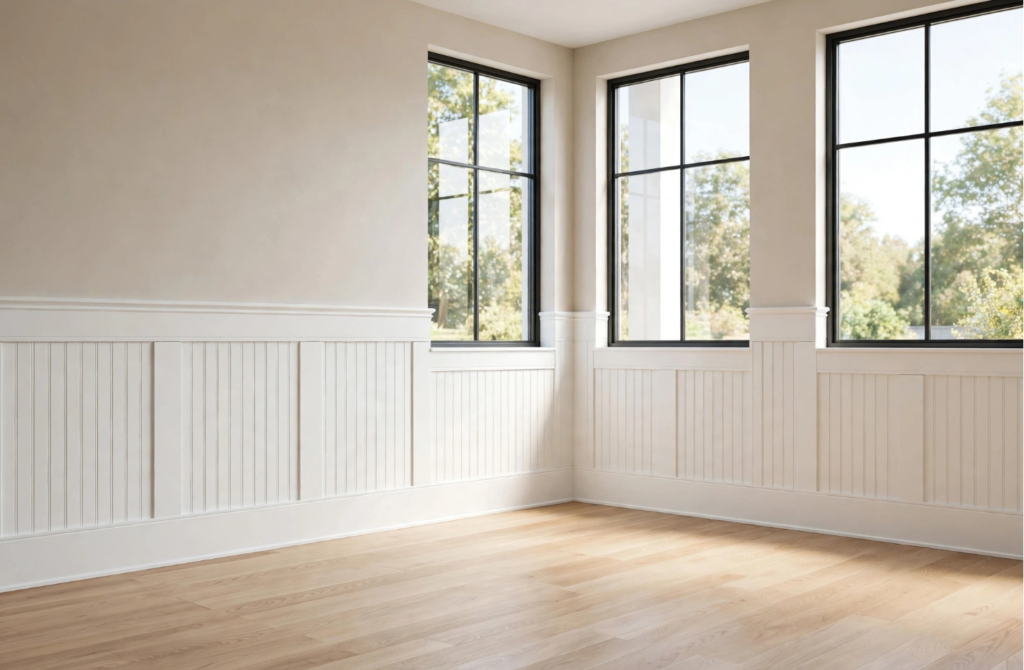
What Is Beadboard?
Beadboard is a style of wall or ceiling panelling made up of narrow, vertical boards or panels with a repeating bead-and-groove pattern.
Traditional beadboard was often constructed from individual tongue-and-groove boards, while modern versions can also be manufactured as large sheets or panels, which mimic the appearance of multiple thin boards.
The distinctive vertical rhythm is the key to the design.
These lines give beadboard a lighter, more casual appearance than heavily detailed raised-panel wainscoting. As one of the most versatile wainscoting and beadboard styles, it has long been associated with cottage, coastal, farmhouse, Victorian, and casual decorating themes.
However, beadboard is not limited to only one style of decorating. Painted in a sophisticated neutral or deep shade, it can also be used in transitional and contemporary rooms.
This Old House reports that modern beadboard is available in a variety of materials, including wood, MDF, and PVC, and can be used on walls, ceilings, or as wainscoting.
For more sophisticated decorating inspiration, explore our guide to Modern Luxury Home Decor Ideas for an Elegant, Contemporary Home for ideas that combine clean lines, refined details, and a polished look.
6 Popular Wainscoting Styles to Know
Once you understand that beadboard is one type of wainscoting, the rest of the choices become easier to compare.
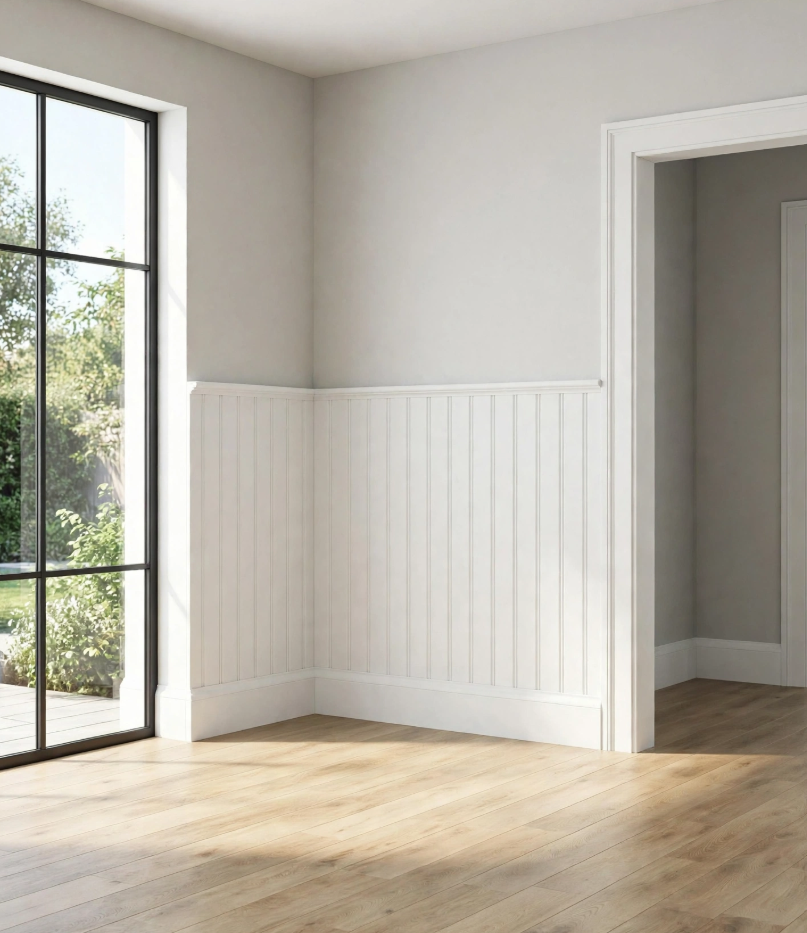
1. Beadboard Wainscoting
Beadboard has closely spaced vertical grooves and rounded bead details.
Best for:
- Bathrooms
- Powder rooms
- Kitchens
- Laundry rooms
- Mudrooms
- Cottage-style spaces
- Coastal interiors
Its vertical rhythm adds texture without creating the heavy formal appearance of elaborate panel molding.
For a classic look, white beadboard paired with a contrasting wall color or wallpaper is hard to beat. For a more contemporary result, consider a deeper paint color and simpler trim.
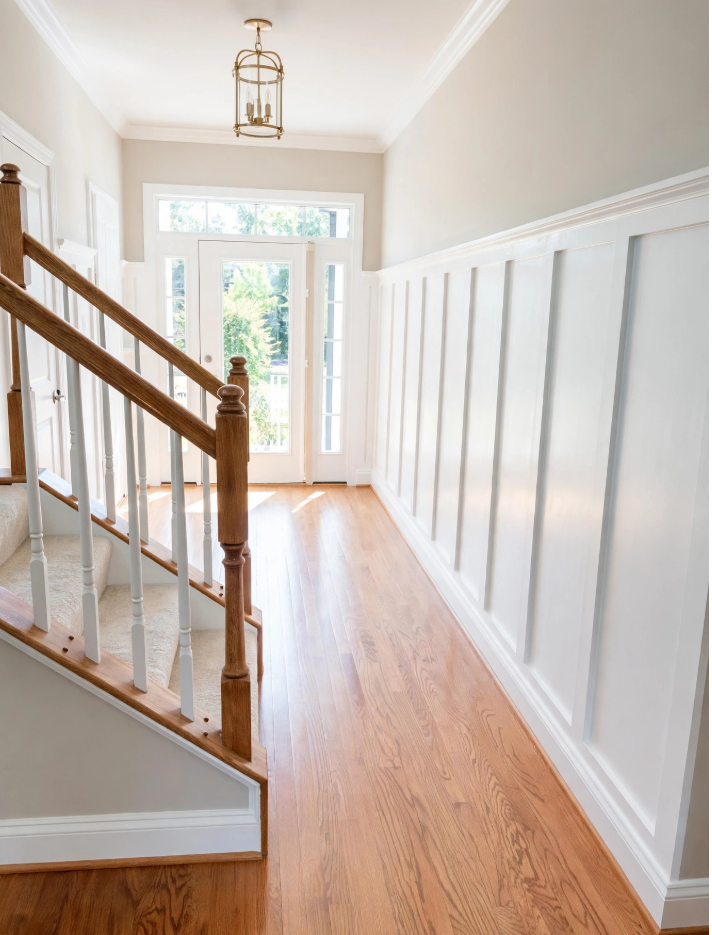
2. Board-and-Batten Wainscoting Styles
Board and batten uses vertical battens or strips over a wall or backing surface to create a repeating geometric pattern.
It has stronger visual lines than beadboard and can feel more architectural.
Best for:
- Modern farmhouse homes
- Craftsman-inspired interiors
- Transitional rooms
- Bedrooms
- Hallways
- Mudrooms
One advantage is its flexibility. The spacing and proportions can be adjusted to suit the wall instead of relying on one fixed panel pattern.
This Old House identifies board and batten as a longstanding wainscoting style often associated with Arts and Crafts architecture.
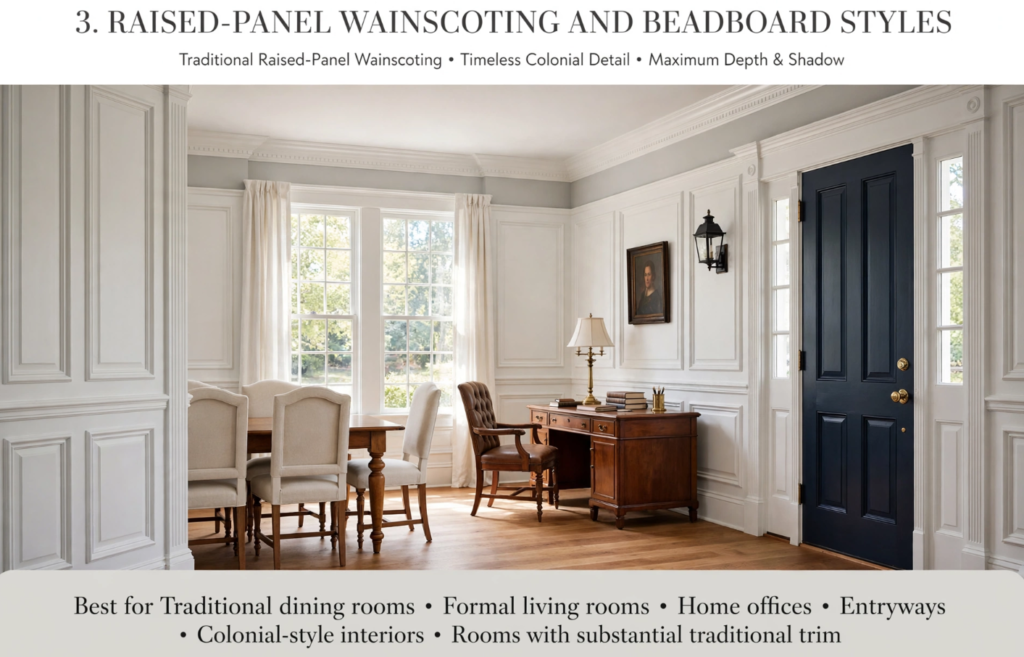
3.Raised-Panel Wainscoting and Beadboard Styles
Raised-panel wainscoting is one of the most traditional choices.
The center panel projects outward from its surrounding frame, creating noticeable depth and shadow.
Best for:
- Traditional dining rooms
- Formal living rooms
- Home offices
- Entryways
- Colonial-style interiors
- Rooms with substantial traditional trim
This style works especially well when the rest of the room already contains architectural details such as crown molding, substantial baseboards, traditional doors, or hardwood flooring.
In a minimalist room, however, elaborate raised panels can feel visually heavier than necessary.
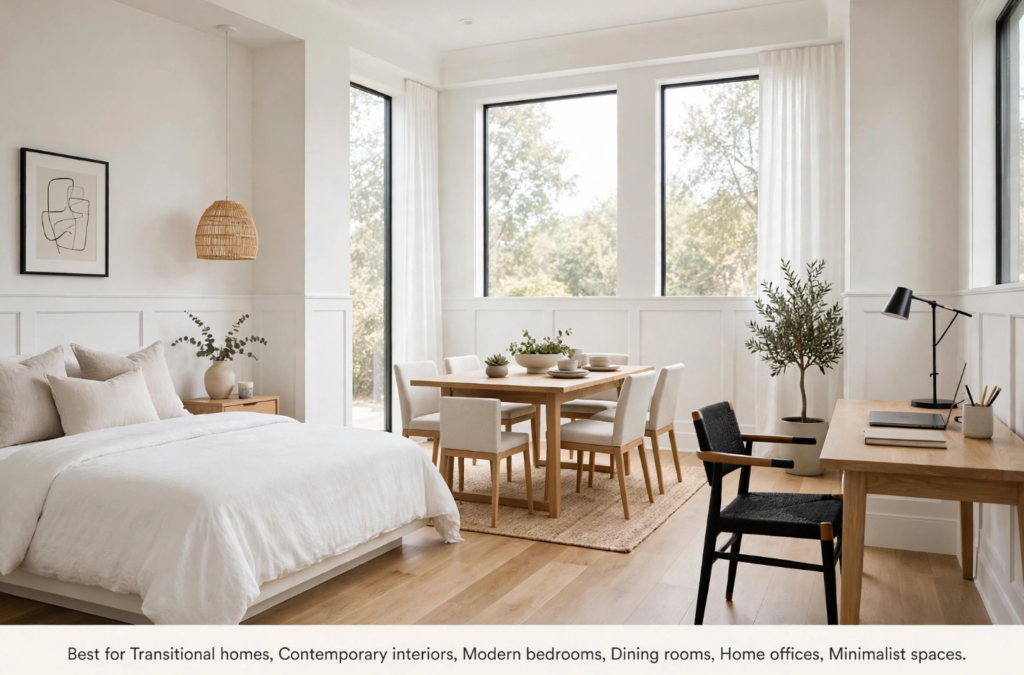
4. Flat-Panel or Shaker Wainscoting Styles
Flat-panel wainscoting uses simple recessed or flat areas surrounded by rails and stiles.
The result is cleaner and less ornate than raised paneling.
Best for:
- Transitional homes
- Contemporary interiors
- Modern bedrooms
- Dining rooms
- Home offices
- Minimalist spaces
This is one of the easiest styles to adapt because the basic geometry is simple. It can look traditional with detailed trim or modern when paired with wider panels and minimal molding.
5. Picture-Frame Molding Wainscoting Styles
Picture-frame wainscoting uses rectangular molding pieces applied directly to the wall to create the appearance of individual panels.
It can provide architectural interest without requiring full recessed or raised panels.
Best for:
- Bedrooms
- Dining rooms
- Hallways
- Entryways
- Traditional and transitional interiors
The key is consistent spacing. A wall covered with too many small boxes can look busy, while fewer, better-proportioned rectangles usually create a more intentional appearance.

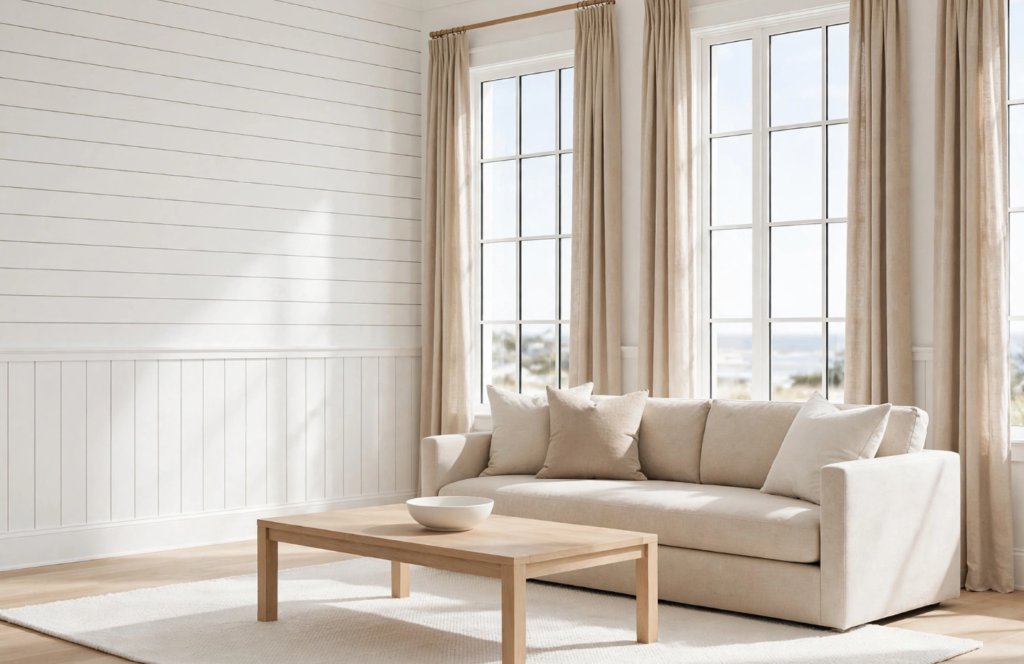
6. Shiplap and Tongue-and-Groove Wainscoting Styles
Shiplap and tongue-and-groove are related wall-paneling treatments that are sometimes used as wainscoting.
It is typically recognized by horizontal boards with visible gaps or shadow lines. Tongue-and-groove boards interlock at their edges.
These treatments can be used vertically or horizontally depending on the design.
Best for:
- Farmhouse interiors
- Coastal rooms
- Rustic homes
- Cabins
- Casual living spaces
They are not interchangeable with beadboard. Beadboard has its own narrow, vertically grooved profile.
Wainscoting Styles Compared
| Style | Overall feel | Good room choices | Visual character |
|---|---|---|---|
| Beadboard | Casual and charming | Bathroom, kitchen, mudroom | Fine vertical texture |
| Board and batten | Architectural and structured | Hallway, bedroom, entry | Strong vertical geometry |
| Raised panel | Formal and traditional | Dining room, office, living room | Deep profiles and shadows |
| Flat/Shaker panel | Clean and transitional | Bedroom, dining room, living room | Simple framed panels |
| Picture-frame molding | Classic and adaptable | Bedroom, hallway, dining room | Decorative rectangular boxes |
| Shiplap | Casual and rustic | Living room, bedroom, coastal spaces | Horizontal board lines |
There isn’t one objectively “best” style.
The right choice depends on the room’s architecture, existing trim, desired level of formality, ceiling height, and how much visual texture you want.
Which Wainscoting Style Is Best for Your Room?
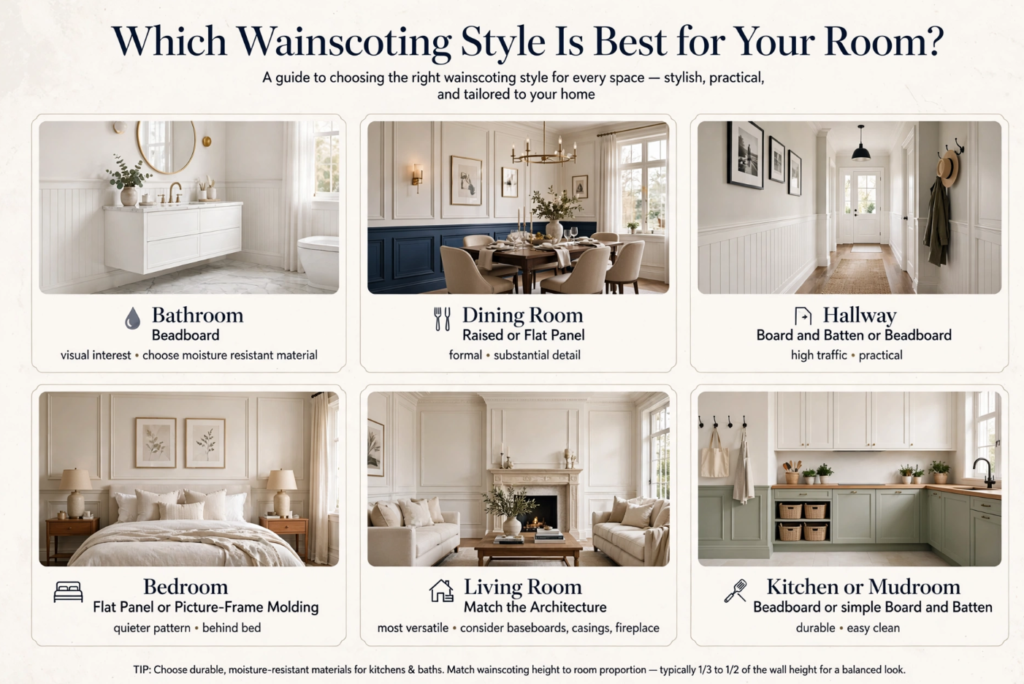
For a bathroom: Beadboard
The beaded board is great for the bathroom since the beaded pattern provides visual interest without a complicated panel design.
But the type of material is more important than the design in a high-moisture area. So make sure to choose the product appropriate for the job and follow the manufacturer’s installation instructions, and not all wood or MDF panels are equal in wet environments.
For a dining room: Raised or flat panel
A formal dining room can support more substantial architectural detail.
Raised panels work particularly well in traditional homes, while flat panels provide a cleaner transitional appearance.
For a hallway: Board and batten or beadboard
Hallways are high-traffic spaces, so wainscoting can be both decorative and practical.
Board and batten creates a stronger architectural statement, while beadboard gives the space a lighter, more casual feel.
For a bedroom: Flat panel or picture-frame molding
Bedrooms generally benefit from quieter patterns.
Flat panels or picture-frame molding can add depth behind a bed without making the wall compete with bedding, artwork, or furniture.
For a living room: Match the architecture
Living rooms are the most versatile rooms in the house.
A traditional room can handle raised paneling, while a transitional room may have flat panels. Rooms with a more dramatic look, such as board and batten, can also be considered if you want a room to have a more dramatic vertical division.
Existing baseboards, door casings, windows, fireplaces, and furniture should all be considered when choosing paneling.
Result words: 67
For a kitchen or mudroom: Beadboard or simple board and batten
These rooms benefit from durable, easy-to-clean finishes and practical wall protection.
Keep the design simple enough that it doesn’t compete with cabinetry, countertops, appliances, or storage.
How High Should Wainscoting Styles Be?
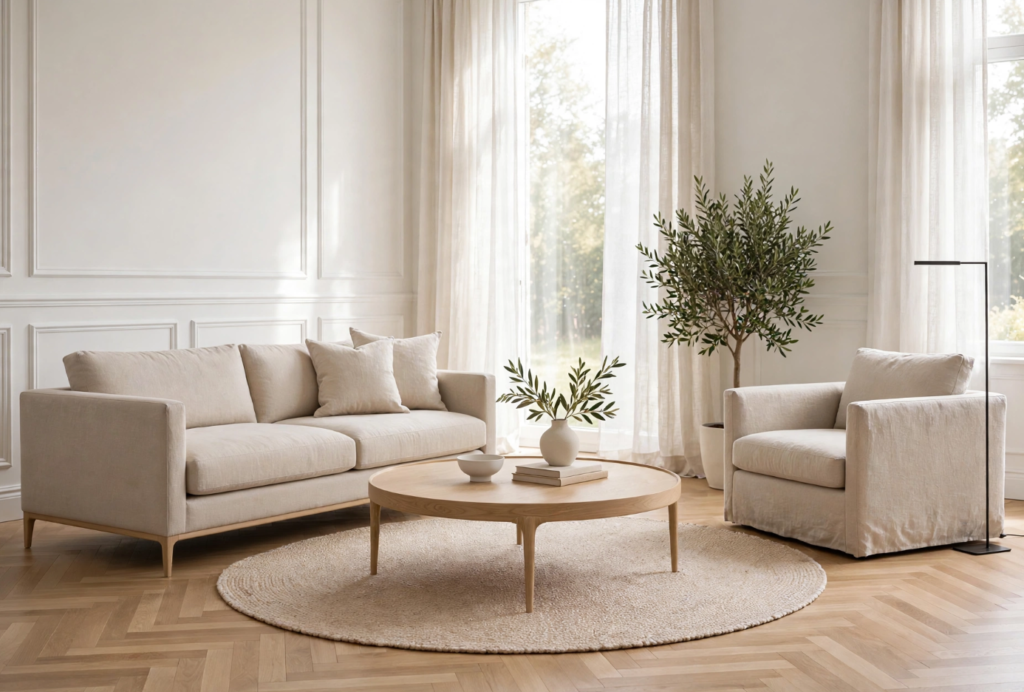
The old rule of thumb is to place the top of the wainscoting about one-third of the way up the wall.
So a 9-foot wall would get a 3-foot tall chair rail.
This is a good guideline, but not a requirement.
This Old House recommends a cap at about one-third the height of the wall in many traditional cases and suggests going higher if the situation demands.
Don’t think of a height, think of the character of the room in which the board is located.
Consider:
- Ceiling height
- Window sill height
- Door casing
- Existing chair rails
- Baseboard height
- Furniture
- Wall length
- Whether the treatment stops at chair-rail height or continues higher
A useful rule is:
Choose a height that makes the existing horizontal lines in the room feel intentional rather than fighting them.
If your window sills are close to the height you’re considering, for example, aligning the top rail with that existing line can create a more cohesive result.
Should Wainscoting Styles Always Stop at One-Third Height?
No.
The one-third guideline is a useful starting point, not a universal requirement.
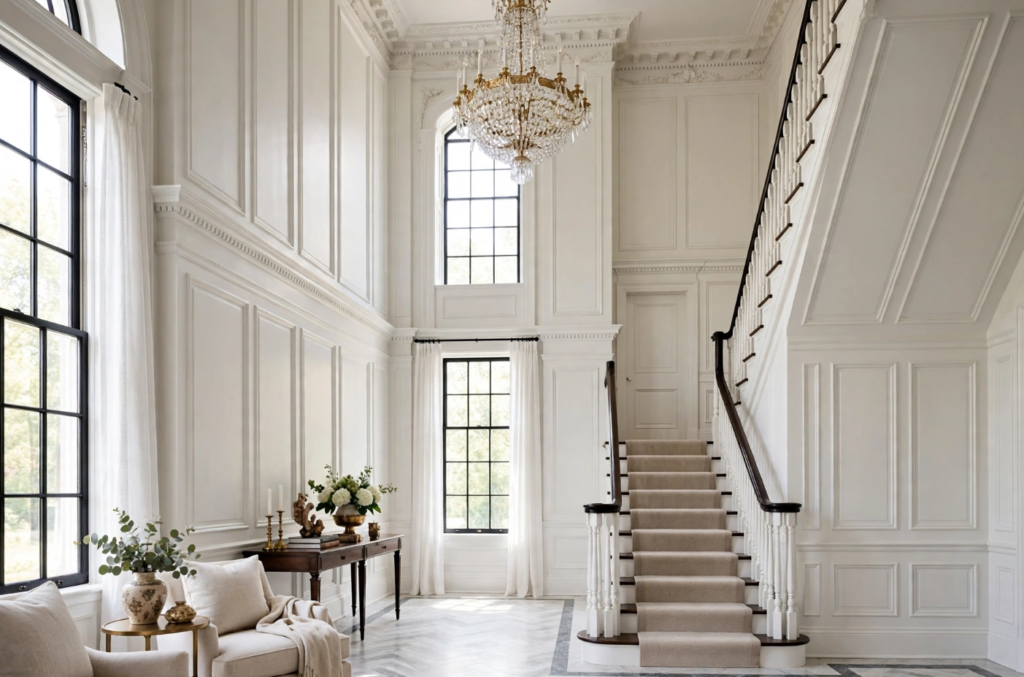
Taller wainscoting can work when the room has:
- High ceilings
- Tall windows
- Strong architectural trim
- A dramatic traditional style
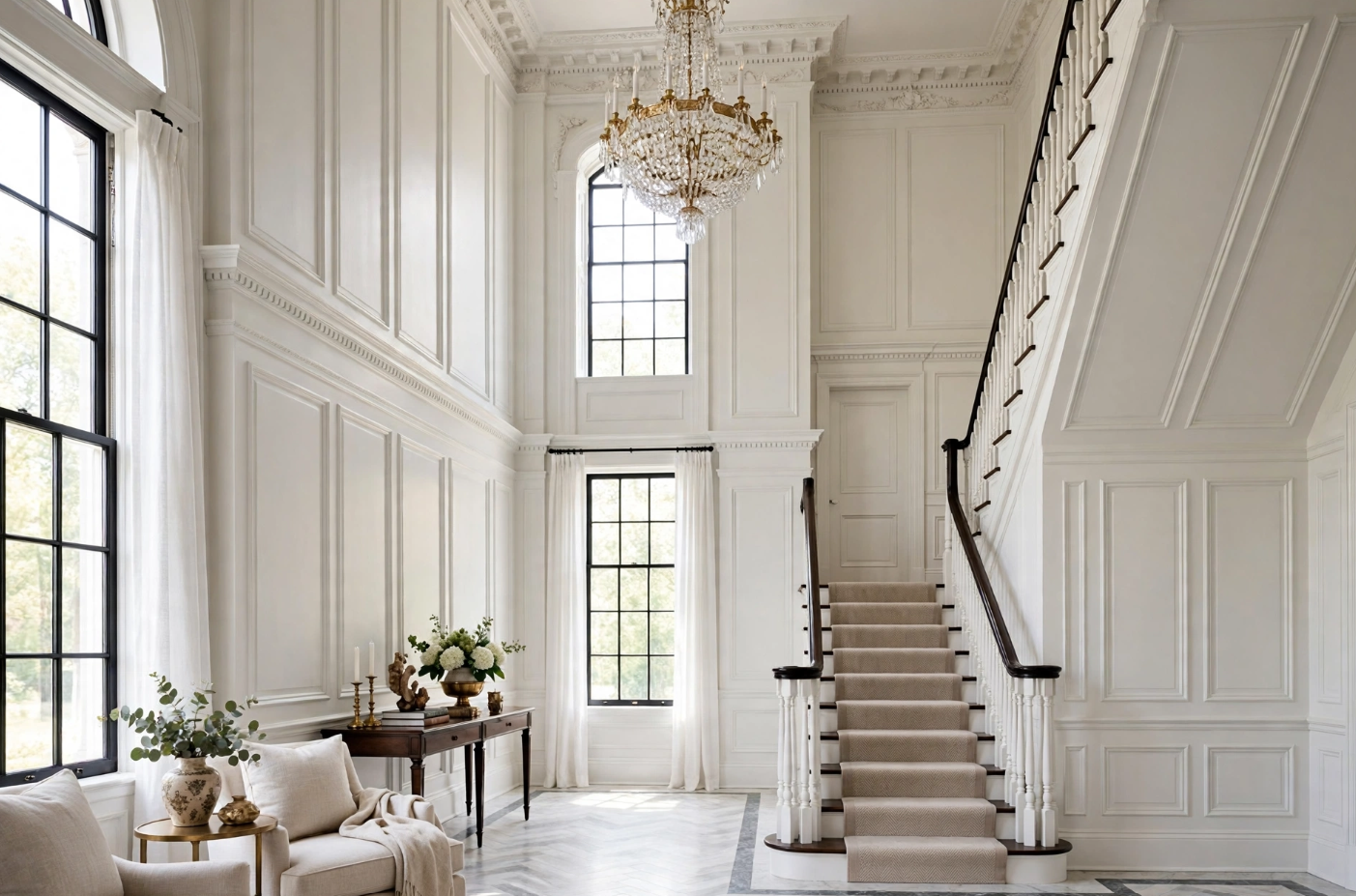
- A staircase or other vertical architectural feature
Full-height paneling is also possible, although it becomes more of a complete wall-paneling treatment than conventional lower-wall wainscoting.
The goal is proportion, not following a measurement blindly.
How Do Materials Change the Look of Wainscoting Styling?
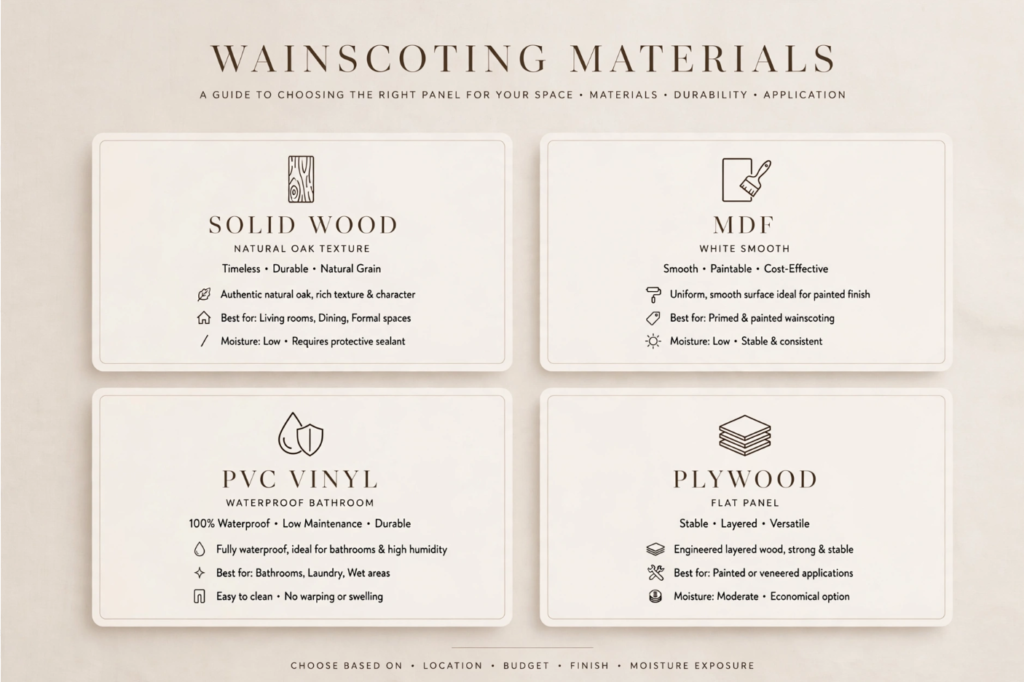
The pattern is only part of the decision. The material will affect the durability, appearance, installation, maintenance and finishing.
Solid wood
Solid wood gives you natural grain, and can be stained or painted
It can look beautiful in traditional interior designs, but you need to consider the movement and effects of moisture on the wood.
MDF
MDF is popular for painted trim and paneling because it has a smooth, consistent surface.
It’s particularly useful when you want crisp painted profiles without paying for premium solid wood throughout the project.
However, standard MDF should not automatically be treated as moisture-proof. Always check the product’s specifications before using it in bathrooms or other damp areas.
PVC or vinyl
PVC-based products can be useful where moisture resistance is important.
They are especially worth considering for bathrooms, laundry areas, and other spaces where conventional wood products may require additional protection.
Plywood
Plywood can work well for certain flat-panel applications and custom-built wall treatments.
The grade, thickness, face veneer, and finish all affect the final appearance.
Is Wainscoting Still in Style in 2026?
Yes—but the way it’s being used is changing.
While Current 2026 design coverage shows interest in wall paneling and wainscoting, the trend is not focused on creating an abundance of decorative moldings.
The article reports that Houzz saw U.S. searches for “wainscoting” rise 32% in its 2026 Emerging Summer Trends Report. This reflects growing interest in wainscoting and beadboard styles, along with a broader shift toward warm neutral palettes and interiors with more architectural character.
Other 2026 design report coverage emphasizes the use of paneling around architectural details but with more space between the planks and simpler designs being preferred over intricately decorated surfaces.
This means that the wainscoting seen today can take many forms that are quite different from the traditional heavily decorated paneling of the past.
Current directions worth considering
- Simple flat panels
- Larger, more relaxed panel proportions
- Warm whites and creamy neutrals
- Earthy greens and browns
- Natural wood
- Minimal trim
- Paneling around fireplaces or architectural features
- Monochromatic walls and trim
- Personalized layouts rather than copy-and-paste patterns
The most timeless choice isn’t necessarily the trendiest one.
Choose a style that makes sense with your home’s architecture first, then use current colors or finishes to make it feel fresh.
What Is the Golden Rule of Wainscoting?
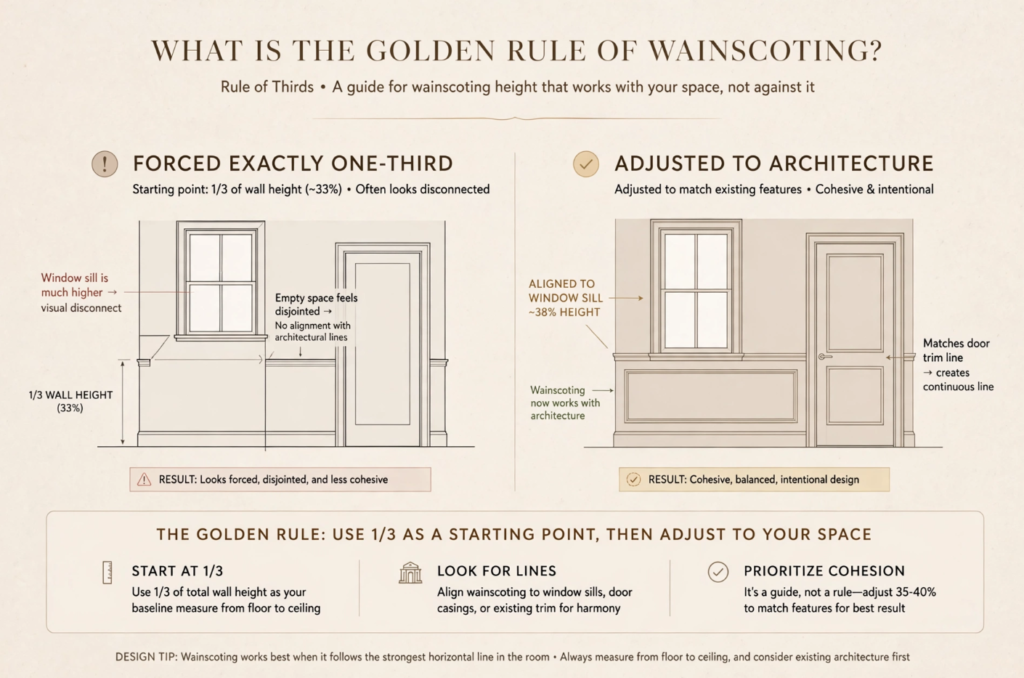
The most commonly cited “golden rule” is the rule of thirds: the wainscoting typically occupies roughly the lower third of the wall.
But treating one-third as an unbreakable rule can create problems.
If your window sill, door trim, or existing architectural lines sit somewhere else, forcing wainscoting and beadboard styles to exactly one-third of the wall may actually make the room look less cohesive.
A better practical rule is:
Start with one-third, then adjust the height to work with the room’s existing architecture.
That gives you a proportion guideline without turning it into a rigid formula.
Common Wainscoting Mistakes to Avoid
1. Choosing a style before looking at the room
Don’t select raised panels simply because they look beautiful in a photograph.
Ask whether the style fits your home’s architecture.
2. Making the panels too small
Too many tiny boxes can make a wall feel busy.
Larger, simpler panel layouts often create a more relaxed appearance.
For more wainscoting inspiration, explore Benjamin Moore’s wainscoting ideas to see how different panel styles, colors, and room settings can transform your walls.
3. Ignoring windows and doors
Paneling shouldn’t look as though it was installed without considering the rest of the wall.
Plan around:
- Door casings
- Window trim
- Outlets
- Radiators
- Built-ins
- Fireplaces
4. Using the wrong material in a damp room
A beautiful panel isn’t useful if the material isn’t appropriate for its environment.
Check the manufacturer’s moisture and installation guidance before installing a product in a bathroom or other damp location.
5. Creating inconsistent spacing
Uneven gaps are one of the quickest ways to make DIY wainscoting look improvised.
Measure the entire wall before cutting.
6. Overdecorating
Wainscoting is already an architectural feature.
You don’t necessarily need elaborate trim, bold wallpaper, multiple patterns, and heavy furniture competing with it.
7. Following trends too literally
A 2026 trend report can provide inspiration, but your home doesn’t need to look like a showroom.
Architecture, proportions, function, and your personal style should come first.

How to Choose Between Beadboard and Other Wainscoting Styles
If you’re still unsure, use this quick decision guide.
Choose:
beadboard if you want:
- Fine vertical texture
- A cottage or coastal feel
- A relatively relaxed look
- Character in bathrooms or mudrooms
- A classic but informal wall treatment
board and batten if you want:
- Strong vertical lines
- A geometric pattern
- Modern farmhouse or Craftsman character
- A more architectural statement
raised panel if you want:
- Formality
- Traditional character
- Deep shadows and detailed profiles
- A classic dining room or office look
Choose flat panel if you want:
- Clean lines
- Transitional style
- A quieter architectural detail
- A modern interpretation of traditional paneling
Choose picture-frame molding if you want:
- Decorative wall boxes
- A relatively simple visual treatment
- Classic or transitional character
- A way to add detail without full panel construction

Can Wainscoting Make a Room Look Smaller?
Not necessarily.
The effect depends on the height, color, pattern, and proportions.
A busy pattern covering too much of a small room can make the walls feel visually heavier. On the other hand, carefully proportioned wainscoting and beadboard styles can make a room feel more finished and add useful architectural rhythm.
Vertical patterns such as beadboard or vertically oriented board and batten can also emphasize the vertical direction of a room.
The safest approach for a small space is usually to keep the design relatively simple and make sure the paneling works with the existing trim rather than competing with it.

Final Thoughts
Wainscoting and beadboard aren’t really competing categories.
Wainscoting is the broader wall-treatment category, while beadboard is one particular style within it.
Once you understand that distinction, choosing becomes much easier.
Among wainscoting and beadboard styles, beadboard works beautifully when you want fine vertical texture and a relaxed feel. Board and batten creates stronger geometry, while raised panels bring traditional formality. Flat panels offer a cleaner transitional look, and picture-frame molding can add classic architectural detail without the complexity of full panel construction.
And in 2026, wainscoting is still very much relevant. Current design interest favors better proportions, cleaner profiles, warmer finishes, and more intentional placement rather than simply covering every wall with elaborate molding.
The best wainscoting isn’t the style that’s trending hardest. It’s the one that makes sense for your room, your architecture, your lifestyle, and the amount of visual detail you actually want to live with.
FAQ SECTION
These are the strongest FAQ targets for the article.
Is beadboard the same as wainscoting?
No. Wainscoting is the broader category of decorative wall paneling, while beadboard is one specific grooved paneling style that can be used as wainscoting.
Is wainscoting still in style in 2026?
Yes. Current 2026 design data and coverage show continued interest in wainscoting, with Houzz reporting a 32% increase in U.S. searches for the term.
What is the golden rule for wainscoting?
A common starting point is the rule of thirds, placing the top of the wainscoting around one-third of the wall height. However, windows, doors, ceiling height, and existing trim can justify adjusting that proportion.
Which is better, beadboard or wainscoting?
The comparison isn’t quite apples-to-apples because beadboard is one of the wainscoting and beadboard styles used for wall paneling. Choose beadboard when you want narrow vertical texture; choose another wainscoting style when a different level of formality or geometry better suits your room.
What are the main types of wainscoting?
Common styles include beadboard, board and batten, raised panel, flat/recessed panel, and picture-frame molding. Shiplap and tongue-and-groove can also be used as lower-wall treatments.
What height should wainscoting be?
One-third of the wall is a useful starting point, but there is no universal height for wainscoting and beadboard styles. Existing windows, doors, trim, ceiling height, and overall room proportions should influence the final placement.
Can beadboard be used in a bathroom?
Yes, but the material and installation method matter. Use a product appropriate for moisture exposure and follow its manufacturer’s installation requirements rather than assuming every beadboard product is suitable for wet conditions.
Does wainscoting make a room look smaller?
Not automatically. The effect depends on the height, pattern, color, and scale. Overly busy or poorly proportioned paneling can feel heavy, while simple, well-scaled designs can add structure without making a room feel cramped.