






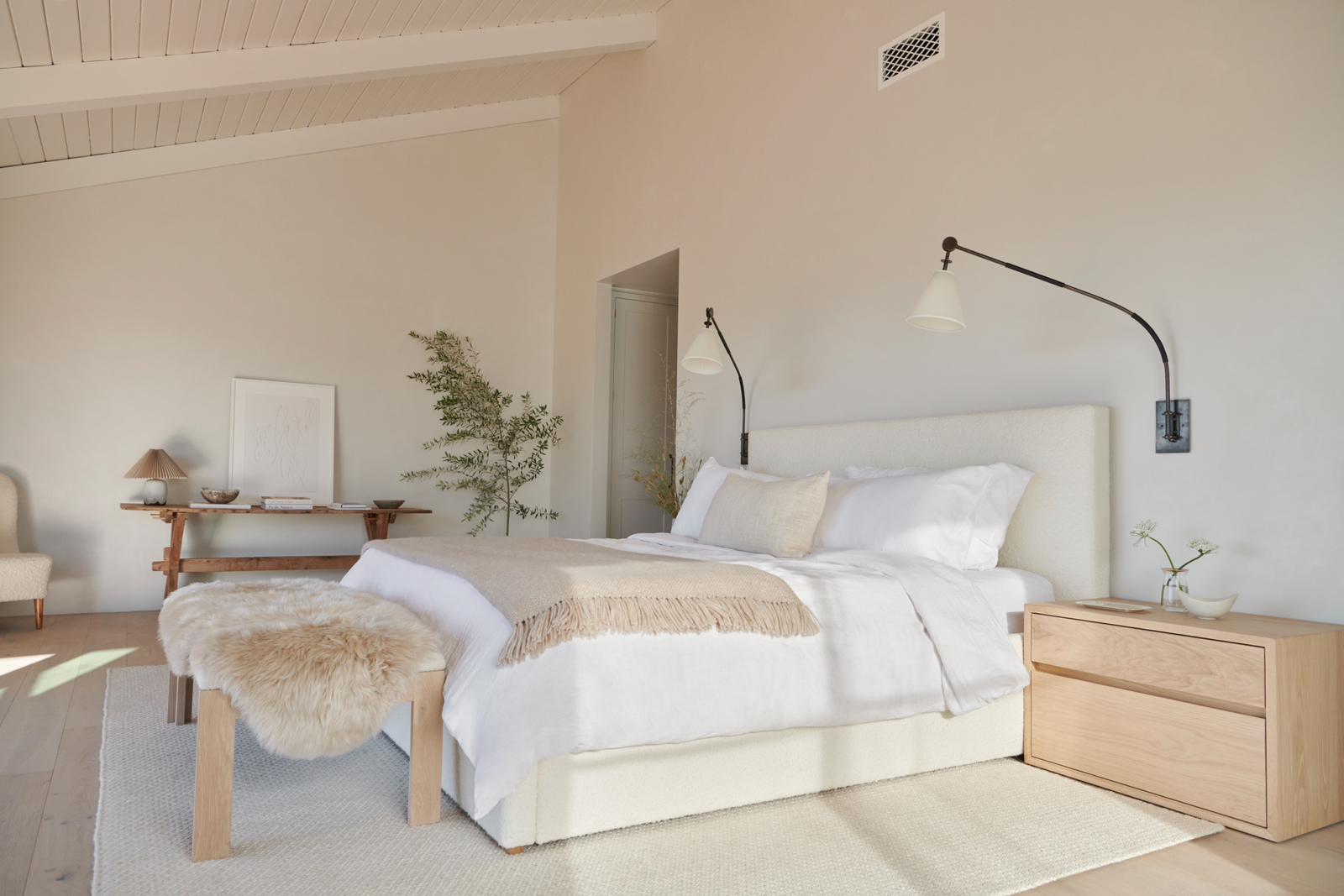
Neutral bedroom decor ideas can feel warm, elegant, and full of personality without relying on bold colors or expensive furniture. The secret is to combine complementary shades, comfortable fabrics, natural materials, and a few carefully chosen details that give the room depth.
Whether you love creamy whites, soft beige, warm taupe, or muted gray, these 15 neutral bedroom decor ideas will help you create a timeless space that feels inviting rather than plain. You can recreate these looks in a spacious primary bedroom, a small guest room, or a rental without replacing everything you own.
Explore these 15 Pink Bedroom Decor Ideas for a Soft, Pretty Space to create a cozy, elegant bedroom with beautiful pink shades, soft textures, and charming decorative accents.
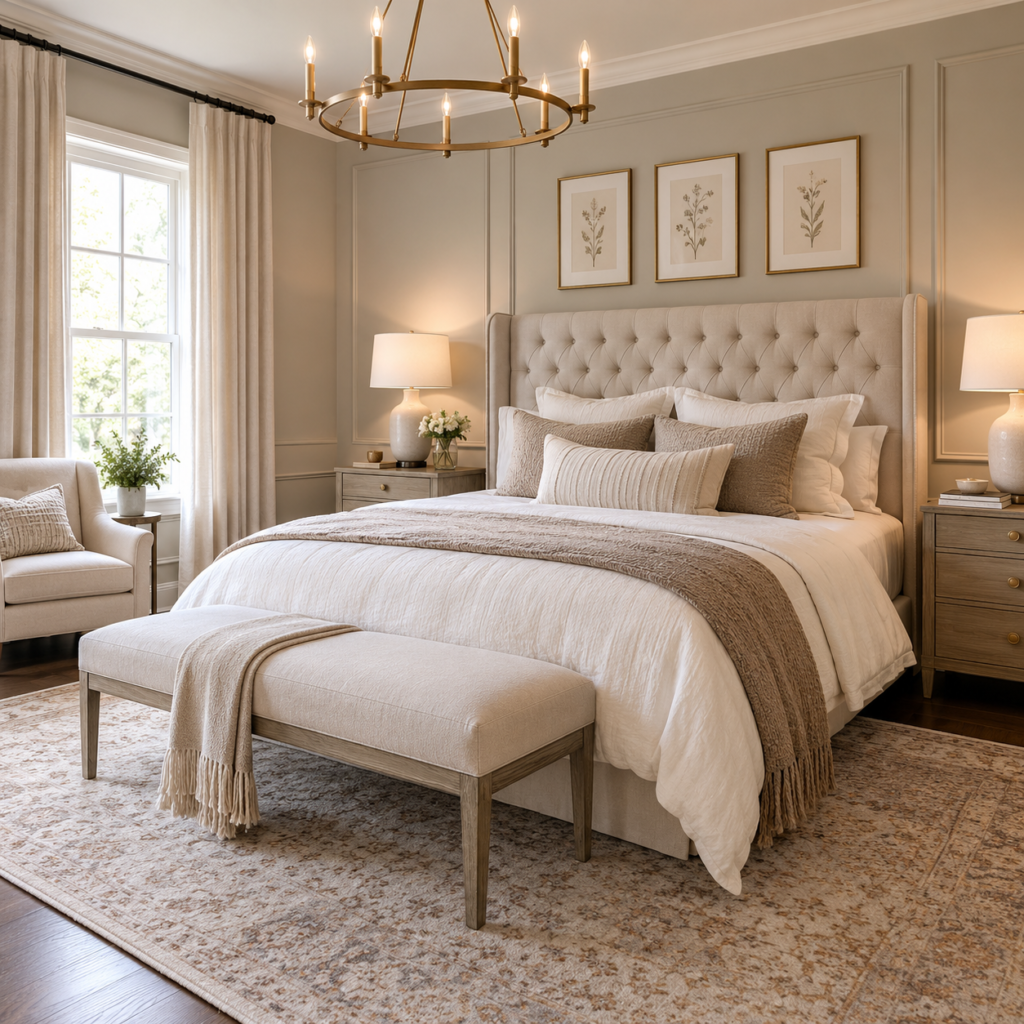
15 Neutral Bedroom Decor Ideas
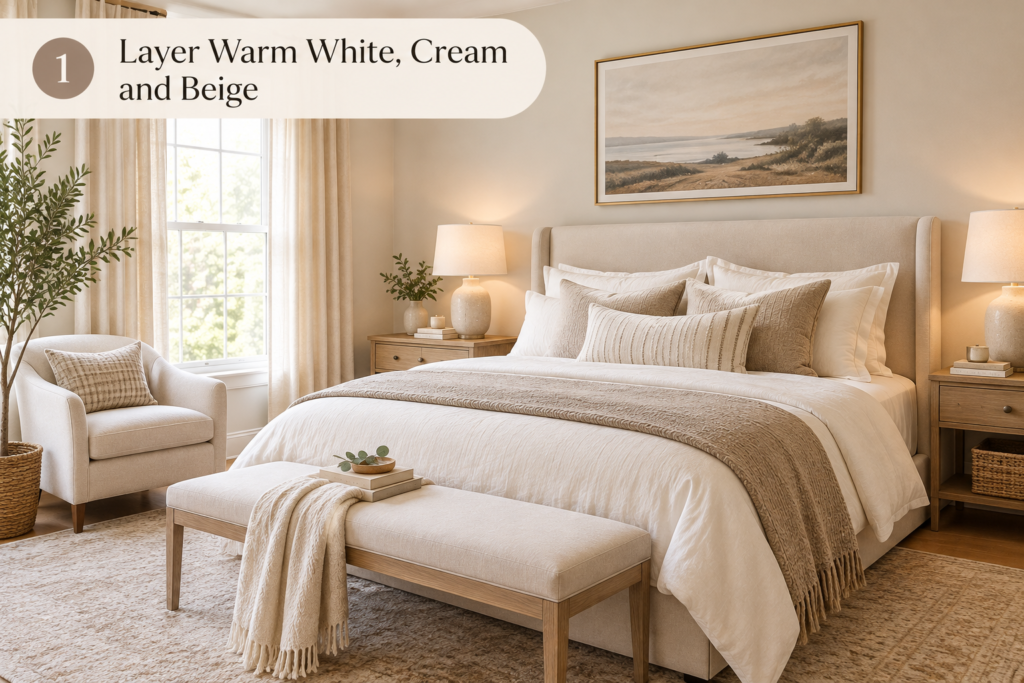
1. Layer Warm White, Cream, and Beige for Neutral Bedroom Decor Ideas
Image concept: A bright, elegant bedroom with an ivory upholstered bed, cream duvet, beige throw, warm-white walls, pale oak nightstands, and sheer curtains.
A combination of warm white, cream, and beige creates a soft foundation that feels classic in almost any bedroom style. Instead of using the same shade on every surface, let each color play a different role. Warm-white walls can keep the room bright, cream bedding adds softness, and beige pillows or a throw introduce subtle contrast.
For a cohesive look, repeat each shade at least twice. For example, pair beige pillows with a matching throw or rug, then balance them with ivory bedding and pale wood furniture. This repetition helps the room feel intentional without making everything match perfectly.
How to recreate it: Start with your existing bedding, then add two or three complementary textiles before considering new furniture. Test paint samples beside your bedding and flooring in both daylight and evening light.
Suggested image alt text: Warm white and beige bedroom with layered ivory bedding and pale wood furniture.
Explore these 15 Living Room Decorating Ideas for Every Style to create a beautiful, comfortable space that reflects your personality and complements your TV wall decor.
2. Create a Cozy Taupe and Greige Palette for Neutral Bedroom Decor Ideas
Image concept: A sophisticated bedroom with greige walls, a taupe upholstered headboard, cream bedding, mushroom-colored curtains, and natural wood accents.
Taupe and greige are excellent choices if you want something richer than plain white but softer than a dark brown or charcoal scheme. Taupe often has brown or earthy undertones, while greige combines characteristics of gray and beige. Their appearance varies by paint formula and lighting, so test samples in your actual room.
Use a lighter shade on the walls and bring in a deeper version through the headboard, curtains, or bedding. A cream duvet can break up the mid-tones, while a wooden nightstand adds another natural finish.
This combination works especially well when you want a bedroom that feels polished without looking formal. It can also suit traditional, contemporary, and transitional interiors.
How to recreate it: Choose one dominant neutral, one supporting mid-tone, and one lighter shade. Avoid selecting every item from the same color family without checking whether their undertones work together.
Suggested image alt text: Cozy taupe and greige bedroom with cream bedding and natural wood accents.
You can also explore these 10 Christmas Home Decor Ideas for Every Style to make your home feel festive, cozy, and inviting for the holiday season.
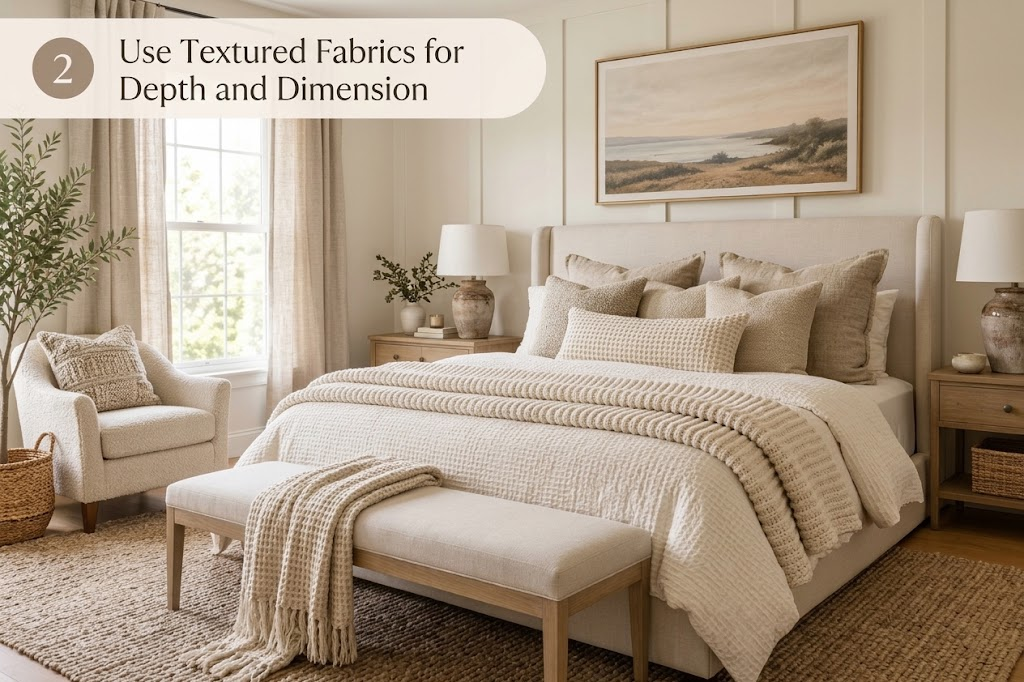
3. Make the Bed the Focal Point With an Upholstered Headboard for Neutral Bedroom Decor Ideas
Image concept: A tall, softly curved oatmeal upholstered headboard behind a neatly layered neutral bed, with simple oak nightstands and warm bedside lamps.
A statement headboard gives a neutral bedroom a clear focal point without requiring a dramatic paint color. Upholstered designs in oatmeal, ivory, mushroom, or soft taupe bring softness to the bed and help distinguish it from the wall behind it.
Choose a shape that complements the room. A gently curved headboard can soften a boxy layout, while a tall rectangular design creates a more structured, tailored look. In a smaller bedroom, consider the overall width and height so the bed does not overwhelm the wall.
Keep the surrounding decor relatively simple. Matching lamps, restrained artwork, and relaxed bedding let the headboard stand out without making the room feel crowded.
Budget-friendly alternative: If replacing the bed is not practical, create a focal point with a large framed artwork or a fabric panel mounted securely behind the existing bed.
Suggested image alt text: Neutral bedroom with a curved oatmeal upholstered headboard and simple wood nightstands.
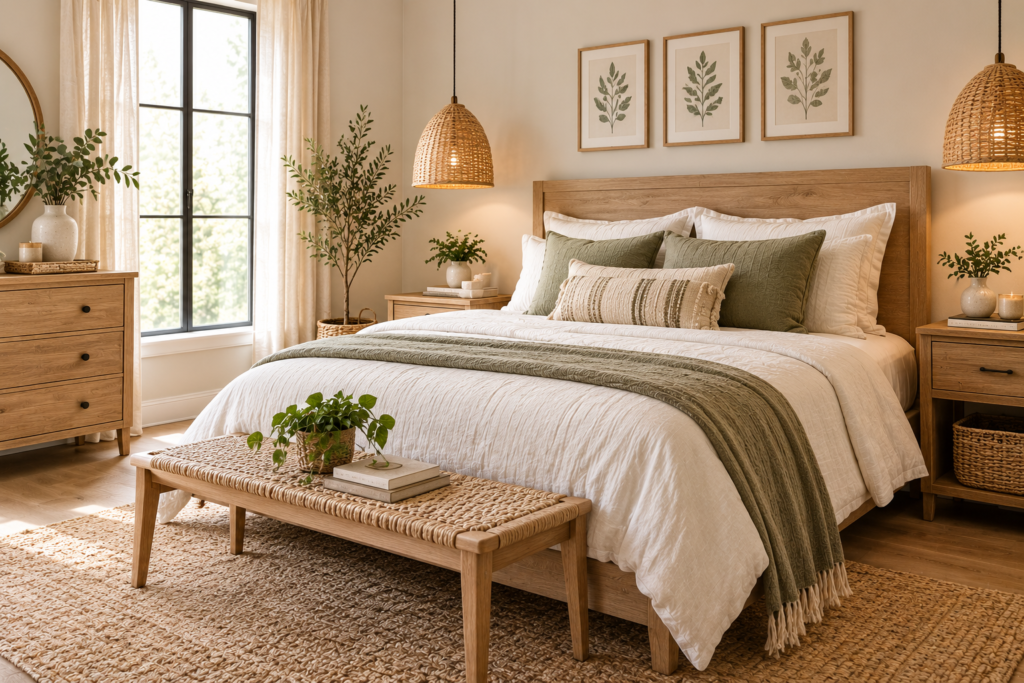
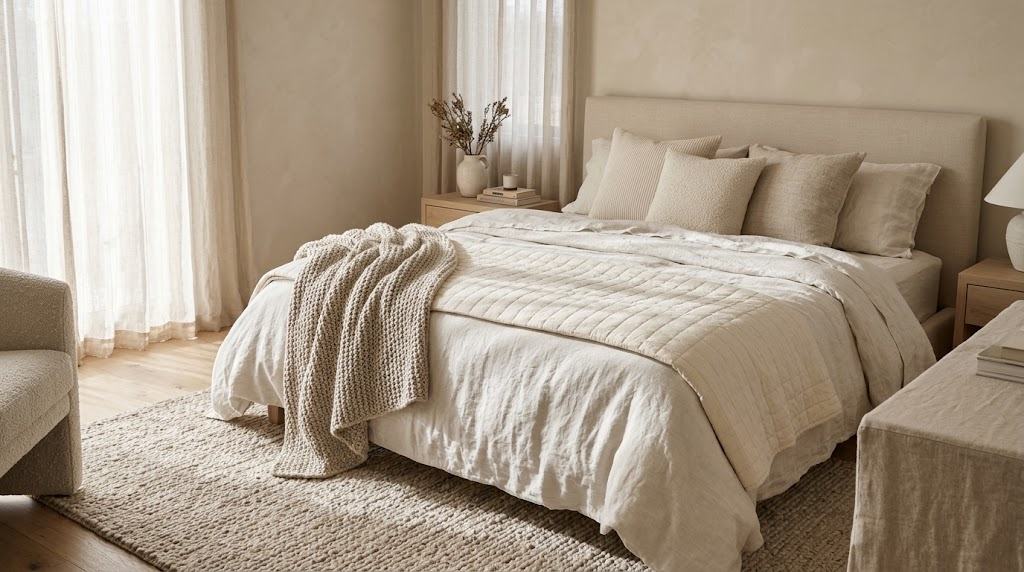
4. Mix Linen, Cotton, and Chunky Textures for Neutral Bedroom Decor Ideas
Image concept: A cream bedroom featuring relaxed linen bedding, a quilted cotton coverlet, a chunky knit throw, textured pillows, and a soft woven rug.
When a bedroom uses a limited color palette, texture becomes one of its most important decorative features. Linen, smooth cotton, quilted bedding, knitted throws, and woven rugs create different surfaces for the eye to notice without introducing strong colors.
Begin with comfortable everyday bedding, then add a coverlet or lightweight blanket across the lower third of the bed. One textured throw and a small selection of pillows can add enough dimension without making the bed difficult to use.
The key is contrast. Pair a smooth duvet with a more tactile blanket, or combine relaxed linen with a neatly quilted coverlet. You do not need every fabric to be heavily textured.
Practical tip: If you prefer easy-care bedding, check washing instructions before buying. Some decorative fabrics need more careful maintenance than everyday cotton.
Suggested image alt text: Layered neutral bedding with linen sheets, a quilted coverlet, and a chunky knit throw.
Refresh your bedroom with these [Bedding Set Ideas 2026: 15 Stylish Looks for Your Bedroom] to create a cozy, stylish, and inviting space for every season.
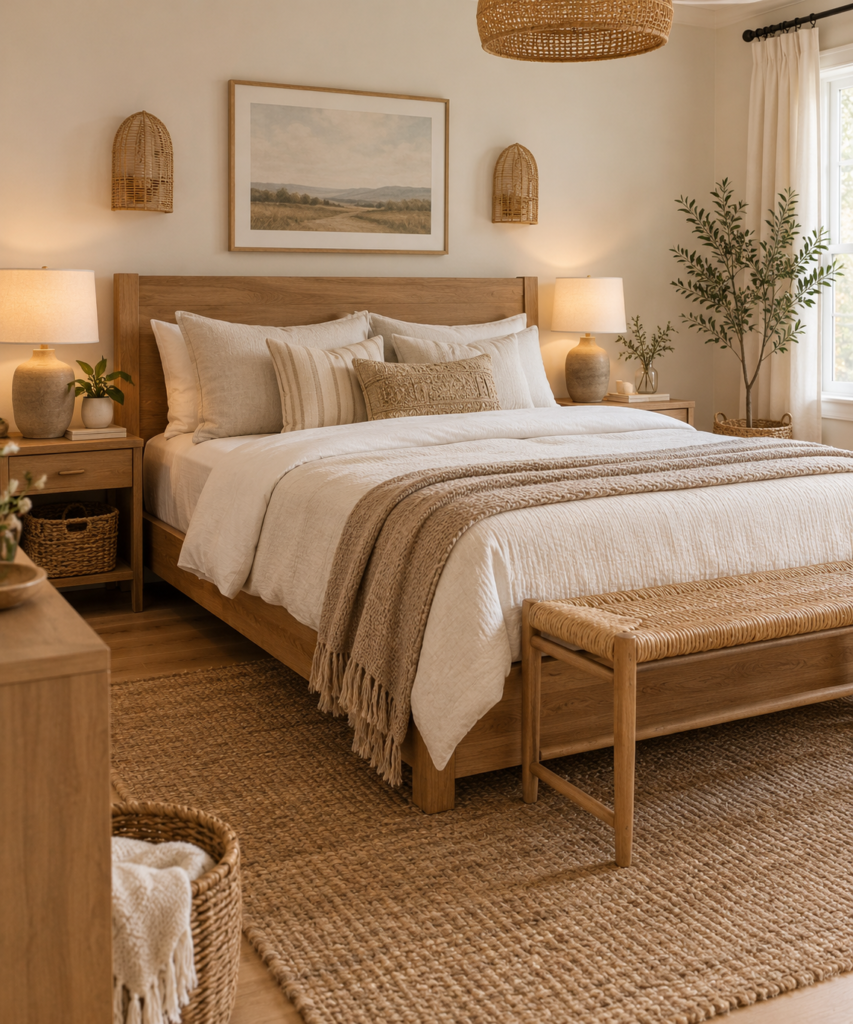
5. Bring in Natural Wood and Woven Accents for Neutral Bedroom Decor Ideas
Image concept: A warm neutral bedroom with a natural oak bed frame, woven bedside baskets, a jute-style rug, a rattan bench, and cream bedding.
Natural materials keep a neutral bedroom from feeling too polished or flat. Wood introduces grain and warmth, while woven baskets, rattan furniture, and natural-fiber rugs add variation through their irregular patterns and surfaces.
You do not need to buy an entire matching furniture set. An existing wood nightstand can work with an upholstered bed, a woven storage basket, and a simple fabric bench. The combination feels collected rather than overly coordinated.
Pay attention to undertones when mixing woods. Pale oak, medium walnut, and darker brown finishes can coexist, but repeating a finish or keeping the undertones compatible helps the room feel connected.
Small-room idea: Use one woven basket beneath a nightstand or beside a dresser to add natural texture without taking up much floor space.
Suggested image alt text: Warm neutral bedroom with natural oak furniture, woven baskets, and cream bedding.
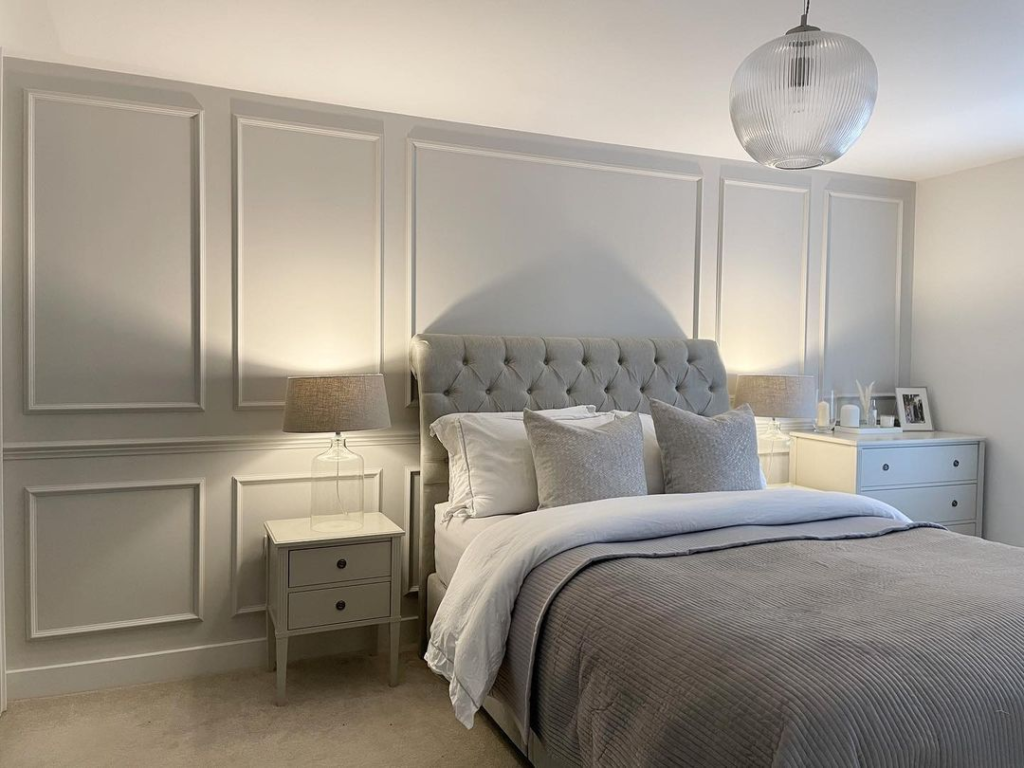
6. Give the Bed Wall a Subtle Neutral Feature for Neutral Bedroom Decor Ideas
Image concept: A cream bedroom with understated vertical wall paneling behind the bed, warm-white walls, a simple upholstered headboard, and minimal bedside decor.
A feature wall can create architectural interest without taking a neutral scheme in a bold direction. Subtle paneling, a textured wallpaper, or a slightly deeper paint color behind the bed provides definition while keeping the room calm.
For a traditional bedroom, consider simple picture-frame molding. Narrow vertical panels can suit a more contemporary space, while a restrained grasscloth-inspired wallpaper adds texture to a softer, natural scheme.
Keep the rest of the walls relatively simple so the feature has room to stand out. In a small bedroom, a subtle finish across the bed wall may be enough; covering every wall with a strong texture can make the room feel visually busy.
If you rent, removable wallpaper or artwork can provide a similar focal point without a permanent renovation.
Suggested image alt text: Timeless neutral bedroom with subtle cream wall paneling behind the bed.
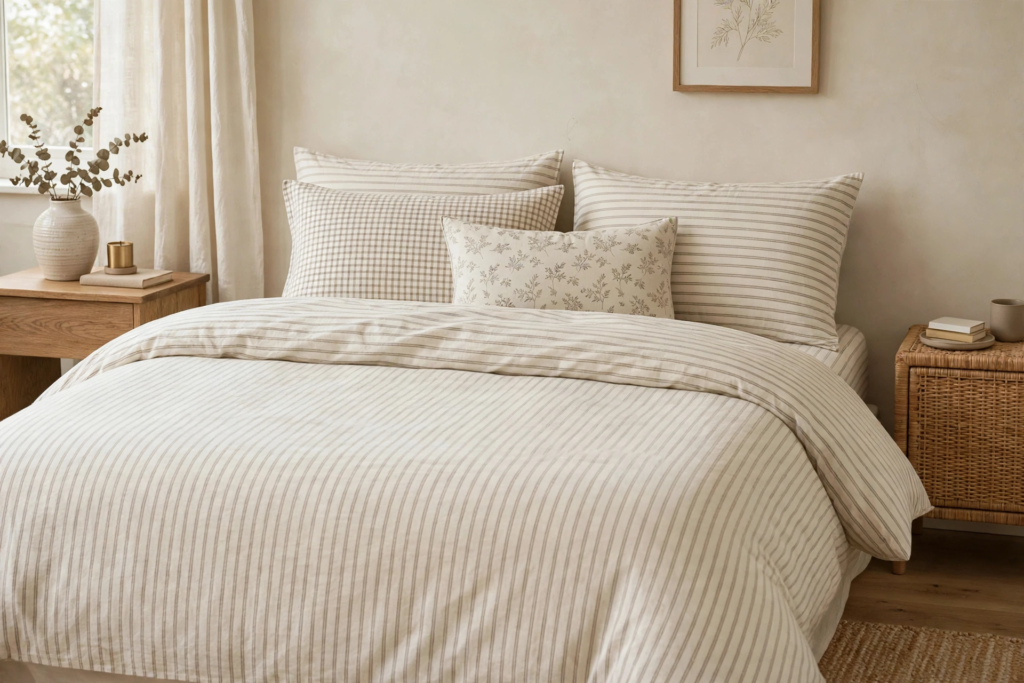
7. Use Understated Patterns in Neutral Bedding for Neutral Bedroom Decor Ideas
Image concept: An ivory bed dressed with thin taupe stripes, small-scale checks, a textured cream duvet, and one understated patterned accent pillow.
A neutral bedroom does not have to rely on solid fabrics. Stripes, small checks, delicate botanical prints, and subtle geometric designs can add personality while keeping the palette restrained.
The easiest way to mix patterns is to vary their scale. For example, use thin stripes on the duvet, a small check on one pillow, and a plain textured coverlet to give the eye a place to rest.
Choose patterns that share at least one color. Cream and taupe stripes can sit comfortably beside a beige check when the background shades are similar. If you prefer a more traditional bedroom, look for understated botanical or heritage-inspired prints.
Budget-friendly alternative: Keep your existing duvet and replace only the pillow covers or throw. Small changes can refresh the entire bed without requiring a new bedding set.
Suggested image alt text: Neutral bedroom bedding with subtle taupe stripes, small checks, and cream textiles.
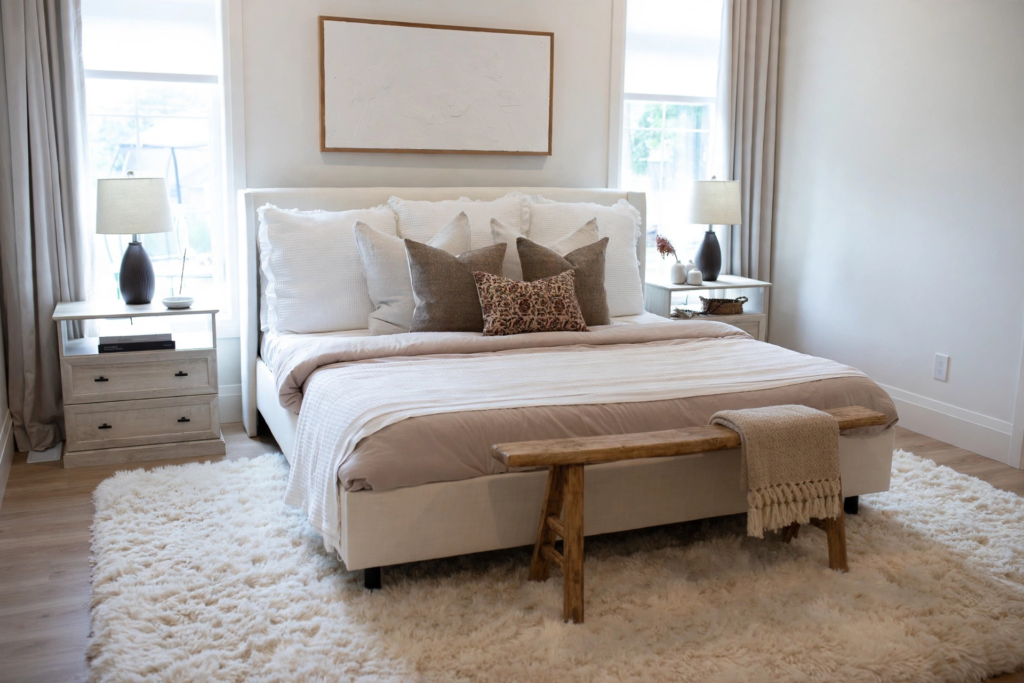
8.Anchor the Room With a Neutral Area Rug for Neutral Bedroom Decor Ideas
Image concept: A softly layered bedroom with a large textured ivory-and-beige area rug extending beneath the bed, pale wood flooring, and understated neutral furnishings.
An area rug helps connect the bed, nightstands, and surrounding furniture visually. It also adds texture and creates a softer transition between the bed and the floor.
For a larger bedroom, a rug extending beyond both sides and the foot of the bed can help anchor the main furniture. In a smaller space, choose a size that leaves enough visible floor around the edges rather than forcing an oversized rug into the layout.
Look at the rug’s pattern and texture as well as its color. A low-contrast geometric design or subtle woven pattern can add interest without competing with patterned bedding.
Before buying, measure the bed and the available floor area. Check door clearance, furniture legs, and the amount of rug you want visible on each side. The best size depends on the room layout and bed dimensions.
Practical tip: Choose a pile height and material suited to your cleaning routine, especially if you have pets or prefer easy vacuuming.
Suggested image alt text: Neutral bedroom with a textured beige area rug extending beneath the bed.
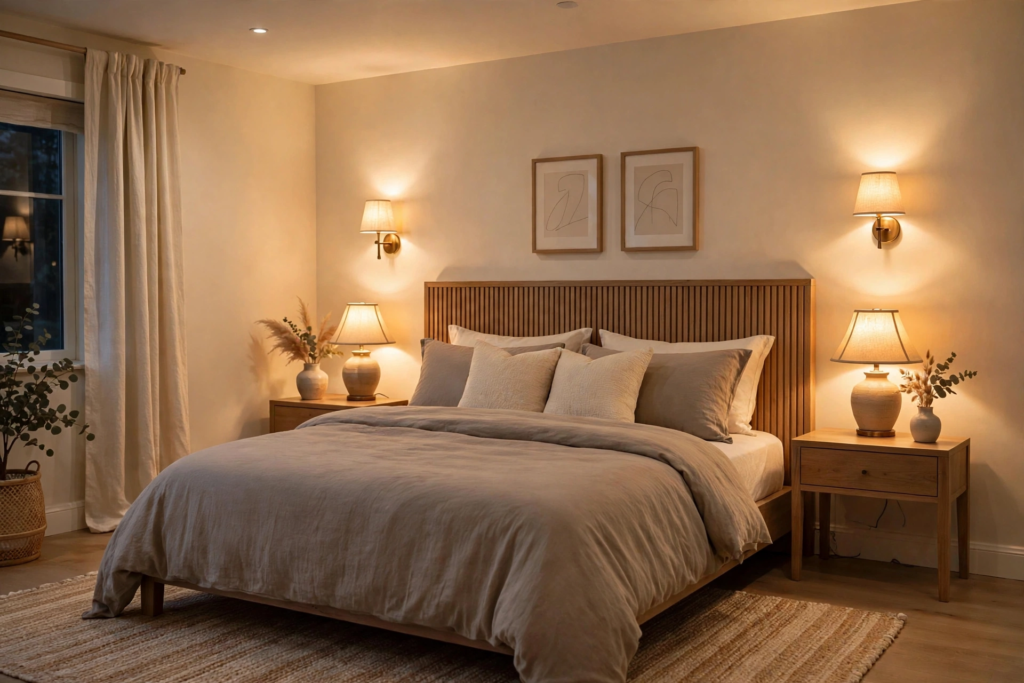
9. Use Warm, Layered Lighting for Neutral Bedroom Decor Ideas
Image concept: A cozy bedroom with matching warm-glow bedside lamps, subtle wall sconces, soft ceiling lighting, cream walls, and taupe bedding.
Lighting can change how neutral colors look and how welcoming a bedroom feels. A room lit by one bright overhead fixture may feel flat, while several thoughtfully placed light sources create a more flexible atmosphere.
Begin with general room lighting, then add bedside lamps or wall sconces for reading and everyday tasks. A small accent lamp on a dresser can create another pool of light in the evening.
Warm-toned bulbs often complement beige, cream, and natural wood, but the ideal appearance depends on your paint colors and personal preference. Look at bulbs in the room rather than choosing them by packaging alone.
If you rent or cannot install new wiring, plug-in lamps are an easy alternative to hardwired sconces. Use fixtures and cords safely, following the manufacturer’s installation instructions.
Suggested image alt text: Warm neutral bedroom illuminated by bedside lamps and soft ambient lighting.
10. Style Nightstands Without Making Everything Match
Image concept: A balanced neutral bedroom with a pale oak nightstand on one side, a darker wood table on the other, matching warm lamps, and restrained accessories.
A coordinated bedroom does not need identical furniture on both sides of the bed. Two different nightstands can create a collected look as long as their visual weight and overall height feel reasonably balanced.
For example, combine a compact wood table with a darker bedside chest, then connect the two sides with similar lamps, related finishes, or matching shades. The furniture can differ without making the room feel disjointed.
Keep the surfaces practical. A lamp, a small dish for everyday items, and one decorative object are often enough. Drawers or a shelf help keep chargers, books, and other essentials out of sight.
In a small bedroom, consider wall-mounted shelves or narrow nightstands to preserve floor space.
Suggested image alt text: Neutral bedroom with complementary mismatched wood nightstands and coordinated bedside lamps.
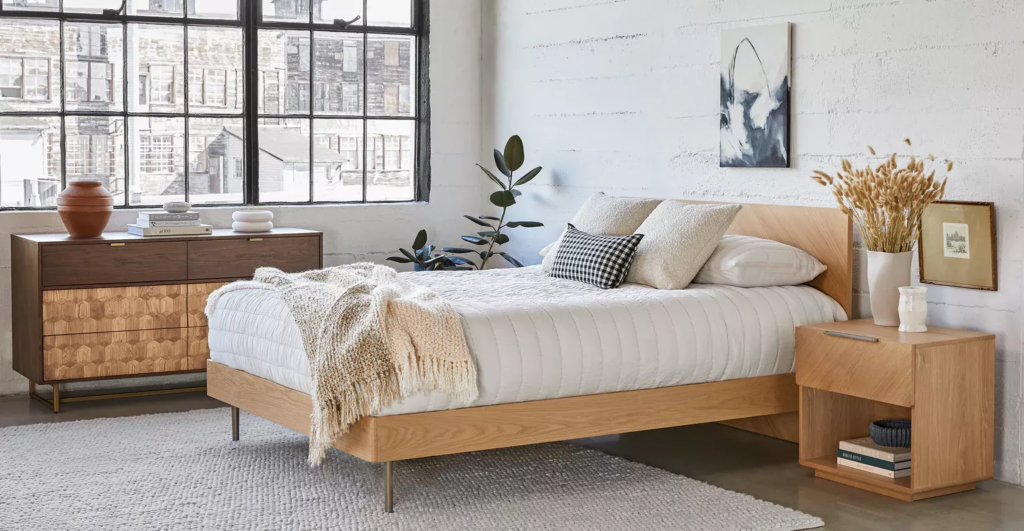
11. Add Oversized Artwork in Soft, Natural Colors
Image concept: A neutral bedroom with a large muted landscape painting above an upholstered headboard, featuring soft sand, ivory, gray-green, and warm brown tones.
Artwork gives a neutral bedroom personality without requiring a stronger wall color. A landscape, abstract composition, or botanical print can introduce subtle variations that connect the bedding, walls, and furniture.
One larger piece can feel calmer than a collection of many small frames, particularly above a wide headboard. If you prefer a gallery wall, use a consistent frame finish or a shared color palette to bring the pieces together.
Choose artwork that complements the room rather than trying to match every detail exactly. A muted green in a landscape can work with beige bedding and wood furniture, while a soft charcoal line drawing can introduce definition into an ivory room.
Budget-friendly alternative: Frame a print you already love or use a pair of simple, coordinated prints instead of purchasing a large original artwork.
Suggested image alt text: Neutral bedroom with oversized muted landscape artwork above a cream upholstered bed.
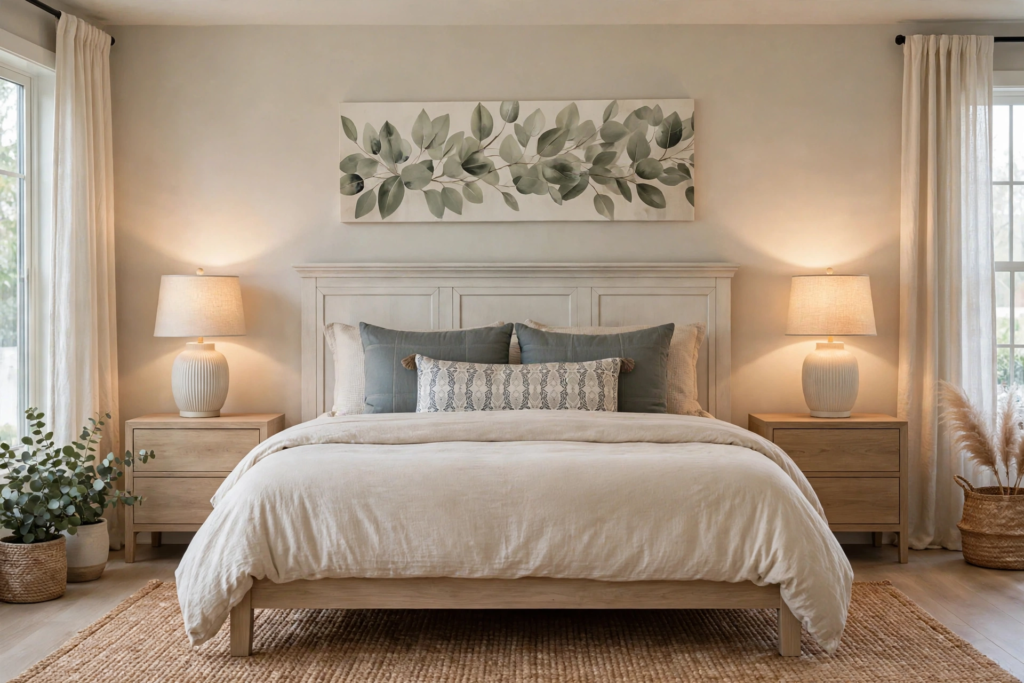
12. Soften the Windows With Full-Length Curtains
Image concept: A bright neutral bedroom with floor-length oatmeal curtains, sheer white panels, a large window, and layered cream bedding.
Curtains add softness to the room and can help visually connect the window to the rest of the decor. Linen-look fabrics, cotton blends, and softly textured neutral panels work particularly well with warm wood and relaxed bedding.
Where the window and wall arrangement allow, mounting the curtain rod above the window frame and extending it beyond the sides can make the window treatment feel more generous. Measure carefully so the panels do not obstruct doors, radiators, or other features.
For privacy, combine sheer panels with lined curtains or suitable blinds. If reducing outside light is important, check the fabric’s light-blocking performance rather than assuming that every thick-looking curtain is blackout-rated.
Choose a shade that relates to the walls without disappearing completely. A slightly deeper oatmeal curtain against warm-white walls can add gentle definition.
Suggested image alt text: Neutral bedroom with full-length oatmeal curtains and sheer white window panels.
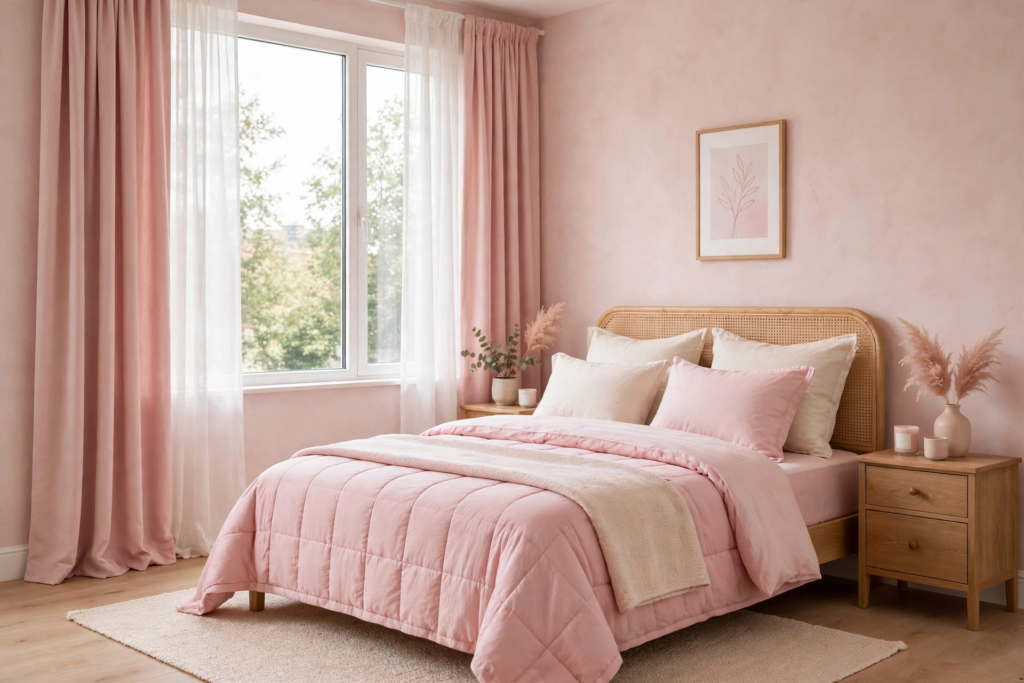
13. Add Contrast With Dark Wood or Matte Black
Image concept: A cream and beige bedroom with a dark walnut headboard, black bedside lamps, pale bedding, and understated brown accents.
A timeless neutral bedroom benefits from a little contrast. Without it, pale walls, light bedding, and light furniture can blend together until the room feels washed out.
Dark wood, matte-black lighting, or a deeper brown throw can provide a grounding element. You do not need to introduce all three. Start with one or two pieces and repeat the darker finish subtly elsewhere to create a visual connection.
For example, a walnut bed frame can anchor cream bedding, while black lamp bases echo the dark details in framed artwork. If you already have dark furniture, lighten the surrounding textiles instead of replacing the furniture.
This approach works particularly well in larger rooms where a little visual weight can help define the bed area. In a small bedroom, keep most of the larger surfaces light and use dark accents selectively.
Suggested image alt text: Cream bedroom with a dark walnut bed frame and subtle matte-black accents.
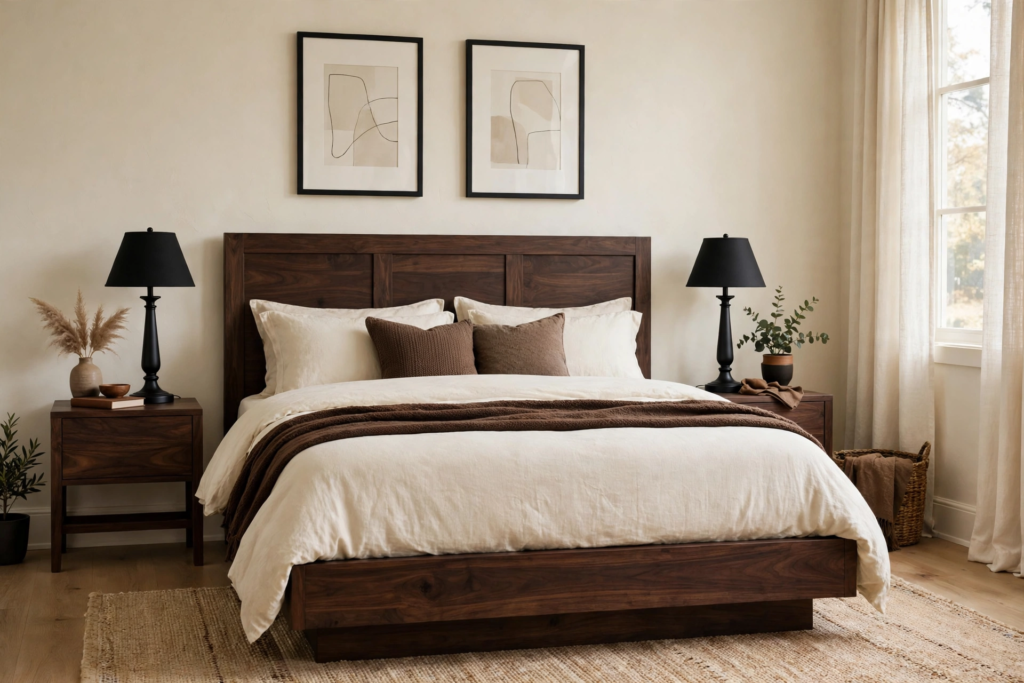
14. Add a Bedroom Bench or Small Reading Corner
Image concept: A spacious neutral bedroom with a low upholstered bench at the foot of the bed, a soft throw, a compact armchair, and a warm floor lamp.
A bench or reading corner can make a bedroom feel more complete while serving a practical purpose. A bench at the foot of the bed provides a place to set clothes or fold a blanket, while a small armchair creates a separate spot for reading.
Choose furniture according to the available floor space. In a narrow bedroom, a slim bench may be more practical than a deep upholstered seat. In a larger room, an armchair and side table can create a comfortable corner near a window.
Keep the colors connected to the main palette. A beige bench, cream cushion, and natural wood side table can add function without introducing a new color scheme.
If storage is limited, consider a bench with a compartment for extra blankets. Leave enough space to walk around it comfortably and open nearby drawers or doors.
Suggested image alt text: Neutral bedroom with a slim upholstered bench and a cozy reading corner.
15. Finish With Personal Accessories and a Restrained Accent
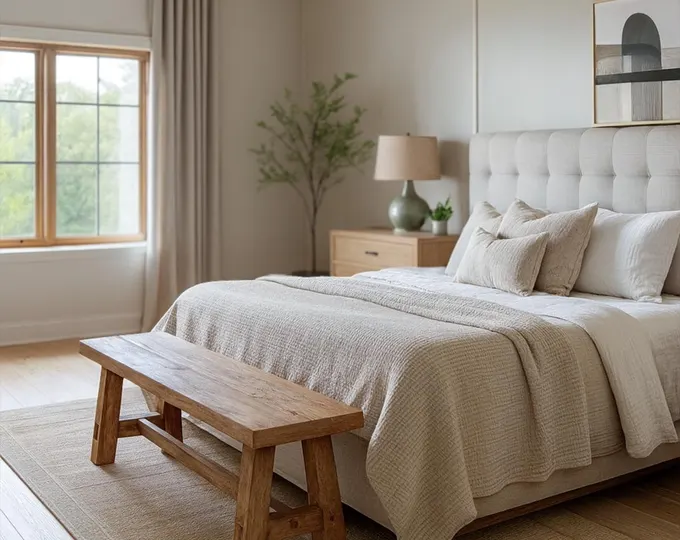
Image concept: A calm neutral bedroom with ceramic vases, a small stack of books, a simple tray, natural greenery, cream bedding, and a muted olive accent cushion.
The final details are what make a neutral bedroom feel personal rather than like a showroom. A ceramic vase, a favorite book, a framed photograph, or a small plant can bring character to a restrained palette.
Use accessories in small groups rather than scattering objects across every surface. A tray on a dresser can hold a few meaningful items, while a bedside table may need only a lamp and one decorative piece.
If you want a hint of color, choose a restrained accent such as muted olive, dusty blue, soft blush, or warm rust. Repeat it once or twice through a pillow, artwork, or throw so it feels intentional. These accents can change over time without requiring a full room makeover.
Leave some surfaces empty. Negative space helps the important pieces stand out and makes everyday cleaning easier.
Suggested image alt text: Neutral bedroom with simple ceramic accessories, greenery, and a muted olive accent pillow.
Neutral bedroom decor ideas can feel warm, elegant, and full of personality without relying on bold colors or expensive furniture. The secret is to combine complementary shades, comfortable fabrics, natural materials, and carefully chosen details that give the room depth, and you can explore Benjamin Moore’s bedroom paint ideas for inspiration when choosing calming colors for your space.
How to Choose the Best Neutral Colors for Your Bedroom
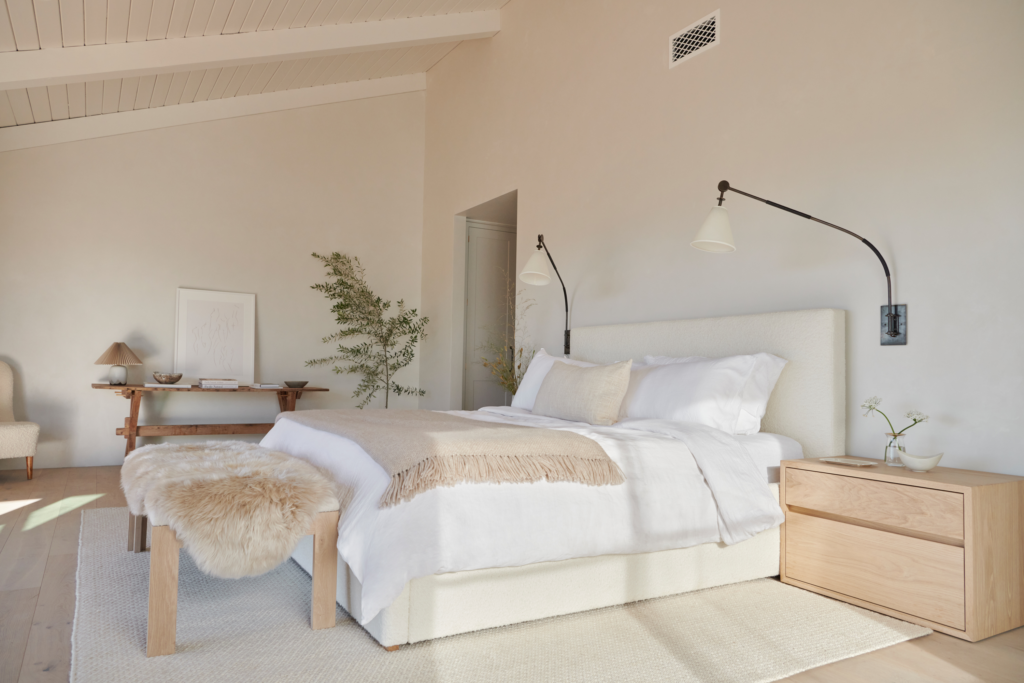
The best neutral bedroom color depends on the light in the room, the existing furniture, and the atmosphere you want to create.
| Neutral shade | Overall look | Works well with |
|---|---|---|
| Warm white | Bright and soft | Natural oak, beige linen, woven textures |
| Cream | Gentle and inviting | Taupe, walnut, brass-toned details |
| Beige | Sandy and relaxed | Ivory bedding, jute, warm wood |
| Taupe | Grounded and sophisticated | Cream, chocolate brown, muted olive |
| Greige | Balanced and understated | Natural wood, white textiles, charcoal accents |
| Soft gray | Quiet and contemporary | White bedding, walnut, subtle blue-gray accents |
| Mushroom | Earthy and cocooning | Warm white, brown, textured upholstery |
Before painting, test samples on more than one part of the room. Observe them during the day and after the lamps are switched on. Existing flooring, furniture, and window exposure can all influence how a color appears.
A useful starting point is to select one dominant neutral, one supporting shade, and one contrasting finish. This creates a clear palette without restricting you to a single color.
How to Make a Neutral Bedroom Look Classy on a Budget
You do not need to replace your entire bedroom furniture set to make the room feel more polished. Focus on changes that affect the largest visual areas first.
- Refresh the bed. Wash or neatly arrange your existing bedding, then add one textured throw or a pair of complementary pillow covers.
- Improve the lighting. Replace a harsh-looking bulb with a suitable warm-toned option or add a bedside lamp.
- Reduce visual clutter. Clear unnecessary items from nightstands and dressers, keeping frequently used essentials within reach.
- Introduce one natural texture. Try a woven basket, a wood tray, or a textured cushion.
- Create one focal point. Use artwork, a headboard, or a subtle accent wall rather than decorating every surface.
- Reuse what you own. Move an existing lamp, frame, or side table to a more useful position before buying replacements.
If you have a larger budget, consider a rug, curtains, or an upholstered headboard. These pieces can make a noticeable difference, but measure your room and compare materials before committing.
Common Neutral Bedroom Decorating Mistakes
Using only one shade. A room filled entirely with the same beige or white can look flat. Mix lighter and deeper tones with a few contrasting finishes.
Ignoring undertones. A yellow-toned cream may clash with a cool gray, even when both colors look neutral individually. Compare samples together in your own lighting.
Buying furniture that is too large. An oversized headboard or deep nightstand can restrict movement. Measure the room and check drawer and door clearances before purchasing.
Overloading the bed with pillows. Too many decorative pillows can make the bed inconvenient to use. Choose a manageable number that suits your bed size and routine.
Relying on overhead lighting alone. Add bedside or task lighting where needed so the room can serve different purposes throughout the day.
Decorating every surface. Too many accessories compete for attention. Leave some space empty to keep the bedroom calm and functional.
Final Thoughts
The most successful neutral bedrooms are not necessarily the palest or the most expensive. They combine a thoughtful color palette with comfortable textiles, useful furniture, natural materials, and a few personal details.
Start with the pieces you already own, choose neutrals that work with your room’s lighting, and add contrast through texture or a deeper finish. With a few intentional changes, you can create a bedroom that feels timeless today and remains easy to update in the years ahead.
FAQ Section
Timeless bedroom ideas include neutral wall colors, quality-looking bedding, natural wood furniture, layered lighting, understated artwork, and comfortable textiles. Choose pieces that suit your room rather than relying entirely on short-lived trends.
Current bedroom design coverage highlights warm neutrals, layered textures, sculptural lighting, natural materials, and more expressive focal points.
Warm white, cream, beige, taupe, and greige are versatile options. Cream and warm white can create a bright look, while taupe and mushroom shades add depth. The best choice depends on your natural light, flooring, and existing furniture.
Choose a cohesive color palette, keep furniture proportions appropriate, layer a few complementary textures, and use warm, practical lighting. A well-made bed, uncluttered nightstands, and one focal point can make a room look more polished without excessive decoration.
Combine different shades and materials rather than using one color everywhere. Try textured bedding, patterned curtains, natural wood, artwork, or a darker accent. Even a small contrast between a cream duvet and taupe pillows can add depth.
Yes. Neutral bedrooms remain a prominent decorating choice, although current interpretations often use warmer undertones, more texture, and deliberate contrast instead of relying on flat beige or cool gray alone.
Keep the layout open, select appropriately scaled furniture, use light colors where they suit the available lighting, and limit unnecessary accessories. Curtains hung higher than the window frame may also create a taller visual impression when the layout allows.