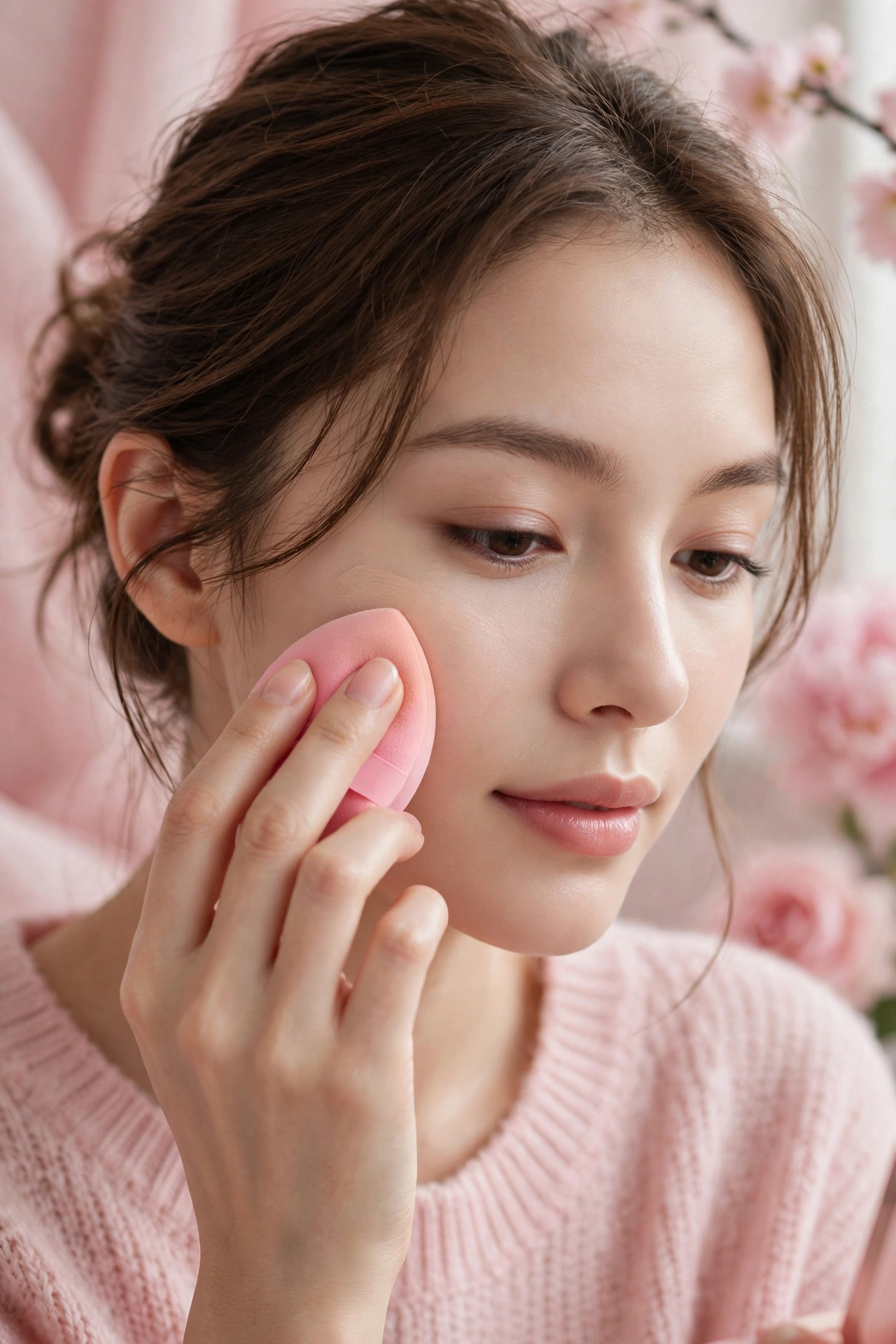
If your makeup goes from fresh and pretty in the morning to greasy, smeared, and patchy by lunch, the issue might not be your foundation, but rather your routine. These beauty hacks for oily skin can help you control excess shine, keep your makeup looking fresh, and make your overall look last longer.
The key to achieving well-blended long-lasting makeup lies in balancing oil throughout the process: before putting your makeup, while putting it, and then after.
Your goal shouldn’t be to completely dull the appearance of your skin.
Instead, aim to minimize shine while letting your skin maintain its healthy appearance and texture. According to dermatologists, the best way to do that is by using gentle cleansers and oil-free or non-comedogenic treatments for people who are prone to oily skin while still taking care to nourish their skin with a good moisturizer.
Below are 15 helpful tips about how to make your makeup last longer on oily skin without having to dust on thick layers of powder.
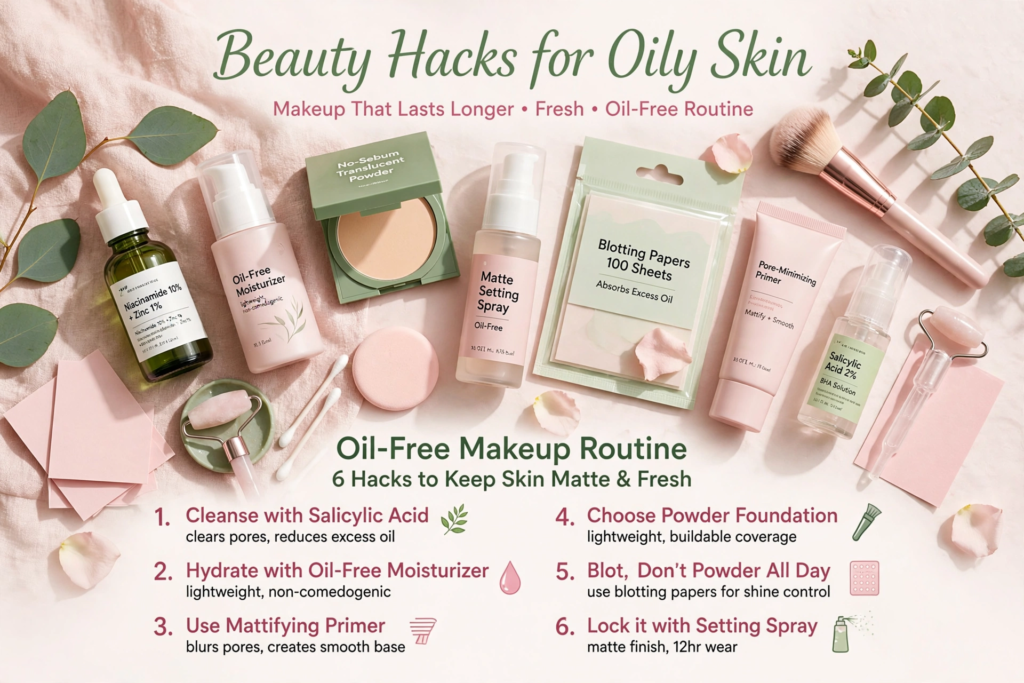
The best makeup routine for oily skin at a glance
For a quick routine, follow this order:
- Cleanse gently.
- Apply lightweight moisturizer and daytime sunscreen.
- Let skincare settle.
- Apply mattifying primer where you get oily.
- Optionally press a small amount of translucent powder onto especially oily areas.
- Apply a thin layer of foundation.
- Add concealer where needed.
- Set the T-zone and other oily areas with powder.
- Finish with setting spray.
- Carry blotting papers for touch-ups.
The biggest difference comes from using oil-control products strategically instead of applying maximum mattifying product everywhere.
1. Beauty Hacks for Oily Skin: Start with Gentle Skin Prep
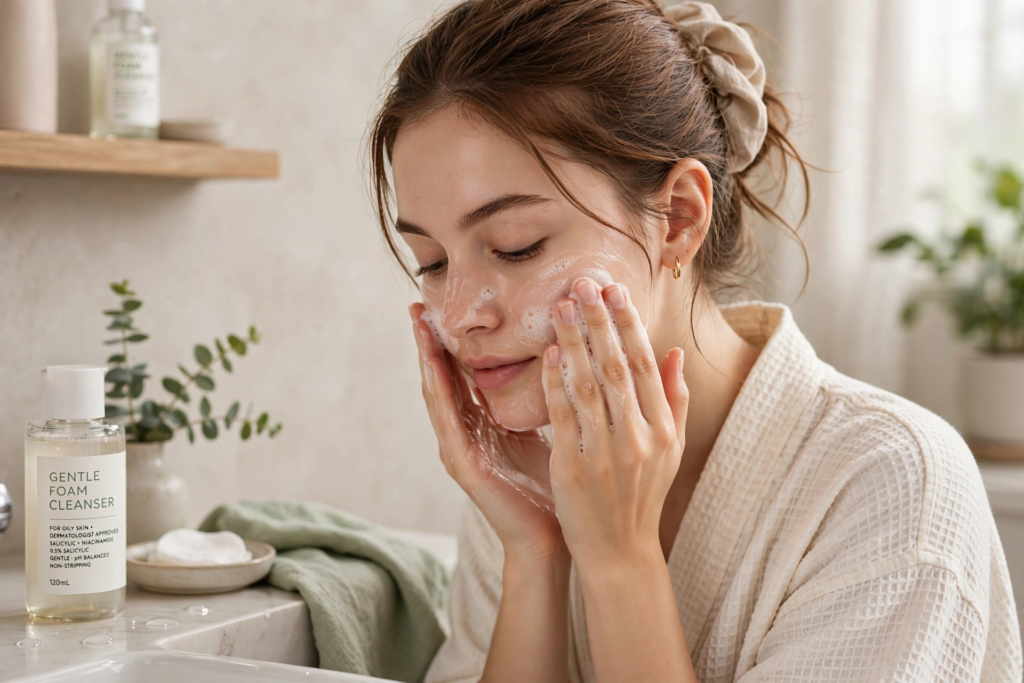
Before applying any cosmetics and creams, it is essential to remove the top layer of dead cells and oil with a gentle cleanser rather than a harsh one.
For oily skin, dermatologists do not recommend harsh cleansing and scrubbing since it irritates the skin and makes it red and unhealthy-looking.
The American Academy of Dermatology advises people with oily skin to gently cleanse their skin twice a day and after sweating.
One should not feel their skin is tight after cleansing.
If it does, it may mean the cleanser or the way of cleansing is too harsh.
If you’re also concerned about makeup settling into fine lines, check out Makeup That Doesn’t Settle Into Fine Lines: Tips for Mature Skin for practical application tips.
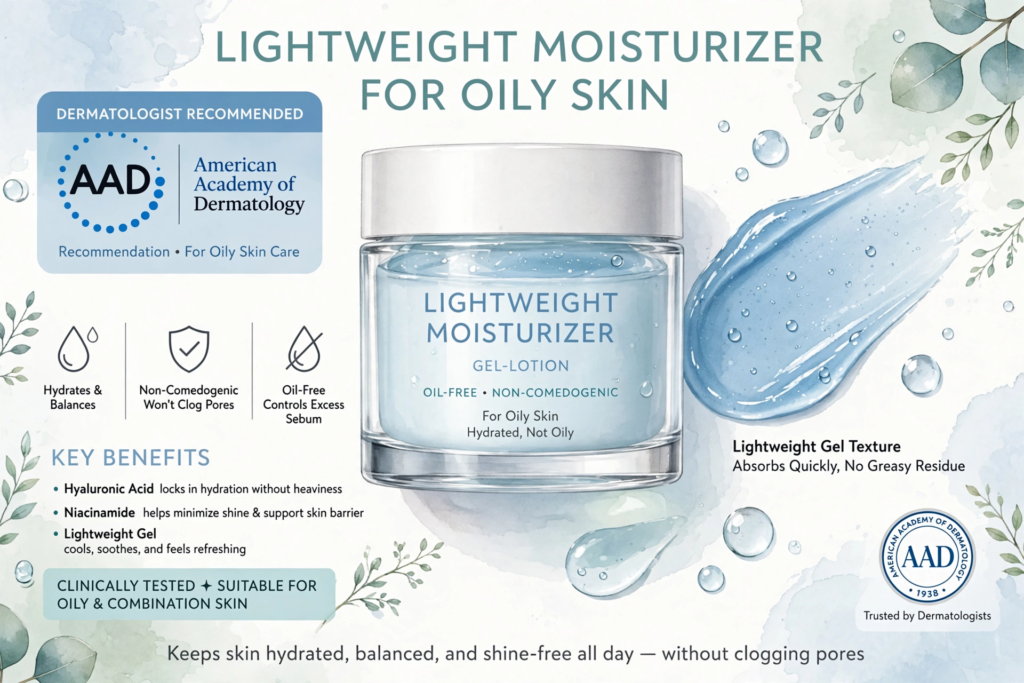
2. Beauty Hacks for Oily Skin: Use a Lightweight Moisturizer
Skipping moisturizer because it is oily can lead to dryness or irritation.
The American Academy of Dermatologists actually recommend moisturizing for oily skin, it is just best to go for oil free or non-comedogenic formulas that won’t clog pores for those worried about blemishes.
As for makeup, try to find something that is not too heavy but still provides enough moisture.
Gel or lighter lotions are a good place to start if you are used to something heavier.
Do not overdo it.
Put on enough to feel hydrated but not oily and let it set in a bit.
If you prefer a lighter, more natural base, check out Makeup Routine Without Foundation: Easy Natural Looks for simple ways to create a polished look without foundation.
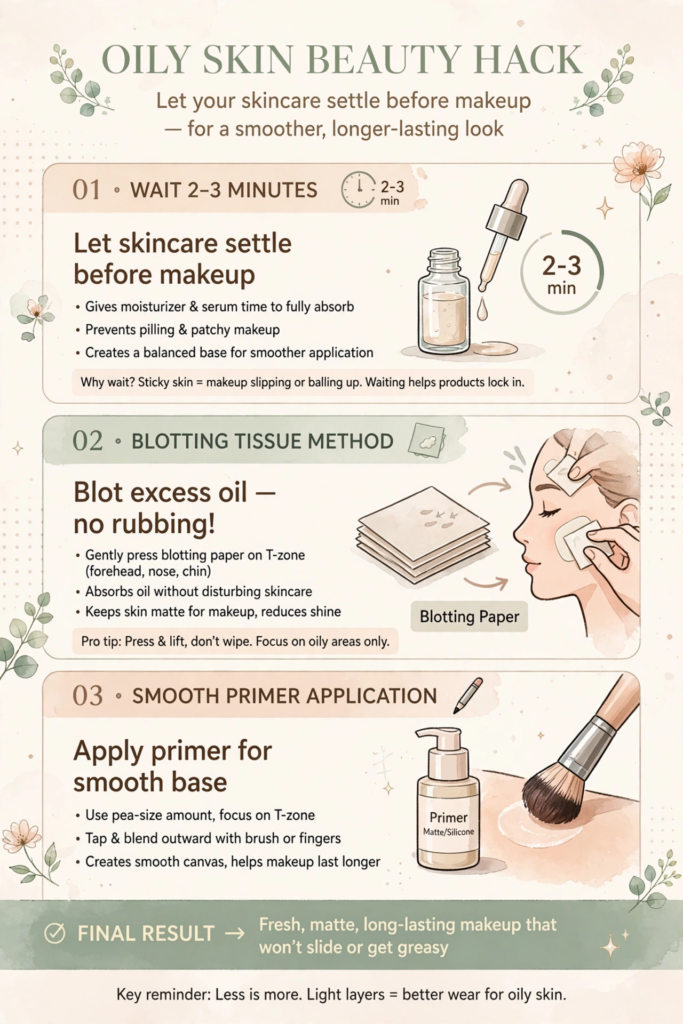
3. One of the Best Beauty Hacks for Oily Skin: Let Skincare Settle
One of the most common oily skin mistakes is going from a wet moisturizer to your primer and makeup.
Instead, let your skin absorb the products you’ve applied before putting any makeup on. If your face looks oily before you start applying your makeup, blot away some of the oil with some tissue paper or your fingers instead of putting more powder on your face.
This will give you an even surface to apply your primer and foundation.
If you’re just starting out, check out our guide to Beginner Makeup Kit on a Budget: What You Actually Need for a simple list of essential products without overspending.
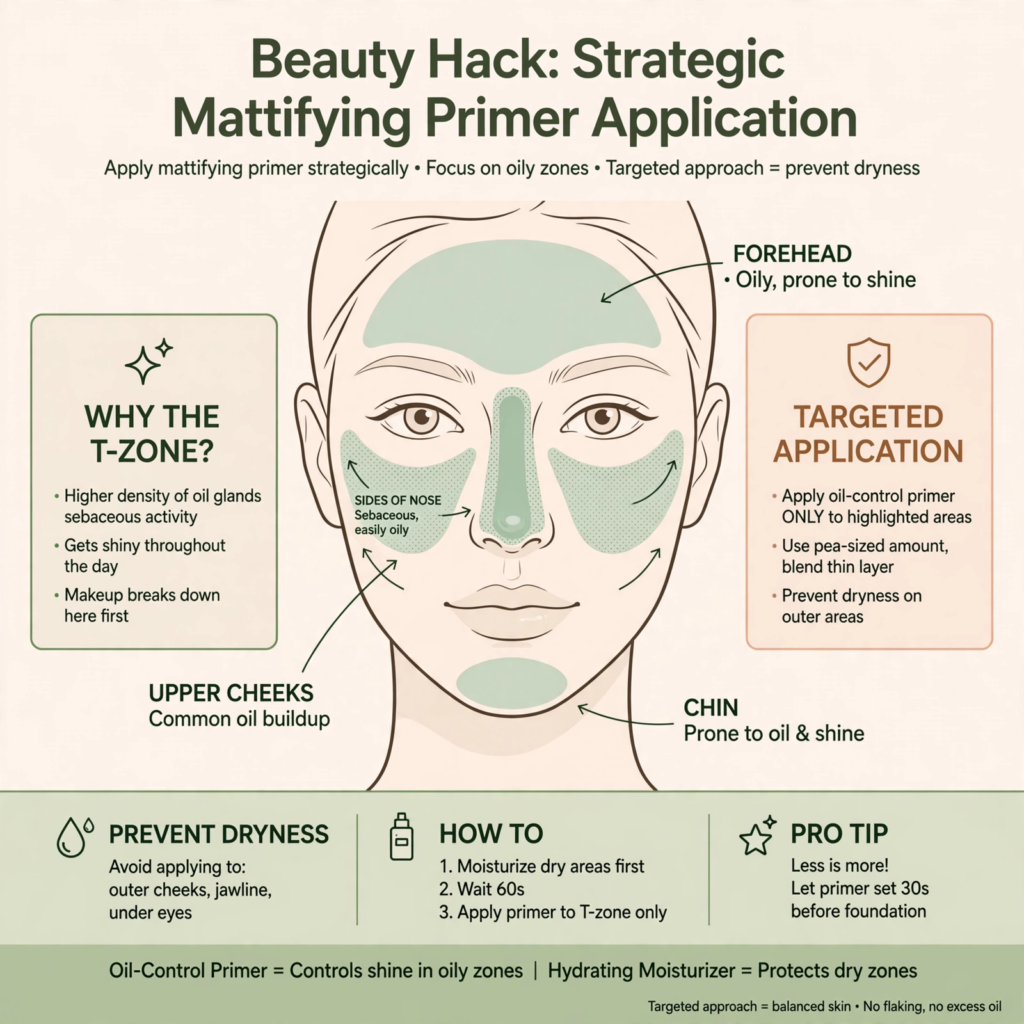
4.Beauty Hacks for Oily Skin: Apply Mattifying Primer Strategically
A mattifying primer can be useful, but you don’t necessarily need it across every inch of your face.
Focus on the places where makeup breaks down first:
- Forehead
- Nose
- Around the sides of the nose
- Chin
- Upper cheeks, if they become oily
This targeted approach can help prevent the rest of your complexion from becoming unnecessarily dry or overly powdered.
Look for products described as mattifying, oil-control, oil-free, or non-comedogenic when those characteristics suit your skin.
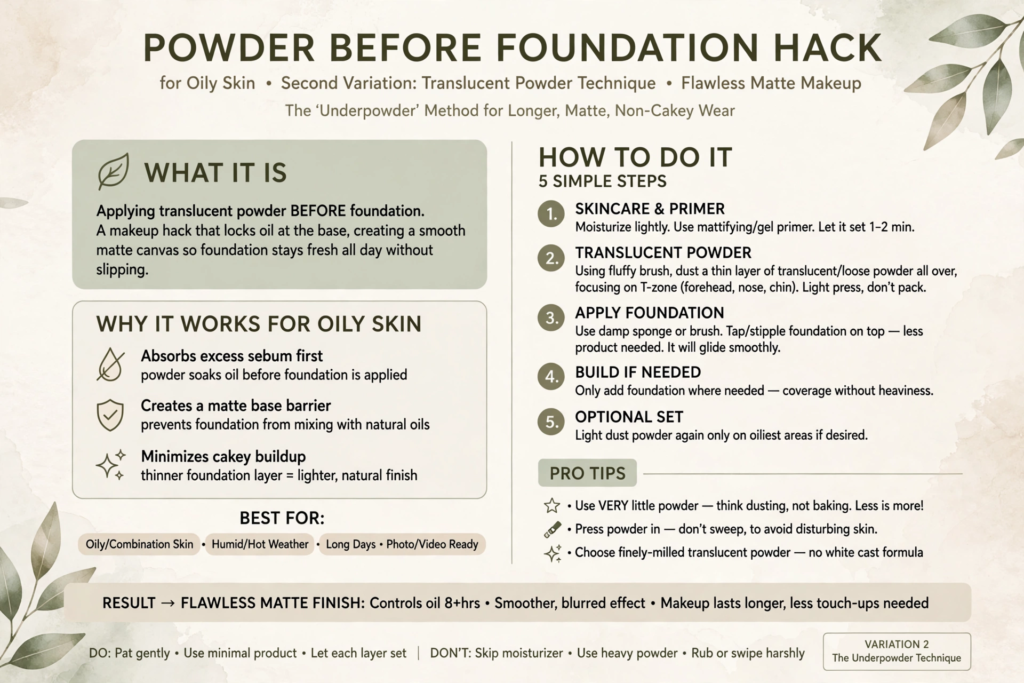
5.Beauty Hacks for Oily Skin: Try the Powder-Before-Foundation Trick
One of the more interesting techniques found across oily-skin makeup sources is applying a very light layer of translucent powder before foundation.
The idea is to use a small amount of powder over particularly oily areas after primer and before foundation.
Don’t bake your entire face.
Use a fluffy brush or puff and apply just enough to take away excess surface slip. Too much powder underneath foundation can make the base look heavy or uneven.
This technique is best treated as an optional experiment. If your foundation already wears well without it, there’s no reason to add another layer.
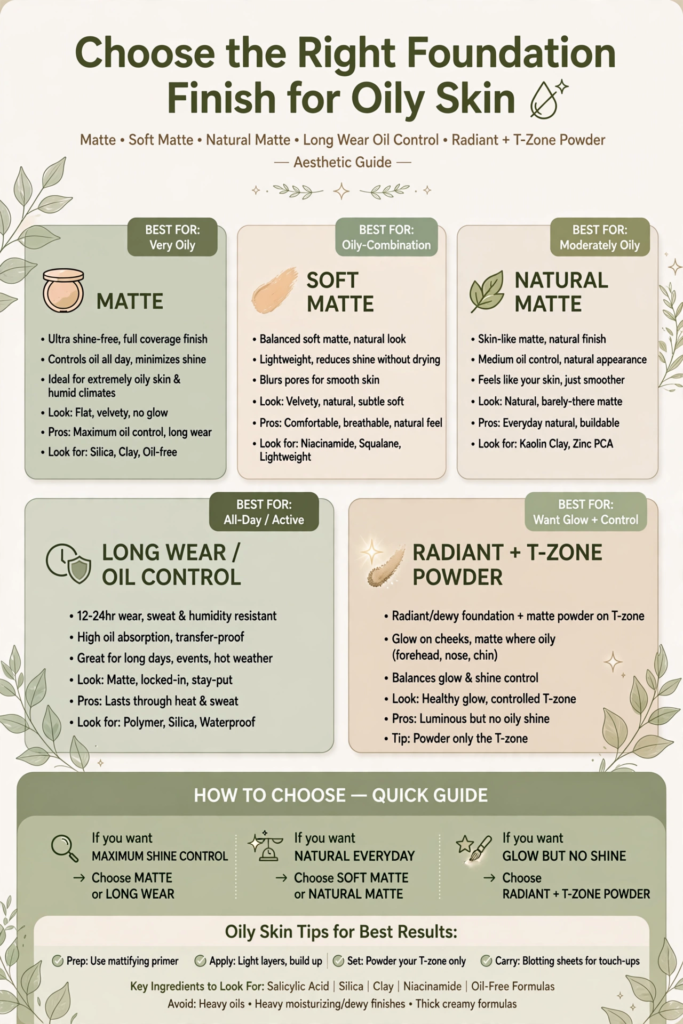
6. Beauty Hacks for Oily Skin: Choose the Right Foundation Finish
If shine is your biggest concern, a natural-matte or matte foundation can make maintenance easier.
Look for terms such as:
- Matte
- Soft matte
- Natural matte
- Long-wear
- Oil-control
However, completely matte makeup isn’t mandatory.
If you prefer a more natural or radiant finish, you can use a less-matte foundation and control shine with targeted powder around the T-zone.
Current makeup trends also leave room for natural, radiant finishes, so oily skin doesn’t automatically mean you have to eliminate every trace of glow.
7. Beauty Hacks for Oily Skin: Apply Foundation in Thin Layers
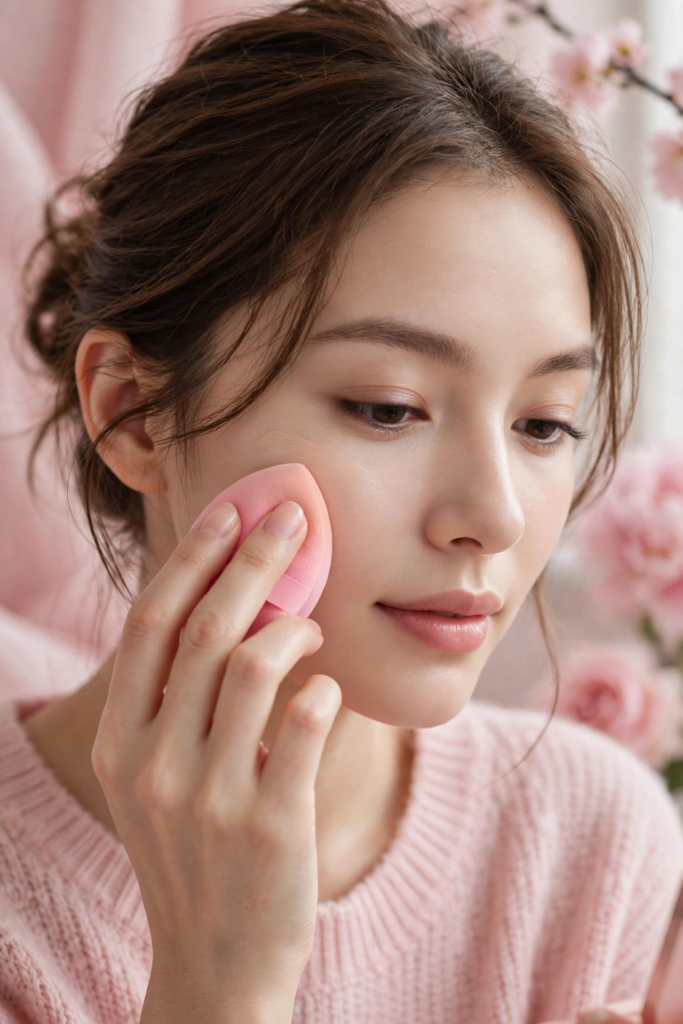
More is not necessarily better. Apply a small amount and build the coverage according to your needs.
The product can oxidize and leave unwanted color when mixed with oil, so try to leave the foundation lighter and apply additional coverage where it is needed most.
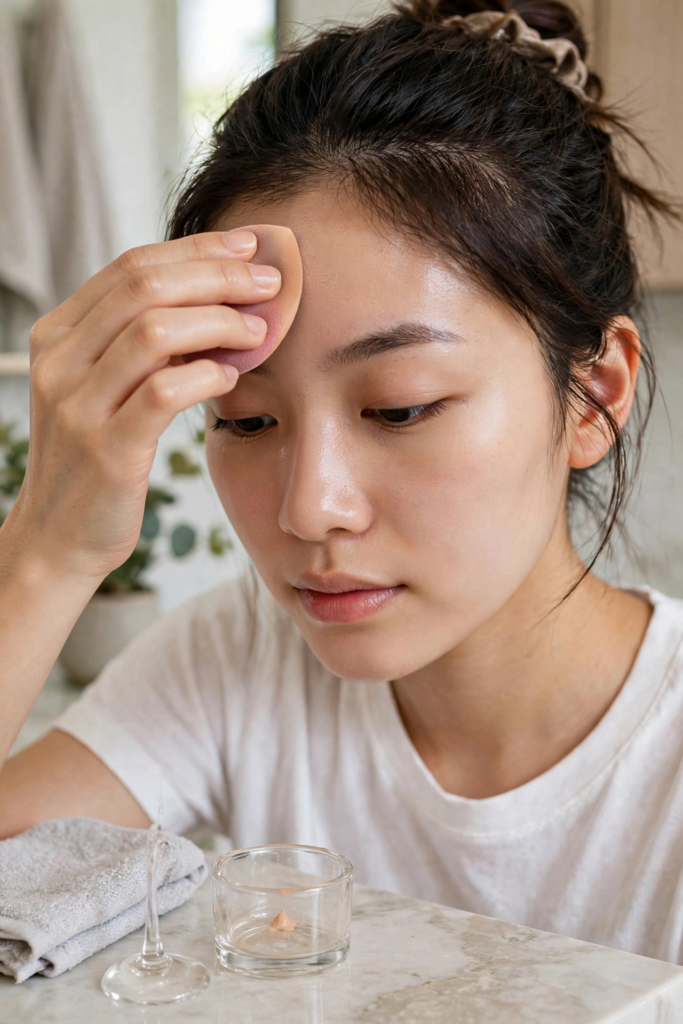
Use a brush, a sponge or any other tool of your choice to apply the product and avoid rubbing it into the skin if you have already achieved the desired coverage.
8. Beauty Hacks for Oily Skin: Set Oily Areas With Powder
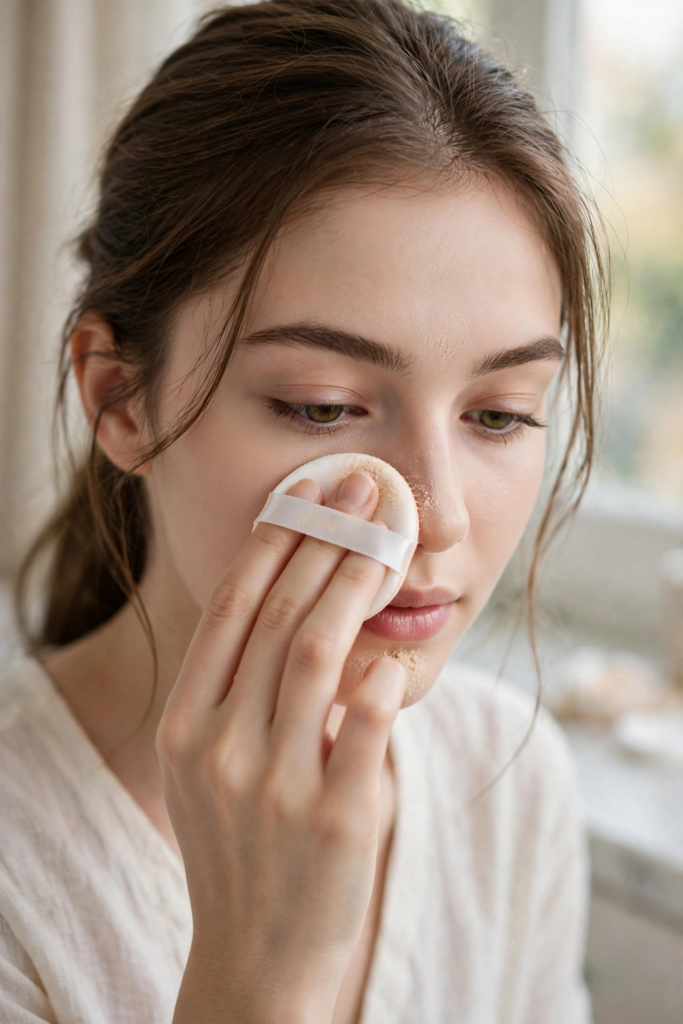
After foundation and concealer, use setting powder where you need additional oil control.
The T-zone is usually the obvious starting point:
- Center of the forehead
- Nose
- Around the nose
- Chin
If your cheeks become oily too, add powder there.
You don’t have to powder every part of your face equally.
A light layer is usually easier to maintain than a thick layer. Pressing powder into the skin with a puff can provide more targeted application, while a fluffy brush can give a lighter finish.
9. Keep highlighter strategic
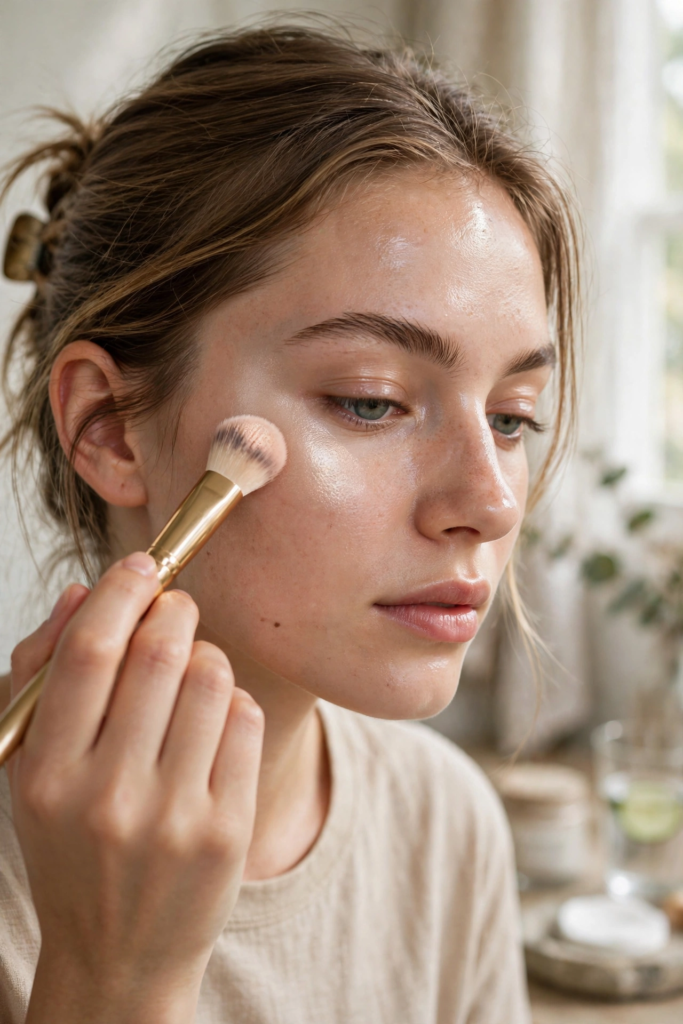
Having oily skin doesn’t mean you have to forgo highlighters.
It’s all about finding the difference between wanted shine and unwanted oil.
You don’t want to apply a glossy product everywhere, so stick to applying it in certain points like the tops of your cheekbones.
If your nose and your forehead tend to shine naturally, it’s probably best to avoid applying highlighter there.
That way, you can have wanted shine in certain parts while keeping other parts matte.
10. Beauty Hacks for Oily Skin: Set the Finished Look
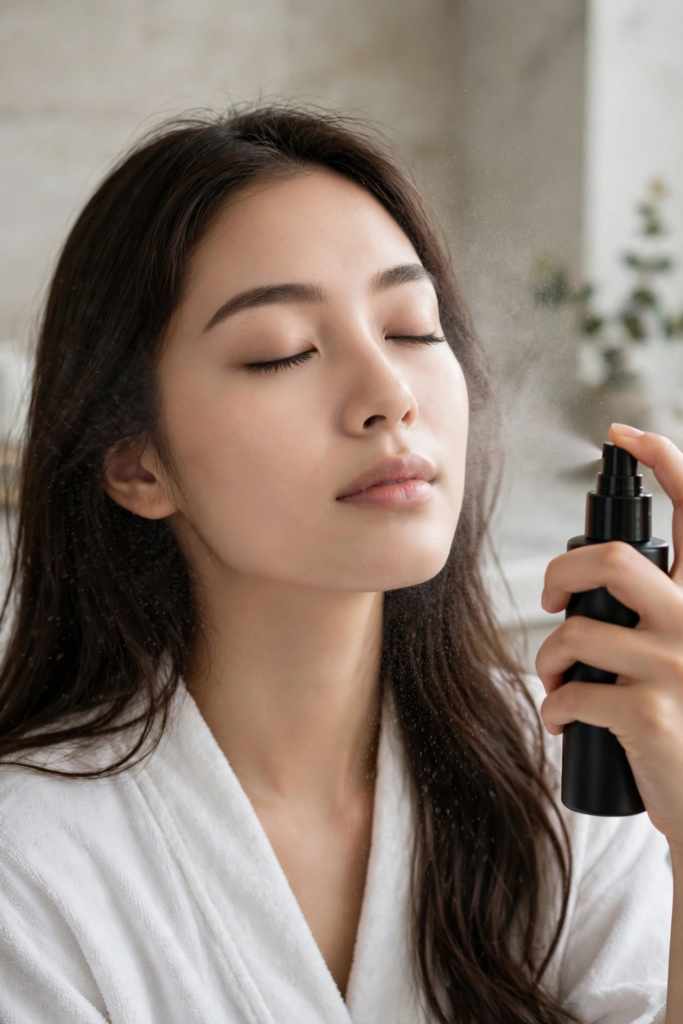
Setting spray can also be used as the last step, to set the makeup in place, especially when you know it will slide around during the day.
If you want a matte finish, use a setting spray that promises to give you this effect.
Just remember, setting spray is not an all-in-one solution to oily skin.
A good combination of skin care and makeup, the right preparation of your skin, using primer and the right kind of foundation, applying some targeted powder and a setting product will give you the best results.
11.Beauty Hacks for Oily Skin: Don’t Keep Adding Powder Throughout the Day
This is one of the easiest ways to turn oily makeup into cakey makeup.
When you see shine at lunchtime, your first instinct may be to grab the powder and keep layering.
Instead, remove excess oil first.
Adding powder directly on top of a layer of oil can make the complexion look thicker and more textured.

12. Beauty Hacks for Oily Skin: Blot Before Touching Up
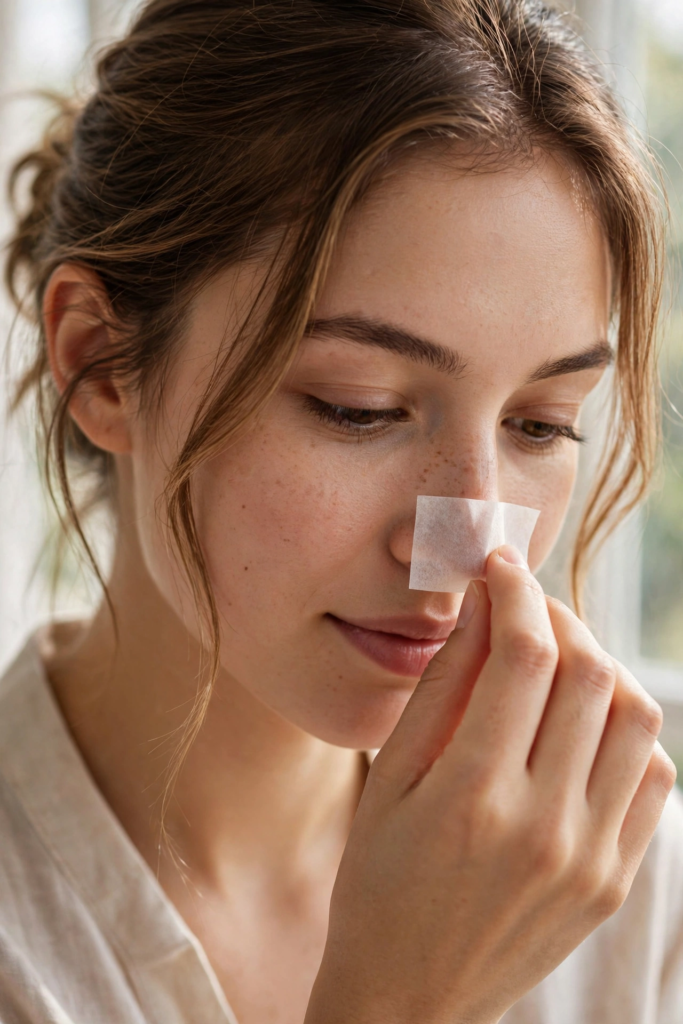
Blotting papers are one of the simplest tools to keep in your purse.
When your face becomes shiny:
- Take a blotting sheet.
- Press it gently against the oily area.
- Lift it away.
- Repeat on another area if needed.
- Add a small amount of powder only if you still need it.
Don’t rub the sheet across your face.
The goal is to remove excess surface oil without disturbing the foundation underneath.
13. Beauty Hacks for Oily Skin: Use Less Product Where Oil Breaks Makeup Down
If foundation is constantly coming off your nose, chin, or forehead, applying more may not be an option.
Try using less of it on those specific areas instead.
A thin layer is easier to manage than a heavy application.
It also allows you to add concealer to spot cover any bare spots, and it makes it easier to touch up your makeup later in the day if it does come off.
14. Keep your makeup tools clean
Brushes, sponges, and puffs come into repeated contact with your skin and makeup.
Clean them regularly according to the care instructions for the particular tool and product.
This is especially important if you’re dealing with oily or acne-prone skin. Dermatologists also recommend choosing non-comedogenic makeup and skincare if clogged pores are a concern.

15. Build a K-beauty-inspired oily-skin routine
So, what do Koreans use for oily skin?
There isn’t one universal Korean routine or product that every Korean person uses. However, current K-beauty coverage commonly emphasizes lightweight hydration, gentle cleansing, targeted oil control, and thin base makeup rather than simply stripping the skin.
For makeup, that can translate into:
- Lightweight skincare
- A pore-blurring or mattifying primer where needed
- A thin cushion or foundation layer
- A small amount of setting powder on oily areas
- A powder puff for precise application
- Blotting papers for touch-ups
Current Asian-beauty community discussions also frequently mention sebum-control powders, with Innisfree No-Sebum Mineral Powder appearing repeatedly in recent oily-skin discussions. Those are user experiences, not evidence that the product works for everyone.
The broader K-beauty approach is useful for one reason: it reinforces the idea that oil control doesn’t have to mean dehydrating your skin. Current K-beauty coverage similarly emphasizes balancing hydration and sebum management.
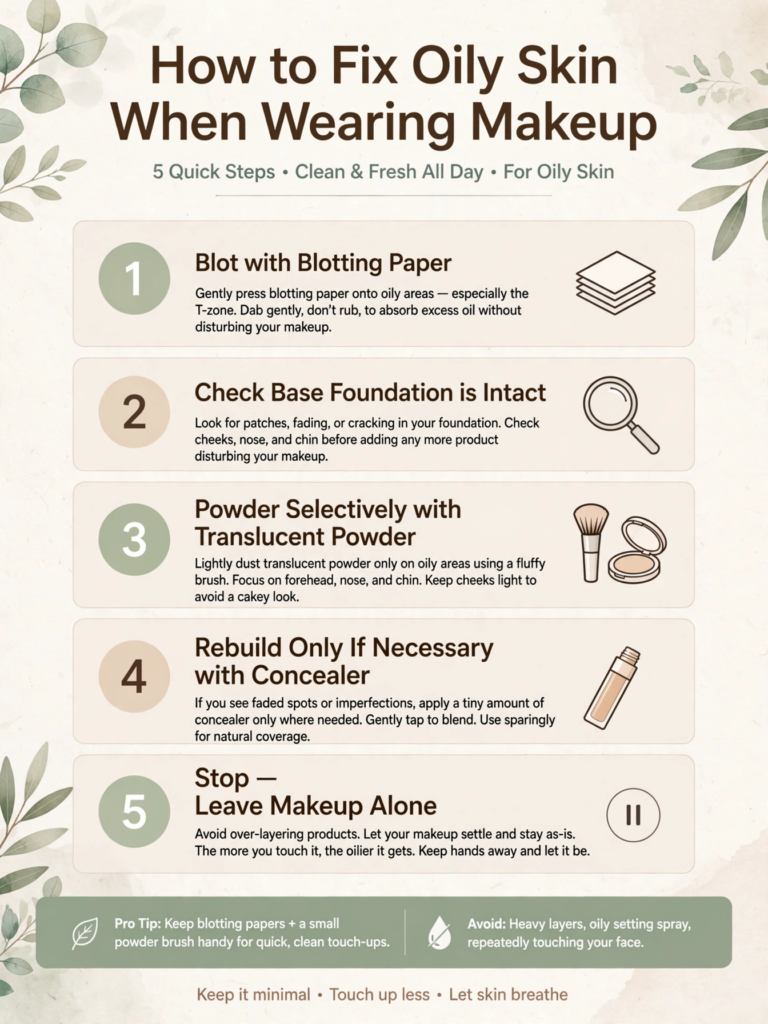
How to fix oily skin when wearing makeup
If you’re already wearing makeup and suddenly notice that your face looks greasy, don’t start your entire makeup routine again.
Try this quick rescue method:
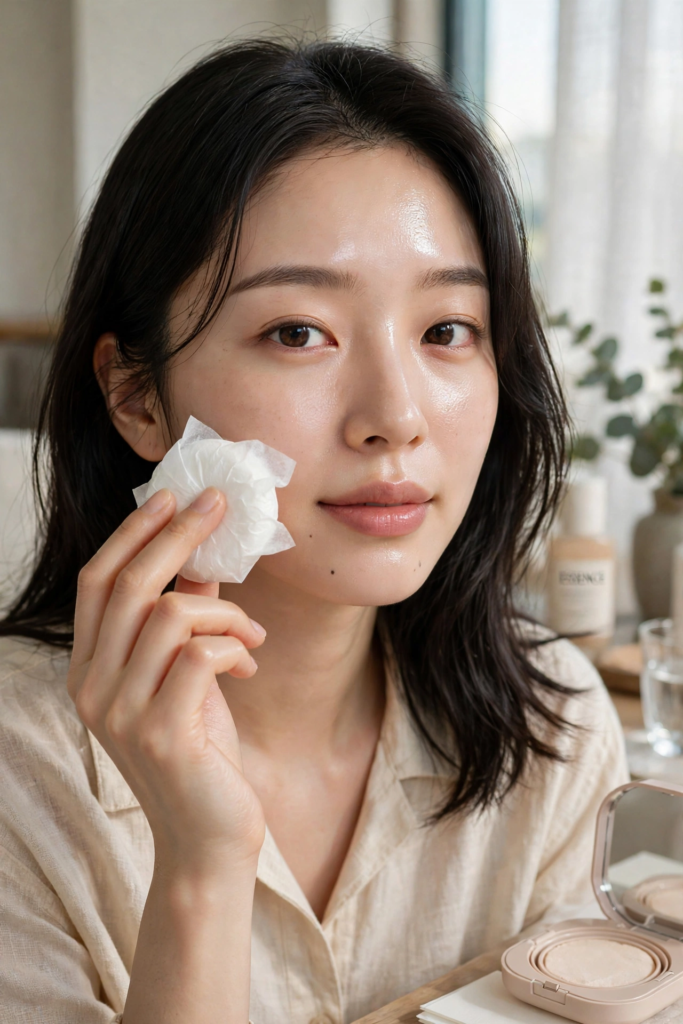
Step 1: Blot.
Press blotting paper onto the oily areas.
Step 2: Check your base.
If the foundation is still intact, don’t disturb it.
Step 3: Powder selectively.
Press a small amount of translucent or pressed powder onto the shiny areas.
Step 4: Rebuild only if necessary.
If foundation has separated or disappeared, use a tiny amount of foundation or concealer only on the affected spot.
Step 5: Stop.
Once the shine is controlled, leave the makeup alone.
This approach prevents the classic cycle of oil → powder → more texture → more foundation → even more texture.
What makeup tricks work best for oily skin?
The most useful tricks are the ones that reduce the amount of oil and makeup you have to fight with later.
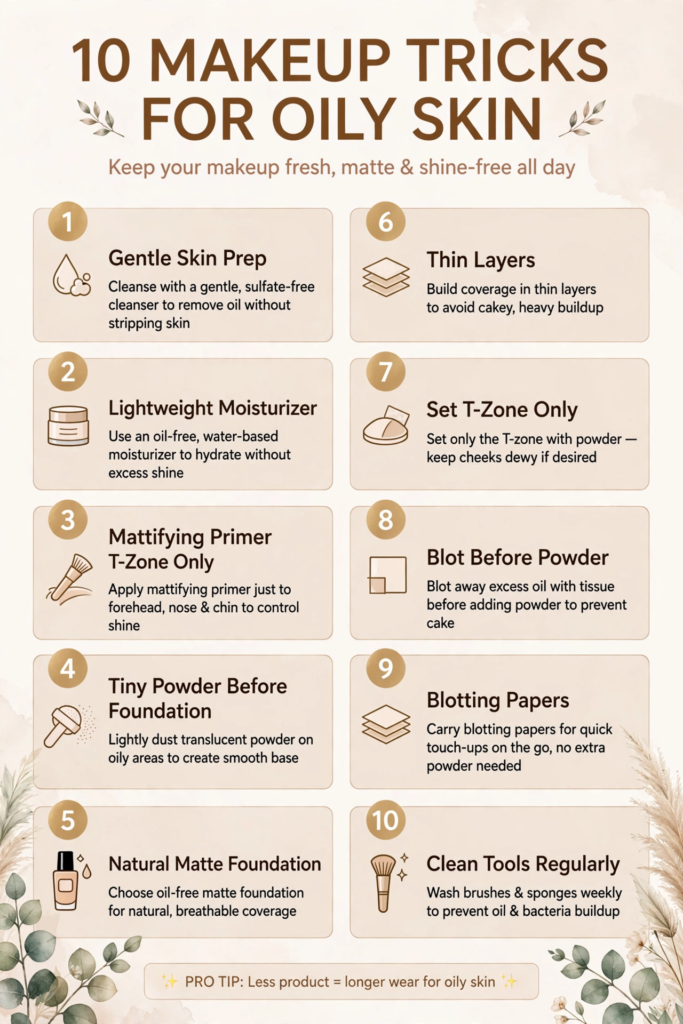
Try these first:
- Use gentle skin prep.
- Don’t skip lightweight moisturizer.
- Apply mattifying primer only where necessary.
- Experiment with a tiny amount of powder before foundation.
- Choose a natural-matte or matte foundation if you prefer a less shiny finish.
- Apply foundation in thin layers.
- Set the T-zone instead of automatically powdering your entire face.
- Blot before adding more powder.
- Keep blotting papers with you.
- Clean your makeup tools regularly.
You don’t need to use every trick at once. Start with the few that solve your biggest problem.
If your makeup goes from fresh and pretty in the morning to greasy, smeared, and patchy by lunch, the issue might not be your foundation, but rather your oily-skin makeup routine. These beauty hacks for oily skin can help, especially when paired with a gentle skincare approach like the one recommended by Lab Muffin Beauty Science.
Common oily-skin makeup mistakes to avoid
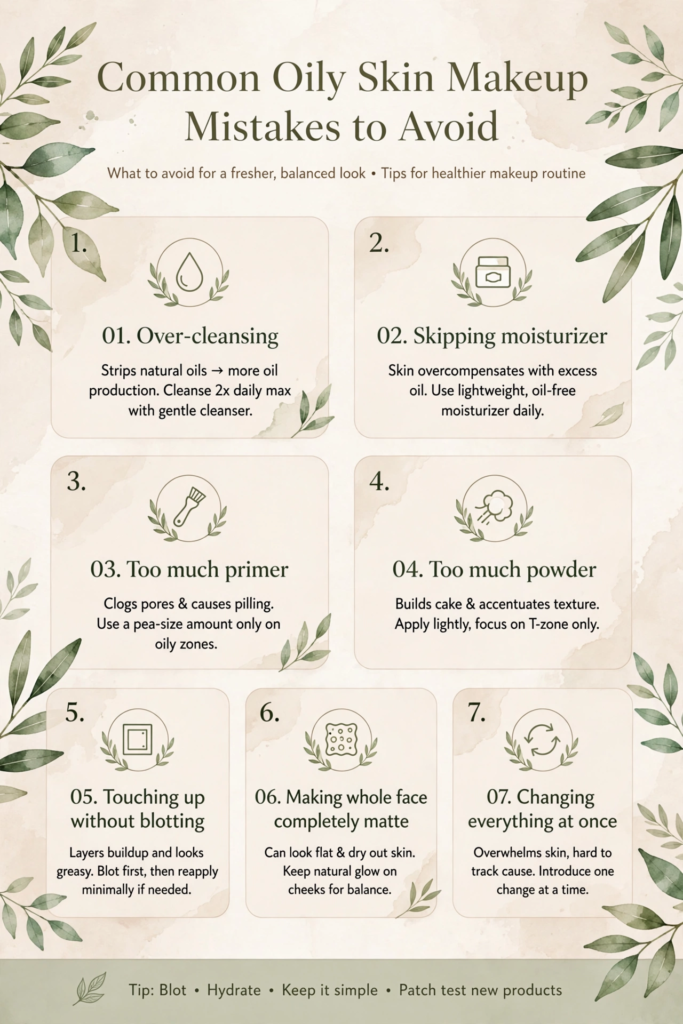
Over-cleansing
Trying to remove every trace of oil can leave your skin irritated and uncomfortable. Dermatologists recommend gentle cleansing rather than aggressive scrubbing.
Skipping moisturizer
Oily skin can still need hydration. If your skin becomes dry or irritated, the routine may become harder to manage.
Using too much primer
Primer should create a better surface for makeup, not become another thick layer underneath it.
Applying too much powder
More powder isn’t always more oil control. Too much can emphasize texture and make touch-ups difficult.
Touching up without blotting
If oil is already sitting on your makeup, powdering directly over it can create a heavier finish.
Making the whole face completely matte
You can control shine without eliminating all dimension from your complexion. Strategic powder and highlighter placement can give you a more natural result.
Changing everything at once
If you introduce a new cleanser, moisturizer, primer, foundation, powder, and setting spray simultaneously, it becomes difficult to know what is helping or irritating your skin.
Change one or two variables at a time.
The bottom line
The best makeup routine for oily skin isn’t necessarily the one with the most oil-control products. It’s the one that gives you enough control to keep your makeup intact without making your complexion look heavy or uncomfortable.
Start with gentle skin prep, use lightweight hydration, target oily areas with primer and powder, apply foundation in thin layers, and blot before you reach for more makeup.
And if you prefer a more natural finish, you don’t have to fight your skin’s natural dimension. The goal is controlled shine—not necessarily a completely flat, powdery complexion.
FAQs
What are some makeup tricks for oily skin?
Use a lightweight moisturizer, apply mattifying primer where you get oily, use thin layers of foundation, set the T-zone with powder, and blot excess oil before touching up. A very light layer of translucent powder before foundation can also be tested on particularly oily areas.
How do I stop my face from being oily with makeup?
You can’t necessarily stop your skin from producing oil, but you can make shine less noticeable. Start with appropriate skin prep, use an oil-control or mattifying primer, choose a suitable foundation finish, set oily areas with powder, and blot before adding more makeup.
What do Koreans use for oily skin?
There is no single product or routine used by everyone in Korea. K-beauty routines commonly emphasize lightweight hydration, gentle cleansing, targeted oil control, thin base makeup, setting powder, and touch-up products such as blotting papers. Recent Asian-beauty discussions frequently mention sebum-control powders, including Innisfree No-Sebum Mineral Powder, but individual experiences vary.
How do you fix oily skin when wearing makeup?
First blot away excess oil rather than immediately applying more powder. Then lightly powder the affected areas. If foundation has broken down, use a small amount of foundation or concealer to repair only those spots instead of reapplying a full layer.
Should oily skin use moisturizer before makeup?
Yes. Oily skin can still become dry or irritated, and dermatologists recommend moisturizing when appropriate. For people concerned about clogged pores, oil-free and non-comedogenic products are useful labels to look for.
Is powder or setting spray better for oily skin?
They do different jobs, and you can use either or both. Powder directly helps reduce visible shine, while setting spray can help finish and hold the makeup. If your biggest problem is midday oil, powder is usually the more direct touch-up tool.
Should you put powder on before foundation if you have oily skin?
You can experiment with a very light layer of translucent powder on particularly oily areas after primer and before foundation. It is not necessary for everyone, and using too much can make the base look heavy.
Why does my makeup get oily after a few hours?
Natural sebum production can eventually make the complexion look shiny and can contribute to foundation breaking down. Your foundation’s finish, skincare underneath, amount of product, climate, sweating, and application technique can all affect how quickly that happens.
How do you touch up oily makeup without making it cakey?
Blot first, then apply a small amount of powder only where needed. Avoid repeatedly layering foundation and powder across the entire face.
Can oily skin wear dewy makeup?
Absolutely. Oily skin doesn’t have to be completely matte. If you want a dewy finish, keep the glow intentional and use powder strategically on areas where natural oil creates unwanted shine.