Building your first makeup collection can quickly become expensive. That’s why creating a beginner makeup kit on a budget is a smarter way to start. You might begin with mascara, then see primer, contour powder, highlighter, three different palettes, setting spray, six brushes, and a whole drawer of products you may never use.
It is not necessary to buy all of those products.
A practical beginner makeup kit on a budget can start with around six products and grow from there. You don’t need to buy every category of makeup; instead, focus on a few versatile essentials that give you everything you need to create a simple, polished everyday look.
If you’re looking for techniques that create a smoother, more natural finish, see our guide to Makeup That Doesn’t Settle Into Fine Lines: Tips for Mature Skin.
The Short Answer: Start With 6 Makeup Essentials
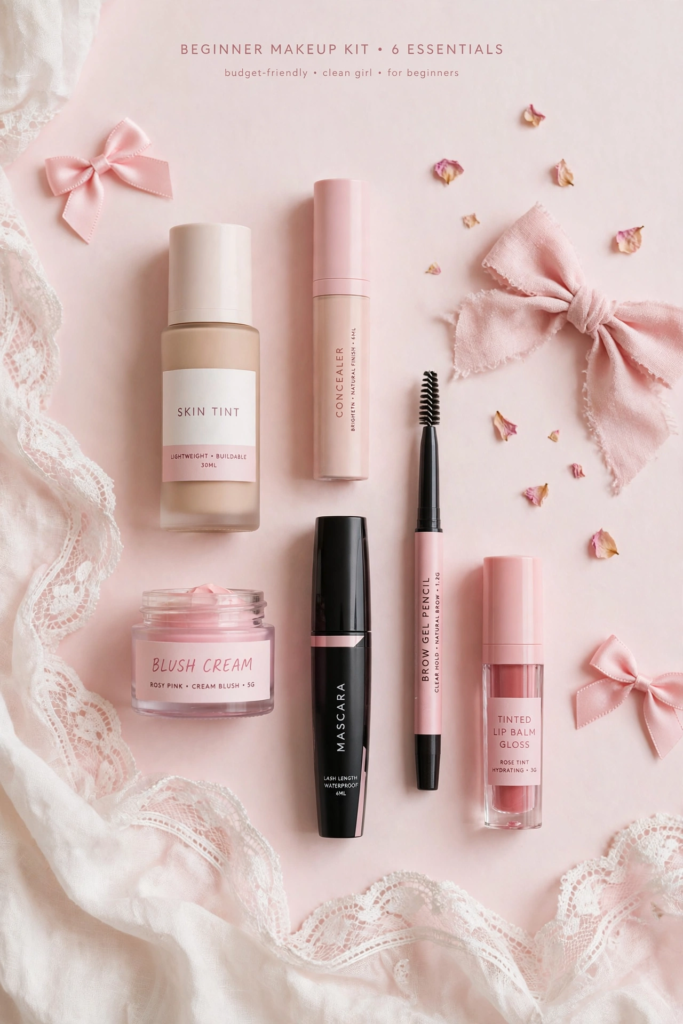
If you’re starting completely from scratch, prioritize these:
- Skin tint, tinted moisturizer, or foundation
- Concealer
- Blush
- Mascara
- Brow gel or brow pencil
- Tinted lip balm, lipstick, or gloss
That’s enough to do a natural everyday look.
If there is the budget, setting powder and a small, neutral shade, eyeshadow palette would be a good addition.
Primer, bronzer, contour, highlighter, setting spray, eyeliner, and multiple lip products can wait though.
The ideal beginner’s kit is not necessarily about what products you get but being able to understand what each product is for and being able to use most of what you bought.
If you prefer lighter coverage, try our guide to a Makeup Routine Without Foundation: Easy Natural Looks for simple ways to create a fresh everyday look without foundation.
Your Complete Beginner Makeup Kit
1. Skin Tint or Foundation for a Beginner Makeup Kit on a Budget
Your base product evens out your complexion and gives the rest of your makeup a more finished appearance.
For a first kit, you have several choices:
- Skin tint: Usually a lighter, more casual option
- Tinted moisturizer: Useful when you want light coverage and a comfortable feel
- Foundation: Better when you want more coverage or a more perfected finish
You don’t need all three.
If you want natural makeup, start with a tinted moisturizer or light foundation. If you plan on doing more heavy coverage for special occasions, try a buildable base.
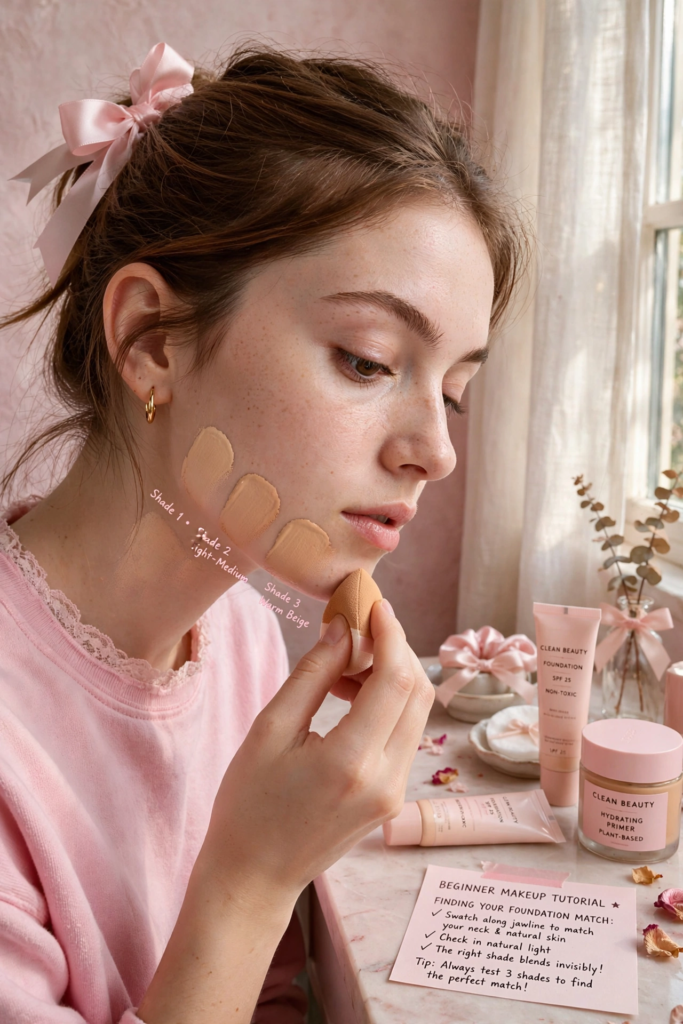
When purchasing foundation, it is best to avoid wasting money on expensive products. Try spending a little more time finding the shade that suits you best, instead of buying a costly shade that doesn’t suit you at all.
To find the right shade, match the shade along your jaw line while in natural lighting. The goal is to have your makeup appear natural, and not have a clear line between your makeup and neck.
If your base makeup looks heavy or uneven, read Why Does My Foundation Look Cakey? 9 Mistakes and How to Fix Them to find common causes and practical fixes.
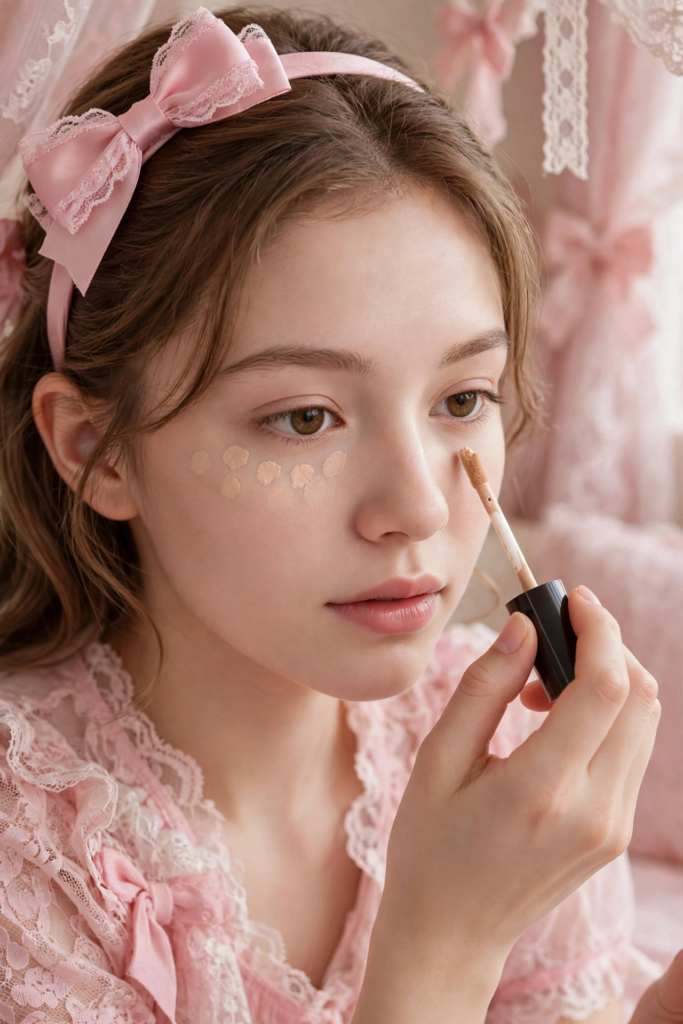
2. Concealer for a Beginner Makeup Kit on a Budget
Concealer is useful for areas that need a little extra coverage after your base is applied.
You can use it for:
- Under-eye darkness
- Redness around the nose
- Individual blemishes
- Small areas of uneven pigmentation
You may not need a very high coverage concealer. Novices tend to have it easier with a concealer that requires blending, rather than heavy coverage.
Apply it in small amounts. You can always add more, but there’s no way to remove the excess once it’s on your face.
Money saving tip: if you use a foundation that has enough coverage for you, you’ll probably need less concealer. If you like to wear light foundations, chances are you’ll rely on concealer to spot cover your blemishes.
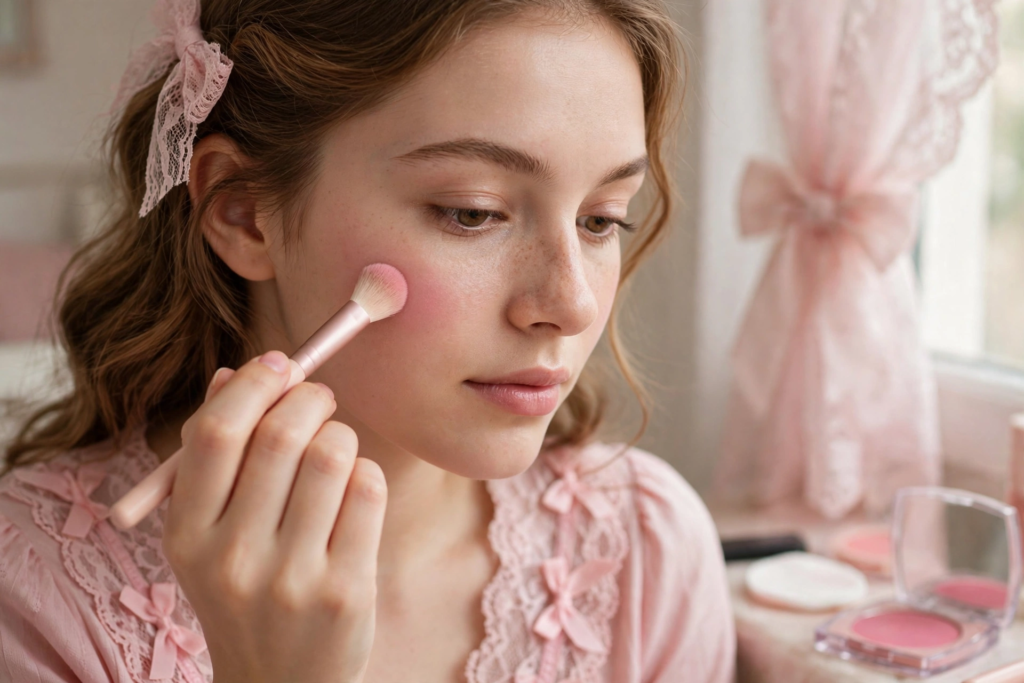
3.Blush for a Beginner Makeup Kit on a Budget
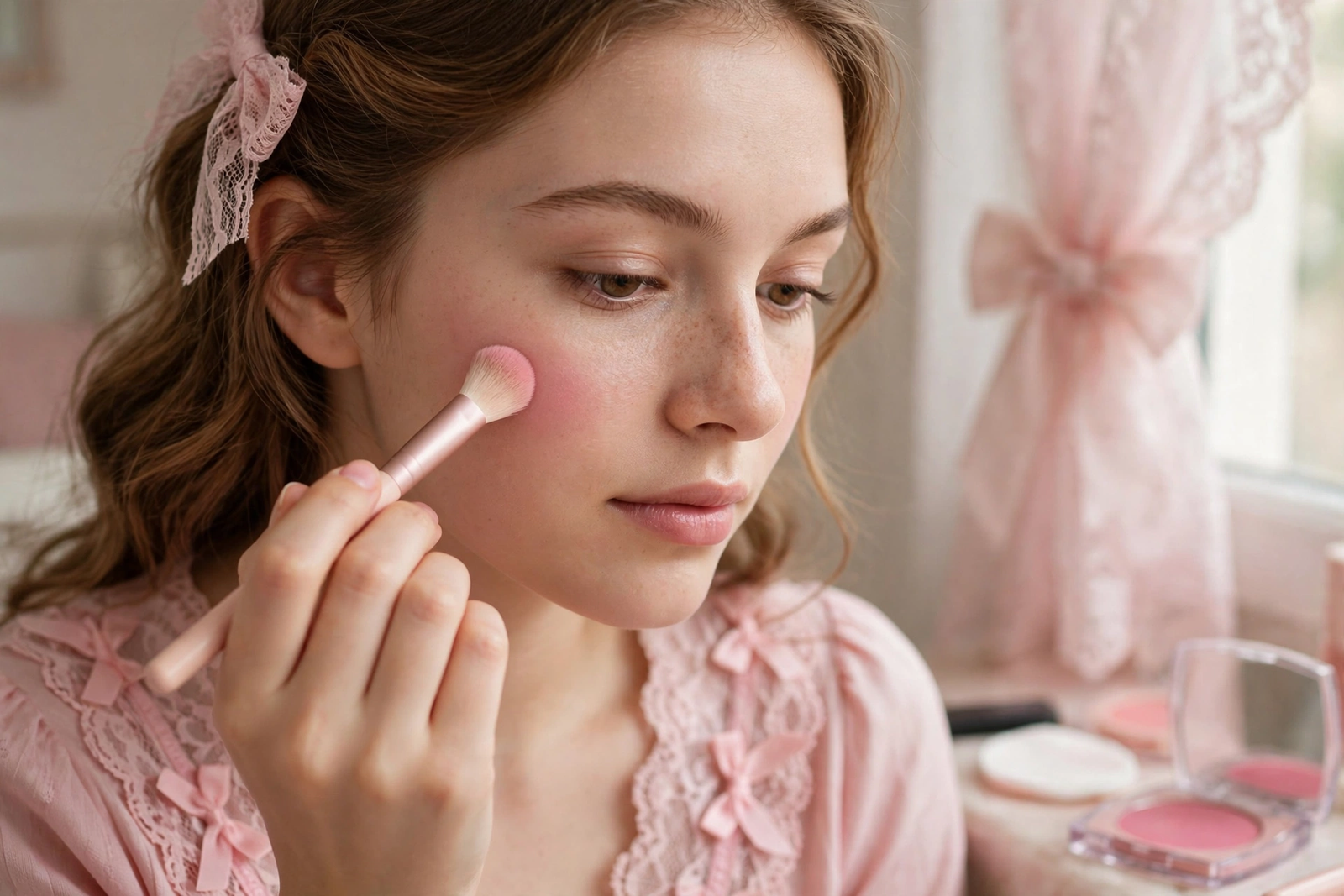
The blush is one of the easiest tools to restore the color of the face after using complexion cosmetics.
For the first blush, go for the shade that will look nice with the everyday makeup. In this case, the pink, peach, rose, mauve, or another color in a subtle version will suit best, depending on the undertone of your skin.
The cream texture is perfect for those who like to apply the product with their fingers, while powder ones are portable and can be used with a mini brush.
Do not worry about having different shades for summer and winter seasons.
As a beginner, it is better to start with one shade that becomes a favorite among your cosmetics.
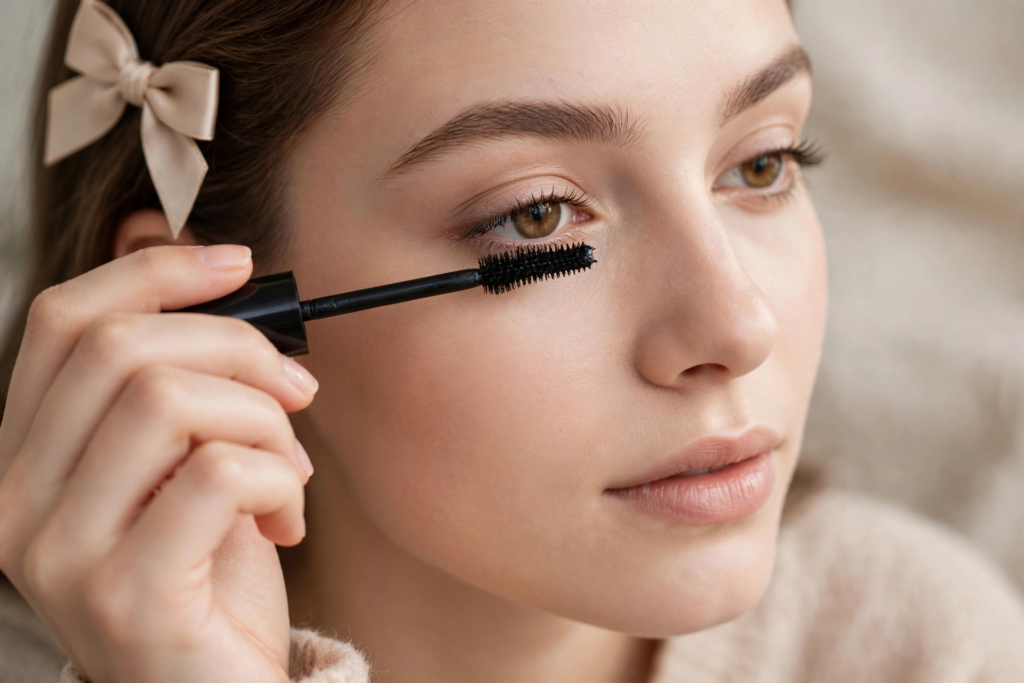
4. Mascara for a Beginner Makeup Kit on a Budget
Mascara can make the eyes look more defined without requiring advanced technique.
For your first mascara, think about the effect you want:
- Lengthening: Emphasizes lash length
- Volumizing: Creates a fuller appearance
- Defining: Separates and darkens lashes
- Water-resistant or waterproof: Useful when longevity or moisture resistance is important
You do not need to use a couple of different formulas.
Make sure to keep the wand controlled while applying, and do not pump it in and out of the tube. If the product begins to dry out, do not add water or saliva, follow the manufacturer’s instructions. Eye makeup requires special hygiene. The FDA advises against sharing eye cosmetics and reminds that manufacturers usually recommend disposal after a short period of use due to the risk of bacteria and fungi that can grow after multiple applications.
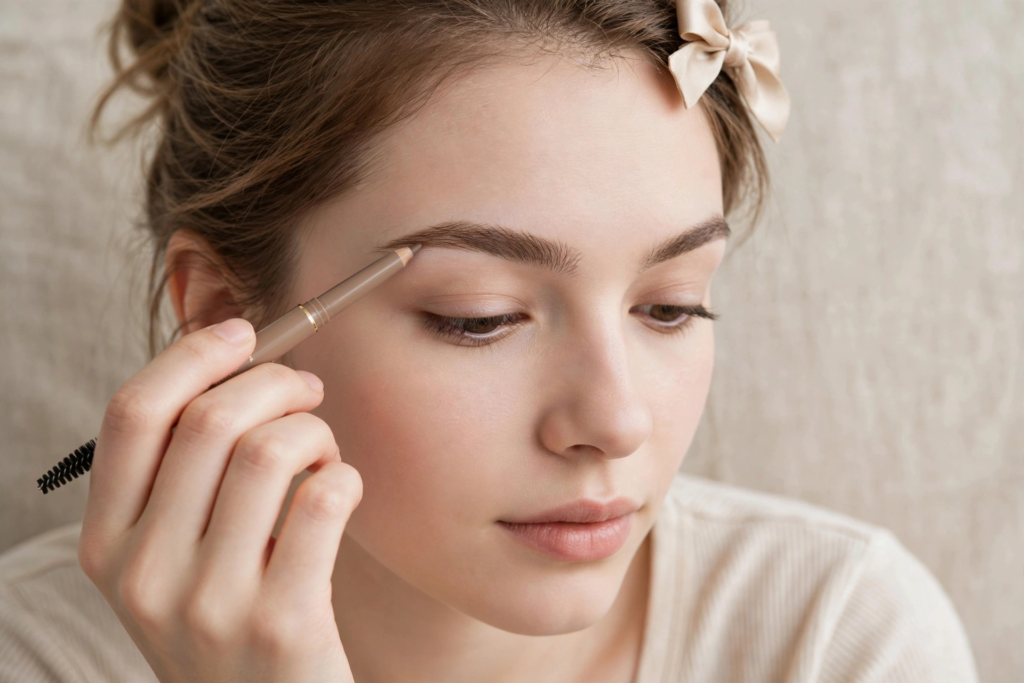
5. Brow Gel or Brow Pencil for a Beginner Makeup Kit on a Budget
Brows can frame the face, but you don’t need to develop an elaborate brow care regimen to get started.
Let’s discuss the options based on how much correction you feel like you need.
Brow gel is your best option if you have brows you’re generally happy with but want to groom or enhance them slightly
Brow pencils are a better option if you notice small spaces you want to fill or need a little more definition.
And when applying, remember to use light strokes in the direction of your brow rather than filling the space in one solid motion.
If you have full brows already, you might find that you simply don’t need a brow product at all.
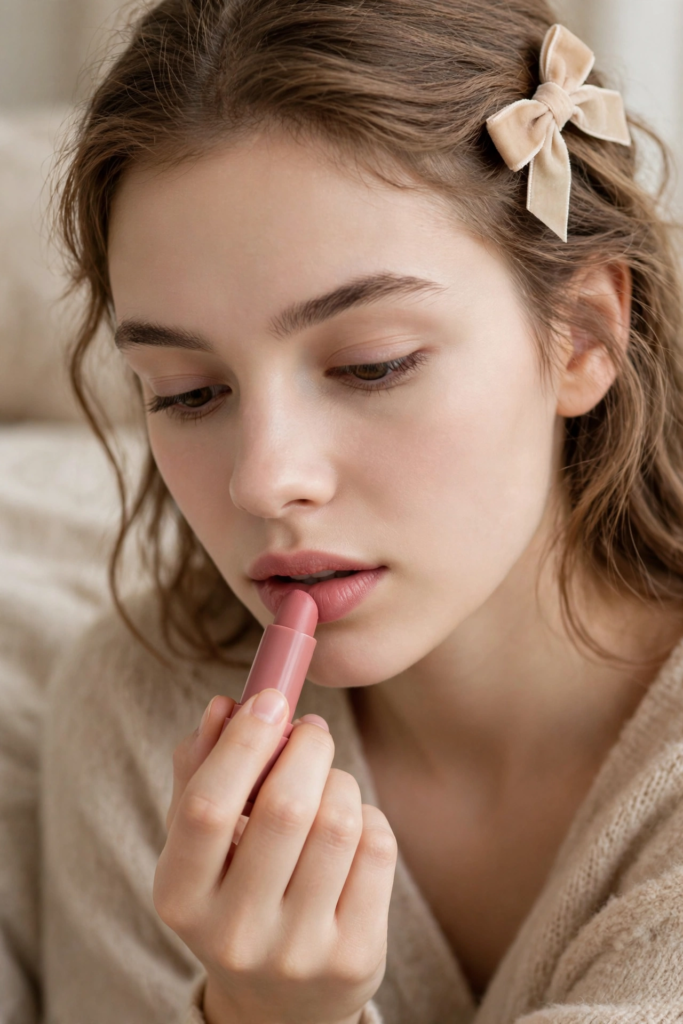
6. Tinted Lip Balm, Lipstick, or Gloss for a Beginner Makeup Kit on a Budget
A lip product gives you an easy way to add color without requiring complicated application.
For a first purchase, consider:
- Tinted balm for the easiest everyday option
- Gloss for shine
- Sheer lipstick for more color
- Cream lipstick for a comfortable, traditional lip look
Choose a shade you can imagine wearing regularly rather than buying the boldest color simply because it looks exciting in the package.
A neutral pink, rose, mauve, berry, brown, or your own preferred everyday shade can become the product you reach for most often.
Add These Next: Setting Powder and Neutral Eyeshadow
Once your six basics are covered, you can expand your kit.
7. Setting Powder for a Beginner Makeup Kit on a Budget
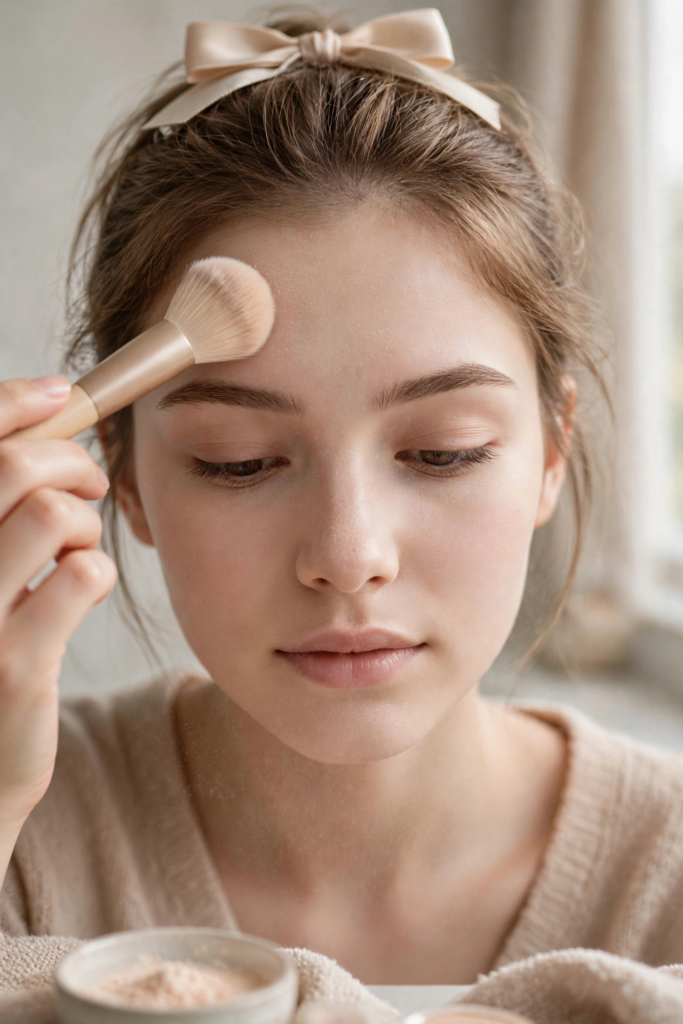
Setting powders are great if you’re someone whose makeup tends to get shiny, slides off during the day, or needs more staying power in specific places.
But they aren’t for everyone.
If you have dry skin and like to look fresh-faced, you might not need much (or any!) powder. If you tend to get oily in your T-zone, you can just lightly dust your forehead, nose, and chin with powder.
You don’t have to use setting powders on your entire face just because you have them, y’know?
8.A Small Neutral Eyeshadow Palette for a Beginner Makeup Kit on a Budget
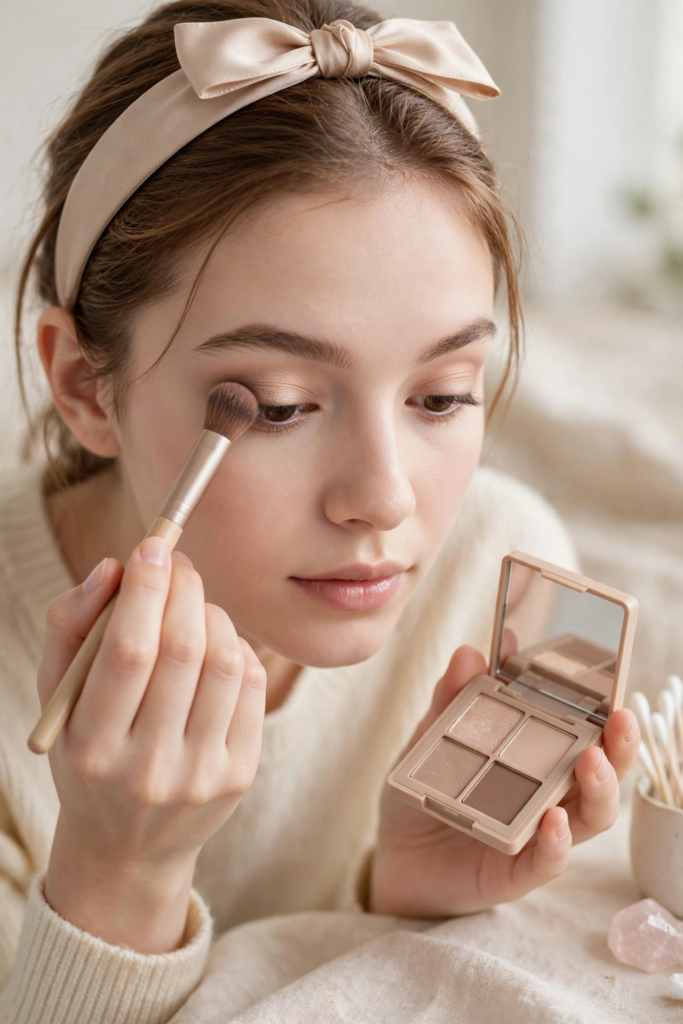
A beginner doesn’t need a huge 30- or 40-shade palette.
A small palette with a few wearable shades can teach you the basics of:
- Lid color
- Crease definition
- Outer-corner depth
- Simple blending
- Soft eyeliner-like definition
Neutral browns, taupes, beige, champagne, and similar shades can give you plenty of everyday combinations.
Start with one or two shades before attempting complicated multi-color looks.
What About Primer, Bronzer, Highlighter and Setting Spray?
These products aren’t bad purchases. They’re simply not priorities for everyone starting out.
Primer
Useful when: Your makeup has a specific issue that primer helps address, such as texture, dryness, or longevity.
Skip for now if: Your moisturizer and base already work comfortably together.
Bronzer
Useful when: You want to add warmth or dimension.
Skip for now if: You’re still learning basic complexion application.
Contour
Useful when: You’re specifically interested in sculpting techniques.
Skip for now if: You want a simple everyday routine.
Highlighter
Useful when: You enjoy adding targeted shine.
Skip for now if: Your budget is tight.
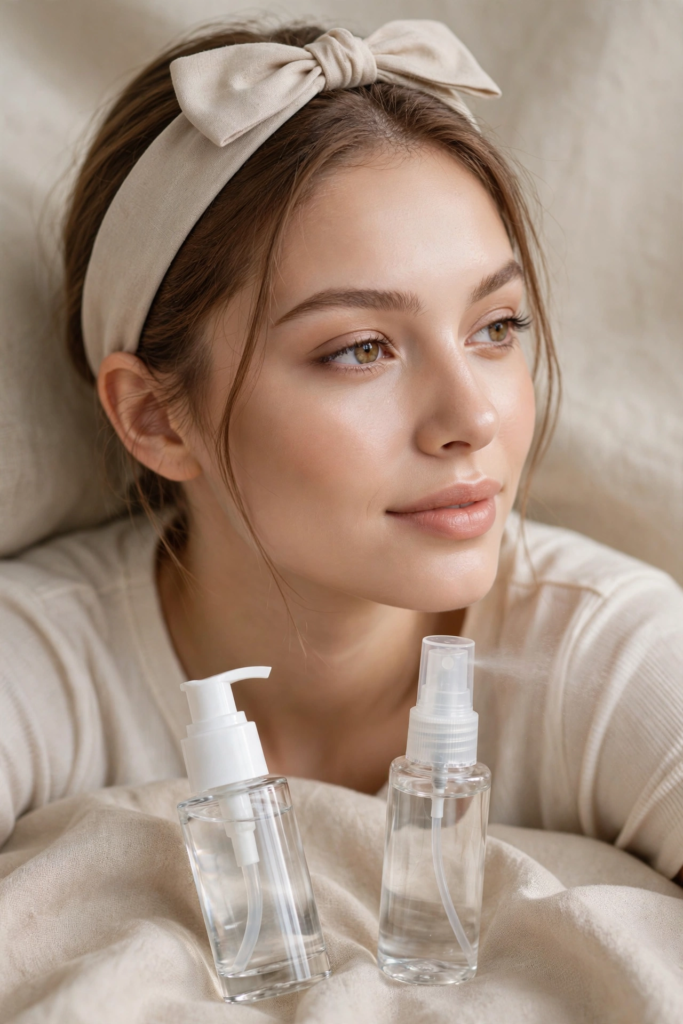
Setting spray
Useful when: You want to modify the finish or help your makeup wear according to the product’s intended use.
Skip for now if: You’re still learning the basics.
The key question isn’t “Do makeup beginners need this?”
It’s:
“Does this product solve a problem I currently have?”
That question can save you a surprising amount of money.
How Much Should a Beginner Spend on a Beginner Makeup Kit on a Budget?
There isn’t one correct budget because prices vary considerably by brand, retailer, sales, and formula.
Instead of promising an exact universal total, think in tiers.
Lean starter kit
Choose approximately six products:
- Base
- Concealer
- Blush
- Mascara
- Brow product
- Lip product
This is the best approach when your budget is especially limited.
Complete everyday kit
Add:
- Setting powder
- Small eyeshadow palette
- One or two basic tools
This gives you more flexibility without turning your makeup bag into a professional kit.
Expanded kit
Only after you’ve used the basics for a while, consider:
- Primer
- Bronzer
- Highlighter
- Eyeliner
- Setting spray
- Additional lip colors
- Additional brushes
Recent beginner discussions show that users often question whether they really need all of these categories, with multipurpose products and smaller collections frequently favored when budgets are limited.
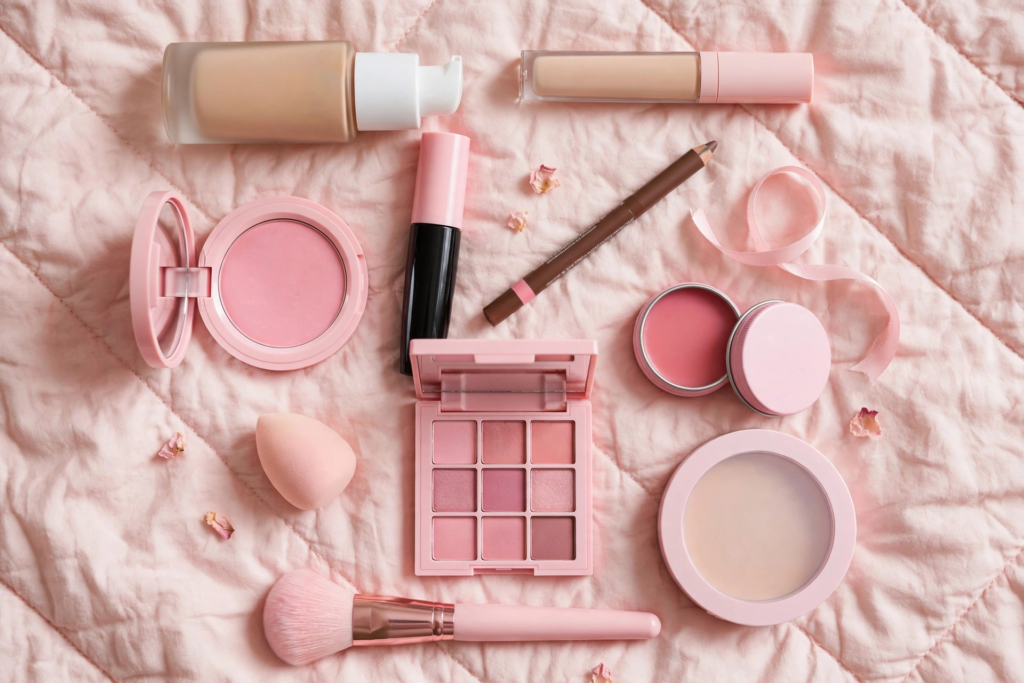
How to Choose Beginner-Friendly Makeup for a Beginner Makeup Kit on a Budget
Price isn’t the only thing that determines whether a product is a good beginner purchase.
Consider your skin type
Think about whether your skin tends to be:
- Dry
- Oily
- Combination
- Normal
- Sensitive
A formula that works beautifully for one person may not feel comfortable on another.
Choose the finish you actually like
Do you want:
- Natural
- Matte
- Satin
- Radiant
- Dewy
Knowing your preferred finish can prevent you from buying products that technically work but never get used.
Look for versatility
A product is more valuable when it fits naturally into several looks.
For instance,
a neutral eyeshadow palette can complement day and evening makeup, a comfortable lip color can suit both bare and more dressed up looks, and a concealer can offer targeted coverage without a heavy full-coverage foundation.
Don’t buy shades because they’re trendy
Trends change.
Your first makeup purchases should primarily support the looks you actually want to wear.
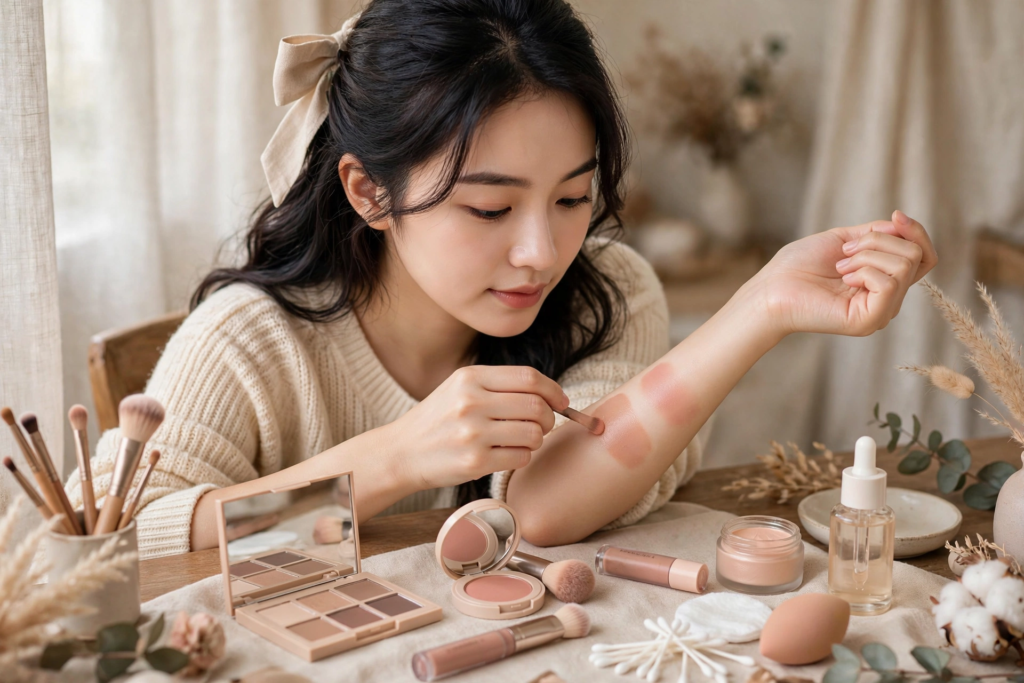
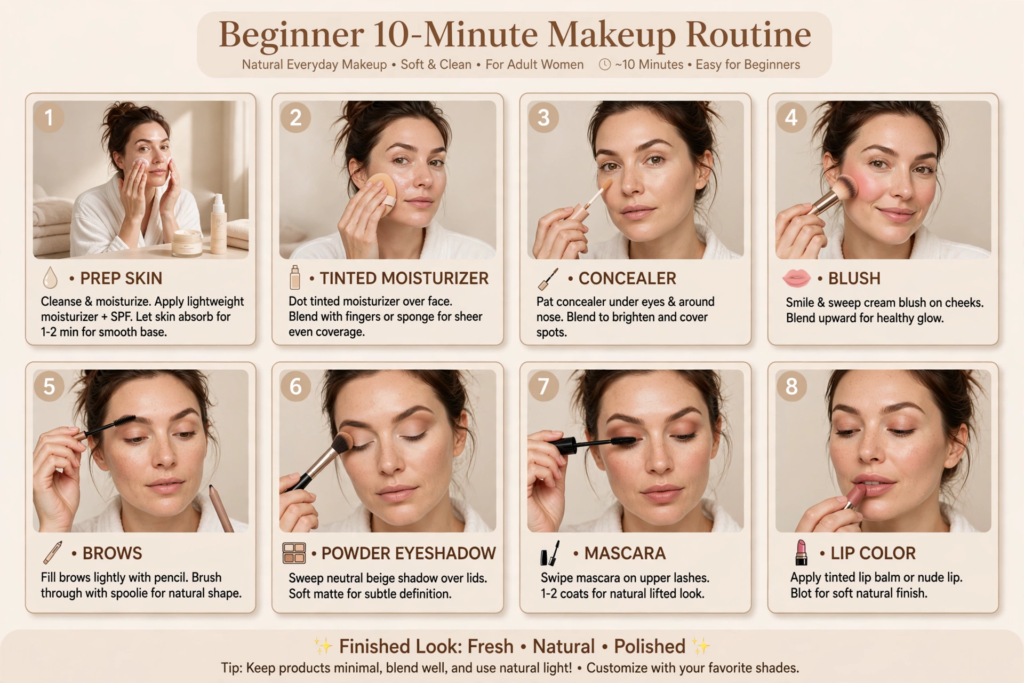
The Simplest 10-Minute Routine for a Beginner Makeup Kit on a Budget
Once you have your products, keep the application straightforward.
Step 1: Prep your skin.
Start with your usual skincare routine and sunscreen when appropriate.
Step 2: Apply your base.
Use a small amount of skin tint, tinted moisturizer, or foundation and blend evenly.
Step 3: Conceal selectively.
Add concealer only where additional coverage is needed.
Step 4: Add blush.
Apply a small amount and build gradually.
Step 5: Define your brows.
Use brow gel or a pencil where needed.
Step 6: Apply mascara.
One or two controlled coats can be enough for an everyday look.
Step 7: Finish with lip color.
Apply your balm, gloss, or lipstick.
Step 8: Add optional powder or eyeshadow.
Use these only if they fit the look you’re creating.
You don’t have to use every product every morning.
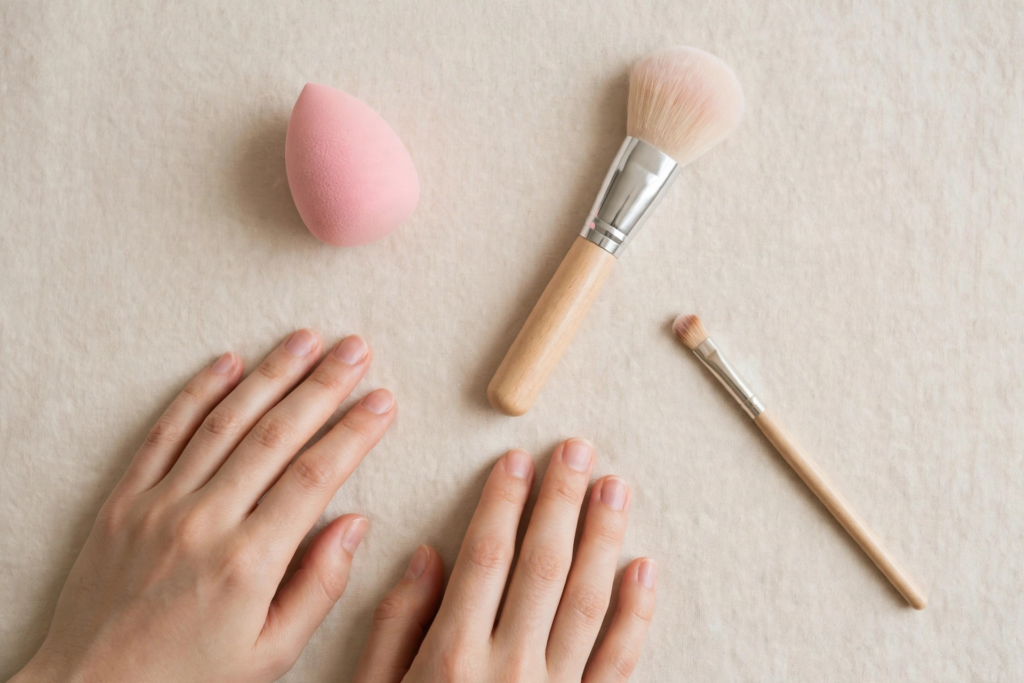
Beginner Makeup Tools You Actually Need for a Beginner Makeup Kit on a Budget
You can start with surprisingly few tools.
Your fingers
Clean fingers can work well for some cream and liquid products, particularly when you’re learning how much product you need.
One makeup sponge
A sponge can be useful for blending complexion products and creating a softer finish.
One face brush
A basic face brush can handle powder or blush depending on its shape and density.
One eyeshadow blending brush
If you use eyeshadow regularly, one blending brush can be more useful than a large collection of specialized brushes.
That’s enough to begin.
A 20- or 30-piece brush set may look like a bargain, but buying tools before you know what you actually use can create clutter just as quickly as buying too much makeup.
What Beginners Should Skip for Now
If money is tight, you can safely delay many popular categories.
Skip or postpone:
- Huge eyeshadow palettes
- Multiple foundations
- Multiple setting powders
- Contour palettes
- Several highlighters
- Multiple setting sprays
- Specialized brush collections
- Several shades of the same lipstick
- Trend-driven products you aren’t sure you’ll use
You can always buy them later.
The better approach is to identify a specific need first.
Need more coverage? Explore a different base or concealer.
Makeup gets shiny? Consider powder.
Want more dimension? Try bronzer.
Want more eye definition? Add eyeliner.
Want a different finish? Explore setting spray.
This turns shopping into problem-solving rather than collecting.
How to Make Your Beginner Makeup Kit on a Budget Last
Buying inexpensive makeup doesn’t mean treating it carelessly.
Keep products closed when you’re not using them, wash reusable tools regularly, and avoid sharing makeup.
The FDA recommends keeping cosmetic containers clean, washing your hands before use, and not sharing cosmetics. It also advises discarding products if their color or smell changes.
Eye products deserve particular attention. Don’t add water or saliva to dried mascara, and don’t use eye makeup if you have an eye infection.
For sensitive skin, introduce new products cautiously. The American Academy of Dermatology recommends testing new skincare products on a small area before wider use when irritation is a concern.
What Is the 3:1:1 Rule for Makeup and a Beginner Makeup Kit on a Budget?
This question needs a clarification because “3:1:1 rule” is not one universally accepted makeup-application formula.
For U.S. travelers, the well-established TSA 3-1-1 rule refers to liquids, aerosols, gels, creams, and pastes in carry-on baggage. Each container must generally be 3.4 ounces (100 mL) or less, and the liquids must fit into one quart-sized bag, with one bag per passenger.
That matters when you’re traveling with products such as liquid foundation, concealer, mascara, lip gloss, or setting spray.
Some beauty websites use “3:1:1” to describe their own makeup routines or product ratios, but these meanings are inconsistent. For a beginner makeup kit, it is better not to treat an unofficial beauty formula as a universal rule.
The Best Beginner Kit Is the One You Use
You don’t have to recreate the case of a professional make-up artist.
Start with a foundation, a concealer, blush, mascara, a product for eyebrows and lip color. Add some powder and a little neutral eye shadow palette if you want more options. The rest should be added as needed.
The most common budget mistake is not buying an inexpensive product.
It is buying ten inexpensive products that you will not use instead of six products that you will use every week.
Build your collection little by little, learn what works best for your skin and for your needs, and let your collection grow with your skill level.
For basic makeup safety and hygiene guidance, the FDA’s cosmetics safety recommendations are a useful reference when you’re learning how to store, use, and share makeup products safely.
FAQs
What is a good makeup starter kit for beginners?
A practical starter kit can begin with a skin tint or foundation, concealer, blush, mascara, brow product, and lip color. Add setting powder and a small neutral eyeshadow palette if you want more versatility.
What are the essentials for a beginner makeup kit?
The essentials are a complexion product, concealer, blush, mascara, brow product, and lip product. The exact list can vary depending on your skin, preferred makeup style, and whether you want minimal or more complete coverage.
What are the basic makeup essentials for beginners?
For an everyday look, start with base makeup, concealer, blush, mascara, brows, and lips. You can add eyeshadow, powder, eyeliner, or setting spray later.
How much should a beginner spend on makeup?
There is no single correct amount. A beginner can start with a small six-product collection and expand gradually rather than buying a complete collection at once. Shopping sales, choosing drugstore products, and prioritizing multipurpose items can help control the total cost.
Does a beginner need primer?
No. Primer can be useful for a specific concern, but it isn’t automatically necessary. If your moisturizer and base already give you the finish and wear you want, you can skip primer.
Does a beginner need foundation and concealer?
Not necessarily both. Some people prefer a foundation or skin tint alone, while others use concealer for targeted coverage with little or no foundation. Your preferred coverage should determine the combination.
Do beginners need contour and highlighter?
No. Both are optional. Learn basic complexion, blush, brows, lashes, and lips first if you want to keep your routine simple.
Can beginners apply makeup without brushes?
Yes. Clean fingers can work for some cream and liquid products, while a sponge can help blend complexion products. You can add brushes as you discover which techniques you actually use.
What makeup should I buy first on a tight budget?
Prioritize products that noticeably change your everyday look: a base product, concealer if needed, blush, mascara, brow product if needed, and lip color. Delay products that solve problems you don’t currently have.
Is the 3:1:1 rule a makeup application rule?
There is no single universally accepted makeup-application rule called the 3:1:1 rule. In the U.S., the established 3-1-1 rule is the TSA carry-on liquids rule.