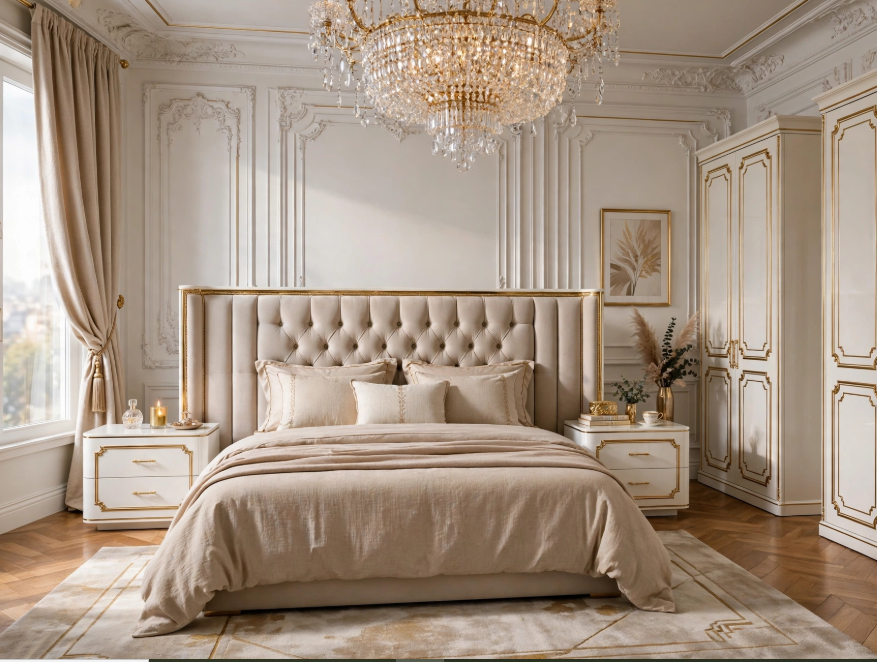
Luxury home decor tips: Home decor trends 2026
Luxury home decor is not about overspending on the coziest sofa, marble, and gold-plated details. It is more about the elegant arrangement, balance, and the appeal of the space. A well-designed home exudes coziness, comfort, and luxury through the furniture, lighting, materials, and the space’s overall feel.
This is precisely where the modern luxury home decor trend is going in 2026. The current design coverage leans towards creating an image of a personal environment with everyday objects and interior details that evoke cosiness, accessibility, and tactility.
The good news is that you do not need to be a billionaire to recreate this atmosphere. Using the right furniture pieces, colours, materials, and lighting, you can achieve this aesthetic. Moreover, you will be able to furnish your home in a manner that reflects your personality, values, and tastes. If you are curious about how to decorate your home in the style of luxury, focus on the architectural structures, colours, spatial layout, and lighting.
Below are some inspiring luxury home decor ideas that will help you elevate your space to the next level.
For more practical tips, check out our guide to a Small Bedroom Layout With Queen Bed and Dresser: Smart Space-Saving Ideas to make the most of limited floor space.
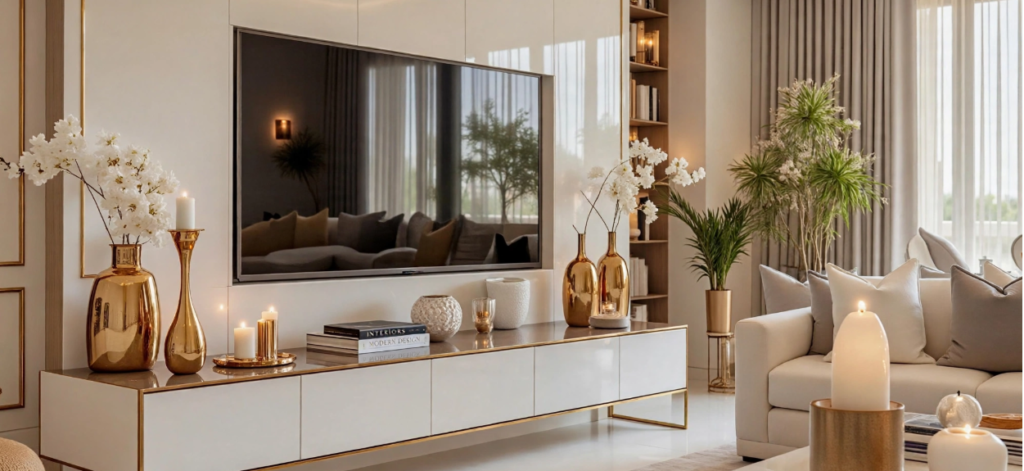
What Makes a Home Look Luxurious?
A luxurious home usually has less to do with price and more to do with quality, proportion, restraint, craftsmanship, comfort, and consistency.
A room can contain expensive furniture but feel like it’s missing something if the other items such as the rug is too small, the artwork is undersized, the lighting harsh, or every surface crowded.
Conversely, a relatively simple room can feel luxurious with well-scaled furniture, colors that complement each other and the lighting layer adds. Every visible object has a purpose.
Think of luxury as a combination of:
- Well-proportioned furniture
- Cohesive colors
- Quality-looking materials
- Layered lighting
- Comfortable textiles
- Meaningful artwork
- Architectural detail
- Negative space
- Thoughtful styling
- Personal character

How Do the Wealthy Decorate Their Homes?
There is no one way to decorate the house for the wealthy homeowner. Some prefer contemporary minimalist style, others – more traditional, eclectic, bright, or personalized.
Nevertheless, the examples of luxury-home decoration and the reports about modern design tend to feature customization, sophistication, and the use of fine materials, rather than precious objects.
The lesson that can be taken by an ordinary homeowner is that less is more. Choose a few things in which you will invest time and effort; give them a place in the room, so that they can speak for themselves. A custom-made corner cupboard, a big painting, a comfortable sofa, well-furnished curtains, or an unusual lamp can be much more expressive and memorable than dozens of accessories that require constant maintenance.
If you’re working with limited space, explore our guide to Small Bedroom Layout Ideas: How to Arrange Furniture in a Tiny Room for practical ways to position your bed, dresser, and other essentials.
25 Luxury Home Decor Ideas for an Elegant High-End Look
1.Start With a Cohesive Luxury Home Decor Color Palette
One of the easiest ways to give your home a more sophisticated look is to create a color story throughout your house.
Warm white, ivory, cream, taupe, greige, camel, brown, olive, charcoal, and muted blue are all colors that can be used as your foundation. You can use a couple of these colors as your main colors or stick to one. Use the colors throughout your home in your furnishings, textiles, art, and accessories.
If you want to go bolder in your color scheme, you can choose a charcoal, forest green, navy, or brown as your base.
Don’t worry about having all the rooms in sync. Just stick to a couple of colors so your whole home will tie together.
What color makes a house look expensive?
There is no magic color that can make a house look expensive. It is always safer to go for a restrained, well-balanced color scheme.
Warm neutrals are a reliable foundation in any home, but an achingly stylish combination of rich colors can also enhance architectural details and be easier on the eyes in the right lighting. According to the 2026 interior design trends, living spaces will see a rise in bold and vibrant hues juxtaposed against a backdrop of more muted tones.
The luxurious feel is achieved through the use of contrasting shades, finishes, and proportions rather than through the choice of paint colors per se.
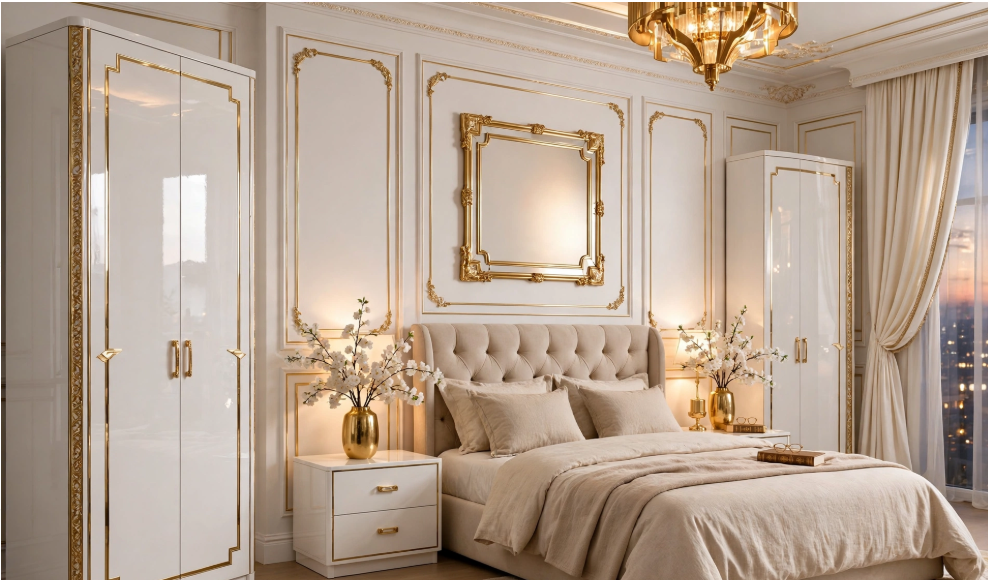
2. Choose One Strong Focal Point for Luxury Home Decor
Every room benefits from somewhere for the eye to land.
That might be:
- An oversized painting
- A fireplace
- A sculptural light
- A beautiful sofa
- A dramatic headboard
- A stone coffee table
- A large mirror
- An architectural feature
Once you choose the focal point, allow surrounding pieces to support it rather than compete with it.
For example, if your living room has a dramatic artwork above the sofa, you probably do not need a second oversized wall feature directly beside it.
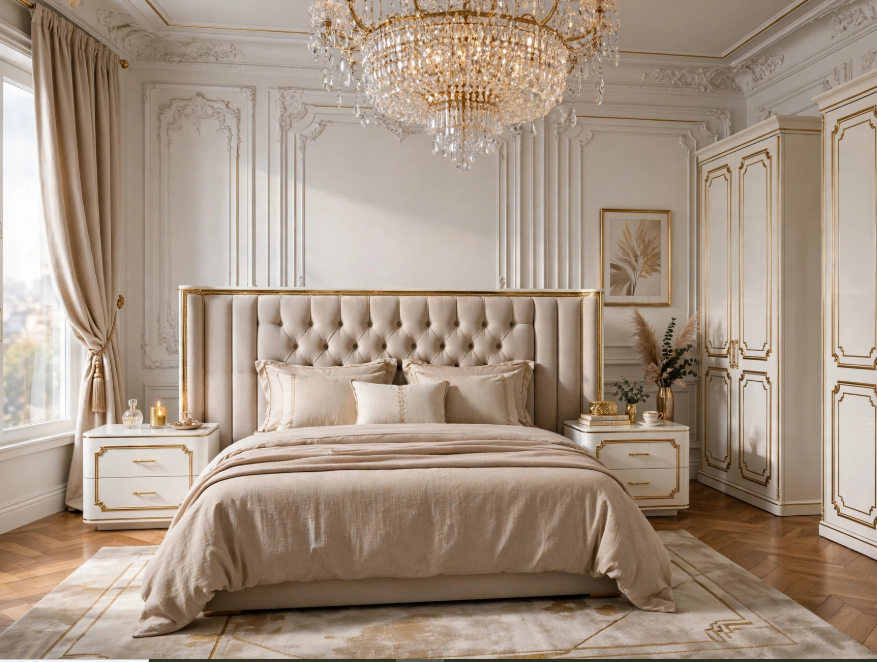
Luxury often comes from knowing when to stop.
3. Invest in Comfortable Furniture for Luxury Home Decor
Furniture is one of the areas where proportion matters more than decoration.
A beautiful sofa that is too small for the room can make an otherwise expensive interior feel unfinished. Likewise, an enormous sectional can overwhelm a compact living room.
Before buying furniture, measure:
- Wall length
- Door openings
- Walking paths
- Window locations
- Existing furniture
- Rug dimensions
Then consider how much empty space you need around each piece.
Choose silhouettes that can remain attractive for years rather than pieces that depend entirely on a short-lived trend.
Comfort matters, too. Modern luxury is increasingly associated with homes that support real life rather than merely looking impressive in photographs.
If your bedroom lacks built-in storage, explore our guide to Small Bedroom Ideas With No Closet: Smart Storage Solutions for practical ways to organize clothing and make better use of limited space.
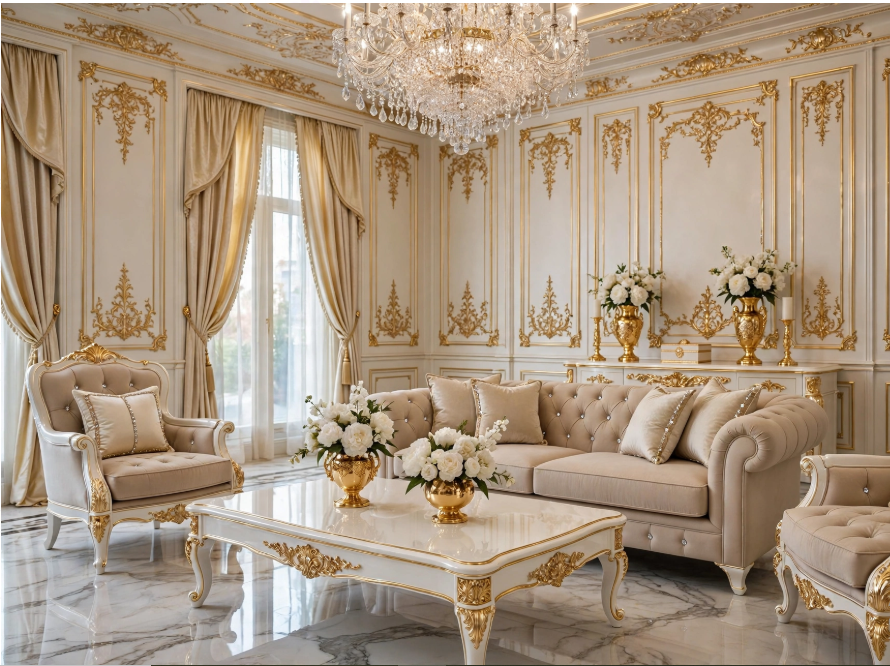
4. Bring in Natural Stone for Luxury Home Decor
Stone can introduce instant visual depth because its pattern and texture are naturally irregular.
You might use:
- Marble
- Quartzite
- Limestone
- Travertine
- Slate
- Soapstone
You do not need stone everywhere.
A stone coffee table, fireplace surround, bathroom vanity, kitchen backsplash, or small side table can provide enough visual richness.
If you are choosing stone for a hardworking surface, consider durability and maintenance as well as appearance. Different stones respond differently to acids, scratches, staining, heat, and sealing requirements.
That practical consideration is part of luxury too: the material should suit how the room is actually used.
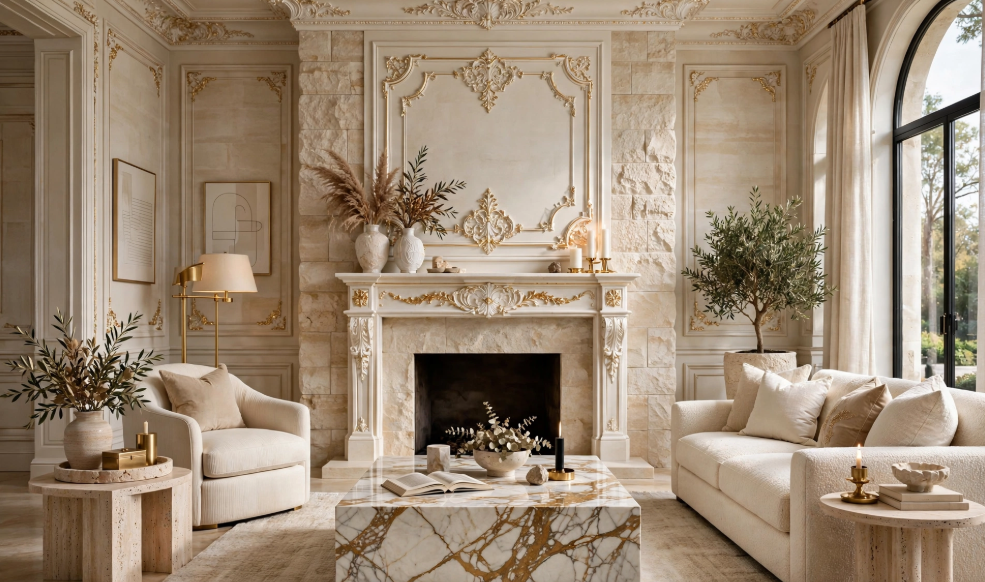
5. Warm the Room With Quality Wood for Luxury Home Decor
Natural wood prevents an elegant room from becoming visually cold.
Warm oak, walnut, ash, cherry, and other wood tones can appear in:
- Flooring
- Cabinets
- Coffee tables
- Sideboards
- Shelving
- Dining tables
- Bed frames
- Architectural details
Wood is particularly effective when paired with stone or smooth finishes.
For example, a pale stone surface with warm oak feels softer than a room made entirely from glossy hard surfaces.
The best result usually comes from repeating the same or related wood tones rather than introducing several unrelated finishes.
For a timeless look that blends classic character with contemporary style, explore Vintage Modern Home Decor Ideas: 15 Ways to Mix Old and New for inspiration on combining old and new pieces.
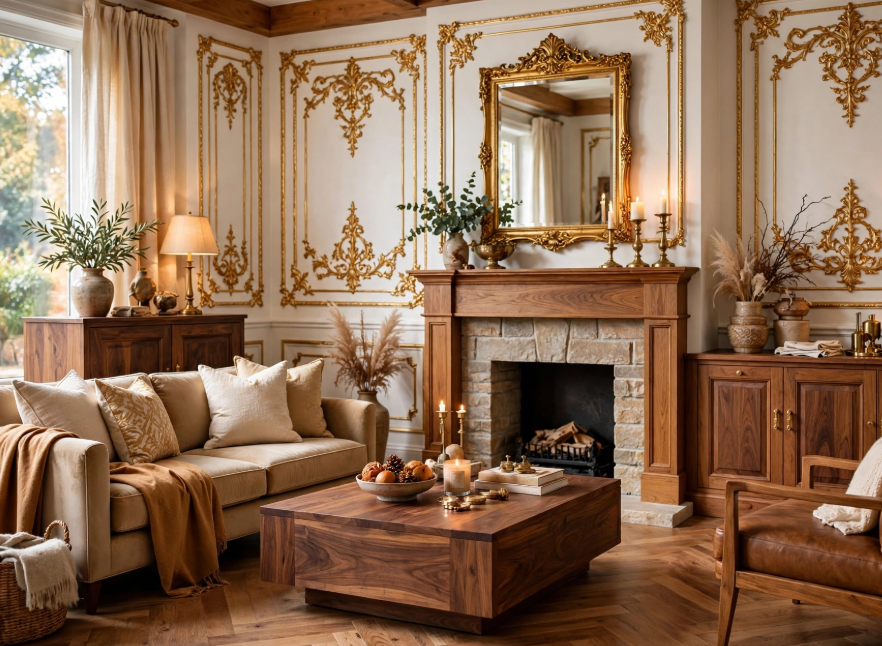
6.Layer Your Lighting for Luxury Home Decor
Lighting can completely change how expensive a room feels.
Instead of relying on one overhead fixture, create several levels of illumination:
Ambient lighting: provides general room illumination.
Task lighting: helps with reading, cooking, working, or grooming.
Accent lighting: highlights artwork, shelves, architecture, or decorative features.
Decorative lighting: contributes visual character through lamps, pendants, sconces, or chandeliers.
This layered approach creates depth and allows you to change the mood throughout the day.
Current luxury-design coverage also emphasizes warm, diffuse lighting in wellness-oriented spaces.
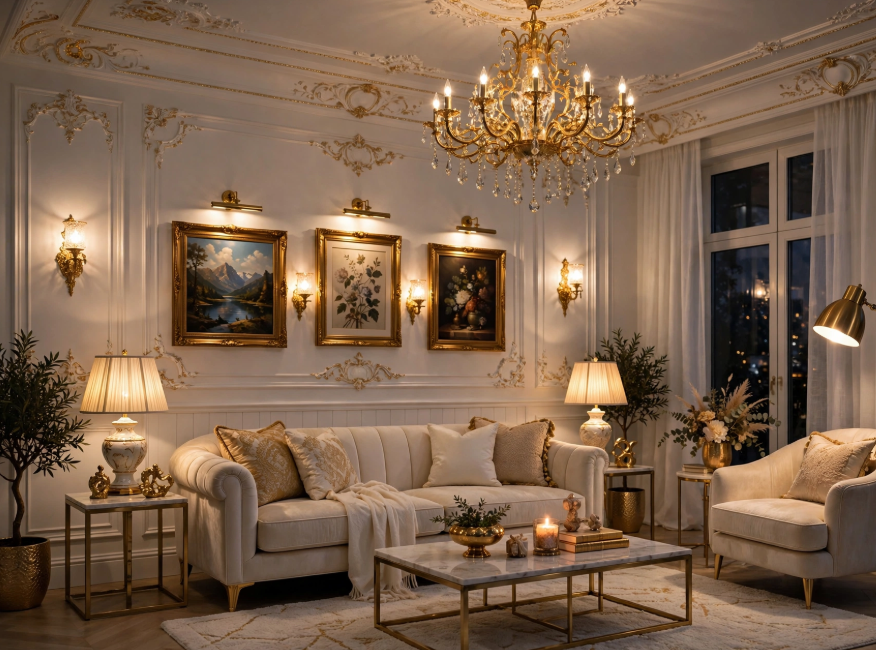
7. Make a Statement With One Beautiful Fixture for Luxury Home Decor
You do not need an extravagant chandelier in every room.
Instead, choose one fixture that gives the space personality.
Try:
- A sculptural pendant above a dining table
- A large chandelier in a foyer
- A pair of elegant sconces beside a fireplace
- A statement pendant over a kitchen island
- A sculptural floor lamp beside a reading chair
Keep the surrounding lighting simpler so the fixture has room to stand out.
A statement fixture works best when its scale relates to the room and the furniture below it.

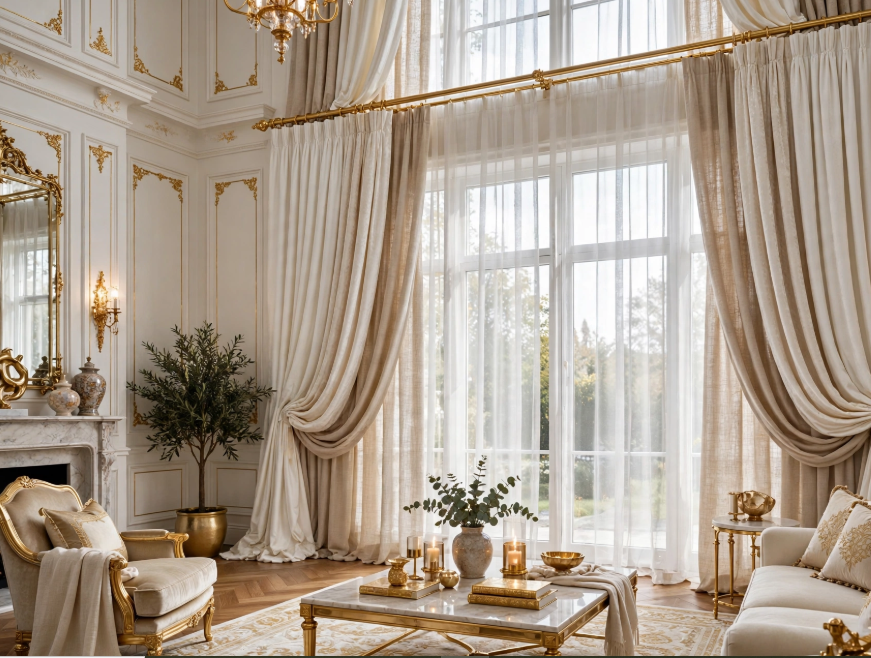
8.Hang Curtains High and Wide for Luxury Home Decor
Window treatments have a surprisingly large effect on the finished appearance of a room.
Rather than stopping the curtain rod exactly at the window frame, consider extending the rod beyond the window and mounting it higher, provided the architecture allows it.
Floor-length curtains can also create a more finished appearance.
Choose fabrics that complement the room:
- Linen
- Cotton blends
- Velvet
- Textured sheers
- Subtle woven fabrics
Avoid curtains that end awkwardly several inches above the floor unless the room specifically requires that treatment.
For a softer luxury look, pair a sheer layer with a heavier curtain.
A well-designed space often starts with thoughtful proportions and a balanced mix of materials. For more inspiration on creating a polished interior, explore Architectural Digest for expert home and interior design ideas.
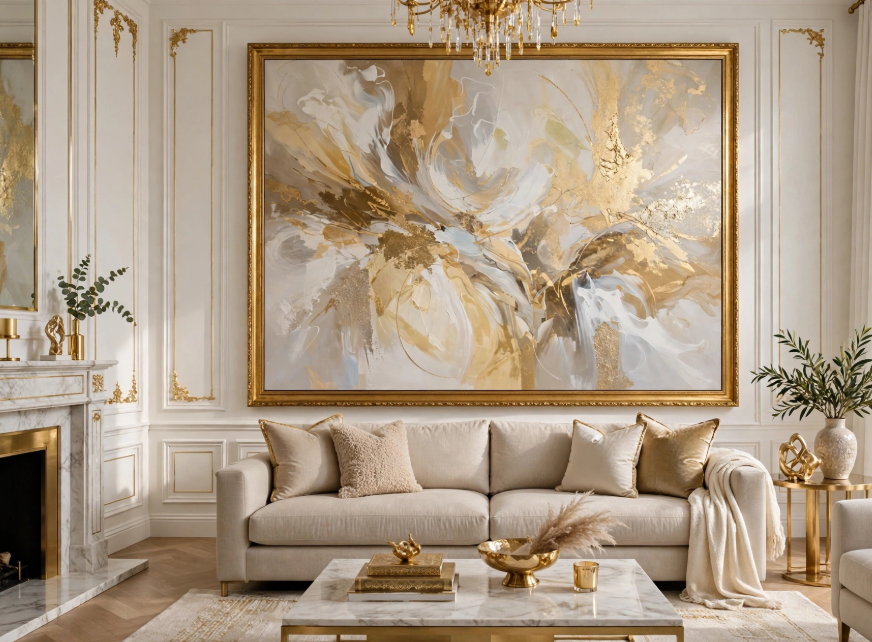
9. Use Oversized Artwork for Luxury Home Decor
Small artwork can disappear above a large sofa or on a wide wall.
One larger piece can create much more visual impact.
Look for:
- Abstract art
- Landscapes
- Photography
- Botanical artwork
- Large-scale textile art
- Sculptural wall pieces
You do not need an expensive original painting.
A large artwork with the right scale, frame, and color relationship can create a strong focal point even at a modest price.
The important thing is that the artwork relates to the furniture and wall rather than floating awkwardly in a large empty area.
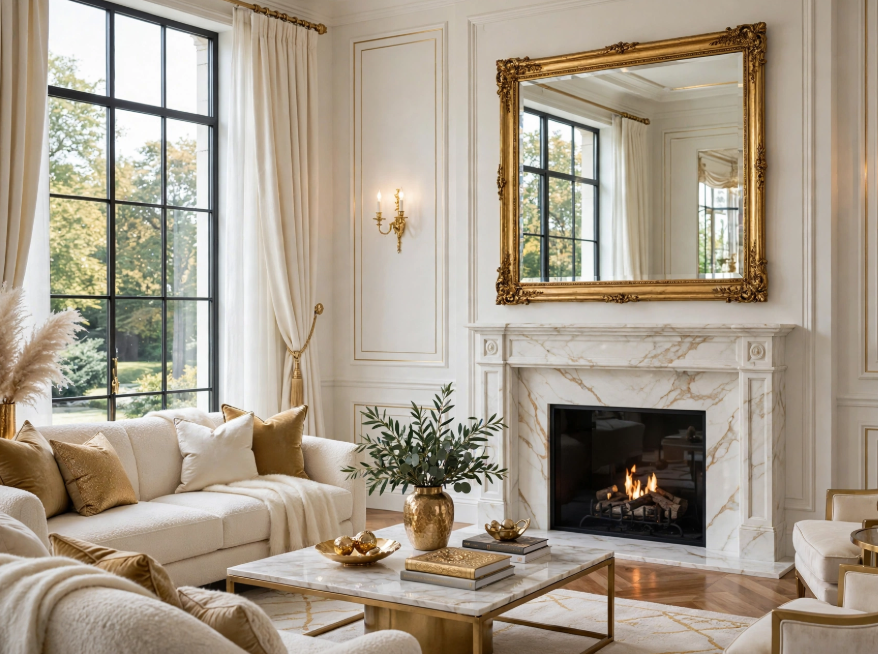
10. Add a Large, Well-Placed Mirror for Luxury Home Decor
A mirror can provide both function and decoration.
Consider placing one:
- Across from a window
- Above a console
- Behind a dining area
- In an entryway
- Over a fireplace
- Beside a dressing area
Choose the frame based on the room
Black gives definition to a room. Brass adds a warm note; wood, a natural feel. An ornate frame suggests traditional decorating, while a simple sculptural frame can give a modern room a very special appeal.
Don’t be tempted to hang a mirror simply because you have an empty space on a wall. Think about how the room is furnished and where you see the mirror when sitting or standing there.
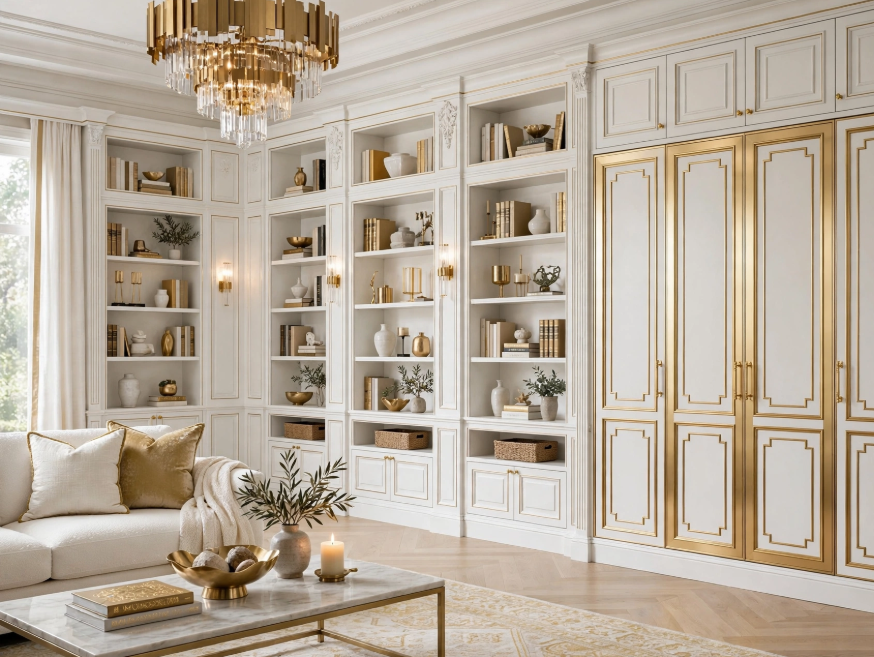
11. Install Custom-Looking Built-Ins for Luxury Home Decor
Built-in storage is one of the easiest ways to make a room feel deliberately designed.
Consider:
- Wall-to-wall bookshelves
- Built-in media cabinets
- Window seats
- Floor-to-ceiling wardrobes
- Dining-room storage
- Home-office cabinetry
- Entryway cabinetry
Even if true custom millwork is outside your budget, you can create a similar visual effect with modular cabinetry, trim, consistent hardware, and careful installation.
The key is making storage look like part of the architecture rather than an object placed against the wall.
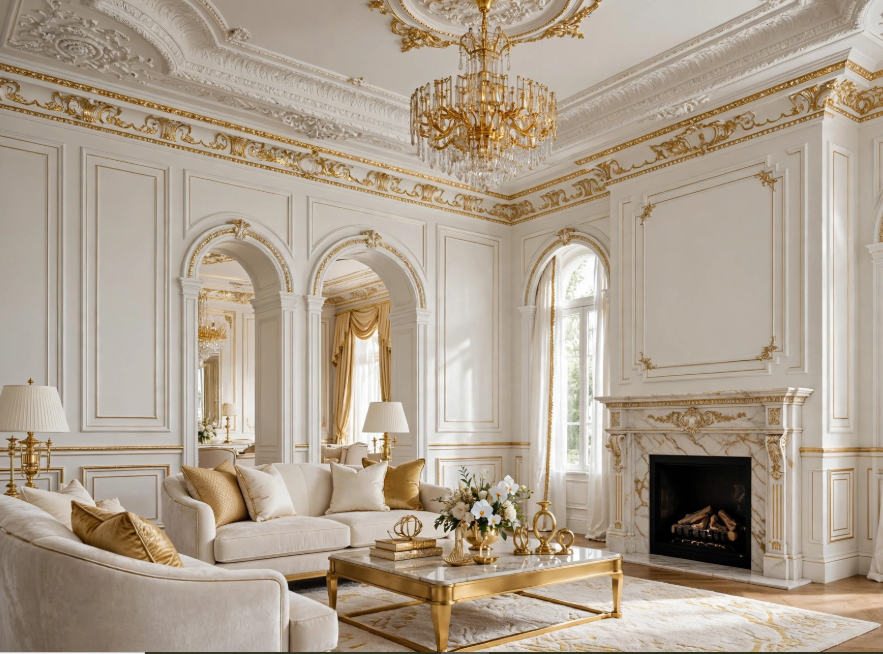
12.Highlight Architectural Details for Luxury Home Decor
Luxury does not always come from furniture.
Sometimes the architecture itself provides the strongest foundation.
If your home already has:
- Crown molding
- Picture-frame molding
- Wainscoting
- Arched openings
- Exposed beams
- Original hardwood
- A fireplace
- Interesting doors
- Tall windows
let those features contribute to the design.
Do not automatically cover distinctive architectural details with excessive decoration.
If the architecture is simple, you can introduce character through restrained wall molding, paneling, trim, or a carefully selected wallpaper treatment.
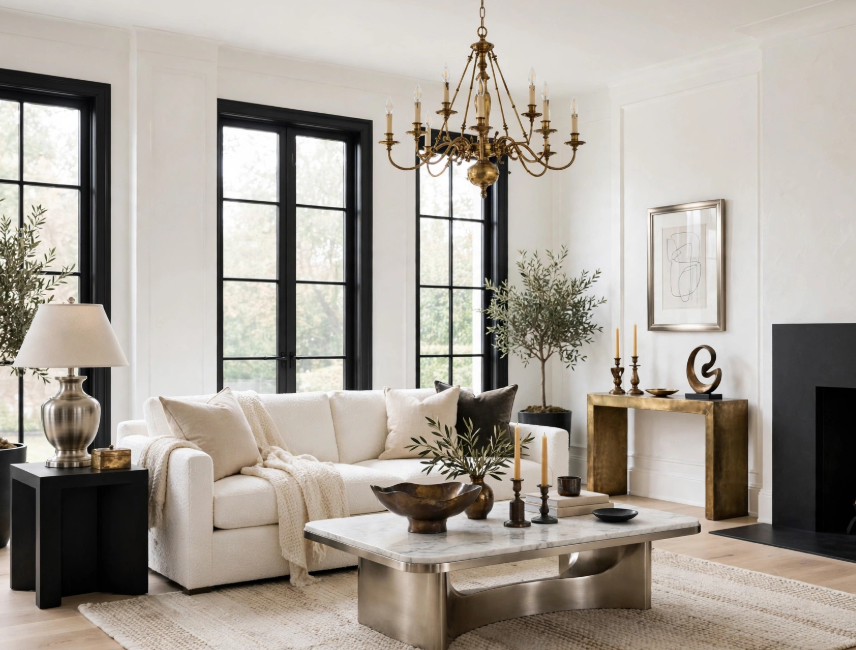
13. Mix Metals With Restraint for Luxury Home Decor
Mixing metals can make an interior feel more collected than using one finish everywhere.
For example, you might combine:
- Aged brass
- Matte black
- Brushed nickel
- Bronze
The trick is repetition.
If brass appears on cabinet hardware, repeat it through a light fixture or small accessory. If black appears on window frames, echo it in a table, artwork frame, or lamp.
You do not need every metal in the house to match perfectly.
Instead, create relationships between them.
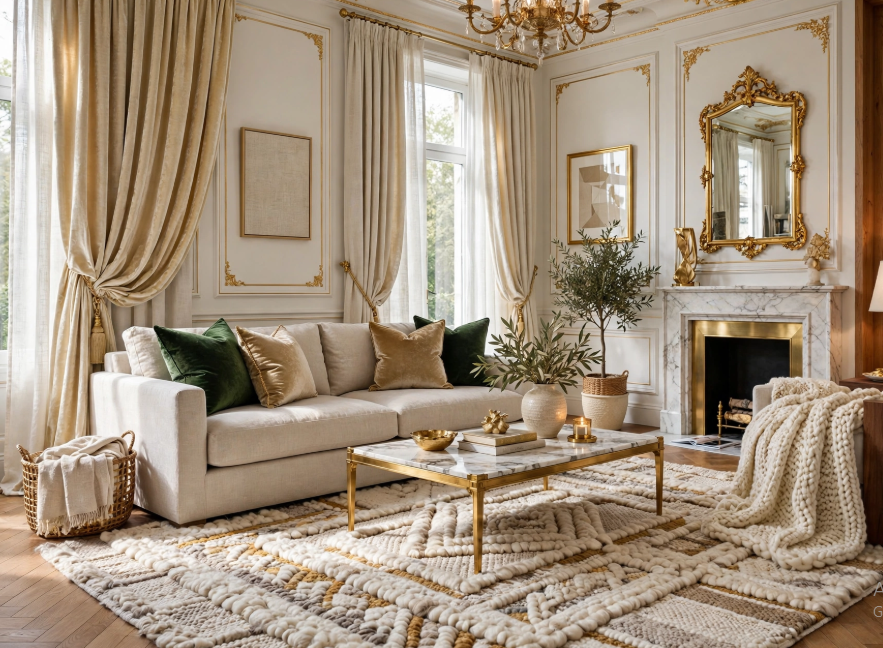
14.Layer Linen, Velvet, Wool, and Other Textures for Luxury Home Decor
Texture is particularly important when using a restrained color palette.
A room made entirely from smooth cream surfaces can feel flat. Add contrast through materials.
Try combining:
- Linen
- Velvet
- Wool
- Bouclé
- Cotton
- Leather
- Woven fibers
- Ceramic
- Stone
- Wood
- Glass
For example, a linen sofa can work with a wool rug, velvet accent pillow, ceramic lamp, wood table, and stone accessory.
The colors can remain simple while the textures create richness.
15. Choose Sculptural Decorative Objects for Luxury Home Decor
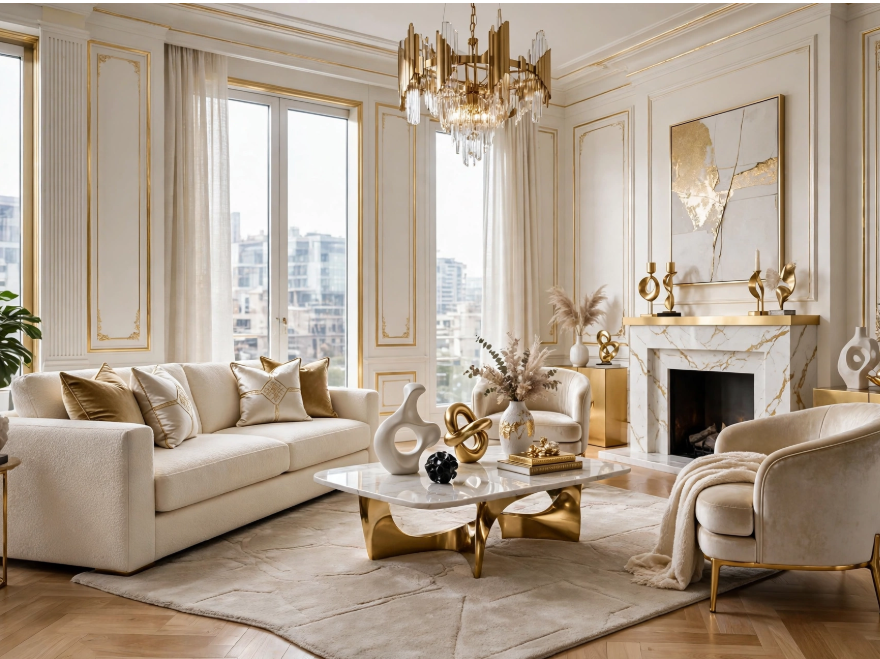
Instead of filling shelves with small conventional accessories, choose objects with strong shapes.
Examples include:
- Organic ceramic vases
- Stone bowls
- Sculptural candleholders
- Abstract figures
- Decorative boxes
- Handcrafted pottery
- Interesting bookends
The goal is not to make every object look expensive.
Choose pieces that have an interesting silhouette, material, finish, or story.
A single sculptural object can often create more impact than several generic decorations.
16. Use Rugs to Define the Room for Luxury Home Decor
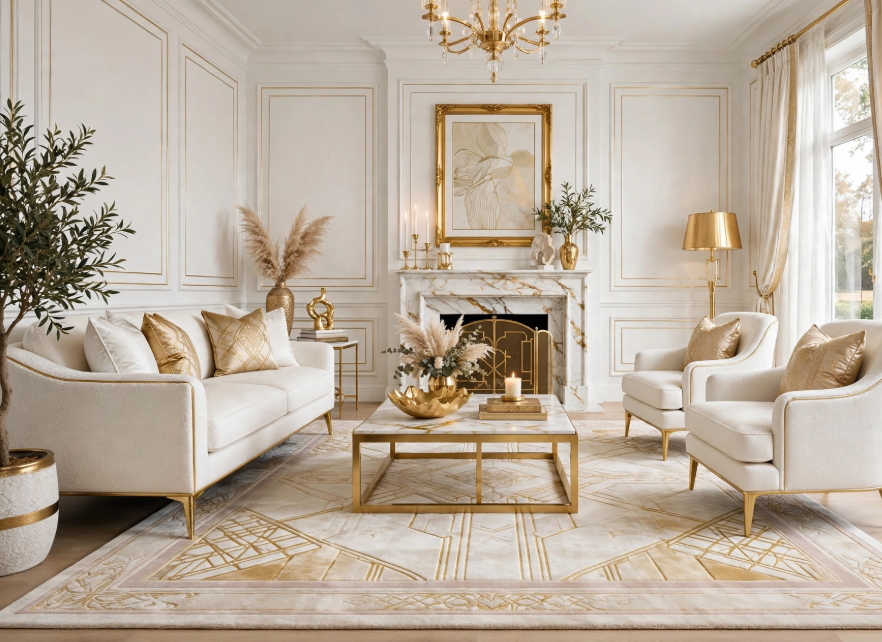
A rug should help connect furniture rather than simply occupy empty floor space.
In a living room, a common mistake is choosing a rug that is too small to relate to the seating arrangement.
Whenever possible, choose a size that allows at least the front legs of major seating pieces to connect visually with the rug.
In a dining room, the rug should extend sufficiently beyond the table to accommodate chairs when they are pulled out.
For bedrooms, a larger rug can create a softer landing around the bed.
The right rug makes the furniture arrangement feel intentional.
17. Style Surfaces With the 3-5-7 Rule
If your coffee table, console, mantel, or bookshelf always looks slightly unfinished, try the 3-5-7 decorating rule.
The current version of the rule generally refers to arranging decorative objects in odd-numbered groupings such as three, five, or seven. Designers and styling publications describe it as a flexible way to create visual rhythm and avoid overly rigid symmetry.
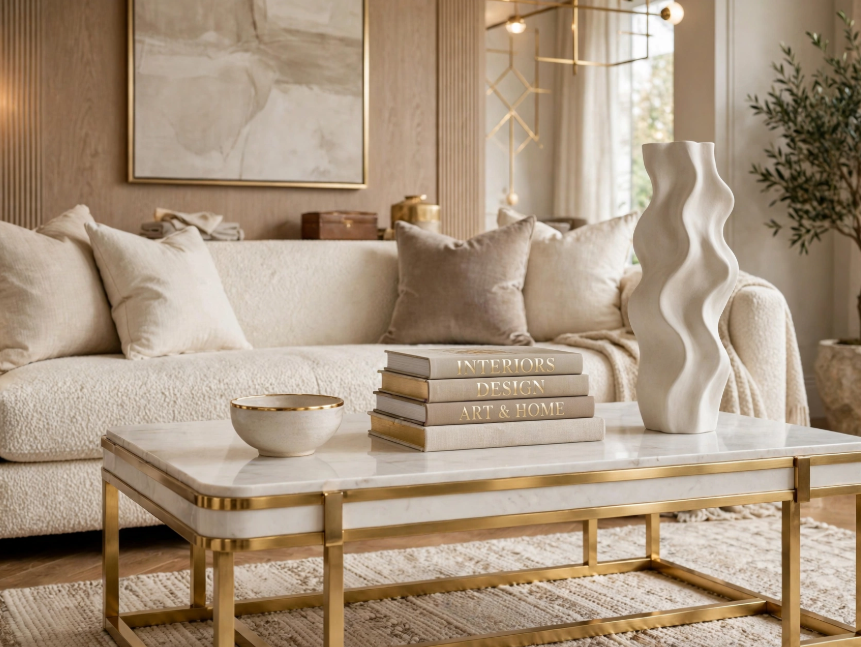
For example, on a coffee table you could combine:
- A sculptural vase
- A stack of books
- A small bowl
The important part is not simply counting to three.
Vary the height, shape, texture, and visual weight.
A tall vase beside a horizontal book stack and a low bowl creates more movement than three objects of identical height.
Also remember that the 3-5-7 rule is a styling guideline, not a decorating law. Symmetry can be beautiful, especially in formal interiors.
Use the principle when it improves the composition, then stop counting and look at the room as a whole.
18. Add Greenery and Natural Elements
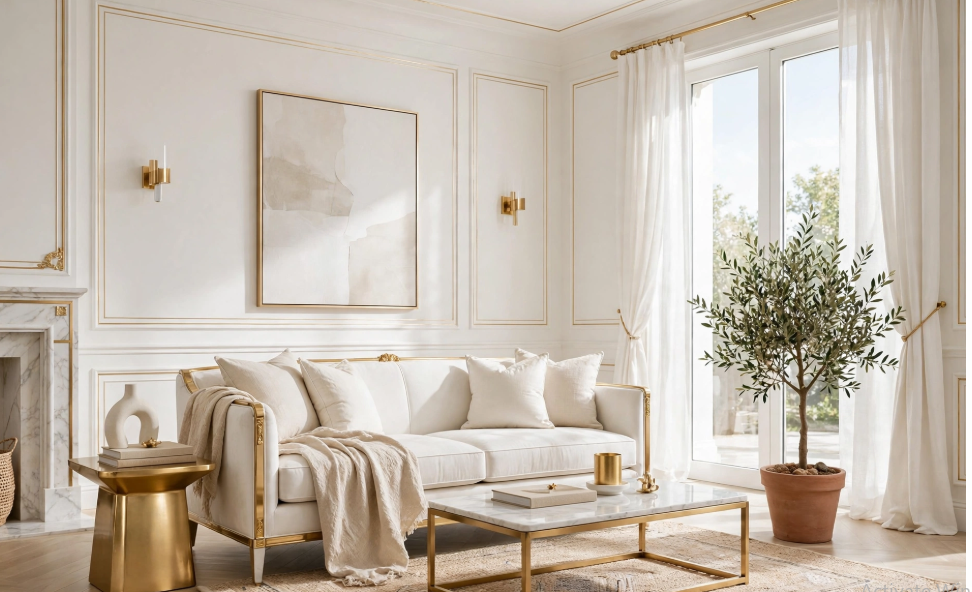
Plants can soften hard architectural lines and introduce life into neutral rooms.
Depending on your space and available light, consider:
- Olive trees
- Fiddle-leaf figs
- Snake plants
- Orchids
- Branch arrangements
- Fresh flowers
- Dried grasses
You can also bring nature indoors through wood, stone, woven materials, shells, ceramics, or botanical artwork.
If you do not have enough natural light for a particular plant, choose one that suits your actual conditions rather than buying purely for appearance.
Luxury should be sustainable for everyday life.
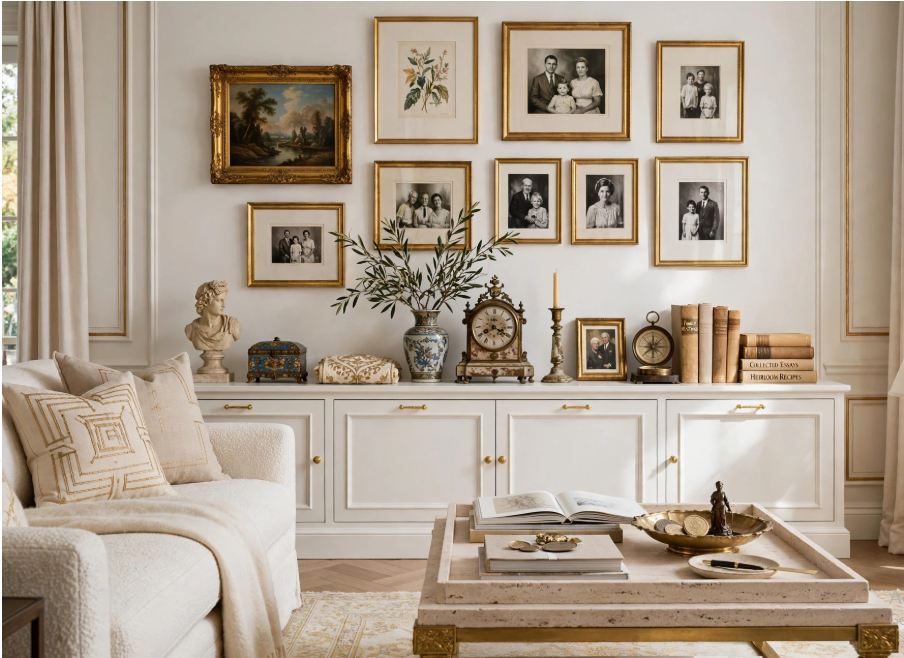
19. Display Meaningful Art and Heirlooms
A home becomes more sophisticated when it feels personal rather than copied from a showroom.
Display things that have meaning:
- Family artwork
- Travel finds
- Vintage pieces
- Books
- Handmade ceramics
- Photographs
- Inherited furniture
- Collected objects
A personal collection can also become a decorating feature.
Instead of scattering sentimental objects randomly around the house, create intentional displays where they can be appreciated.
This approach is especially useful because current luxury interiors increasingly emphasize individuality and personalization rather than one prescribed aesthetic.
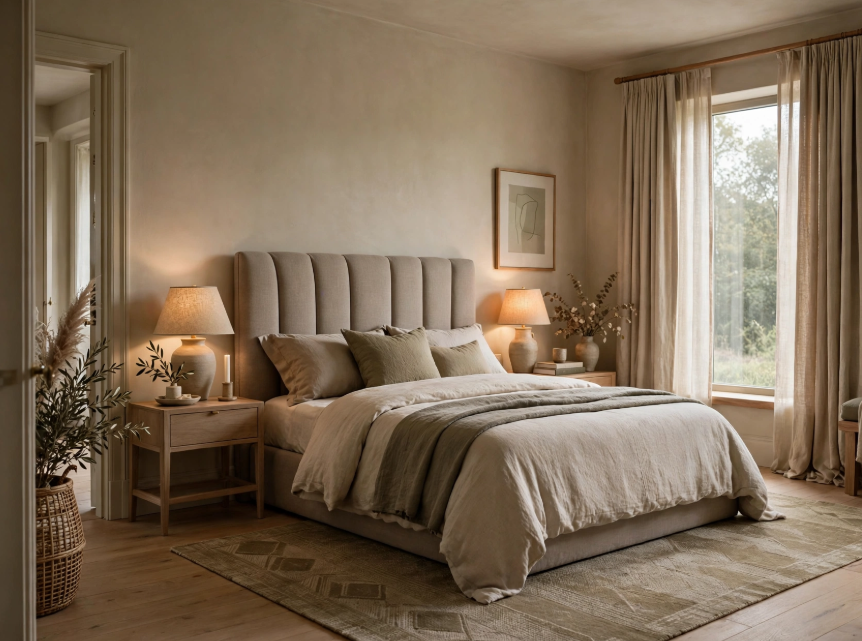
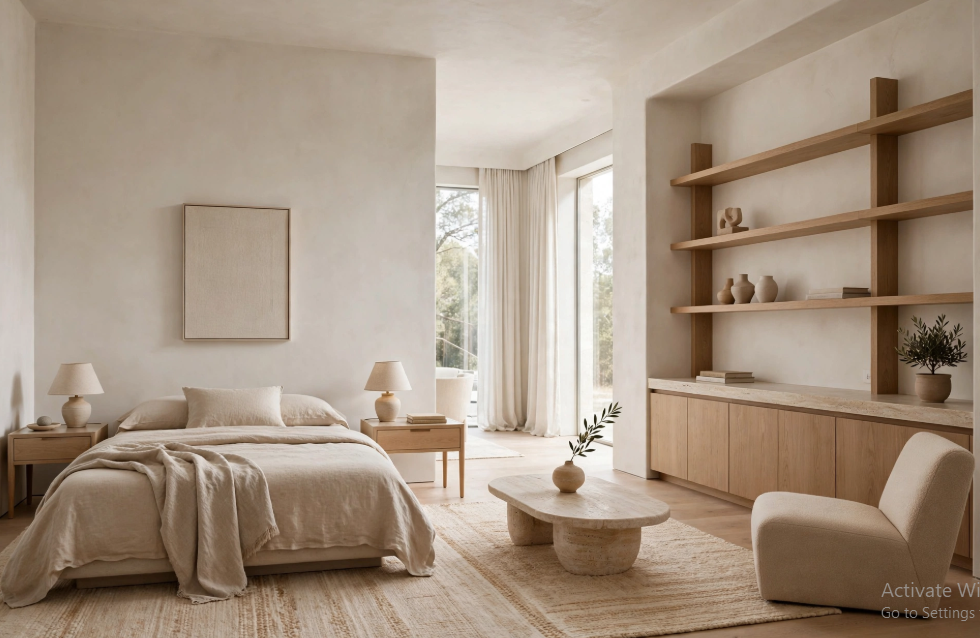
20. Create a Quiet-Luxury Bedroom
The bedroom should feel restful rather than visually busy.
Start with a comfortable bed and build layers around it:
- Upholstered headboard
- Quality-looking bedding
- Two or three complementary pillow textures
- Soft throw
- Bedside lighting
- Area rug
- Curtains
- Minimal artwork
- One or two meaningful accessories
Keep the color palette calm, but do not feel restricted to white.
Taupe, warm beige, muted olive, soft brown, dusty blue, and warm gray can all create a sophisticated bedroom.
The goal is to make the room feel comfortable enough to use every night, not simply attractive in photographs.
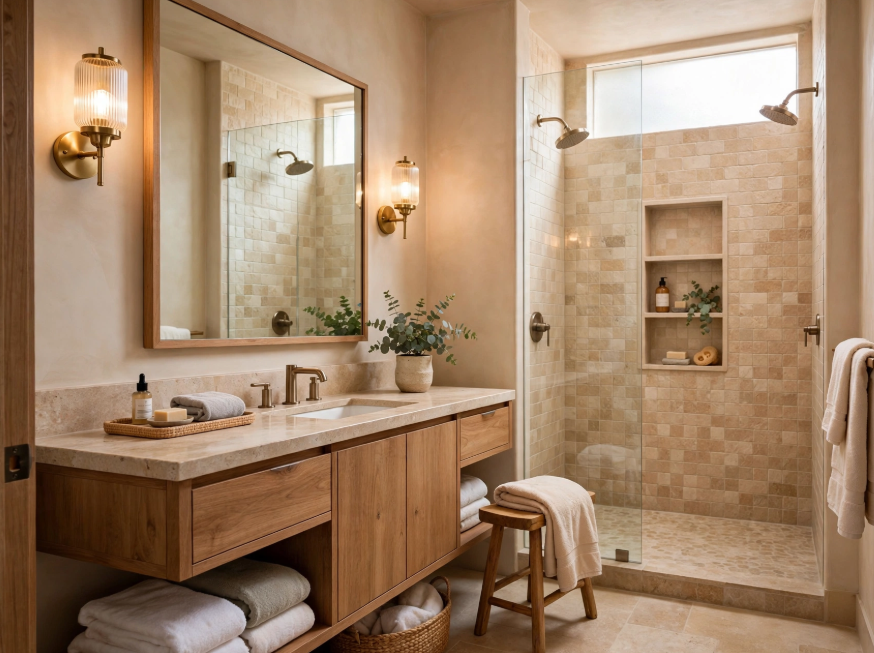
21. Turn the Bathroom Into a Relaxing Retreat
You do not need a huge bathroom to create a luxurious atmosphere.
Focus on the details you interact with every day.
Try:
- A large mirror
- Attractive wall sconces
- A streamlined vanity
- Stone-look surfaces
- A recessed shower niche
- Soft towels
- A wooden stool
- A simple plant
- A small tray for frequently used items
If you are renovating, materials such as natural stone, handmade tile, warm wood and plaster-like finishes can create a more tactile environment. Current luxury design reporting also highlights at-home wellness spaces and spa-like bathrooms as part of the evolving luxury-home conversation.
Keep the countertop as clear as possible. Visual calm is part of the effect.
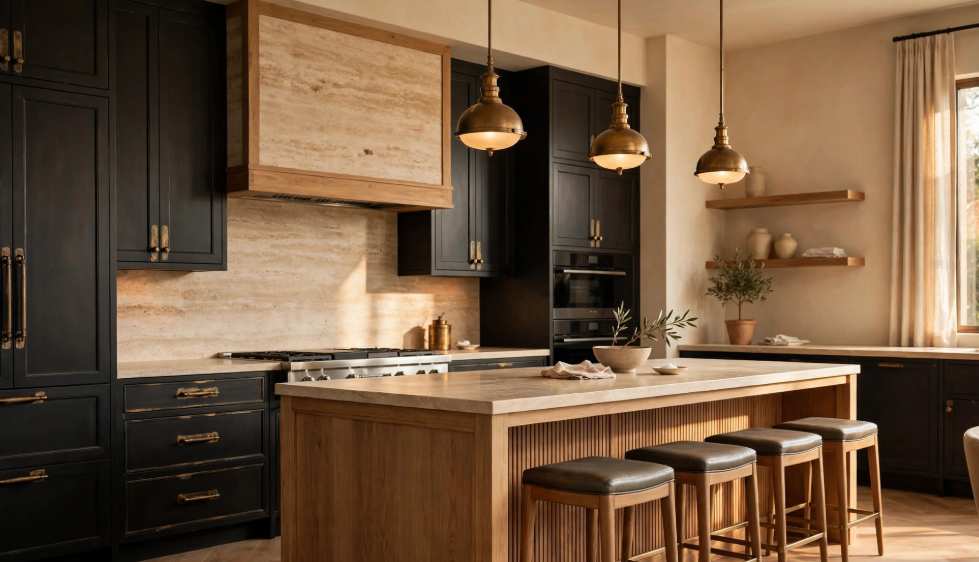
22. Give the Kitchen a More Refined Finish
A luxury kitchen is not necessarily the kitchen with the most expensive finishes.
Start with the large elements:
- Cabinet proportions
- Countertop material
- Hardware
- Lighting
- Backsplash
- Flooring
- Island scale
Then add a few natural accessories such as a wooden cutting board, ceramic vessel, bowl of fruit, or small plant.
Avoid covering the entire countertop with decorative objects.
A clean surface allows beautiful cabinetry, stone and lighting to become the focus.
For a warmer look, combine light or dark cabinetry with natural wood, aged brass, stone, and soft lighting.
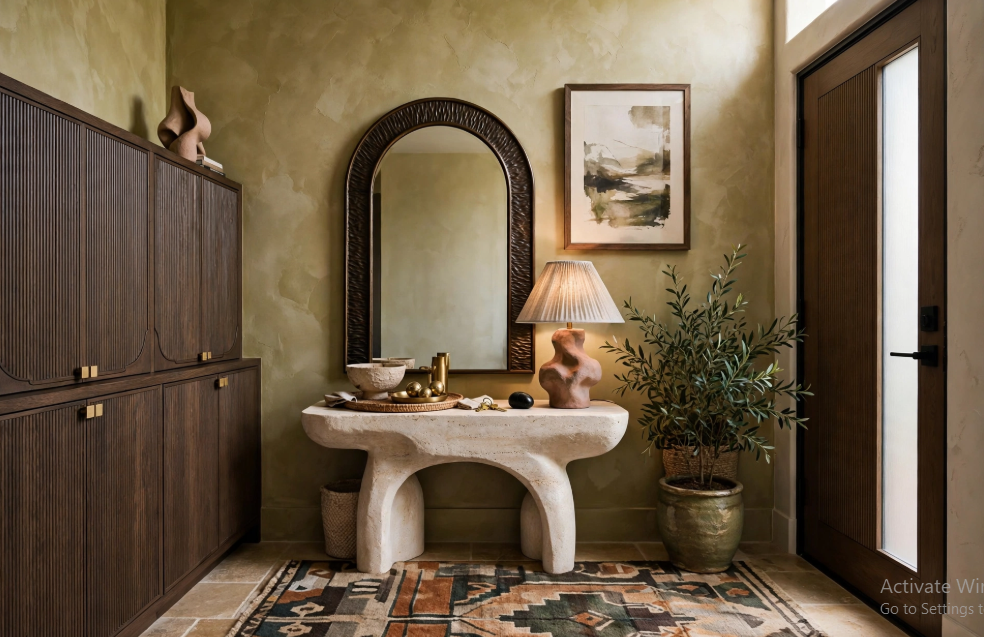
23. Make the Entryway Feel Intentional
The entryway establishes the visual language for the rest of the home.
You only need a few elements:
- Console or narrow table
- Mirror or artwork
- Table lamp
- Small bowl or tray
- Rug
- One sculptural object
- Greenery or flowers
If the entry is small, prioritize function.
Use a closed cabinet or drawer to hide keys, mail, shoes, and other everyday clutter.
A beautifully styled entryway should still be practical enough to survive daily arrivals and departures.
24. Hide Clutter and Protect Negative Space
One of the simplest luxury home decor ideas is also one of the least expensive: remove visual noise.
That does not mean your home needs to be minimalist.
Instead, give the things you love enough space to be noticed.
Edit:
- Decorative objects
- Open shelving
- Countertops
- Coffee tables
- Nightstands
- Bathroom counters
- Kitchen appliances
- Wall art
If every available surface is filled, adding another beautiful object will usually not improve the room.
Try removing several things first.
Then step back.
You may discover that the room already had everything it needed.
25. Design for Comfort, Wellness and Everyday Living
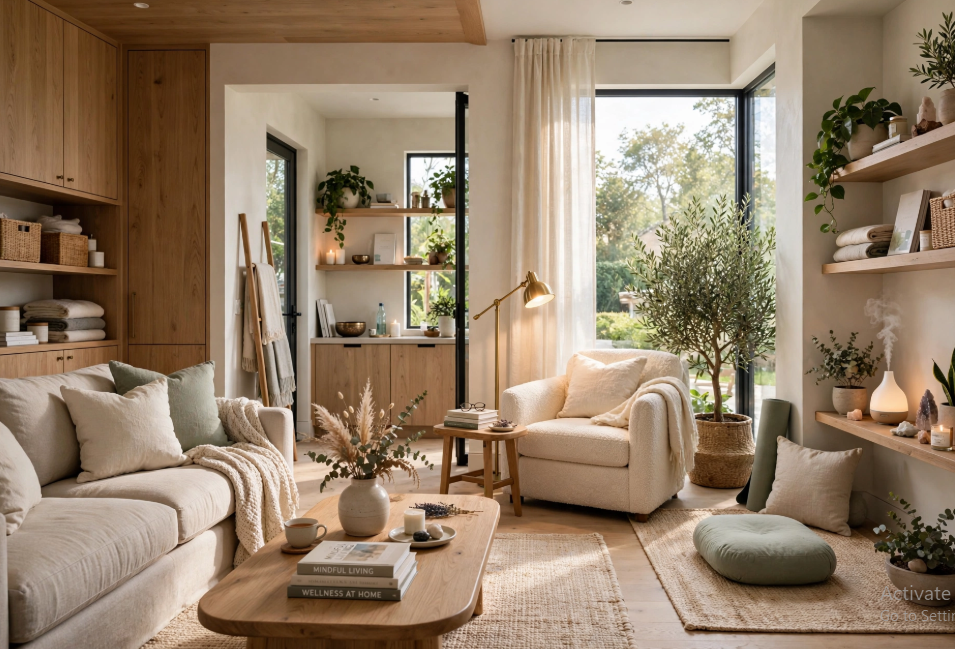
The final layer of luxury is how the home feels to live in.
A beautiful room becomes much more valuable when it supports your routines.
Consider:
- Comfortable seating
- Good reading light
- Convenient storage
- Quiet zones
- Better acoustics
- Natural daylight
- Blackout curtains in bedrooms
- Comfortable temperature
- Easy-to-clean materials
- A dedicated work area
- A relaxing reading corner
Current luxury design forecasts increasingly include wellness-oriented spaces such as meditation rooms, home spas and carefully designed exercise areas, reinforcing the idea that luxury is increasingly connected to experience as well as appearance.
That is what separates a home that merely looks expensive from one that actually feels luxurious.
What Color Makes a House Look Expensive?
If you want a safe starting point, build around warm neutrals such as:
- Warm white
- Ivory
- Cream
- Taupe
- Greige
- Camel
- Soft brown
Then introduce one deeper anchor color such as charcoal, espresso brown, forest green, navy, or muted black.
However, do not assume that neutral automatically means luxurious.
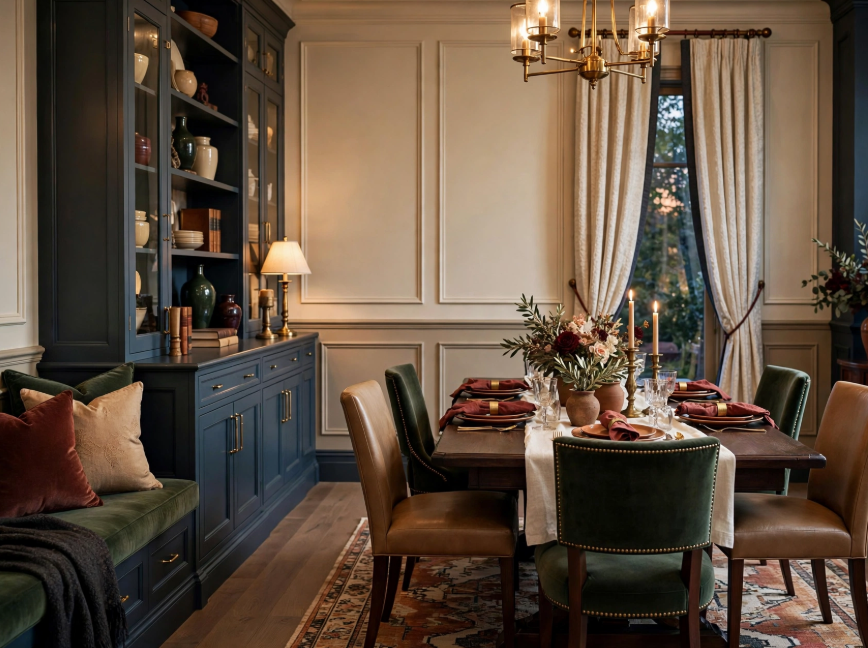
A rich burgundy wall, deep green study, blue dining room, or warm terracotta accent can feel extremely sophisticated when the color works with the architecture, lighting and furnishings.
Current 2026 trend reporting actually shows increasing interest in more expressive interiors, so luxury does not have to mean an all-beige home.
How Do I Make My House Look More Elegant?
If you want the biggest visual improvement without remodeling the entire house, work in this order:
1. Declutter first
Remove anything that does not contribute to the room.
2. Fix the furniture layout
Make sure the furniture encourages conversation and leaves comfortable walking paths.
3. Increase scale where necessary
Replace tiny artwork, undersized rugs, or miniature accessories with pieces that relate properly to the room.
4. Improve the lighting
Add lamps, sconces, floor lights or accent lighting instead of depending entirely on one ceiling fixture.
5. Add texture
Combine smooth and tactile materials.
6. Introduce one focal point
Choose artwork, a light fixture, fireplace, furniture piece or architectural detail.
7. Repeat materials and colors
This creates visual cohesion.
8. Leave breathing room
Do not feel obligated to decorate every wall, shelf or tabletop.
This approach often creates a more noticeable transformation than simply buying more expensive accessories.
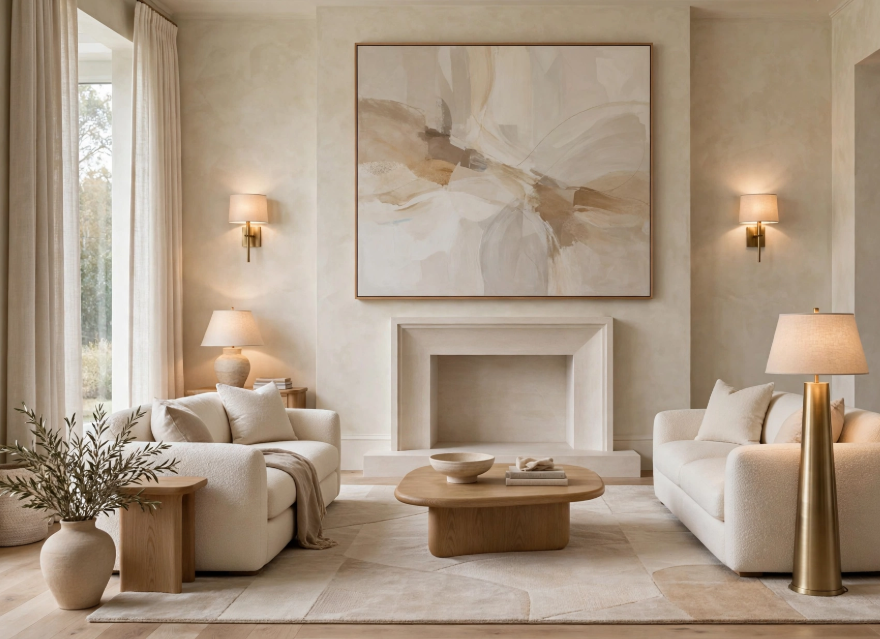
Luxury Home Decor on Different Budgets
Luxury does not have to mean completing a full renovation.
If your budget is small
Focus on:
- Decluttering
- Rearranging furniture
- Better lamps
- New curtain panels
- Larger artwork
- Fresh greenery
- Quality-looking pillow covers
- One attractive mirror
- Coordinated accessories
If your budget is moderate
Consider:
- A larger rug
- Better window treatments
- A quality sofa
- Statement lighting
- Custom-looking shelving
- Improved hardware
- Architectural molding
- A substantial coffee table
If you are renovating
Prioritize the elements that are difficult to change later:
- Flooring
- Cabinetry
- Countertops
- Lighting infrastructure
- Millwork
- Doors
- Plumbing fixtures
- Built-in storage
Spend according to how long you expect the element to remain and how heavily it will be used.
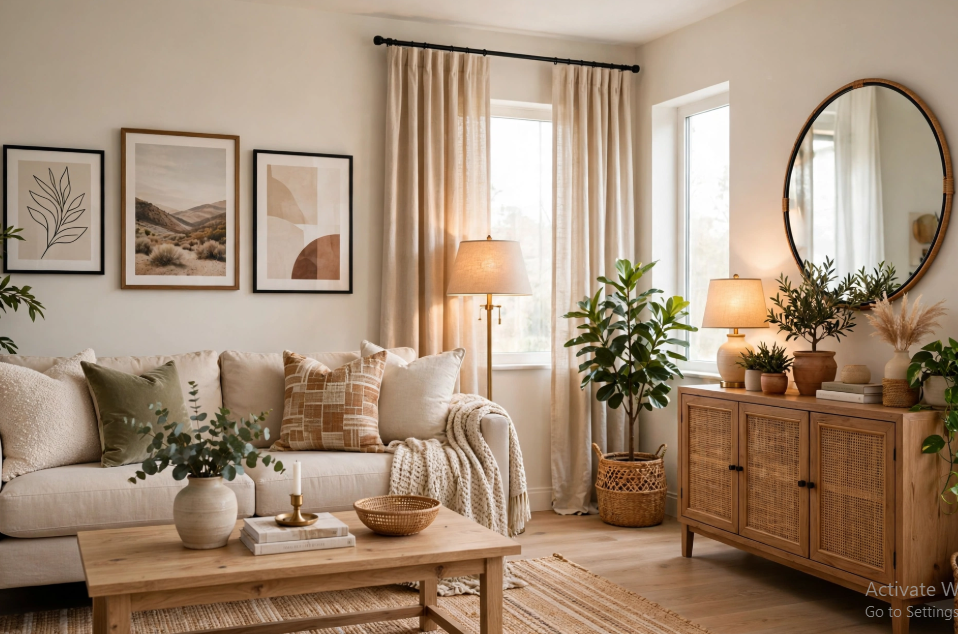
Common Luxury Decorating Mistakes to Avoid
Buying too many small accessories
A room rarely becomes more luxurious simply because it contains more decor.
Choosing the wrong scale
Tiny artwork above a large sofa or a small rug under a large sectional can make the entire room feel disconnected.
Using too many finishes
Five unrelated metals and several competing wood tones can make a room feel chaotic.
Relying on overhead lighting
One bright ceiling fixture rarely creates the same depth as multiple light sources.
Copying a showroom
A showroom is designed to sell a look. Your home needs to support your actual life.
Choosing trends over longevity
If you replace major furniture every year, the room may never develop a coherent identity.
Confusing luxury with logos
Visible branding is not a substitute for craftsmanship, proportion or thoughtful styling.
Decorating every surface
Empty space allows important pieces to become focal points.
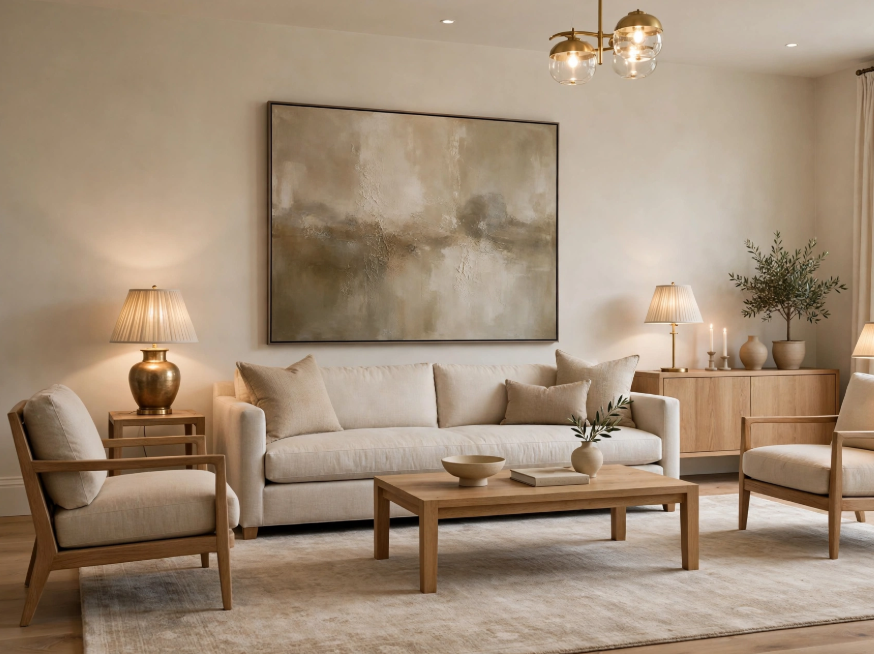
Final Thoughts
The most effective luxury home decor ideas are not necessarily the most expensive ones.
A home feels high-end when its pieces work together. The furniture fits the room. The lighting creates atmosphere. Materials feel intentional. Artwork has enough space to make an impression. Textures add depth. Storage controls clutter. And personal objects give the space character.
If you are starting from scratch, do not try to transform every room at once.
Choose one room, establish the palette, correct the furniture scale, improve the lighting, add texture, introduce one focal point, and edit everything that does not contribute.
Luxury is ultimately less about showing how much you spent and more about making thoughtful choices that create a home that feels comfortable, cohesive, personal, and beautifully considered.
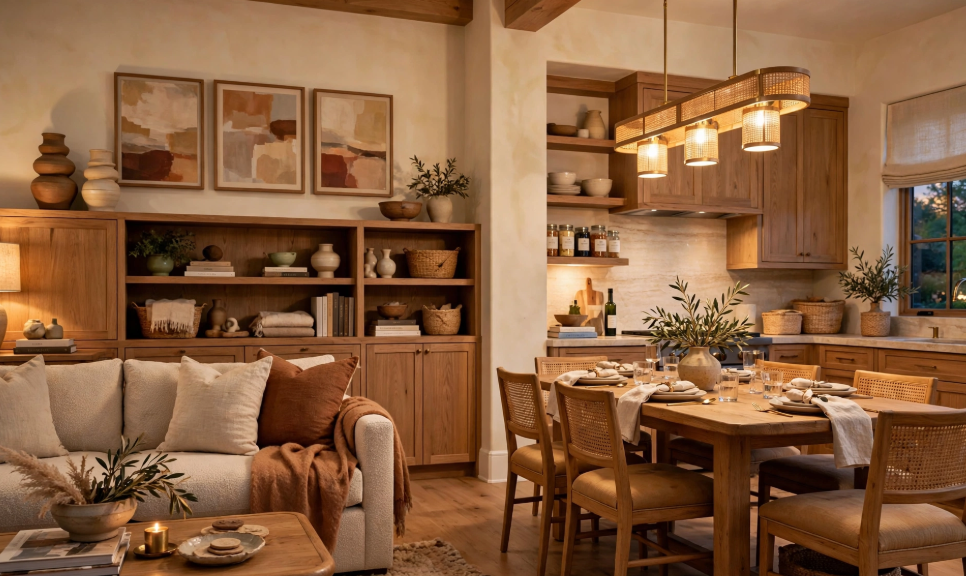
FAQs
Is luxury home decor only for expensive homes?
No. Luxury home decor principles can be applied to apartments, starter homes, rentals, and larger houses. Proportion, lighting, texture, organization and restraint often matter more than the total price of the furnishings.
How do the wealthy decorate their homes?
There is no single style associated with wealthy homeowners. High-end interiors often emphasize customization, craftsmanship, carefully selected materials, artwork, comfort and personal collections rather than following one decorating formula.
What color makes a house look expensive?
Warm neutrals such as ivory, cream, taupe and greige are versatile choices, especially when combined with natural wood and a darker accent. However, rich colors can also look luxurious when they are cohesive with the architecture and lighting.
How do I make my house look more elegant?
Start by decluttering, correcting furniture scale, improving lighting, adding texture, choosing a cohesive color palette and introducing one strong focal point.
What is the 3-5-7 rule in decorating?
The 3-5-7 rule is a styling guideline based on grouping decor in odd numbers such as three, five or seven. It can help create visual rhythm, especially on coffee tables, mantels, shelves and other surfaces. It should be treated as a flexible guideline rather than a strict decorating law.
Can a small house look luxurious?
Yes. In smaller spaces, scale and editing become especially important. Choose furniture that fits the room, use appropriately sized rugs and artwork, layer lighting and avoid overcrowding surfaces.
Does luxury decor have to be neutral?
No. Neutral palettes are versatile, but current 2026 design trends also show stronger interest in richer colors and more individualized interiors.
What makes a living room look expensive?
Correct furniture scale, a substantial rug, layered lighting, well-chosen artwork, quality-looking textiles, curtains and a restrained selection of accessories can create a polished effect.