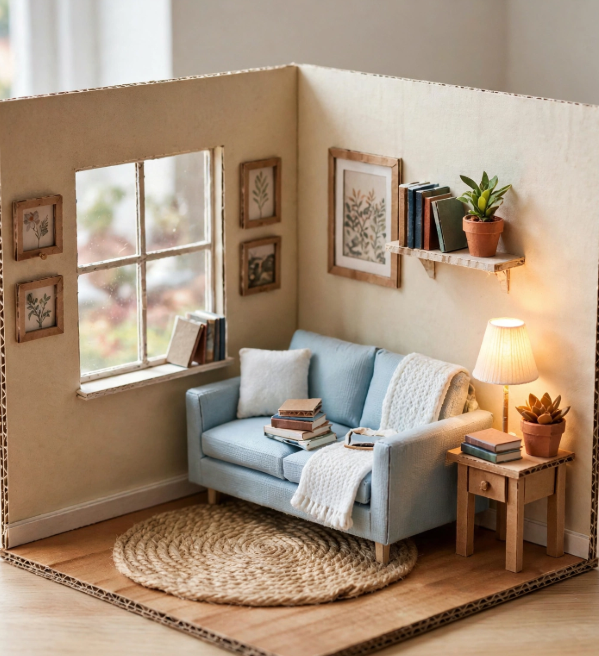
Miniature crafts from recycled materials are a creative way to experiment with tiny décor without investing in an extensive collection of miniature supplies. For example, cardboard can become furniture, bottle caps can turn into tables or planters, and fabric scraps can be transformed into cushions, rugs, or upholstery.
What appears to be a package, a wine cork, or a cardboard fragment in the recycling bin can easily be transformed at a miniature scale. With a little cutting, layering, painting, and imagination, everyday waste can become miniature furniture, garden accessories, room accessories, or even charming dollhouse scenes.
In addition, miniature crafts made from recycled materials can be valuable for anyone who wants to experiment without investing in an extensive collection of miniature supplies. For example, cardboard can be transformed into furniture, bottle caps into tables or planters, and fabric scraps into cushions, rugs, or upholstery.
However, it is important to note that many of these projects are technically examples of reuse or upcycling rather than recycling in the strict waste-management sense. According to the U.S. Environmental Protection Agency, reuse comes before recycling in its waste-management hierarchy.
With that in mind, the following ideas focus on miniature décor that can fit in a dollhouse, room box, diorama, shelf display, or miniature garden.
If you enjoy giving old materials a creative makeover, explore 15 Crochet Upcycle Ideas to Give Old Materials a New Life for more ways to turn leftover supplies into something useful and decorative.
Before You Start: Build a Miniature Reuse Box
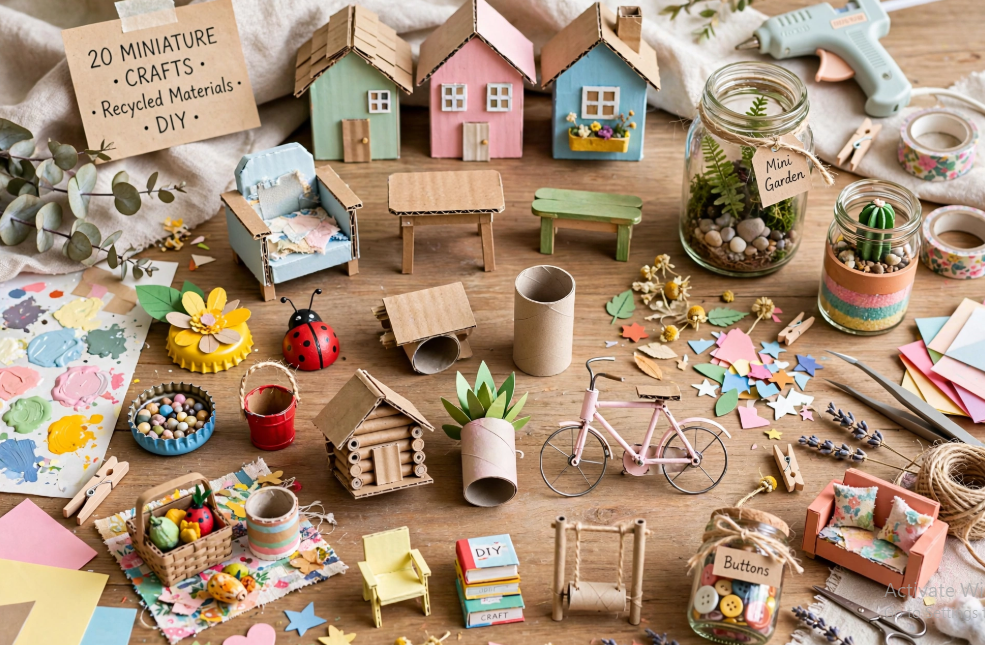
Keep a small container for clean pieces that might be useful later.
Good items to save include:
- Cereal and food boxes
- Small cardboard packaging
- Matchboxes
- Bottle caps
- Clean yogurt cups
- Egg-carton sections
- Corks
- Fabric scraps
- Old magazines
- Buttons
- Paper tubes
- Small pieces of plastic packaging
- Clean wooden stirrers
- Ribbon and thread scraps
You don’t need to save everything. Small, clean pieces that are easy to cut and store are usually the most useful.
For anything involving sharp tools, heat, or hot glue, use appropriate adult supervision.
For another fun way to turn simple materials into personalized accessories, check out 20 DIY Clay Bag Charms That Are Cute, Easy, and Customizable for creative ideas you can make at home.
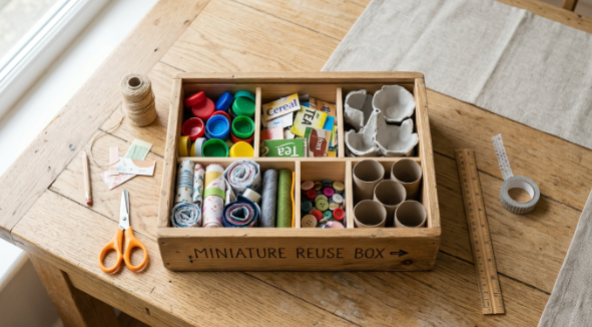
20 Miniature Crafts From Recycled Materials
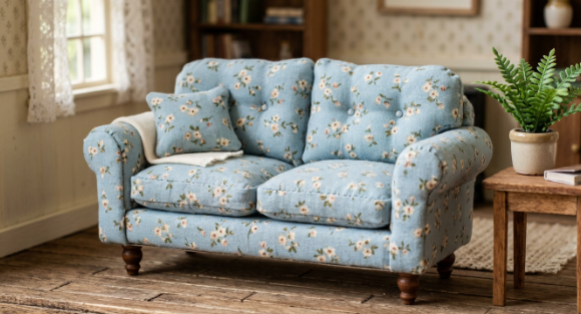
1. Make a Miniature Sofa From a Cereal Box: Miniature Crafts From Recycled Materials
A sturdy cereal box can give you enough cardboard to make a miniature sofa frame.
Cut separate pieces for the seat, back, and arms, layering where you want extra thickness, then cover with a small piece of an old shirt, curtain, or other fabric.
To make the surface fluffy, tuck a thin piece of clean foam or fabric padding under the upholstery.
Best for: dollhouse living rooms and room boxes.
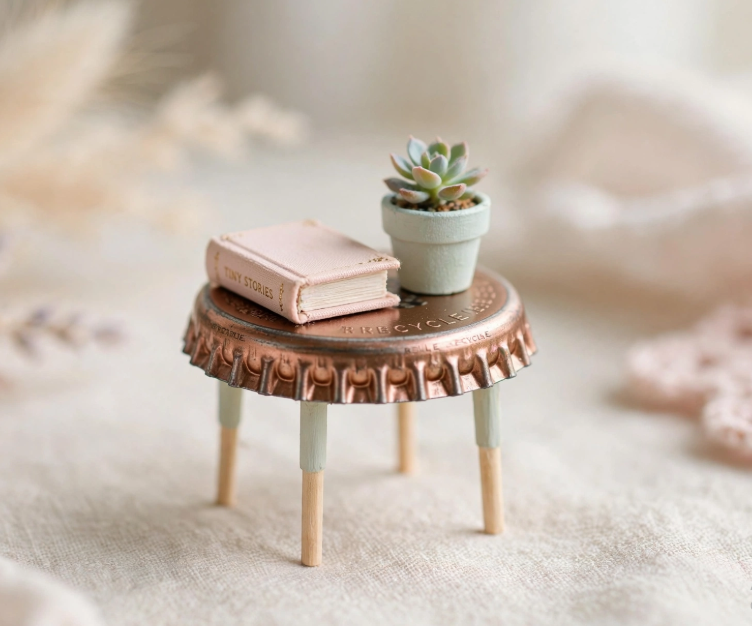
2. Turn Bottle Caps Into a Mini Side Table: Miniature Crafts From Recycled Materials
A bottle cap resembles the shape of an absolutely tiny tabletop.
Paint the cap and glue it to a small piece of cardboard or wood as a base. A tall building can be constructed by stacking several caps on top of each other or using a small strip of recycled material as a central pillar.
Attach a miniature book, plant, or teacup, and you will have a complete miniature room interior.
Bottle caps are often used as miniature furniture and details due to their convenient shape and size.
For more creative ways to give everyday items a second life, explore 20 Recycled Household Item Crafts for a Creative Home for simple projects you can make at home.
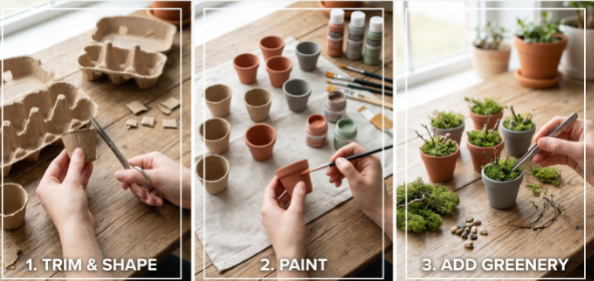
3.Create Egg-Carton Mini Planters: Miniature Crafts From Recycled Materials
An egg-carton cup makes a naturally rounded little container.
Trim the cup neatly, paint it in a terracotta, stone, or neutral shade, and add a tiny amount of suitable miniature greenery.
You can make several in slightly different finishes and group them beside a miniature window, shelf, or garden path.
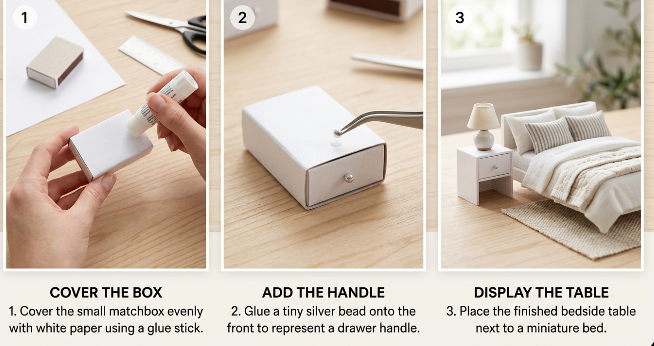
4. Build a Matchbox Bedside Table: Miniature Crafts From Recycled Materials
A matchbox can be transformed into the body of a miniature drawer unit.
Cover with paper, paint, or leave parts of the matchbox surface exposed for a rustic effect, and add a small button or bead as a drawer pull if appropriate.
Position it next to a miniature bed, with a tiny book or lamp on top.
If you enjoy making small decorative projects, explore 20 Easy Air-Dry Clay Crafts for Beginners to Make at Home for more simple ideas to try.
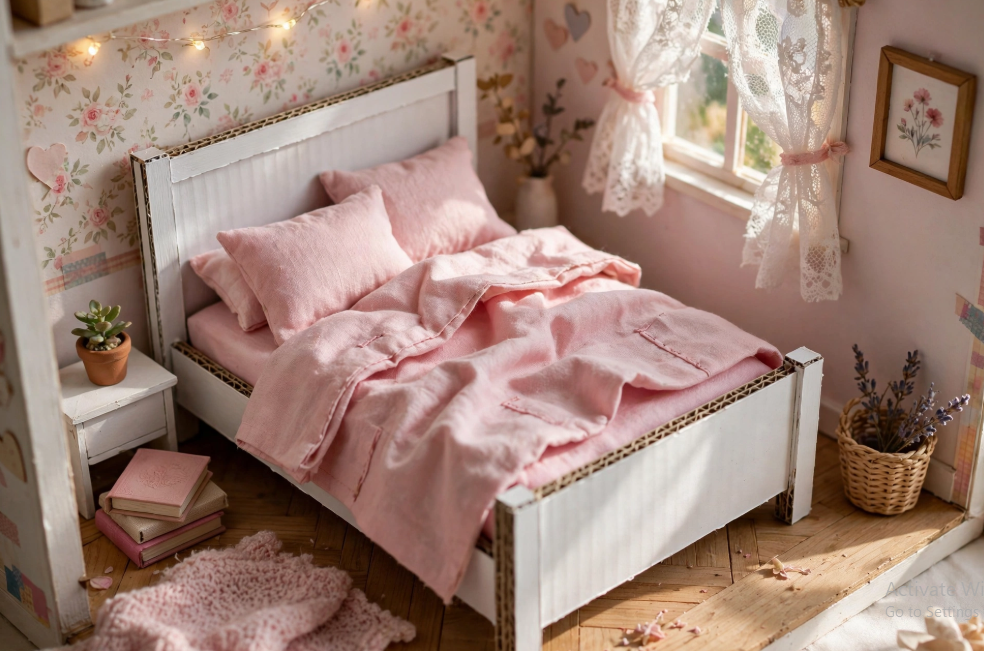
5. Make a Miniature Bed From Packaging Cardboard: Miniature Crafts From Recycled Materials
First, the flat pieces of cardboard from food packaging can be cut to create the headboard, mattress support, and side supports.
Next, cover the mattress with a piece of fabric of your choice, and use another small piece to create a cozy blanket.
Finally, create harmony by repeating the same pattern or color in another part of the room. In addition, add small details, such as miniature pillows or decorations, to make the scene look like an actual room rather than a pile of tiny objects.
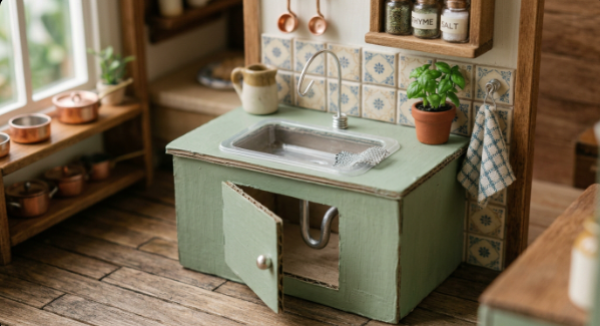
6. Turn Packaging Into a Mini Kitchen Sink: Miniature Crafts From Recycled Materials
First, thin cardboard can be shaped into the cabinet, while a shallow piece of clean packaging can be turned into a miniature sink basin.
Next, cut a simple cabinet shape, add a countertop, and paint the components before assembling them together. Then, use a thin piece of wire to create a tiny faucet.
For an extra detail, a small bead can serve as a decorative cabinet knob.
Ultimately, this project demonstrates one of the most useful miniature-making ideas: common packaging does not have to remain ordinary. Instead, it can be dissected, cut, covered, and painted to create something entirely new. In fact, cardboard miniature kitchens and sinks are already popular DIY projects.
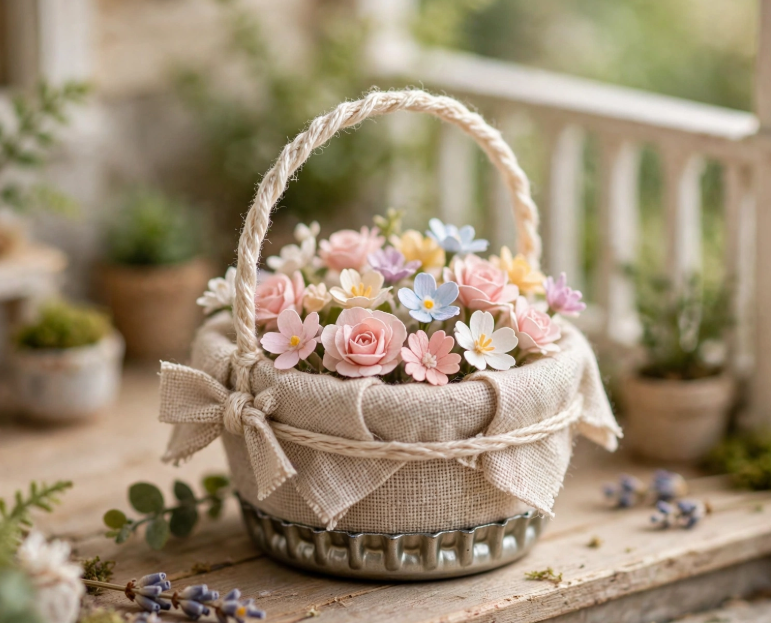
7. Make a Tiny Flower Basket From a Bottle Cap: Miniature Crafts From Recycled Materials
For a miniature garden or porch, try making a miniature hanging basket out of a bottle cap.
Wrap or cover the cap with a narrow strip of paper, fabric, or other suitable scrap material. Tie a small handle made of thread or thin wire on it, and fill it with tiny paper flowers or miniature greens.
Several baskets in different colors make a nice garden display.
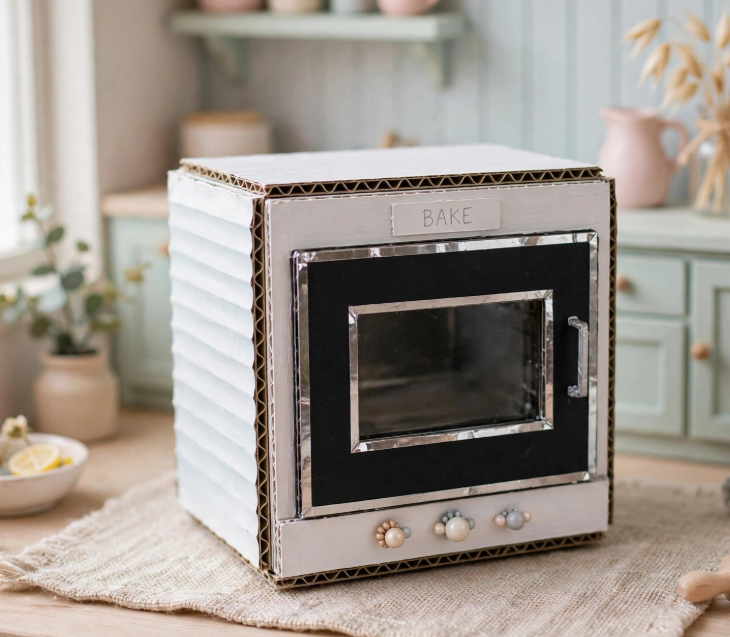
8. Create a Mini Oven From Cardboard
Use layered cardboard to construct a small rectangular oven.
The front can be decorated with a black paper oven door, while tiny buttons or beads can represent controls.
Add a narrow strip of metallic-looking paper around the edge if you want a more modern appearance.
This is a good project for a miniature kitchen because the basic rectangular shape is easy to adapt to different scales.
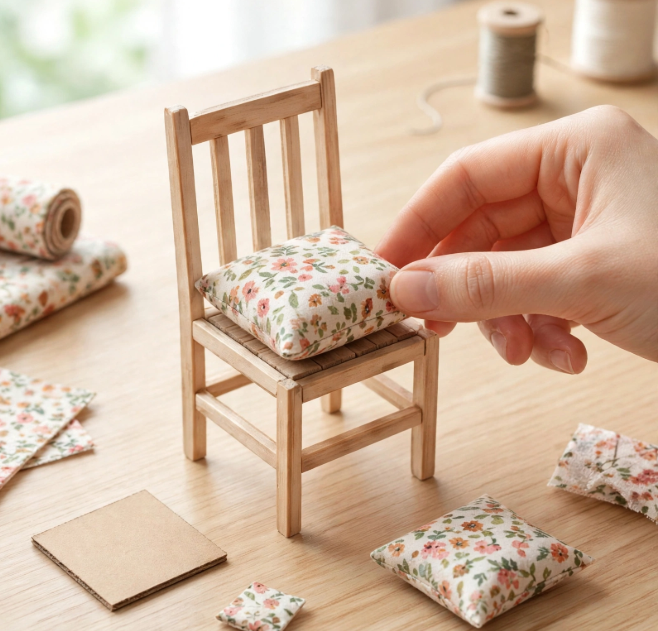
9. Turn Clean Wooden Stirrers Into a Miniature Chair
If you have clean discarded wooden coffee stirrers or similar thin wooden pieces, save them for miniature construction.
Cut or arrange them into a simple seat and backrest. Add a small cardboard cushion covered with fabric.
The goal isn’t to reproduce every detail of a full-size chair. At miniature scale, a recognizable silhouette and consistent proportions often matter more.
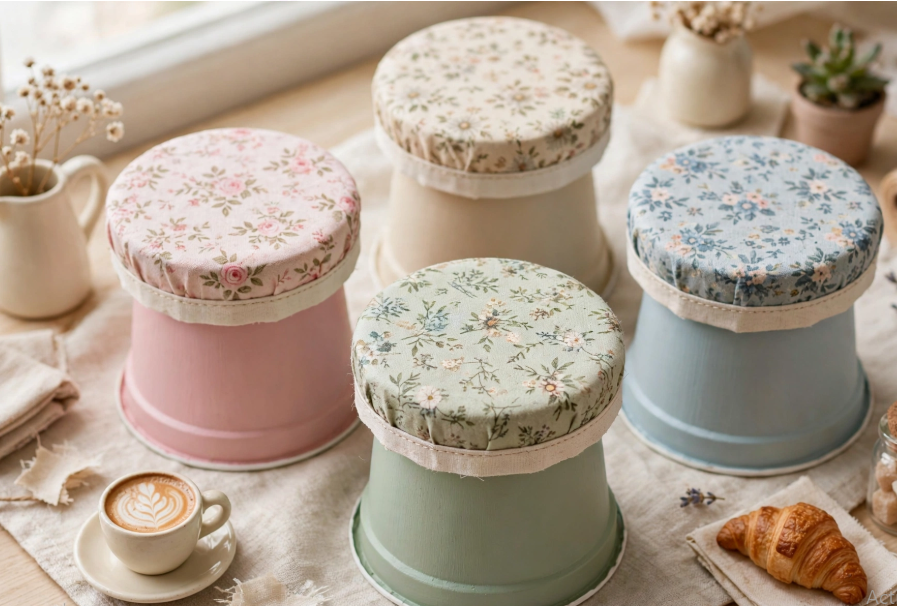
10. Make a Mini Stool From a Yogurt Cup
A small, clean yogurt cup can provide the basic structure for a tiny stool.
Turn it upside down, trim the shape if necessary, and cover or paint the exterior.
Add a circular piece of cardboard or fabric on top to create a seat.
You can make a set of matching stools for a miniature café, kitchen island, craft room, or workshop.
11. Turn a Cork Into a Mini Ottoman
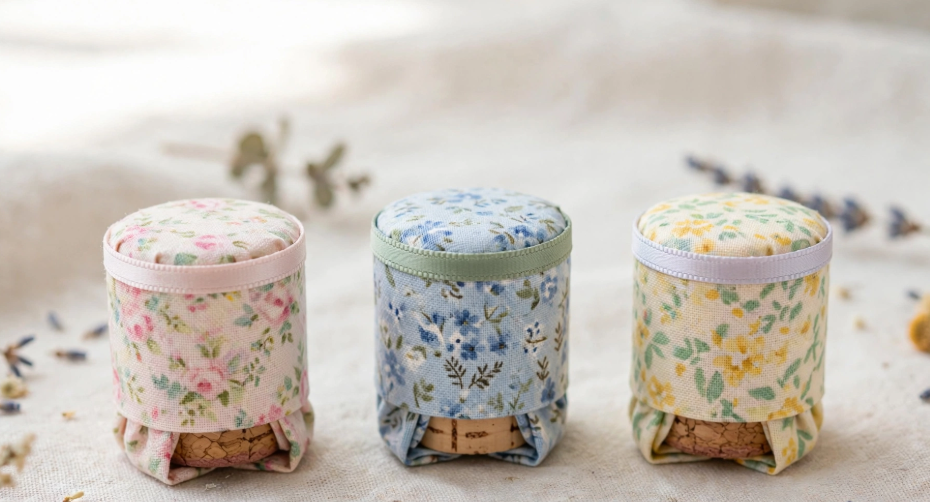
A wine cork can become a surprisingly convincing miniature ottoman.
Wrap a small fabric scrap around it and secure the material underneath. Add a narrow ribbon around the edge for a decorative border.
Because cork already has a compact cylindrical shape, very little structural work is required.
If you don’t use wine corks, ask friends or family members to save clean ones rather than buying new ones specifically for a recycled-material project.
12. Make a Miniature Lamp From a Paper Tube
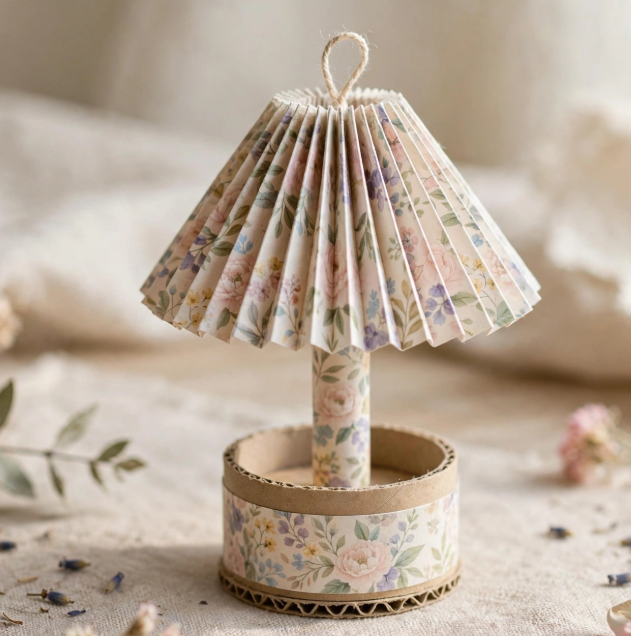
A cardboard tube can be reduced down to a miniature lamp base or shade.
Cut out a small portion to use as the base and make a small shade out of thin paper or packaging material.
Paint the two pieces in coordinating colors and add a tiny loop of thread as a decorative cord.
To make a purely decorative miniature, there is no need for a functional electrical component.
13. Make Tiny Books From Old Magazines
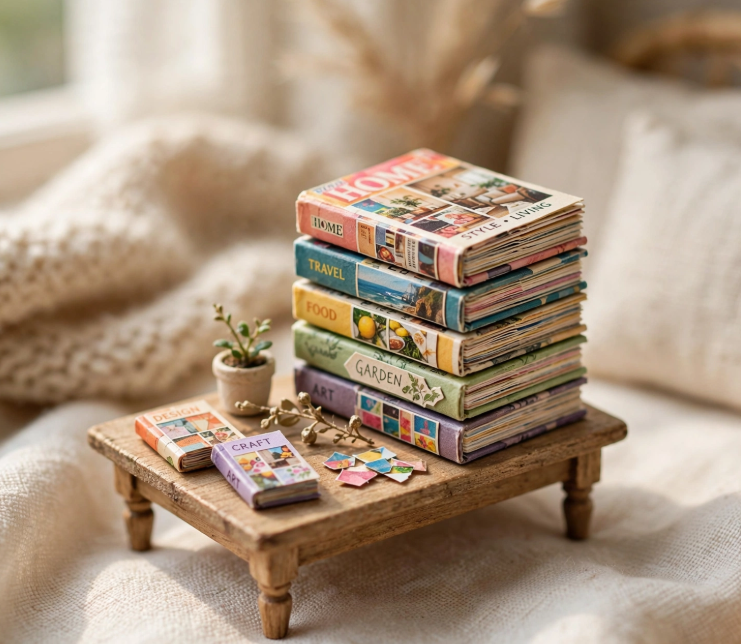
Old magazines can become miniature books, notebooks, or framed artwork.
Cut several tiny rectangles of paper and fold or stack them into little book shapes. Cover the outside with colorful magazine imagery or plain paper.
A small stack of books can instantly make a miniature reading nook, bedside table, desk, or bookshelf feel more lived-in.
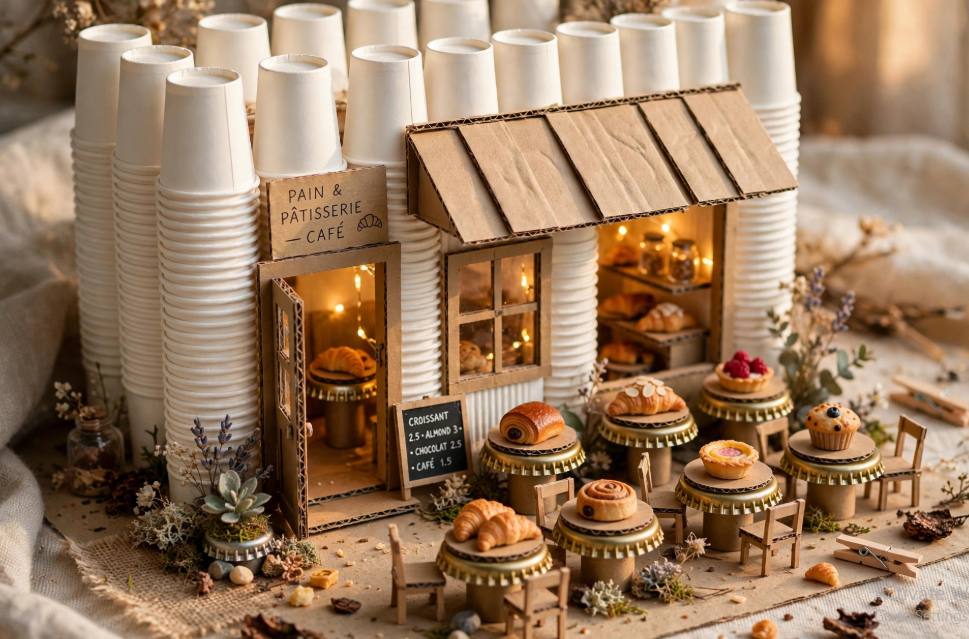
14. Create a Mini Café From Paper Cups
Clean paper cups can be turned into the basic structure of tiny buildings.
Use one or more cups as rounded building forms and add cardboard roofs, doors, windows, signs, and awnings.
A few bottle caps can become tables, while small cardboard circles can serve as plates or trays.
This idea works particularly well as a tiny café, bakery, market stall, or garden kiosk.
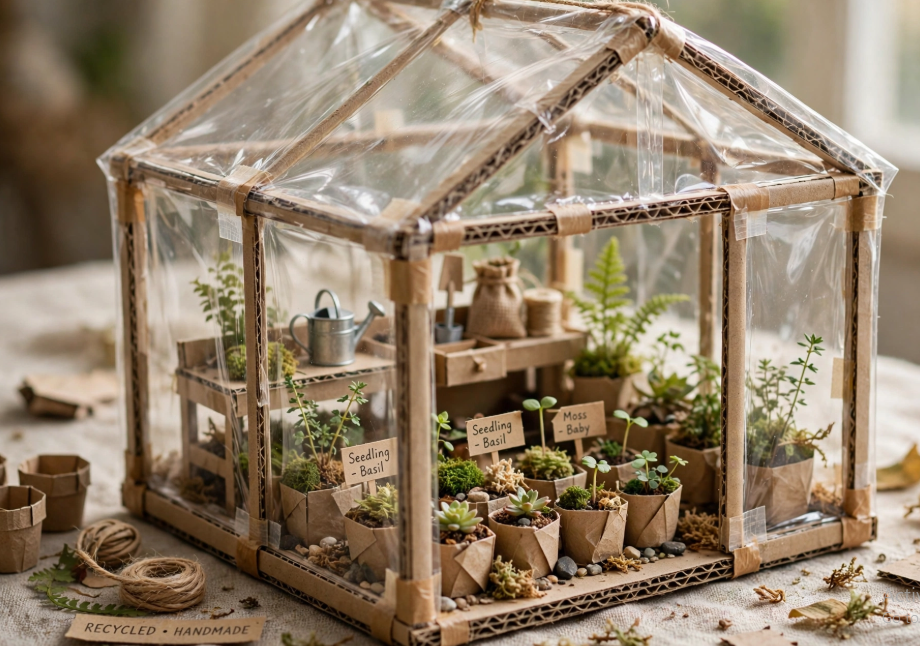
15. Build a Mini Greenhouse From Clear Packaging
Don’t throw away every piece of transparent plastic packaging.
Clean, rigid clear packaging can sometimes be useful for miniature greenhouse panels. Pair it with a simple cardboard or recycled-stick frame.
Add tiny paper pots, miniature plants, or a small potting bench inside.
The transparent panels help create the visual effect of glass without needing actual glass.
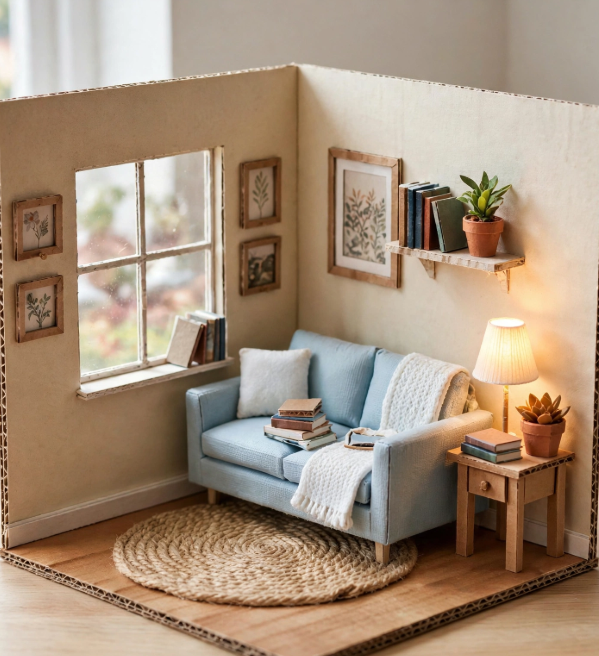
16. Create a Cardboard Reading Nook
Use a small cardboard box as the shell for a tiny reading corner.
Add:
- A miniature sofa or chair
- Tiny books
- A small side table
- A paper lamp
- Fabric for a rug
- A few paper plants
This is one of the easiest ways to turn separate recycled miniature crafts into a coherent scene.
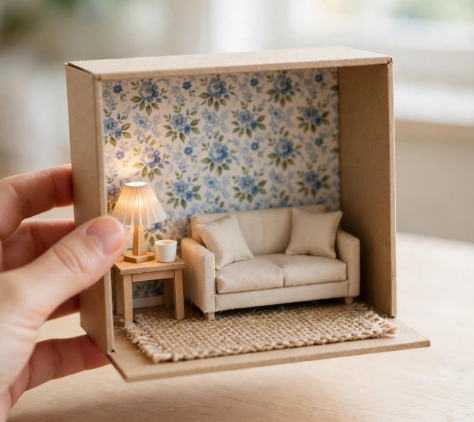
17. Turn a Small Box Into a Miniature Room Box
A sturdy small box can provide an instant room structure.
Cover the back wall with magazine paper, leftover wrapping paper, or painted cardboard. Add a floor from another piece of packaging.
Then furnish it with your recycled miniature pieces.
Room boxes are particularly useful for beginners because you can complete one small scene without constructing an entire dollhouse. Similar recycled room-box projects use common items such as cereal boxes, bottle caps, and paper clips.
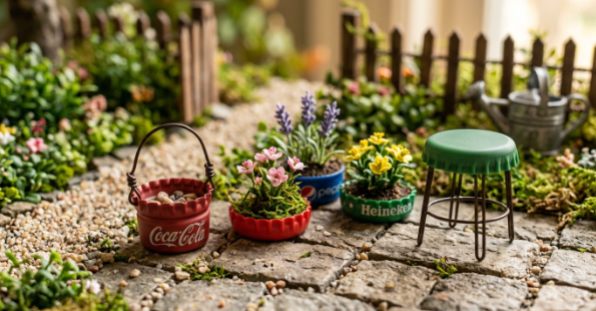
18. Make Tiny Garden Accessories From Bottle Caps
Bottle caps can become much more than tables.
Depending on their shape and scale, use them as:
- Plant pots
- Buckets
- Baskets
- Outdoor stools
- Garden containers
- Tiny tubs
Paint several in related colors so the pieces look intentionally designed rather than randomly collected.
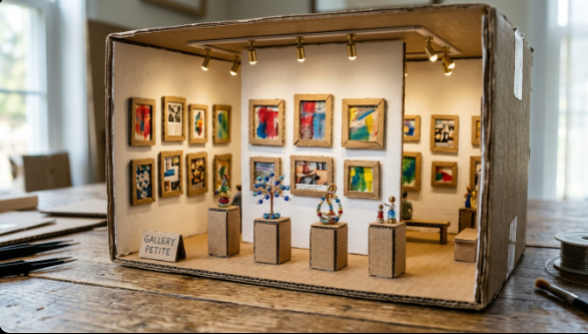
19. Create a Mini Cardboard Art Gallery
Use a small cardboard box or room-box structure as your gallery.
Cut tiny frames from thin packaging cardboard and fill them with miniature artwork made from magazine images, painted scraps, or leftover paper.
Add simple cardboard pedestals and tiny sculptures.
A miniature gallery is also a great way to display several tiny crafts together instead of storing each object separately.
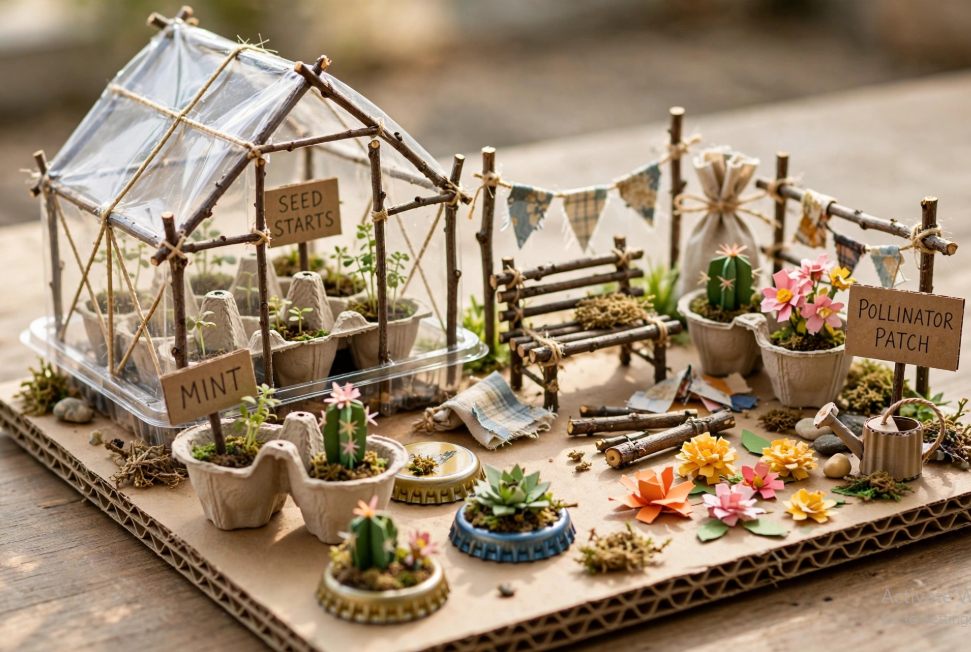
20. Build a Recycled Mini Garden Scene
Bring several techniques together to make a complete miniature garden.
Use:
- Bottle caps for planters
- Cardboard for garden signs
- Egg-carton cups for pots
- Small twigs for benches or fencing
- Paper scraps for flowers
- Clean packaging for a greenhouse
- Fabric or paper scraps for tiny garden accessories
Arrange everything on a sturdy cardboard base.
The most important part is the composition. Leave some open space, vary the heights of your objects, and create a simple path or focal point so the scene feels intentional.
How to Make Recycled Miniatures Look More Realistic
The difference between a cute miniature and a convincing miniature often comes down to proportion and finishing, not expensive materials.
Keep the scale consistent
If you’re building a dollhouse scene, choose a scale before making several large pieces.
A common dollhouse scale is 1:12, while 1:24 is a smaller option. At 1:12, one inch in the miniature represents one foot in the full-size object.
You don’t have to measure every tiny object mathematically, but using one reference piece—such as a chair, door, or person—helps keep the scene believable.
Layer thin materials
Instead of trying to make one thick piece of cardboard look like furniture, layer several thin pieces.
This creates cleaner edges and gives simple recycled materials more structure.
Repeat colors
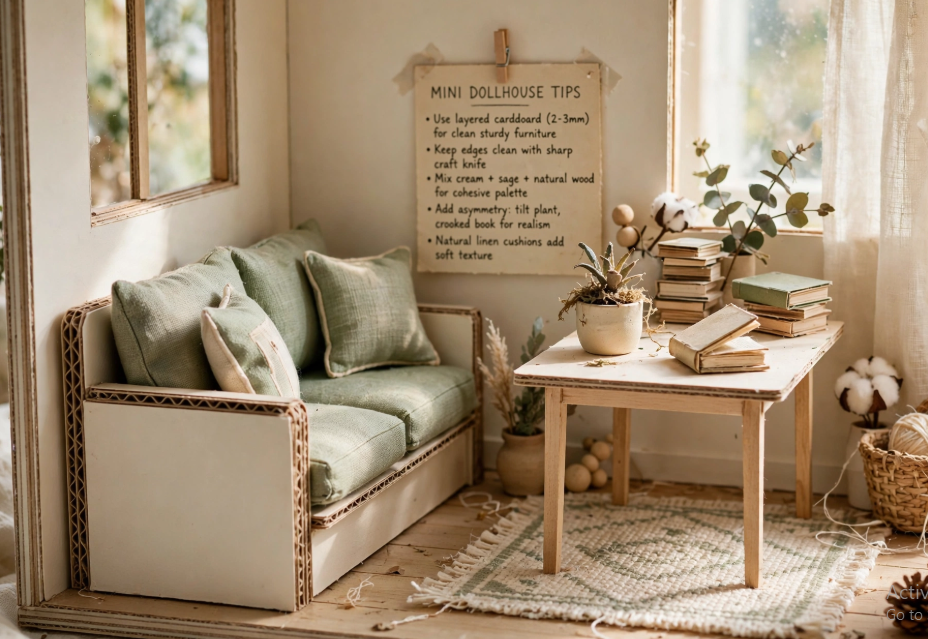
Choose two or three main colors for a room.
For example:
- cream + sage + natural wood
- white + blue + warm brown
- terracotta + green + beige
Repeating those colors across furniture, cushions, plants, and accessories creates visual cohesion.
Add tiny imperfections
Real rooms aren’t perfectly uniform.
A slightly crooked book, uneven plant, worn-looking tabletop, or mismatched cushion can make a miniature scene feel more natural.
Focus on silhouettes
At a very small scale, recognizable shapes are important.
A rectangular shape with four legs can read as a table even when the construction is extremely simple.
What Materials Are Best for Miniature Crafts?
The most useful recycled materials are usually those that are:
- Clean
- Dry
- Easy to cut
- Easy to glue
- Small enough to store
- Sturdy enough to hold their shape
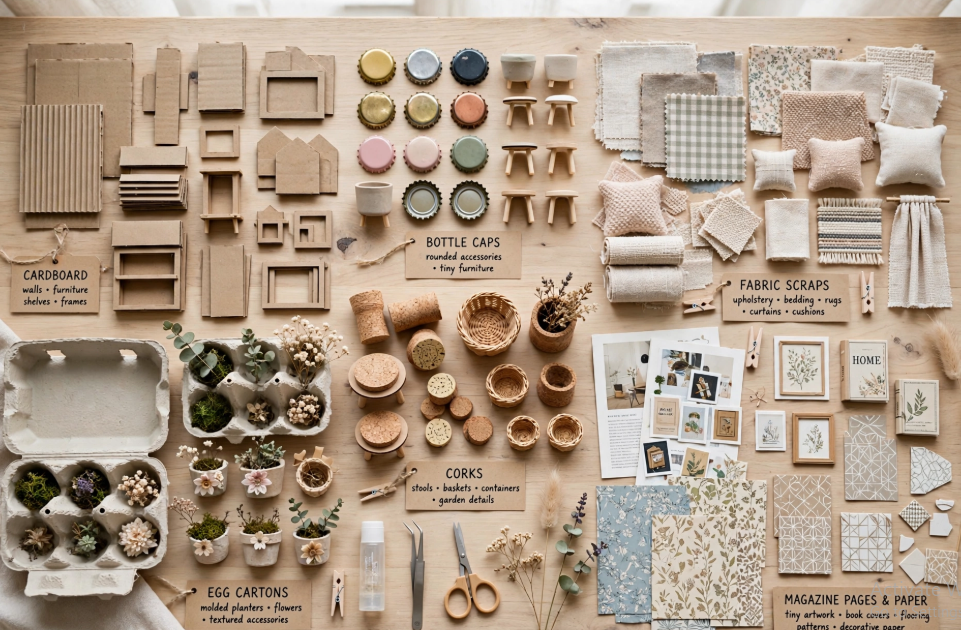
Cardboard is especially versatile because it can become walls, furniture, flooring, shelves, frames, and decorative details.
Bottle caps work well for rounded accessories and tiny furniture.
Fabric scraps are useful for upholstery, bedding, rugs, curtains, and cushions.
Egg cartons provide molded shapes that can become planters, flowers, or other textured accessories.
Corks are naturally compact and can become stools, baskets, containers, or garden details.
Magazine pages are useful for tiny artwork, book covers, flooring patterns, and decorative paper.
Safety Tips for Recycled Miniature Crafts
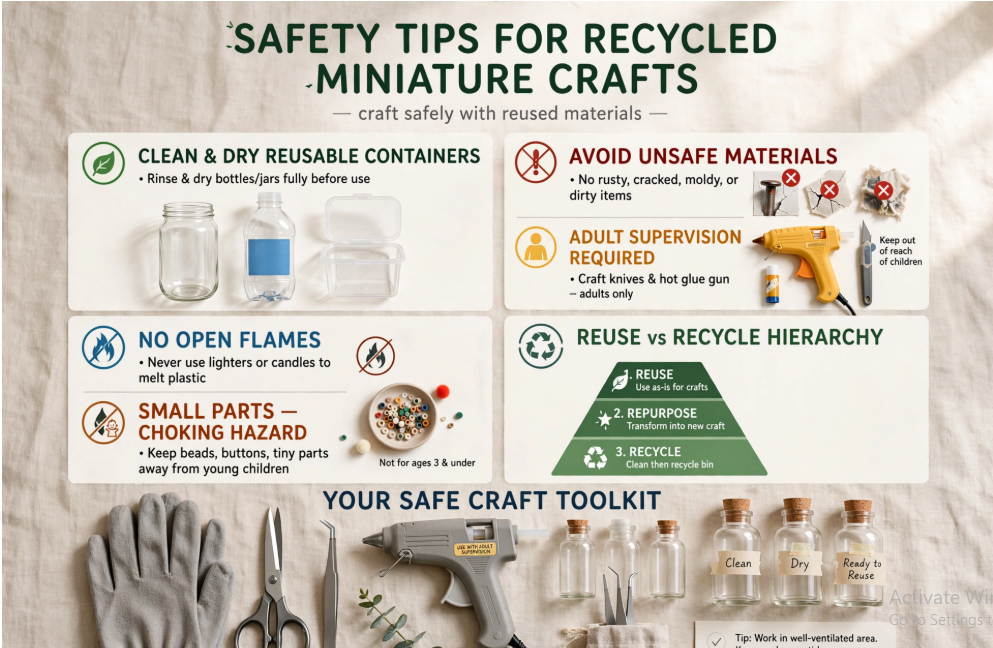
Before crafting, make sure to clean and dry all reusable food and beverage containers that will be used.
Avoid using rusty, cracked, molded, dirty, or sharp objects.
An adult should assist with or supervise a child when using potentially hazardous items such as craft knives, heated tools, a lighter, or hot glue gun, if the project calls for such materials.
Don’t use open flames to melt things in plastic or other materials.
For children’s projects, make sure you don’t leave small loose parts where very young children might find them and put them in their mouths.
Finally, not everything we throw away can be thrown into the recycling bin. Call your local recycling center and ask them what they consider recyclable because every region has different guidelines regarding what can and cannot be recycled. For the mini projects mentioned above, the goal is to re-purpose many common household items, so something that would typically be thrown away can have a new life rather than being tossed into the trash. The EPA even recommends this as something better than recycling since it is listed before recycling on their hierarchy of recycling.
Ultimately, this project demonstrates one of the most useful miniature-making ideas: common packaging does not have to remain ordinary. Instead, it can be dissected, cut, covered, and painted to create something entirely new. In fact, cardboard miniature kitchens and sinks are already popular DIY projects. You can also learn more about the difference between reuse and recycling from the U.S. Environmental Protection Agency.
How to Turn Individual Crafts Into a Miniature Room
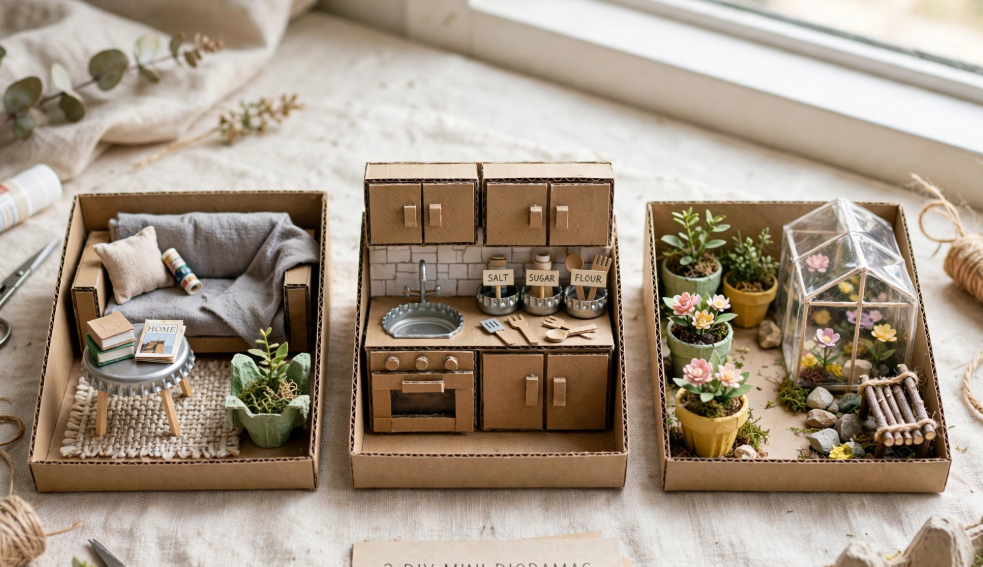
You don’t have to make an entire miniature house at once.
Start with one small scene. For:
a living room, try:
- Cardboard sofa
- Bottle-cap side table
- Tiny magazine books
- Fabric rug
- Egg-carton planter
a kitchen:
- Cardboard cabinets
- Mini sink
- Cardboard oven
- Bottle-cap containers
- Tiny cardboard utensils
a garden:
- Bottle-cap planters
- Egg-carton pots
- Recycled-stick bench
- Paper flowers
- Clear-packaging greenhouse
This approach makes miniature crafting more manageable and lets you build a collection gradually instead of trying to complete a whole dollhouse in one project.
FAQs
Can I make miniatures from recycled materials?
Yes. Clean cardboard, packaging, bottle caps, fabric scraps, corks, paper, egg cartons, small containers, and other household leftovers can be reused to create miniature furniture, accessories, room boxes, and garden scenes. Existing miniature tutorials demonstrate many of these approaches.
What are some crafts I can make from recycled materials?
For miniature projects, you can make sofas, tables, beds, planters, sinks, ovens, chairs, stools, lamps, books, room boxes, greenhouses, garden accessories, and miniature scenes.
What are 20 things that can be recycled?
Common recyclable materials include paper, cardboard, aluminum and steel cans, certain plastic containers, glass bottles and jars, newspapers, magazines, and other materials accepted by local recycling programs. Exact acceptance varies by location, so local recycling guidance should be checked rather than assuming every item is recyclable.
What are 10 examples of products made from recycled materials?
Examples can include recycled-paper products, cardboard packaging, recycled plastic products, recycled-content textiles, recycled aluminum products, recycled glass products, recycled plastic furniture, carpeting, insulation, and other products containing recycled materials. The exact recycled content and manufacturing process varies by product.
What can I make from cardboard for a dollhouse?
Cardboard can become sofas, beds, tables, cabinets, sinks, ovens, shelves, room walls, flooring, picture frames, and miniature artwork.
What can I make with bottle caps for a miniature scene?
Bottle caps can become tiny tables, stools, planters, baskets, containers, buckets, or other rounded accessories.
What scale should I use for a miniature dollhouse?
1:12 is a common dollhouse scale, while 1:24 provides a smaller scene. Choose one scale and keep major furniture pieces proportionate to one another.
How do I make recycled miniatures look less homemade?
Focus on clean edges, consistent proportions, repeated colors, layered materials, and small finishing details. Painting or covering the original packaging can also help disguise its original form.
Are recycled miniature crafts suitable for kids?
Many simple cardboard and paper projects can be adapted for children, but adults should handle or supervise activities involving sharp cutting tools, heat, hot glue, and other potentially hazardous equipment. Children’s recycled-craft resources commonly recommend adult assistance for these steps.