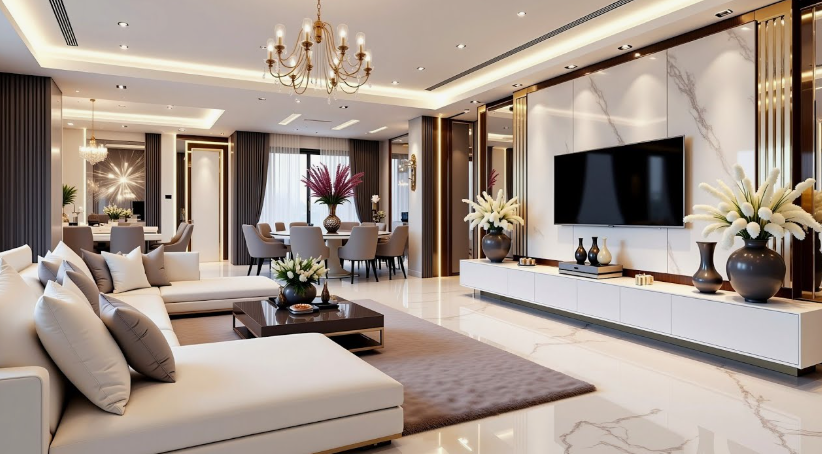
How to decorate your home can feel overwhelming when you have too many styles, colors, and decorating ideas to choose from. The good news is that creating a beautiful home does not require a huge budget or a professional designer. With a few simple choices, you can create a space that feels comfortable, stylish, and […]
Share This Article:
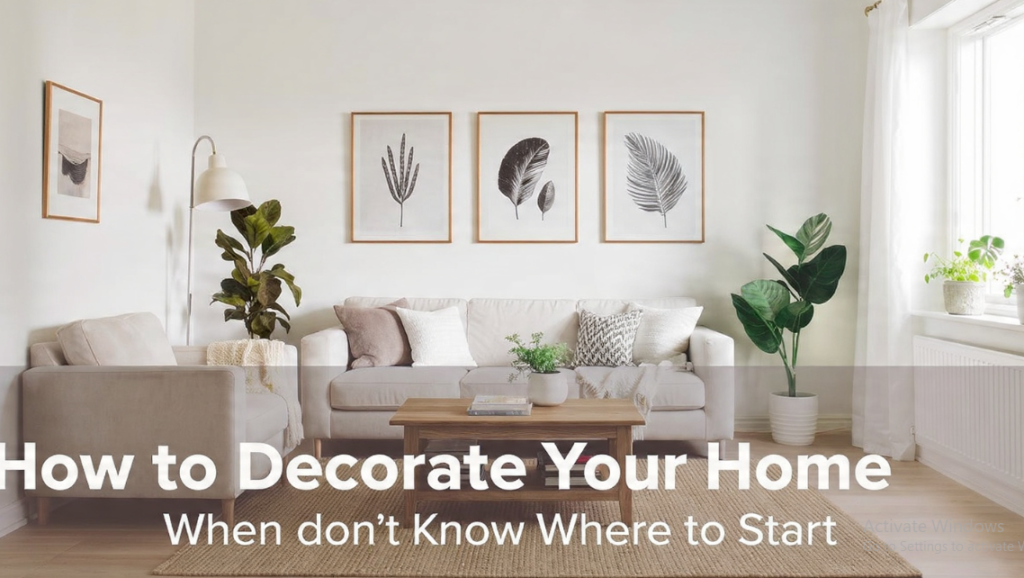
How to decorate your home can feel overwhelming when you have too many styles, colors, and decorating ideas to choose from. The good news is that creating a beautiful home does not require a huge budget or a professional designer. With a few simple choices, you can create a space that feels comfortable, stylish, and personal.
Decorating your home can seem like such a daunting task. You save all the beautiful rooms on Pinterest, realize your house is just not right, but have no idea whether to buy a sofa or some art or paint first.
The good news is that you do not need to be a natural interior design to make the room you want.
The simplest solution is to de-clutter the whole process and focus on one room at a time.
Understand the space in which you want to live, get inspired by what you already have, map out the furniture layout, and build your room from the ground up.
Here is how to decorate your home without spending thousands of dollars in the process.
If you’re looking at an entire house and thinking, “Where do I even start?” you’re already dealing with too many decisions at once.
Instead, choose one room.
A good starter room is usually:
A living room you use every day
A bedroom that needs to feel more comfortable
A dining area that feels unfinished
A home office that isn’t functioning well
You don’t have to finish the rest of the house before moving on. A room-by-room approach gives you a chance to make decisions, see what works, and learn your own decorating preferences as you go.
Recent decorating guides and real-world discussions both emphasize taking the process gradually rather than trying to complete an entire home in one shopping trip.
Start with the room that matters most
Ask yourself:
Which room would improve my everyday life the most if I fixed it?
That’s a better starting question than “Which room should look the prettiest?”
If you spend most evenings in the living room, start there. If your bedroom never feels relaxing, begin with the bedroom.
Your home doesn’t have to be finished all at once.
Step 1: How to Decorate Your Home Based on How You Want It to Feel
Before choosing paint colors or shopping for furniture, decide how you want the room to feel.
Don’t worry about identifying the perfect interior design style yet.
Instead, choose three to five words.
For example:
Cozy
Warm
Relaxed
Natural
Collected
Or:
Bright
Simple
Airy
Clean
Modern
Or:
Colorful
Playful
Eclectic
Creative
Personal
These words become a filter for future decisions.
If you want a cozy room, a cold-looking metal table may not be your first choice. If you want a calm bedroom, extremely busy patterns may not support the feeling you’re trying to create.
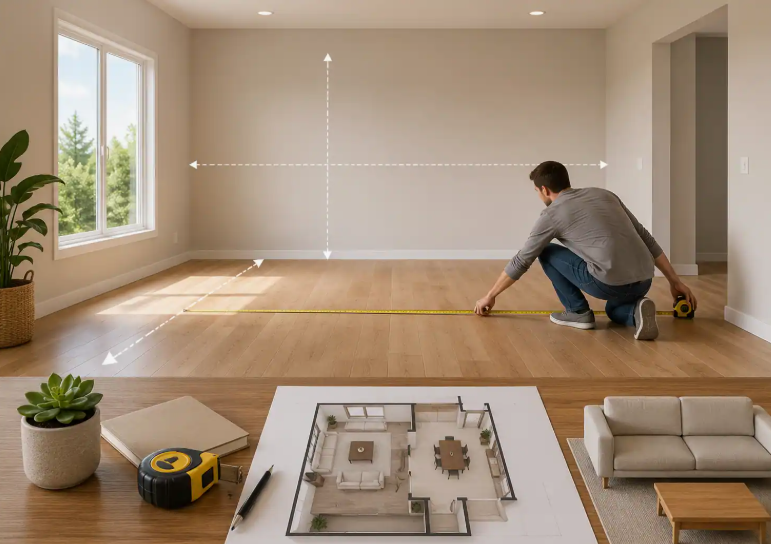
Step 3:How to Decorate Your Home: Measure the Room Before Buying Anything
This is one of the least exciting parts of decorating—and one of the most useful.
Measure:
Room length and width
Ceiling height if relevant
Doorways
Windows
Major architectural features
Existing furniture
Wall space
Walkways
Write the measurements down or sketch a simple floor plan.
You don’t need professional design software.
A piece of paper is enough to start.
Measure your furniture, too
Don’t buy a sofa, bed, dining table, cabinet, or large rug based only on how it looks online.
Record the:
Width
Depth
Height
Then compare those measurements with your available space.
A beautiful piece can still look wrong if it overwhelms the room.
Scale and proportion are among the most important practical considerations when arranging a space, and current beginner guides also emphasize assessing room dimensions and architectural features before making decorating decisions.
Make sure the room still works
Your furniture should leave comfortable paths for everyday movement.
Don’t create a beautiful arrangement that makes it awkward to:
Open a door
Reach a window
Walk around the sofa
Pull out a dining chair
Access storage
Move through the room
Function comes before styling.
Step 4: How to Decorate Your Home With a Simple Decorating Direction
Now look at the inspiration you’ve collected.
Don’t ask:
“Which exact room should I copy?”
Ask:
“What do these rooms have in common?”
Maybe you keep saving rooms with:
warm wood
cream walls
vintage accents
natural fibers
soft lighting
That tells you something about your preferences.
Another person might repeatedly save:
black accents
clean lines
pale wood
minimal furniture
graphic artwork
That’s useful information too.
Create a simple inspiration board
Save around 10–20 rooms you genuinely like.
Then look for repeated patterns.
Pay attention to:
Colors: What colors appear again and again?
Furniture: Do you prefer rounded, straight, traditional, oversized, or streamlined pieces?
Materials: Do you keep choosing wood, linen, metal, glass, leather, stone, or woven textures?
Lighting: Do you prefer bright rooms or warm, layered lighting?
Decor: Do you like minimal surfaces or rooms filled with books, art, plants, and collected objects?
Your decorating style can emerge from these patterns rather than being chosen from a list.
Step 5: How to Decorate Your Home With a Simple Color Palette
You don’t need to pick ten colors.
Start with a simple palette that includes:
A dominant color
One or two supporting colors
One or two accent colors
For example:
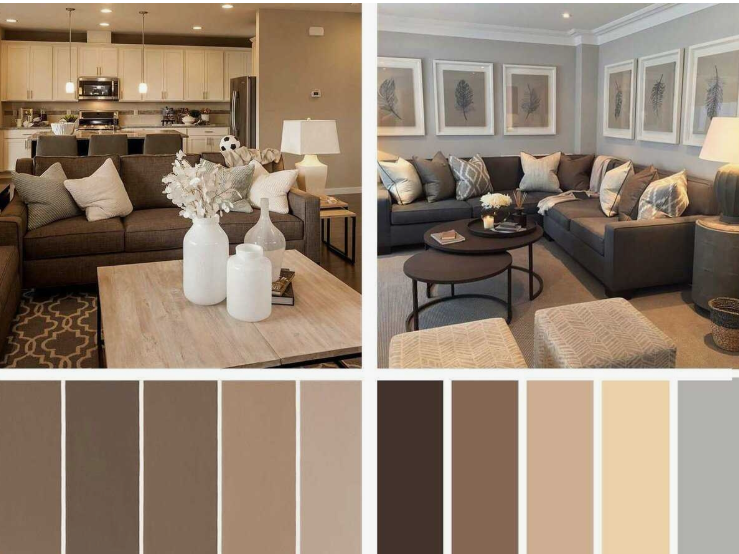
Warm neutral palette
Cream
Warm beige
Medium wood
Olive green
Terracotta
Soft coastal-inspired palette
Warm white
Sandy beige
Soft blue
Natural wood
Muted green
Moody palette
Warm white
Deep green
Brown
Aged brass
Burgundy
The exact colors are up to you.
What matters is that you can see a relationship between them.
Don’t choose paint too early
Paint is an easy thing to change, but furniture and large-scale textiles are much more difficult to replace for cheaper.
If you have a rug, sofa, painting, or some other item in your possession that you adore, use this as inspiration for your room’s colors.
Something like a patterned rug or a favorite painting should give you multiple colors to work with, as well.
This is actually what some decorating guides suggest, too; using a statement piece as your starting point for the room’s color scheme.
Step 6: How to Decorate Your Home With the Right Furniture Layout
Before buying decorative accessories, solve the furniture arrangement.
Ask:
Where is the room’s natural focal point?
Where do people enter?
Where do they walk?
Where should people sit?
Does the furniture encourage conversation?
Is there enough usable surface space?
Are important windows or architectural features blocked?
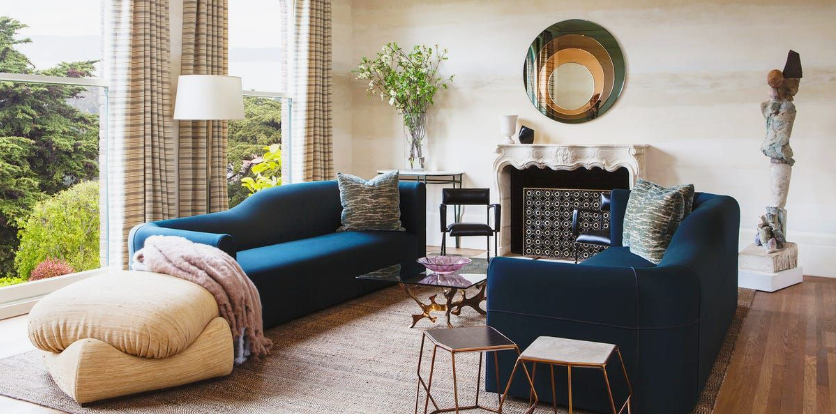
Think about the room’s focal point
A focal point might be:
A fireplace
A large window
A beautiful view
A piece of artwork
A statement bed
A media wall
An architectural feature
You don’t always need to create a new focal point.
Sometimes you simply need to arrange the furniture so the existing feature gets the attention it deserves.
Don’t automatically push everything against the walls
This is especially important in larger living rooms.
Sometimes pulling seating slightly away from the wall creates a more intentional conversation area.
The right arrangement depends on the room’s dimensions and how you use it, so don’t follow a furniture rule just because it appears in a decorating photo.
Step 7: How to Decorate Your Home With One Anchor Piece
If you’re starting from a nearly empty room, don’t buy ten things at once.
Choose one important piece to guide the room.
It could be:
A sofa
An area rug
A bed
A dining table
A piece of artwork
A vintage cabinet
A patterned chair
The right anchor piece gives you something concrete to build around.
For example, imagine you fall in love with a rug containing cream, rust, olive, and brown.
Those colors can guide:
Throw pillows
Curtains
Artwork
Blankets
Accent furniture
This is often easier than starting with an empty room and trying to coordinate every purchase independently.
Step 8: How to Decorate Your Home With Lighting and Textiles
Once the major furniture is working, the room may still feel flat.
This is where lighting and textiles become important.
Consider:
Table lamps
Floor lamps
Ceiling lighting
Curtains
Area rugs
Throw blankets
Pillows
Upholstered pieces
Layer your lighting
Instead of relying entirely on one ceiling fixture, think about how the room is used at different times of day.
A living room might need:
General overhead light
A floor lamp near a chair
A table lamp near the sofa
Accent lighting around artwork or shelving
This gives you more control over the mood.
Use textiles to soften the room
Textiles can also help connect different pieces.
For example, if your sofa is neutral, a rug can introduce color. A throw can repeat one of those colors, while artwork can introduce another related shade.
The goal isn’t perfect matching.
It’s visual repetition.
Step 9: How to Decorate Your Home With Artwork and Personal Details
This is the stage where the room starts to feel like yours.
Add things that have meaning or genuinely appeal to you:
Family photographs
Travel finds
Books
Artwork
Vintage objects
Handmade pieces
Plants
Collections
Ceramics
Sentimental items
Your home shouldn’t look like a furniture showroom.
Current decorating advice increasingly emphasizes personal, meaningful objects rather than making every room look perfectly staged.
Don’t fill every empty surface
An empty corner doesn’t need a basket!
An empty wall doesn’t need a gallery wall!
Empty shelf doesn’t need clutter!
Leave it alone! A room looks so much better with some things that can be seen.
Step 10: How to Decorate Your Home Without Creating Clutter
This might be the hardest step for beginners.
Once a room starts looking better, it can be tempting to keep adding.
Instead, live with the room for a while.
Notice:
What feels missing?
What feels unnecessary?
Is the lighting comfortable?
Is there enough storage?
Does the furniture arrangement work?
Do you actually use the surfaces?
Is anything difficult to clean?
Does the room feel like you?
Decorating doesn’t have to happen in one weekend.
A recent 2026 decorating discussion from a first-time homeowner described feeling overwhelmed after moving into a larger home, with commenters repeatedly encouraging a slower, room-by-room approach and resisting the pressure to furnish everything immediately.
How to Decorate Your Home: What Should You Buy First?
If you’re starting with very little furniture, prioritize function before decoration.
A sensible order is:
Essential furniture
Furniture layout
Area rug or major textile, when appropriate
Lighting
Window treatments
Artwork
Smaller decorative accessories
Seasonal decor
The exact order can vary, depending on the room.
A bedroom may call for a nice bed over pretty pillows
a living room may need seating and layout before considering coffee-table decor
and
a home office may require a functional desk and chair before adding stylish accessories
Don’t use accessories to compensate for a piece of furniture that doesn’t work in a room.
You can’t make a sofa the right size by throwing more pillows on it.
How to Decorate Your Home on a Budget
You don’t need to furnish your home in one expensive shopping trip.
Try this approach instead.
Spend more selectively on high-use pieces
Depending on your situation, larger items such as a sofa, mattress, dining table, or frequently used chair may deserve more consideration because you’ll interact with them constantly.
Save on easy-to-change items
Accessories, decorative objects, and some smaller textiles are easier to change as your taste develops.
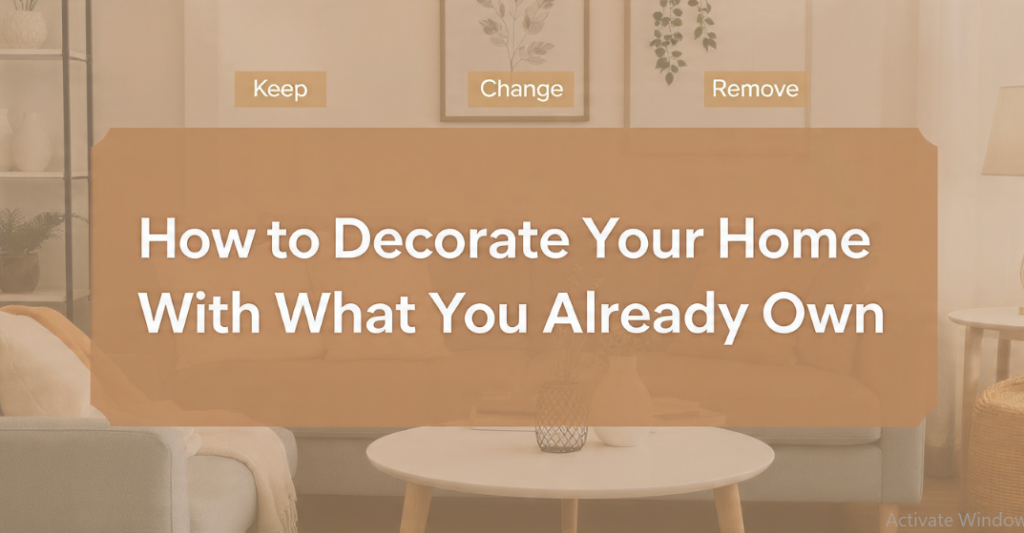
Shop your home first
Move artwork, lamps, baskets, side tables, and accessories between rooms before buying replacements.
Something that looks unnecessary in one room may solve a problem somewhere else.
Consider secondhand pieces
Thrift stores, estate sales, consignment stores and online resale marketplaces can be useful for finding furniture and decorative objects.
But don’t buy something simply because it is cheap.
Ask:
Would I still want this if it weren’t discounted?
That question can prevent a lot of unnecessary purchases.
How to Decorate Your Home: A Simple 7-Day Decorating Plan
If you are completely stuck, use this as your starting checklist.
Day 1: Choose the room
Pick one room and define what you want it to do.
Day 2: Declutter and inventory
Decide what stays, what moves, and what goes.
Day 3: Measure
Record the room dimensions, doors, windows and furniture sizes.
Day 4: Find your direction
Save 10–20 rooms you love and identify recurring colors, materials and shapes.
Day 5: Plan the layout
Try one or two furniture arrangements before buying anything.
Day 6: Choose your first purchases
Prioritize the pieces that solve real functional problems.
Day 7: Style lightly
Add lighting, textiles and a few personal details.
Then stop.
Live with it.
You can always add more later.
How to Decorate Your Home: Common Decorating Mistakes Beginners Make
1. Buying everything at once
This often creates a room full of pieces that were individually attractive but don’t work well together.
2. Choosing a style because it’s trendy
A trend can be useful inspiration, but your home should work for your lifestyle and taste.
3. Buying furniture without measuring
Always check dimensions before committing to a large piece.
4. Starting with accessories
Accessories can’t compensate for a poor layout.
5. Matching everything too perfectly
Your home can have variety while still feeling cohesive.
6. Ignoring lighting
A room with good furniture can still feel uncomfortable if the lighting is harsh or insufficient.
7. Filling every empty space
Negative space is part of the composition.
8. Trying to finish too quickly
Your home can evolve.
You don’t need to make every decision during your first month.
How to Decorate Your Home When You Love Different Decorating Styles
That’s normal.
If you love modern, vintage, traditional, colorful, minimalist and cozy interiors at the same time, don’t force yourself to pick one label.
Instead, identify the common thread.
Maybe you consistently like:
warm colors
natural materials
vintage accents
simple furniture
lots of artwork
Those preferences can become your home’s visual language.
Your rooms don’t have to look identical.
They simply need a few connecting elements.
How to Decorate Your Home When You Have No Furniture at All
Start with the basics.
For each room, make two lists:
Need now
Bed
Sofa
Dining table
Desk
Essential storage
Can wait
Decorative chairs
Artwork
Accent tables
Decorative objects
Seasonal accessories
This prevents you from spending your entire decorating budget before you’ve purchased the things you actually need.
And remember: an empty wall is not an emergency.
You can leave it alone until you find something you genuinely love.
How to Decorate Your Home: The Easiest Rule to Remember
If you’re overwhelmed by everything in this article, remember this sequence:
Function → Measure → Layout → Anchor piece → Color → Lighting → Textiles → Art → Accessories
That’s your basic decorating roadmap.
You don’t need to know everything about interior design before you begin.
You just need to make one good decision at a time.
How to Decorate Your Home: Final Thoughts
Learning to decorate your home if you have no idea where to begin with is not really about finding the magical decorating style that brings out your inner decorator.
It’s really about finding order to your decorating decisions.
Start with one room.
Decide how you actually use that room.
Measure before you buy.
Use what you have.
Pick a feeling over a style (this is really important).
Tackle the furniture layout first, then work on colors, lighting, textiles and personalization.
And most importantly, allow yourself the freedom to decorate at a slow pace.
Your house doesn’t need to be all decorated right away in order to look beautiful. In fact, this can help avoid impulse buying as well as create more personalized spaces over time.
FAQs
How do I start decorating my home when I have no idea what I’m doing?
Start with one room rather than the entire house. Decide how you want the room to function and feel, measure the space, assess your existing furniture, plan the layout, and then add color, lighting, textiles and decor.
What should I decorate first in my house?
Start with the room you use most or the room that would improve your everyday life the most. For many people, that’s the living room, bedroom or kitchen/dining area.
What should I buy first when decorating a home?
Buy functional essentials first, such as a bed, sofa, dining table or desk, depending on the room. Once the basic layout works, add lighting, rugs, window treatments and decorative details.
Should I choose paint or furniture first?
There isn’t one universal rule, but if you already own or plan to buy a major piece you love, it can be easier to choose paint around the larger elements. Paint can then support the furniture, rug or artwork instead of forcing everything else to work around a wall color.
How do I make my home look cohesive?
Repeat a few colors, materials, shapes or textures throughout connected spaces. Cohesion does not mean everything has to match; it means the rooms have visual relationships.
How do I decorate if I don’t have a decorating style?
Look at 10–20 rooms you genuinely love and identify recurring patterns. Notice the colors, furniture shapes, materials, lighting and amount of decoration you repeatedly choose. Your preferences will usually become clearer from those patterns.
How can I decorate my home without spending a lot of money?
Start by using what you already own, rearranging furniture and moving decor between rooms. Then prioritize purchases that solve functional problems and add smaller decorative pieces gradually.
Is it okay to decorate one room at a time?
Yes. Decorating one room at a time can make a large project much easier to manage and gives you an opportunity to learn what you like before making more expensive decisions.
Humor Craze is your destination for beauty, lifestyle, home décor, nails, and DIY inspiration. Discover simple ideas, helpful tips, and creative inspiration for everyday life.