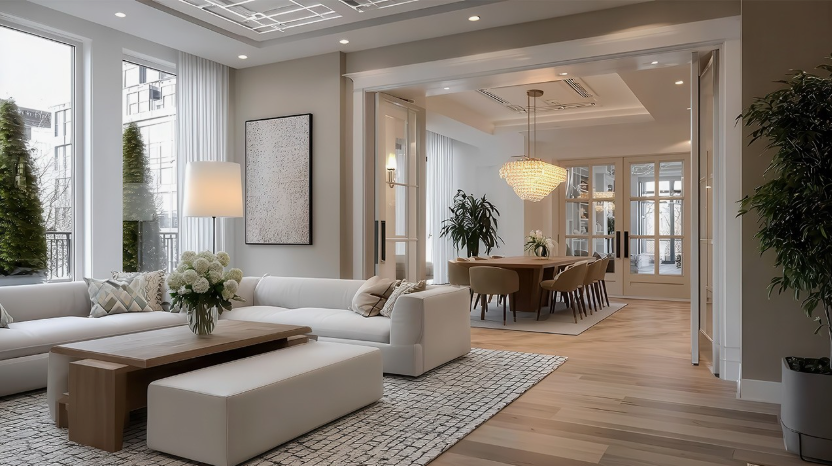
If your furniture, colors, and decor pieces don’t seem to go together, don’t worry—you don’t need to replace everything. How to decorate when everything doesn’t match is really about finding a few elements that connect the room. With the right color palette, repeated textures, balanced furniture, and thoughtful accessories, you can turn mismatched pieces into a space that feels intentional, stylish, and cohesive.
If your sofa, coffee table, chairs, end tables, and accessories look like they were bought at different peoples’ houses, don’t panic and replace everything. A room doesn’t need to have every piece of furniture match in order be stylish or put-together, because in fact, that’s not what current interior-design thinking dictates.
You can mix and match the different aspects of furnishing that a room requires by giving them each something in common with each other.
Things like color, scale, texture, materials, shape, lighting, and repetition can all be used to create a cohesion in a room when the furniture itself doesn’t share common traits.
Here’s how to decorate a room with non-matching pieces, without having to get rid of any of them.
For more renter-friendly inspiration, check out 25 Renter-Friendly Home Decor Ideas That Feel Stylish & Personal for easy ways to make your space feel beautiful without making permanent changes.
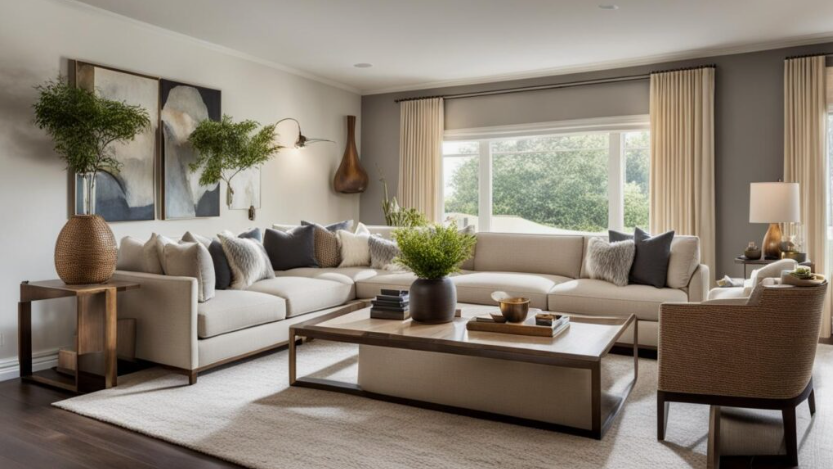
First, Figure Out What Doesn’t Match
Before buying anything, identify the actual problem.
Not all mismatched rooms need the same solution.
If the colors don’t match
Choose two or three colors that you genuinely like and repeat them through pillows, rugs, curtains, artwork, throws, or accessories.
If the furniture styles don’t match
Don’t try to make every piece look identical. Instead, choose one dominant style and let the other styles act as accents.
For example, a traditional wooden cabinet can work with a modern sofa if the rest of the room creates visual connections between them.
If the wood tones don’t match
Look at the undertones rather than trying to find an exact color match. Warm woods can often work together, while a deliberate contrast between light and dark wood can also be effective.
If the furniture sizes don’t match
This is a scale problem. A tiny coffee table next to an oversized sectional can look more awkward than two pieces with completely different styles.
Start by fixing proportion before worrying about accessories.
15 Ways to Decorate When Everything Doesn’t Match
1. How to Decorate When Everything Doesn’t Match: Choose One Anchor Piece
When everything feels disconnected, start with one piece that you want the room to revolve around.
This could be:
- A sofa
- A vintage cabinet
- A large dining table
- An interesting rug
- A statement chair
- A favorite piece of artwork
A good anchor in the room provides a reference point for everything else.
If you have a beloved large piece of vintage wooden furniture, such as a cabinet, it doesn’t mean that everything else should be a replica. You can use the cabinet as a complement to somewhere else in the room. Use one of the cabinet’s materials in another piece or repeat some of its colors.
Modern furniture design advice also points to creating an anchor or a “hero” of sorts instead of trying to plan every element of the design at once.
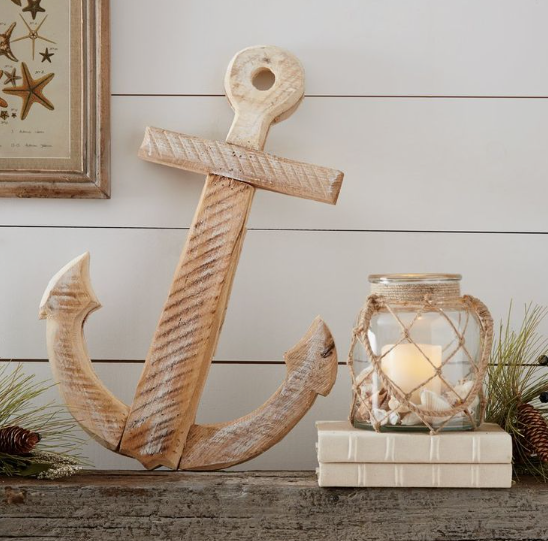
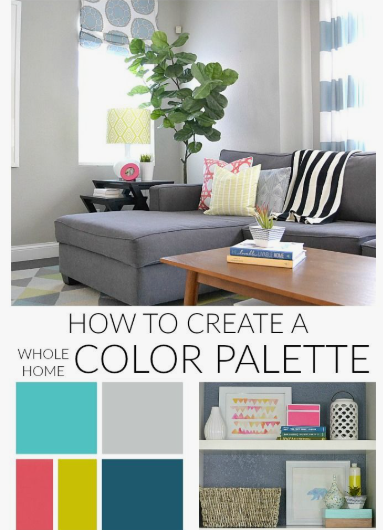
2.How to Decorate When Everything Doesn’t Match: Create a Simple Color Palette
Color is one of the easiest ways to make mismatched furniture feel connected.
You don’t have to use exactly the same color everywhere. Instead, choose a small palette.
For example:
Warm neutral room:
- Cream
- Beige
- Warm brown
- Muted green
Cooler room:
- Soft white
- Gray
- Charcoal
- Dusty blue
Earthy room:
- Terracotta
- Olive
- Cream
- Walnut brown
The furniture can be different, but repeating these colors throughout the room creates a visual relationship.
3.How to Decorate When Everything Doesn’t Match: Repeat Your Colors Around the Room
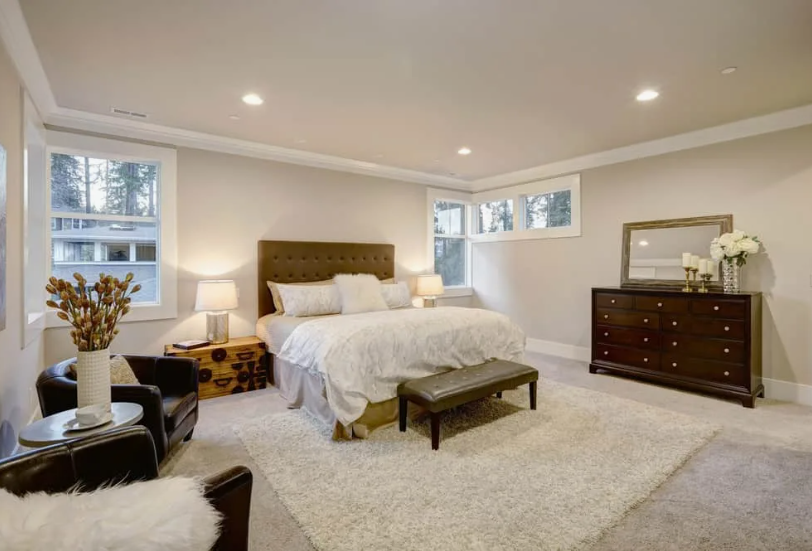
Choosing colors is only the first step. Repeat them.
If your sofa is navy, you don’t necessarily need navy furniture elsewhere. Instead, bring small amounts of navy into:
- A cushion
- Artwork
- A vase
- A rug pattern
- A throw
- A lampshade
This repetition creates rhythm.
The eye begins to notice the same color in different locations, which can make unrelated objects feel intentionally connected.
For more ideas on creating a polished home without overspending, check out How to Make Your Home Look Expensive on a Budget: 15 Easy Ideas for simple decorating upgrades that make a big impact.
4. How to Decorate When Everything Doesn’t Match: Repeat One Material
Color isn’t the only way to create cohesion.
You can repeat a material such as:
- Wood
- Rattan
- Brass
- Black metal
- Glass
- Linen
- Ceramic
For example, you have a room with a modern sofa, an antiques wooden table and a contemporary bookcase.
Instead of getting new furniture in this room, bring in warmth of wood in the form of a picture frame, bowl, lamp base or even a small stool.
The items don’t have to be related, they just have to have a few connections.
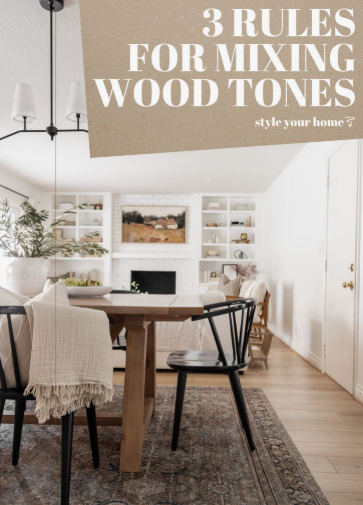
5. How to Decorate When Everything Doesn’t Match: Don’t Be Afraid of Different Wood Tones
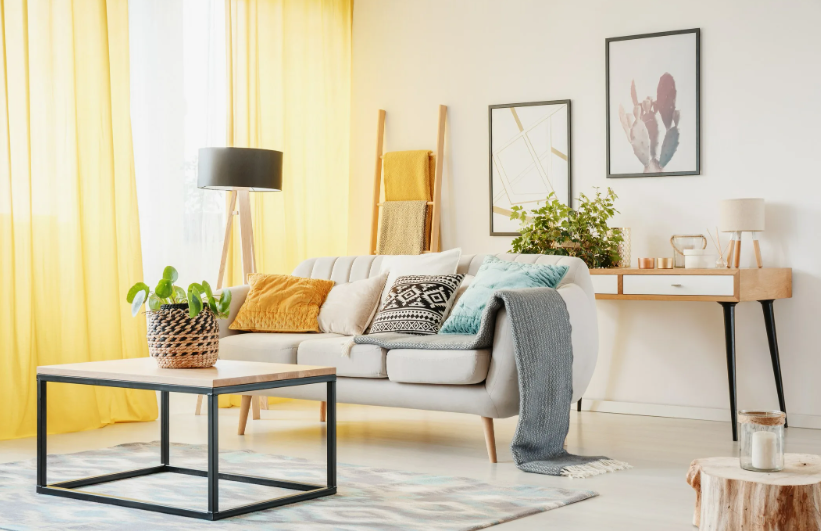
One of the biggest mistakes people make is assuming all of their wooden pieces need to be the same color.
It doesn’t.
Design guidance from Homes & Gardens, Studio McGee, and Room & Board all prove that different colored woods can easily be paired together if it’s done right.
Try this out:
Pick one dominant wood tone, usually the one covering the largest area.
Then add a second wood tone for contrast.
Use a third sparingly, if at all.
Consider the undertone of the wood as well—warmer woods have a different effect than cooler, gray-toned woods.
You can also use a wood tone more than once in a room, just be sure not to use it in isolation; a walnut table and picture frames are more satisfying than a lone walnut sideboard.
For more ways to make a small space feel stylish and expensive, check out Small Living Room Decor Ideas on a Budget: 25 Stylish Ways to Make It Look Expensive for practical ideas that maximize every inch.
6. How to Decorate When Everything Doesn’t Match: Balance Furniture Scale
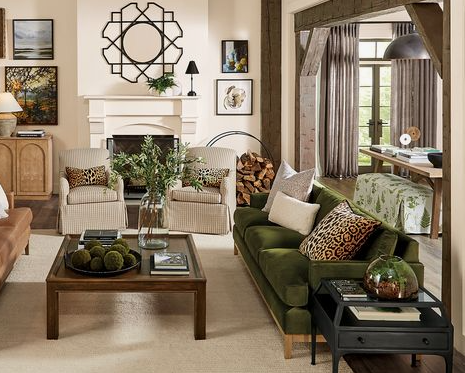
Different furniture styles can be mixed. Different proportions are less obvious.
Pay attention to the visual weight of your largest pieces.
Big, puffy sofas tend to overwhelm stubby little coffee tables, and substantial dark cabinets often dominate several smaller, more delicate pieces.
You don’t have to match them, but you should seek a sense of visual balance in the room.
If you have a large, dark piece on one side of the room, you might want to try adding something equally substantial to the other side, such as:
- A large rug
- A substantial chair
- A tall plant
- A large artwork
- A floor lamp
The goal is to distribute visual weight rather than make every item identical.
For a fresh seasonal update, check out 25 Best Spring Living Room Decor Ideas for a Fresh & Cozy Home for easy ways to add warmth, color, and comfort to your living space.
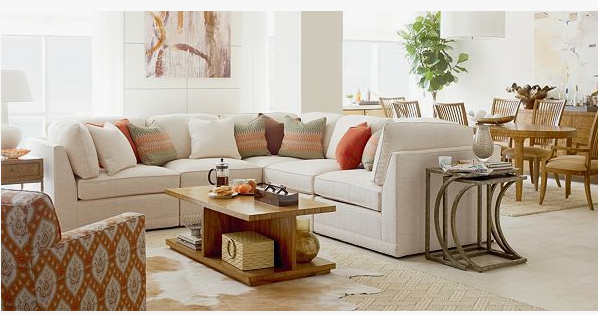
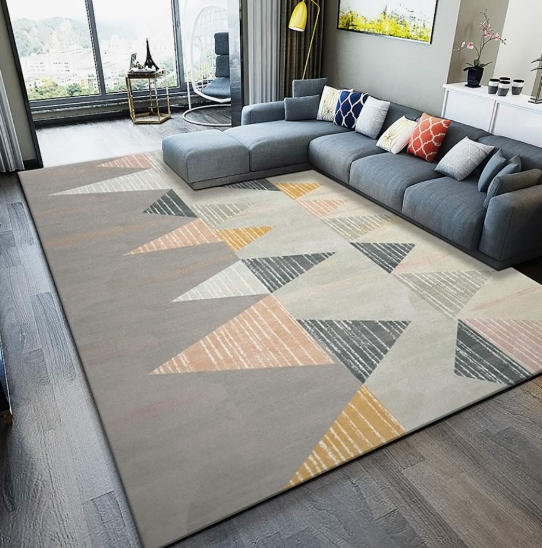
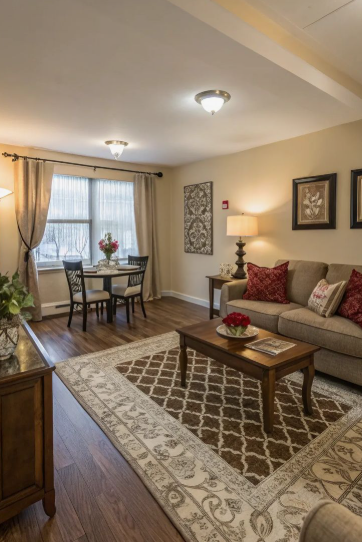
7. How to Decorate When Everything Doesn’t Match: Use an Area Rug as a Visual Bridge
A rug can be one of the most useful tools when furniture doesn’t match.
Why?
Because a large rug can sit underneath several unrelated pieces and visually group them into one zone.
Choose a rug that contains at least some of the colors already present in the room.
For example, if you have:
- A beige sofa
- A walnut table
- A black metal chair
- Olive-green accessories
a rug containing beige, brown, black, and muted green can visually connect those pieces.
Instead of seeing four unrelated objects, the eye begins to see one composition.
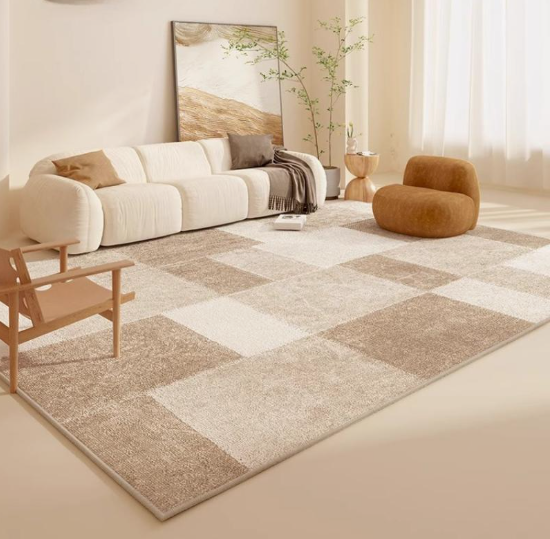
8.How to Decorate When Everything Doesn’t Match: Repeat Shapes
Look beyond color and notice the shapes in your room.
If your furniture has mostly straight lines, adding a few rounded shapes can soften the room.
If you already have several curved pieces, repeat that softness elsewhere.
You can use:
- Round mirrors
- Circular coffee tables
- Arched lamps
- Curved vases
- Rectangular artwork
- Linear shelving
You don’t need every object to have the same shape. Repeating a shape two or three times can be enough to create rhythm.
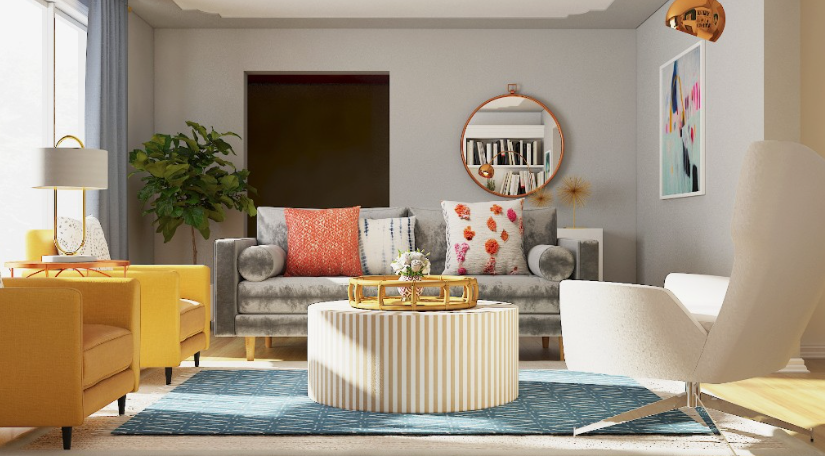
9. How to Decorate When Everything Doesn’t Match: Connect Different Styles With Textiles
Textiles are especially useful when your furniture styles are all over the place.
A traditional armchair can feel more at home beside a modern sofa when you introduce a shared textile palette.
Try repeating:
- Linen
- Cotton
- Wool
- Velvet
- Woven fabrics
- Similar neutral tones
For example, a vintage chair with floral upholstery doesn’t necessarily need to be replaced. A modern sofa can be connected to it with pillows or a throw that contains one of the chair’s colors.
This is much easier—and usually cheaper—than replacing an entire seating arrangement.
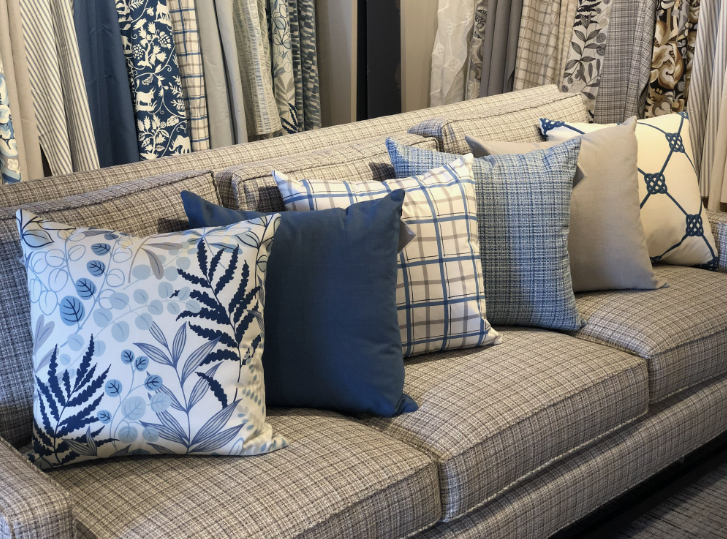
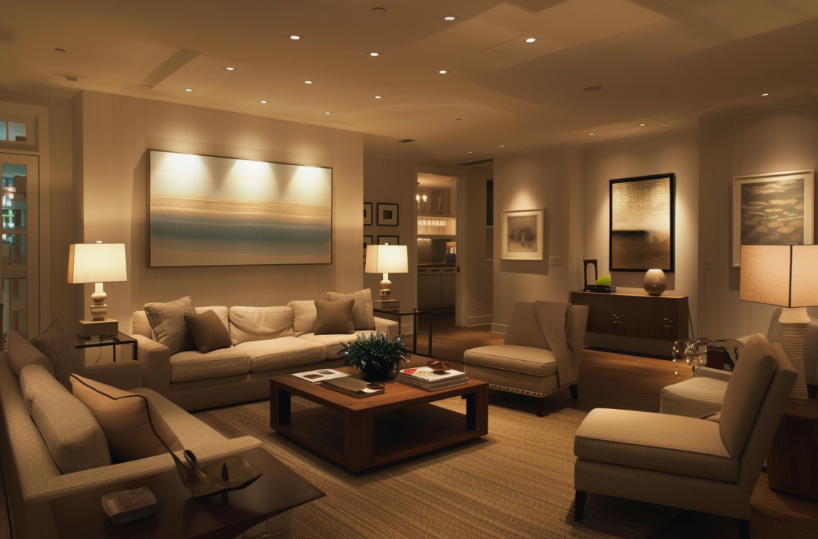
10. How to Decorate When Everything Doesn’t Match: Use Lighting to Create Cohesion
Different furniture can look even more disconnected when lighting is inconsistent.
Instead of relying on one overhead fixture, layer your lighting where possible with:
- Floor lamps
- Table lamps
- Wall lights
- Pendant lighting
- Accent lighting
Choose fixtures that support the room’s overall direction.
For instance, if your room combines traditional wood furniture with contemporary pieces, a simple metal or glass lamp can act as a bridge between them.
Lighting also creates atmosphere, which can make different materials and finishes feel more harmonious.
11.How to Decorate When Everything Doesn’t Match: Create One Clear Focal Point
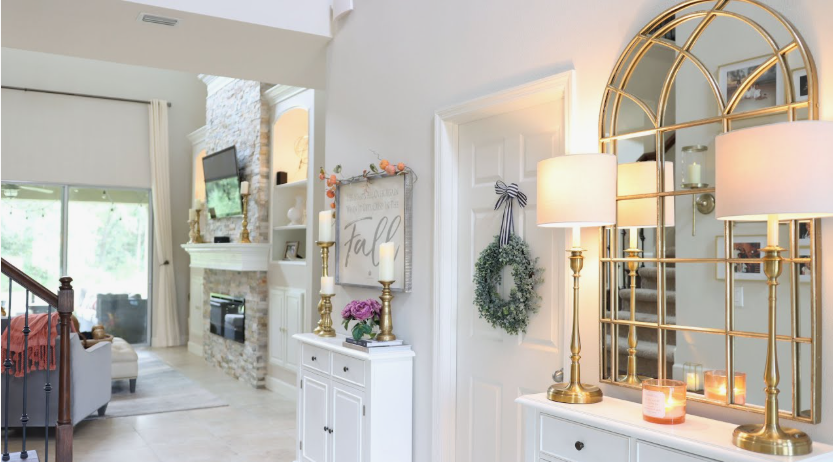
A room becomes visually exhausting when every object demands attention.
Choose one main focal point.
It could be:
- A fireplace
- Large artwork
- A beautiful sofa
- A statement mirror
- A distinctive cabinet
- A dramatic light fixture
Then allow the other pieces to support it.
This is particularly helpful when you already own lots of different furniture.
You don’t need to make every piece special.
Sometimes the best way to make a mismatched room work is to let one piece lead and allow everything else to become supporting scenery.
12. How to Decorate When Everything Doesn’t Match: Use Artwork to Pull the Room Together
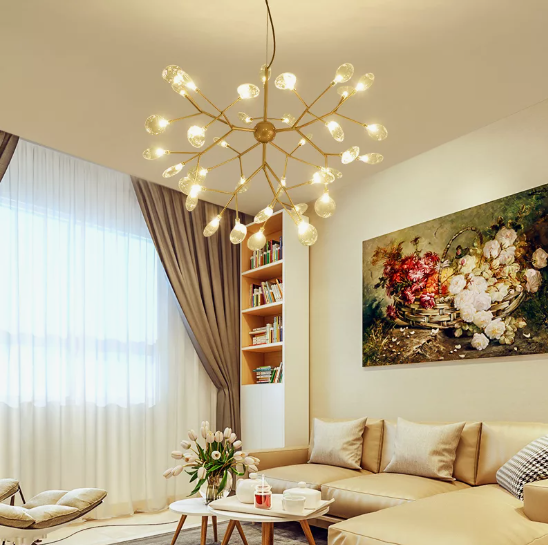
Artwork is a great way to unite colors that don’t seem to blend together.
Start by finding 3 or 4 colors in your room.
Now find an artwork that has some of those colors in it.
For example, if your furniture includes:
- Warm brown
- Cream
- Black
- Muted blue
a piece of artwork containing those colors can act as a visual bridge.
You can also use a gallery wall to make different pieces feel intentional. Keep some consistency through frame color, spacing, subject matter, or palette if the room already feels busy.
13. How to Decorate When Everything Doesn’t Match: Give Sentimental Pieces a Supporting Role
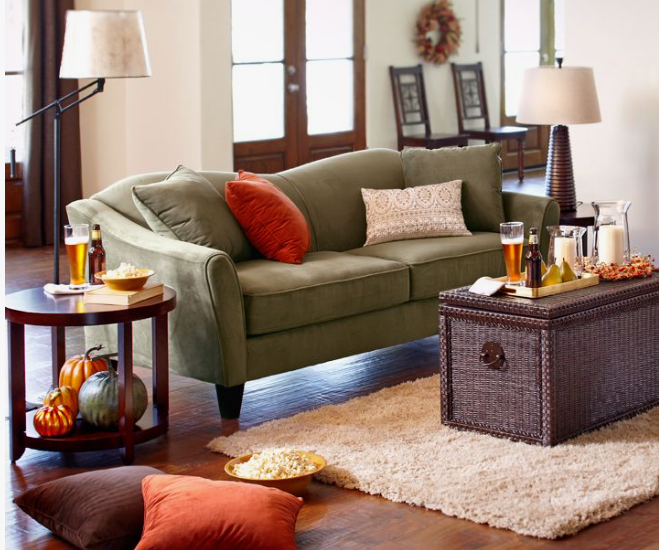
Sometimes the furniture you love least is also the furniture you can’t get rid of.
It might be your grandmother’s cabinet.
Maybe it’s a venerable dining table.
Perhaps it’s the chair in which you’ve sat for decades.
You can’t hide your sentimental pieces.
So place those furnishings in a room such that they become part of the room’s double story.
Then repeat some characteristic of the piece somewhere else in the room.
If, say, the cabinet your mother gave you has a certain warmth to the wood grain, use some of that same wood in a picture frame, side table, bowl, or other small detail.
That way you’re not trying to disguise the cabinet as something it’s not, only making its very presence a kind of statement.
14. How to Decorate When Everything Doesn’t Match: Stop Adding Things When the Room Is Already Busy
This is one of the most important fixes.
If a room feels mismatched, your first instinct may be to buy more accessories.
That’s not always the answer.
Sometimes the room needs less, not more.
Remove a few objects and see what happens.
Try taking away:
- Small decorative objects
- Extra pillows
- Random wall art
- Unused baskets
- Excess tabletop accessories
- Furniture that blocks movement
A little negative space can make the pieces you actually love look more deliberate.
Current organization and design coverage continues to emphasize that visual clutter can make a room feel chaotic, particularly when too many different items compete for attention.
15. How to Decorate When Everything Doesn’t Match: Let One Style Lead
You don’t need to choose one style and eliminate everything else.
Instead, choose a dominant direction.
For example:
Modern + vintage:
Let modern furniture provide the foundation and use vintage pieces as character.
Traditional + contemporary:
Keep the classic pieces as the foundation and introduce cleaner modern accents.
Farmhouse + modern:
Use natural materials and comfortable furniture, then add a few streamlined pieces.
Eclectic + colorful:
Allow more variety, but repeat colors and textures so the room still has rhythm.
A dominant style provides structure while contrasting pieces provide personality.
How to Fix a Room Without Buying New Furniture
If your budget is limited, don’t start with furniture shopping.
Start with the room you already have.
Step 1: Remove everything small
Clear coffee tables, shelves, side tables, and other surfaces.
Step 2: Rearrange the major pieces
Try different furniture positions before buying anything.
Pay attention to:
- Walking paths
- Conversation areas
- Window access
- Doorways
- TV placement
- Furniture proportions
Step 3: Pick three colors
Choose a simple palette based on the furniture you already own.
Step 4: Add one connecting textile
A rug, throw, curtains, or pillows can introduce your chosen colors.
Step 5: Repeat one material
Add a few small touches of wood, black metal, brass, rattan, or another material already present.
Step 6: Add artwork or a mirror
Use the wall to introduce colors and scale without adding another piece of furniture.
Step 7: Edit again
Remove anything that still feels random.
You may discover that your room didn’t need new furniture at all—it needed a stronger visual connection between the pieces you already owned.

What to Do When the Wood Tones Don’t Match
If your room contains several wood finishes, don’t automatically paint or replace them.
First identify the dominant wood.
Then ask:
- Is it warm, cool, or relatively neutral?
- Which wood tone appears most often?
- Can another wood tone be repeated somewhere?
- Would a rug or textile provide separation?
- Is one piece so visually dominant that it needs balancing?
Room & Board recommends looking at common undertones and repeating wood tones to create a more unified appearance.
Studio McGee similarly recommends identifying the dominant wood, considering undertones, using contrast intentionally, and distributing repeated tones throughout the room.
So don’t ask, “How do I make all the wood exactly match?”
Ask:
“How can I make the different wood tones look intentional?”
That’s a much more useful decorating question.
Common Mistakes That Make Mismatched Rooms Look Worse
Trying to match everything exactly
This can make you spend money replacing perfectly functional furniture when you don’t need to.
Introducing too many colors
Different furniture styles are easier to handle when the color palette remains controlled.
Adding accessories to hide the problem
More stuff doesn’t automatically create cohesion.
Ignoring furniture scale
A good color palette cannot completely fix poor proportions.
Using every decorating style at once
Eclectic doesn’t mean random.
Buying a new piece without considering the whole room
Before purchasing anything, ask:
What does this piece connect to?
If the answer is “nothing,” think twice.
A Simple 30-Minute Room Reset
If your room feels completely disconnected, try this quick process.
Minutes 1–5: Remove unnecessary accessories.
Minutes 6–10: Identify your largest furniture piece.
11–15: Choose two or three colors already present.
16–20: Rearrange furniture to improve balance and traffic flow21–25: Group decor using your chosen colors.
26–30: Add one connecting element—a rug, throw, artwork, plant, or lamp.
Then step back.
Don’t judge the room from five inches away. Look at it from the doorway and from the main seating area.
Those are the views that matter most.
If you’re looking for more inspiration, explore HGTV’s decorating ideas for practical ways to bring different furniture styles, colors, and finishes together.
The Bottom Line
When your stuff doesn’t all match, you don’t have to make everything match.
You can make associations.
Repeat colors.
Echo materials.
Balance furniture sizes.
Play with differing woods.
Unify with a rug.
Group objects with art that uses several of their colors. Let sentimental pieces act as accents.
And when all else fails,
take some things away.
It’s not the rooms that are put together with all the same elements that turn out to be great rooms, but the rooms where disparate items are associated in some way
FAQs
Does all furniture have to match?
No. Furniture does not have to come from the same collection or have identical finishes. Different styles can look cohesive when they share colors, materials, proportions, shapes, or other visual connections.
How do you make mismatched furniture look intentional?
Choose one anchor piece, establish a limited color palette, repeat colors or materials, balance furniture scale, and use rugs and textiles to connect different pieces.
Can you mix different furniture styles in one room?
Yes. Modern, traditional, vintage, rustic, and other styles can work together. The easiest approach is usually to let one style dominate while using another style for accents.
Can different wood tones work together?
Yes. Different wood tones can add warmth and depth when their undertones, placement, and repetition are considered.
What should I do if my furniture colors don’t match?
Instead of replacing the furniture, choose two or three colors from the pieces you already own and repeat those colors through rugs, pillows, curtains, artwork, and accessories.
How do I decorate with inherited furniture?
Treat inherited pieces as character pieces. Give them a deliberate location and repeat one of their colors, materials, or finishes elsewhere in the room.
Should all the wood furniture be the same color?
No. Matching every wood finish is not necessary. A dominant wood tone plus one or two supporting tones can create a more layered look.
What if my room still looks cluttered after I decorate it?
Remove some accessories. Visual cohesion often improves when you reduce competing objects and leave more negative space around the important pieces.