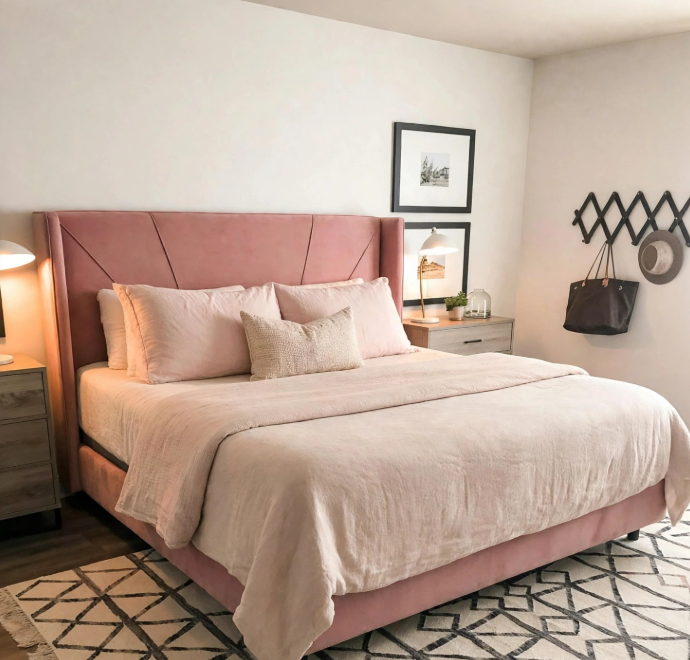
A well-designed bedroom can fulfill multiple functions. First of all, it should look attractive, but effective bedroom design ideas should also focus on comfort and practicality. A bedroom should be convenient to use both in the morning and evening, provide proper storage for clothing, offer a comfortable place to read in bed, and leave enough space to move around.
The simplest way to decorate the interior of a room is to follow a certain algorithm:
Firstly, measure the room and determine the layout. Next, select the bedding and furniture, then choose a suitable color palette. After that, add layered lighting and select complementary textiles. In addition, optimize the storage area to keep the space organized. Finally, complete your bedroom design ideas with carefully chosen decorative items that add personality and visual interest.
This approach helps avoid the most common mistake in decorating a bedroom, such as buying interior items one by one without planning their placement in the room. Once bought, it becomes challenging to find a suitable place for objects that have already been purchased.
At the moment, interior design trends are moving towards warmer colors, richer fabrics, personalization, built-in furniture, and more discrete electronics. However, these trends may differ depending on the needs of the occupants and the size of the room, so it is necessary to consider them individually. The most critical rule in creating a project for the interior of a bedroom is functionality, which extends to all details and interior items.
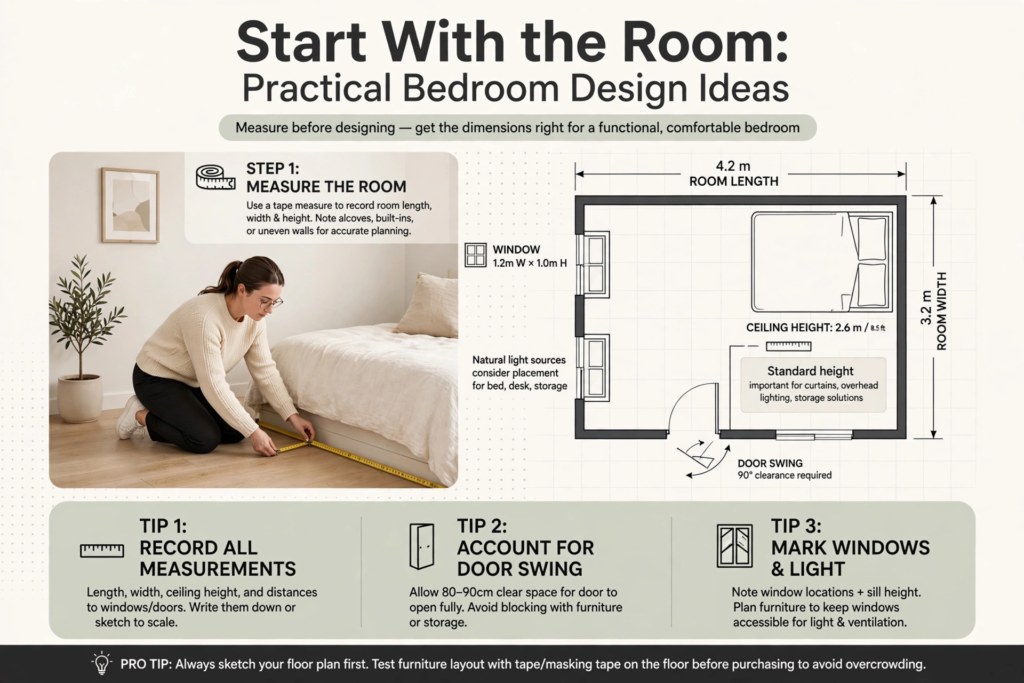
Start With the Room: Practical Bedroom Design Ideas
Before choosing paint colors or browsing bedding, understand what you’re working with.
Measure:
- Overall room length and width
- Ceiling height if you’re considering tall furniture or drapery
- Door locations and swing direction
- Window locations and sill heights
- Closets and built-ins
- Radiators, vents and other fixed elements
- Electrical outlets and switches
- Existing furniture you plan to keep
Then ask a more important question:
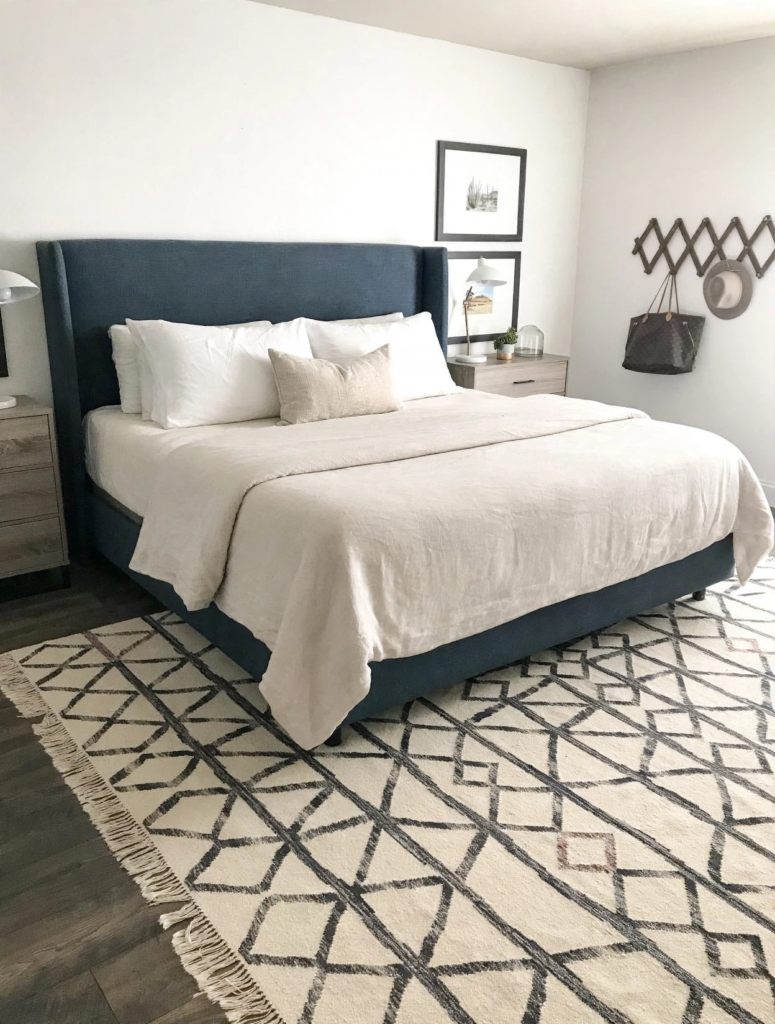
What does this bedroom need to do besides provide a place to sleep, and how can your bedroom design ideas support those needs?
A primary bedroom often requires space for two nightstands, a dresser, a reading chair and lots of clothing storage. A small apartment bedroom may need to include a desk. A guest room might need versatile storage solutions plus a luggage bench.
Current bedroom layout advice always focuses on the fact that the best way to arrange a bedroom comes down to the dimensions, architecture and how the occupants actually use the space.
For more ways to create a polished bedroom without overspending, explore our guide to Affordable Luxury Home Decor: 25 Elegant Ideas on a Budget.
Make a simple priority list
Write down your non-negotiables before shopping.
For example:
- Queen bed
- Two accessible bedside surfaces
- Clothing storage
- Reading light
- Full-length mirror
- Small work area
Anything that doesn’t support one of those needs can come later.
That single step can keep a bedroom from becoming overloaded with decorative furniture.
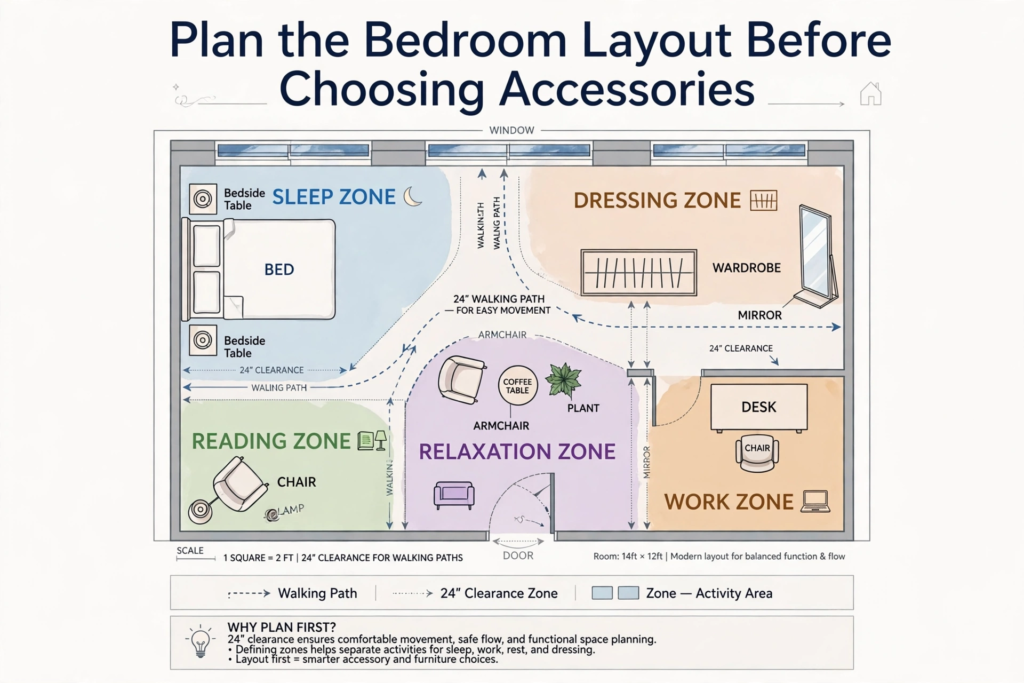
Plan the Bedroom Layout Before Choosing Accessories: Bedroom Design Ideas
Layout is the foundation of bedroom interior design.
A beautiful rug cannot fix a bed that’s blocking a doorway. A gallery wall won’t solve a dresser that prevents a closet from opening.
For a more refined and contemporary look, explore our guide to Modern Luxury Home Decor Ideas for an Elegant, Contemporary Home for inspiration on finishes, furniture and styling.
Start With the Bed: A Key Step in Bedroom Design Ideas
The bed is typically the largest item of furniture and the visual anchor, so place it before everything else.
A common starting point is a position that gives the bed a strong wall and makes it visible from the entrance without creating an awkward traffic path. But there is no universal rule that every bedroom must have the bed in one particular position.
Windows, doors, closets, heating elements and room proportions can change the answer.
Protect the walking paths
You need enough open floor to get in and out of bed, access storage and move between the door and other parts of the room.
As a practical design guideline, many bedrooms work comfortably with roughly 24 inches or more of usable clearance beside the bed, where space allows. In addition, provide extra room around frequently opened drawers and wardrobes to ensure easy movement and everyday functionality.
Treat this as a planning guideline rather than a building-code requirement. Furniture dimensions and personal mobility needs vary.
Think about the room in zones
A larger bedroom doesn’t have to be one enormous sleeping area.
You can create:
- Sleep zone: bed and bedside tables
- Dressing zone: wardrobe, dresser and mirror
- Reading zone: chair, small table and lamp
- Work zone: desk and task lighting
- Relaxation zone: bench, chaise or occasional chair
The zones don’t require walls to separate them; furniture, rugs, lighting, and even ceiling fixtures can create the illusion of separated, defined areas.
For awkward bedrooms
When doors, windows, or closet space make a bedroom tricky to navigate, first identify the features that cannot be changed.
Then, work around them.
Recent conversations on bedroom layouts have more often concerned themselves with the challenges of doors, storage, lighting, and furniture placement than with style itself.
If you want to create an elegant bedroom without overspending, explore our guide to Affordable Luxury Home Decor: 25 Elegant Ideas on a Budget for practical styling inspiration.
Choose the Right Bed and Furniture Scale for Better Bedroom Design Ideas
The biggest furniture mistake in bedroom design is often not the style. It’s the scale.
For example, a small bedroom with an oversized upholstered bed can quickly feel crowded. On the other hand, a large bedroom with a tiny bed, narrow nightstands, and undersized artwork may feel strangely empty. Therefore, choose furniture and décor that are proportionate to the room’s size to create a balanced and cohesive look.
Choose a Bed That Fits the Room for Better Bedroom Design Ideas
Consider:
- mattress size
- bed-frame dimensions
- headboard height
- clearance around the bed
- whether nightstands will fit
- whether drawers or doors can open freely
- whether the bed leaves enough room for storage
Don’t measure only the mattress. Measure the complete bed frame.
Balance Visual Weight for Better Bedroom Design Ideas
Think of furniture as having visual weight.
Like a tall upholstered heavily padded bed that takes up a lot of the visual space. You wouldn’t balance it with very small nightstands.
But maybe a slim metal bed could take a heavier wood nightstand or dresser
You don’t have to match sets of furniture.
You just need to repeat something between them.
- wood tone
- metal finish
- shape
- color
- fabric
- architectural line
This creates connection without making the bedroom look like a matched furniture set.
Nightstands Should Work in Real Life: Practical Bedroom Design Ideas
A bedside table needs to hold whatever you actually use.
That may include:
- lamp
- phone
- glasses
- book
- water
- medication
- alarm clock
- charging cable
If the surface is already crowded before you add decor, the nightstand is too small—or you’re asking it to do too much.
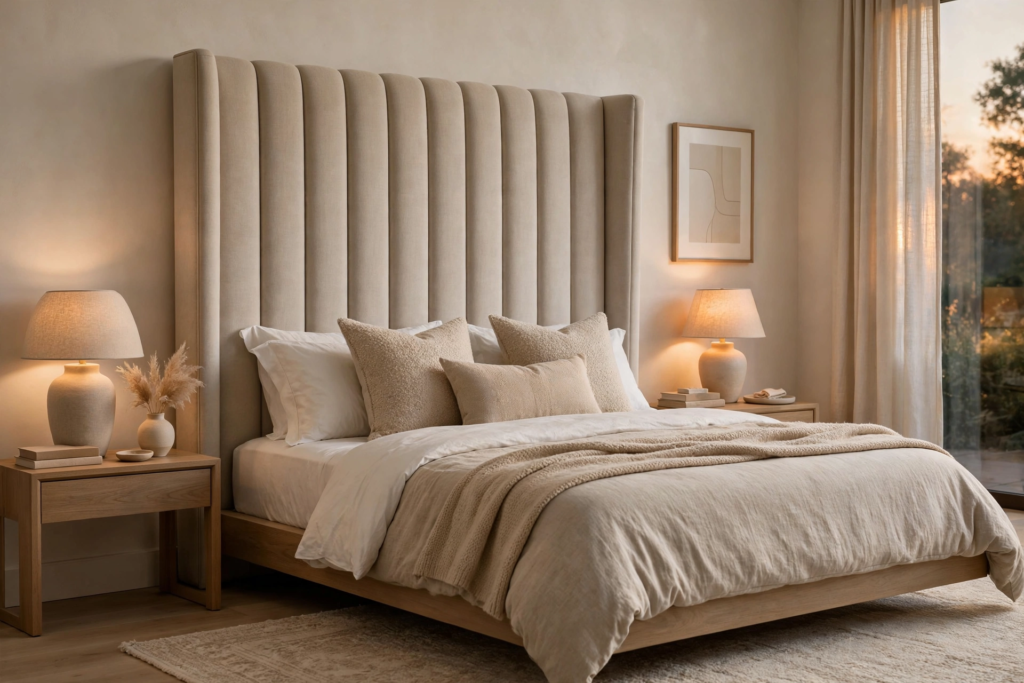
Build a Bedroom Color Palette for Stylish Bedroom Design Ideas
You don’t need a strict formula to create a cohesive bedroom.
Start with three questions:
What mood do I want?
What colors already exist in the room?
How much contrast do I want?
Warm neutrals
Cream, beige, taupe, tan and warm brown can create a relaxed foundation.
They work especially well with:
- natural wood
- linen
- wool
- woven textures
- aged metals
Cool Colors for Calming Bedroom Design Ideas
While soft blue, green and gray hues offer a subdued visual appeal, not every cool shade is necessarily calming.
Modern decorating advice prioritizes undertones, natural lighting and surrounding materials, as a pale blue can appear fresh in one room and frigid in another.
Deep greens, burgundies, browns, navies, and other rich colors can make a bedroom feel warm, enveloping, and inviting. In addition, these deeper shades can create a sense of depth while giving the space a more intimate atmosphere.
Another popular decorating trend is color drenching, in which similar or identical hues are applied to the walls, moldings, and sometimes the ceiling. As a result, the different surfaces blend together, creating a more cohesive and immersive look. In 2026, color-drenched bedrooms are becoming increasingly popular among homeowners looking for a bold yet harmonious bedroom design.
Don’t Choose Paint From a Tiny Swatch: Bedroom Design Ideas for Better Color Decisions
Paint a larger sample area or use large sample boards and observe it at different times of day.
Natural daylight, artificial lighting and surrounding finishes can change how the color reads.
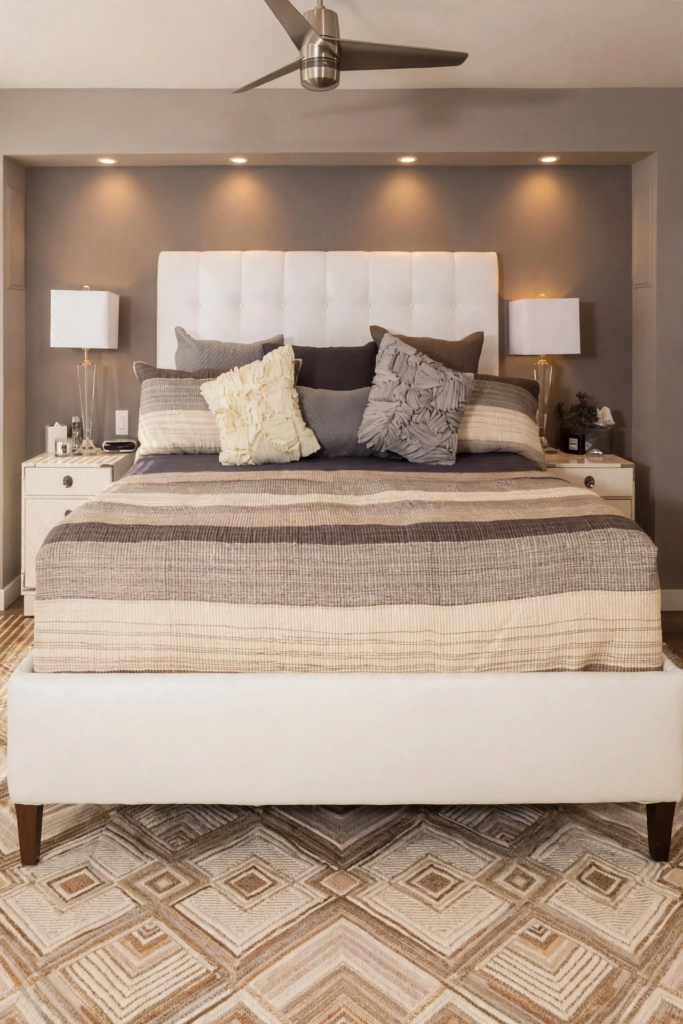
Layer Bedding for Comfort and Style With Bedroom Design Ideas
The bed is usually the most visually important object in the room, so bedding has an outsized effect on the finished design.
A useful layering sequence is:
- Fitted sheet
- Top sheet, if you use one
- Duvet or comforter
- Quilt or coverlet
- Folded throw
- Sleeping pillows
- Decorative pillows
You don’t need every layer.
The principle is to combine function, texture and proportion.
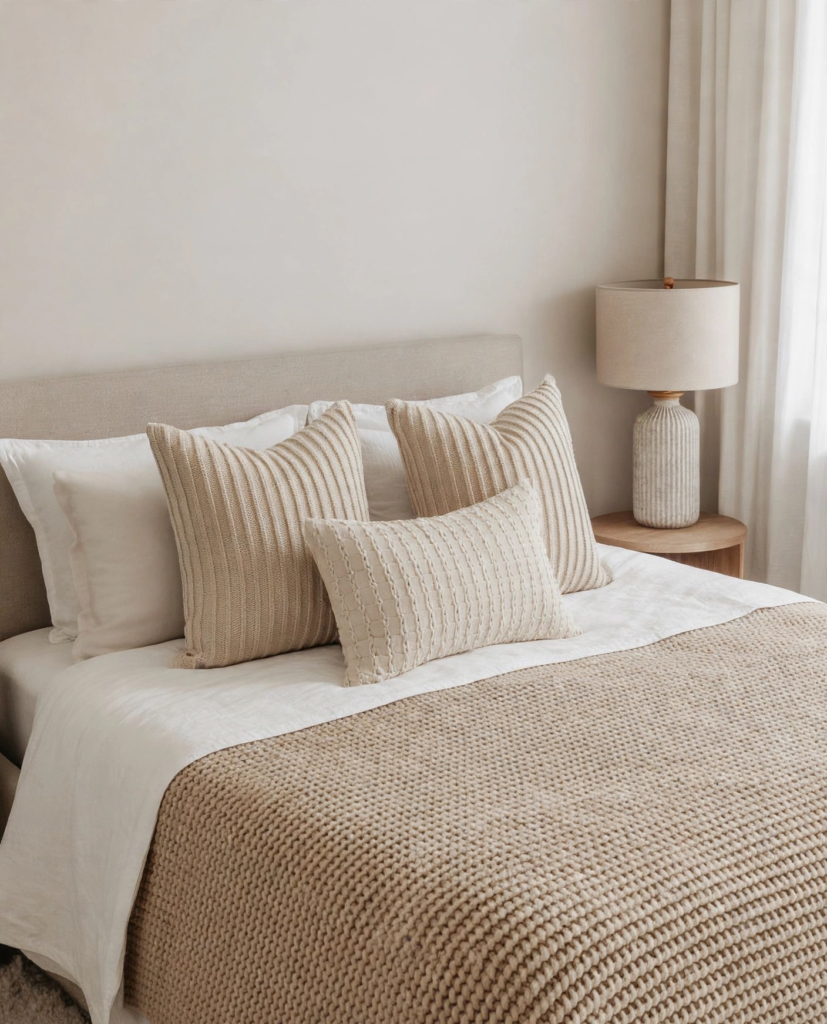
Mix Texture Before Adding More Pattern in Your Bedroom Design Ideas
If your room already contains patterned curtains, artwork and a rug, plain bedding with interesting textures may be enough.
If the room is mostly solid colors, bedding can introduce a controlled pattern.
Useful combinations include:
- linen + cotton
- quilted fabric + smooth percale
- woven throw + crisp sheets
- velvet accent + matte textiles
- chunky knit + lightweight bedding
The goal is contrast without visual noise.
Vary pattern scale
If you use multiple patterns, don’t make every pattern equally prominent.
For example:
- small-scale pattern on a pillow
- medium-scale pattern on the duvet
- larger artwork or rug pattern
Keep some shared color between them so the combination feels intentional.
Use Layered Bedroom Lighting for Better Bedroom Design Ideas
A single ceiling fixture rarely provides the flexibility a bedroom needs.
Instead, think in three layers:
1. Ambient Lighting for Relaxing Bedroom Design Ideas
This provides general illumination.
Examples include:
- ceiling fixtures
- flush mounts
- chandeliers
- recessed lighting
2. Task Lighting for Functional Bedroom Design Ideas
This supports specific activities.
Examples:
- bedside lamps
- reading sconces
- desk lamps
- dressing-area lighting
3. Accent Lighting for Stylish Bedroom Design Ideas
This adds atmosphere.
Examples:
- picture lights
- concealed LED lighting
- decorative lamps
- softly illuminated shelving
Layered lighting is a recurring recommendation across current bedroom design coverage because it allows the room to function differently throughout the day.
Don’t Forget the Bedside Switch in Your Bedroom Design Ideas
A beautiful lamp is less useful if you have to get out of bed to turn it off.
Place controls where they are convenient, or consider fixtures and switches that make bedside operation practical.
Mix Light Fixtures Without Making Them Look Random in Your Bedroom Design Ideas
Bedside lamps don’t necessarily have to match.
If you mix them, create another connection:
- same shade shape
- similar finish
- related color
- similar silhouette
- complementary materials
The objective is relationship, not duplication.
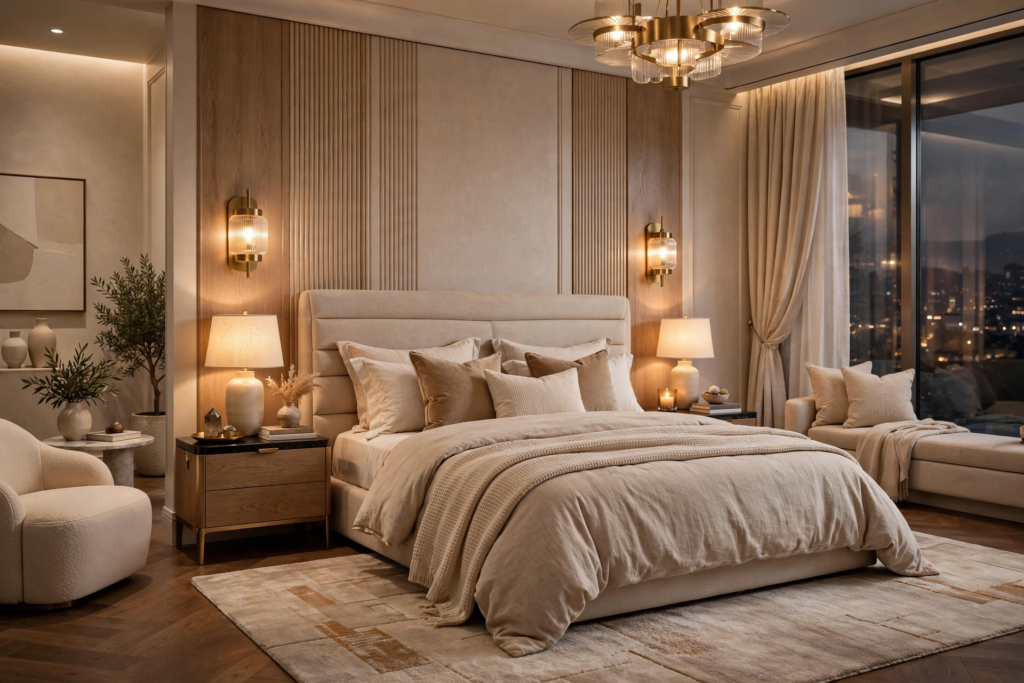
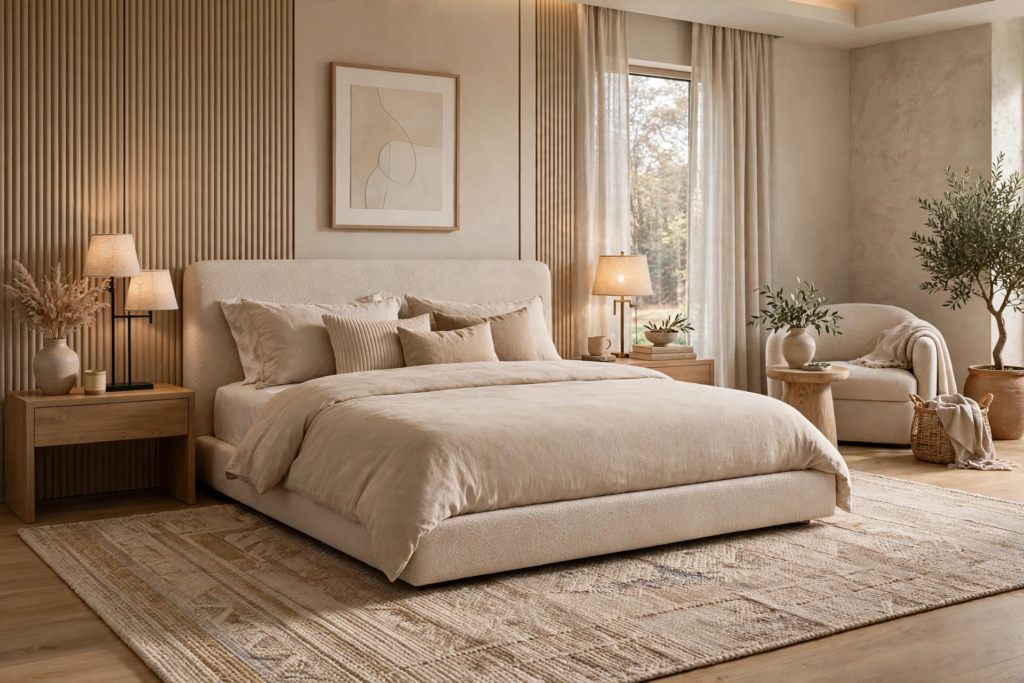
Add a Rug to Ground the Room With Thoughtful Bedroom Design Ideas
A bedroom rug can make the room feel more finished because it visually connects the bed and surrounding furniture.
When possible, choose a rug large enough to extend beyond the sides and foot of the bed.
If a large rug isn’t practical, alternatives include:
- a runner beside the bed
- two smaller bedside rugs
- a partial-under-bed placement
- a smaller rug at the foot of the bed
The correct size depends on the bed, room and furniture arrangement.
Don’t buy a rug first and force the furniture around it.
Plan the furniture footprint, then choose the rug.
Use Window Treatments for Both Function and Style in Your Bedroom Design Ideas
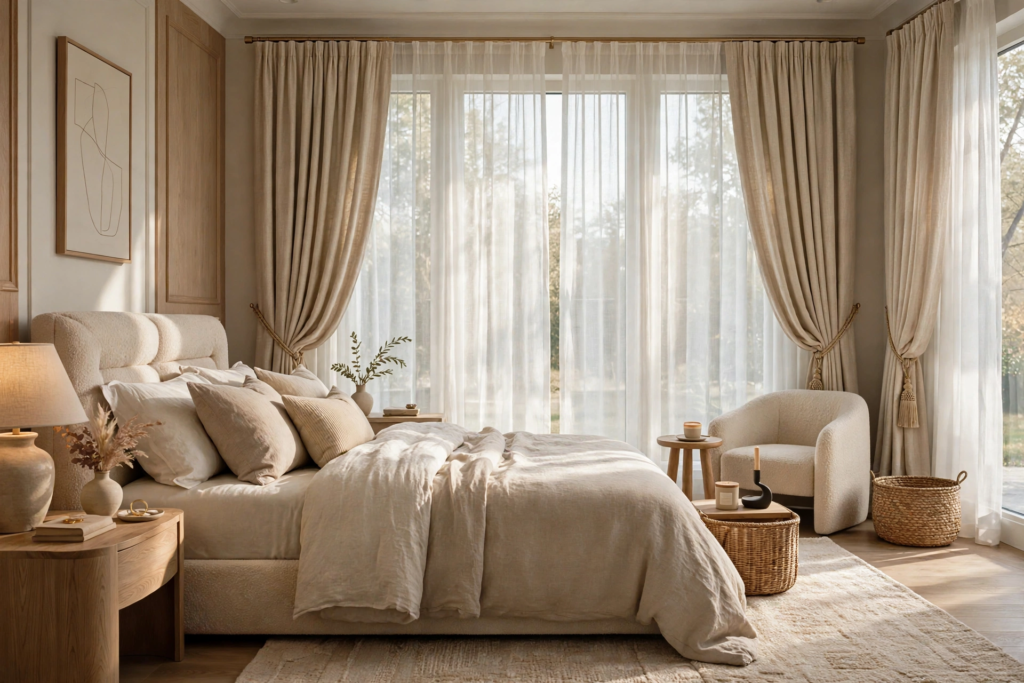
Bedroom window treatments need to solve practical problems before decorative ones.
Consider:
- privacy
- morning sunlight
- nighttime darkness
- temperature
- window access
- visual softness
A layered setup can combine a shade or blind with curtains.
Floor-to-ceiling curtains can emphasize vertical height, while Roman shades or other compact treatments can be useful when floor space is limited.
Choose a rod width and curtain length that suit the window and wall rather than blindly following a single decorating formula.
Solve Storage Before Adding More Decor With Smart Bedroom Design Ideas
Clutter changes how a bedroom feels more than almost any decorative accessory.
Before buying another basket or shelf, determine what needs to be stored.
Useful bedroom storage options
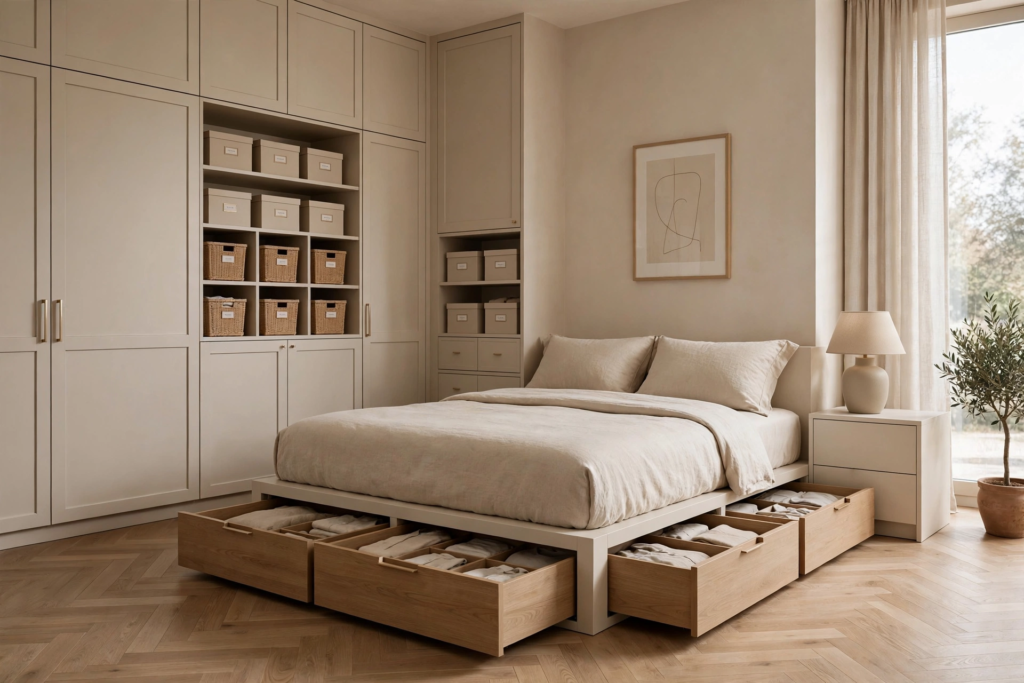
- under-bed drawers
- storage beds
- built-in wardrobes
- tall wardrobes
- dresser drawers
- nightstands with drawers
- wall-mounted shelving
- closed cabinets
- storage benches
Storage beds are particularly relevant in smaller homes because they create additional storage without requiring another large piece of furniture. Current 2026 design coverage highlights this as an increasingly important bedroom solution.
Closed versus open storage
Open shelving is attractive when you have a small, curated collection.
Closed storage is usually better for items you don’t want constantly visible.
A useful compromise is:
closed storage for clutter + open storage for display.
Style Your Nightstands Without Creating Clutter With Smart Bedroom Design Ideas
The nightstand is a small surface, but it has a major visual impact.
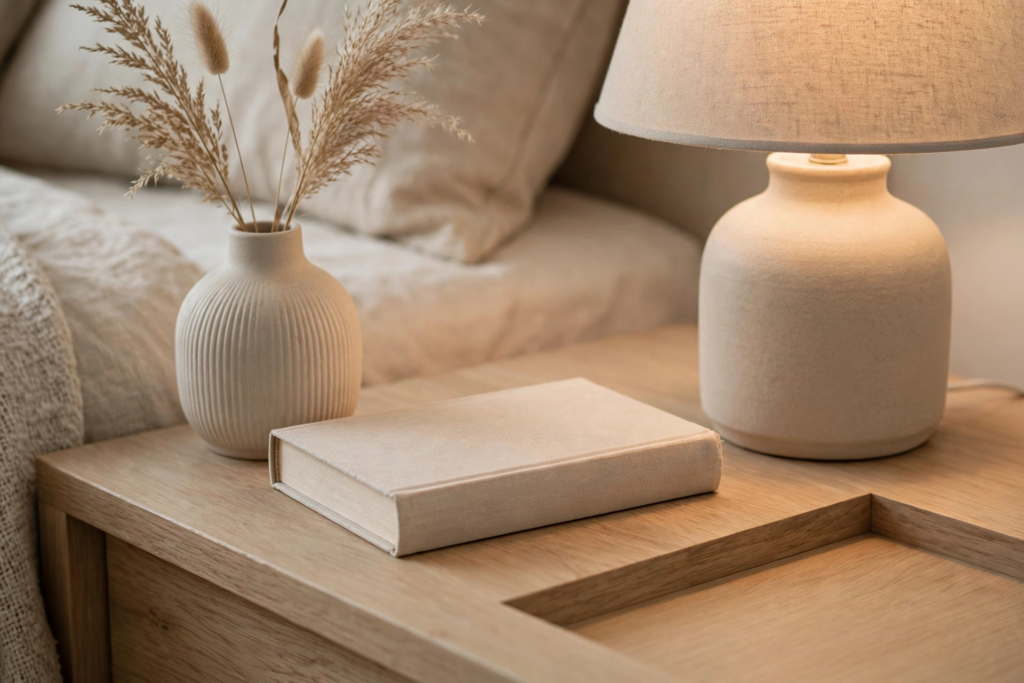
A simple formula is:
one practical item + one light source + one personal/decorative element.
For example:
- lamp
- book
- small ceramic object
Or:
- wall sconce
- small tray
- framed photograph
Varying height and shape can create visual interest.
But don’t decorate the surface so heavily that there is nowhere to put your phone or glass of water.
Function should win.
Add Artwork, Mirrors and Personal Details to Complete Your Bedroom Design Ideas
Artwork is where a bedroom can stop looking like a showroom and start looking like someone’s home.
Choose pieces because you genuinely like them—not because they happen to match the bedding.
Create visual relationships
Artwork can connect to the room through:
- color
- subject
- frame material
- scale
- shape
- texture
You can mix different frame finishes if the overall collection feels intentional.
Use Mirrors Strategically for Better Bedroom Design Ideas
A mirror can provide practical value while reflecting light and creating the perception of greater depth.
Full-length mirrors are particularly useful near dressing areas.
Avoid placing a mirror somewhere that creates an uncomfortable reflection or dominates the room simply because the wall is empty.
Let Personal Objects Stay Personal in Your Bedroom Design Ideas
A bedroom doesn’t need to look professionally staged.
Family photographs, collected objects, books, artwork and inherited pieces can give the room more character than a perfectly coordinated collection of accessories.
Current 2026 design coverage is explicitly emphasizing more personal, soulful bedrooms rather than generic neutral spaces.
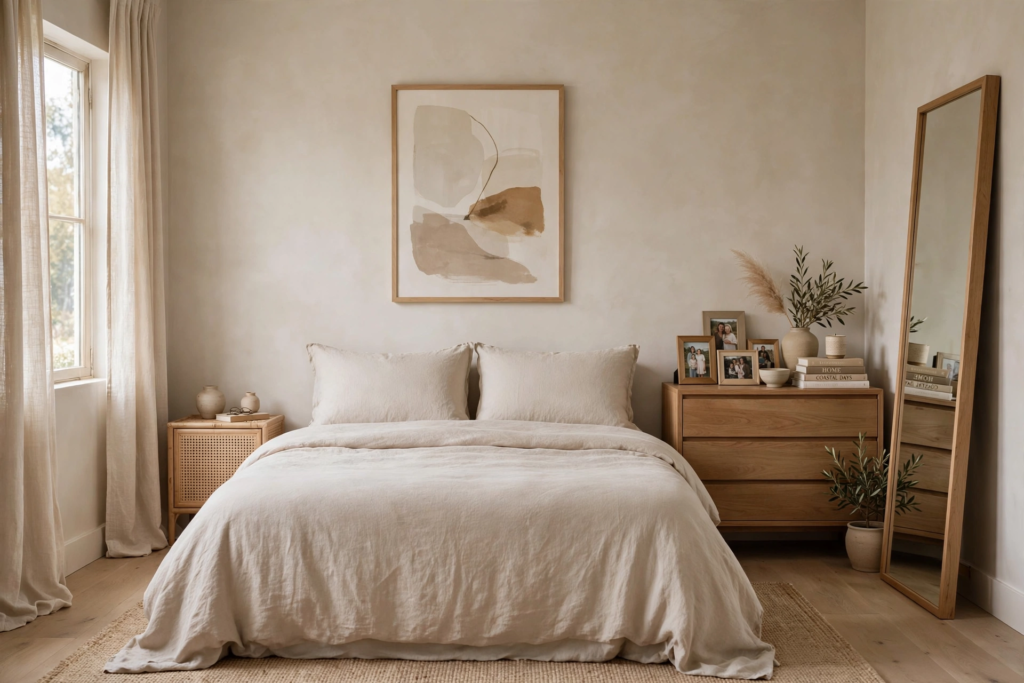
Choose a Bedroom Style That Fits Your Home and Bedroom Design Ideas
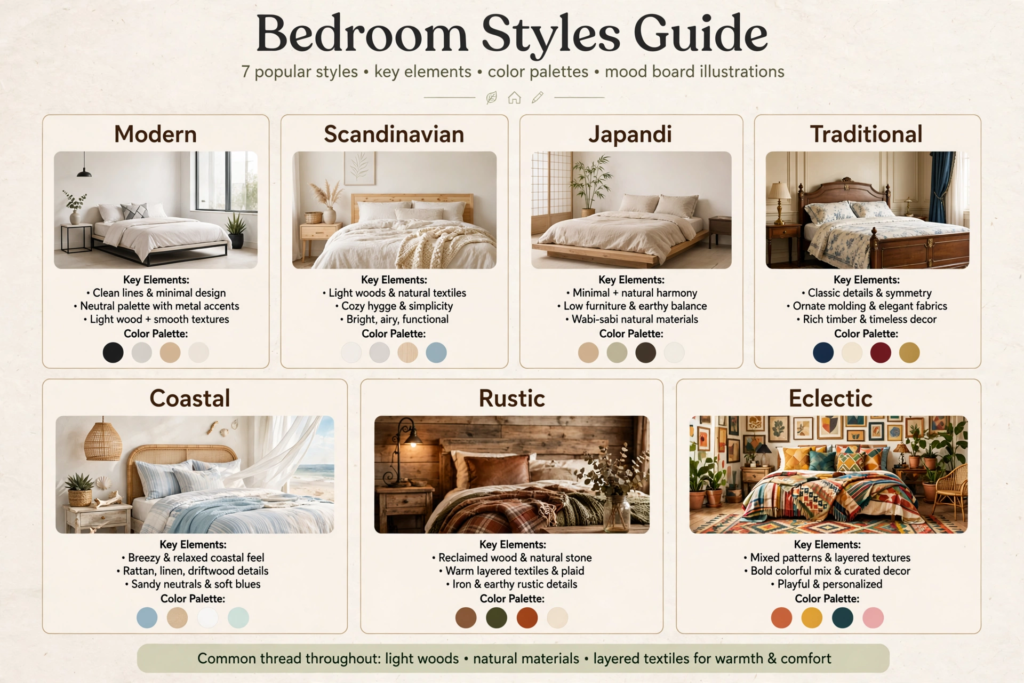
You don’t have to commit to one strict design label, but understanding styles can help narrow your choices.
Modern
Look for:
- clean lines
- restrained decoration
- simple silhouettes
- controlled contrast
- functional furniture
Scandinavian
Think:
- light woods
- simple forms
- soft textiles
- practical storage
- restrained color
Japandi
Combine Japanese-inspired simplicity with Scandinavian warmth:
- natural materials
- low visual clutter
- muted colors
- simple furniture
- tactile fabrics
Traditional
Consider:
- classic furniture
- layered textiles
- decorative molding
- traditional artwork
- richer wood finishes
Coastal
Use:
- soft blues
- sandy neutrals
- natural textures
- light woods
- relaxed textiles
Avoid turning the room into a literal theme unless that’s what you want.
Rustic
Emphasize:
- natural wood
- aged finishes
- earthy colors
- woven materials
- simple, comfortable furnishings
Eclectic
Mix periods, patterns and materials—but give them something in common.
That common element might be color, scale or repeated materials.
A well-designed bedroom can fulfill multiple functions. First of all, it should look attractive, but effective bedroom design ideas should also focus on comfort and practicality. A bedroom should be convenient to use both in the morning and evening, provide proper storage for clothing, offer a comfortable place to read in bed, and leave enough space to move around. For additional guidance on creating a comfortable sleep environment, explore the Sleep Foundation’s bedroom environment tips.
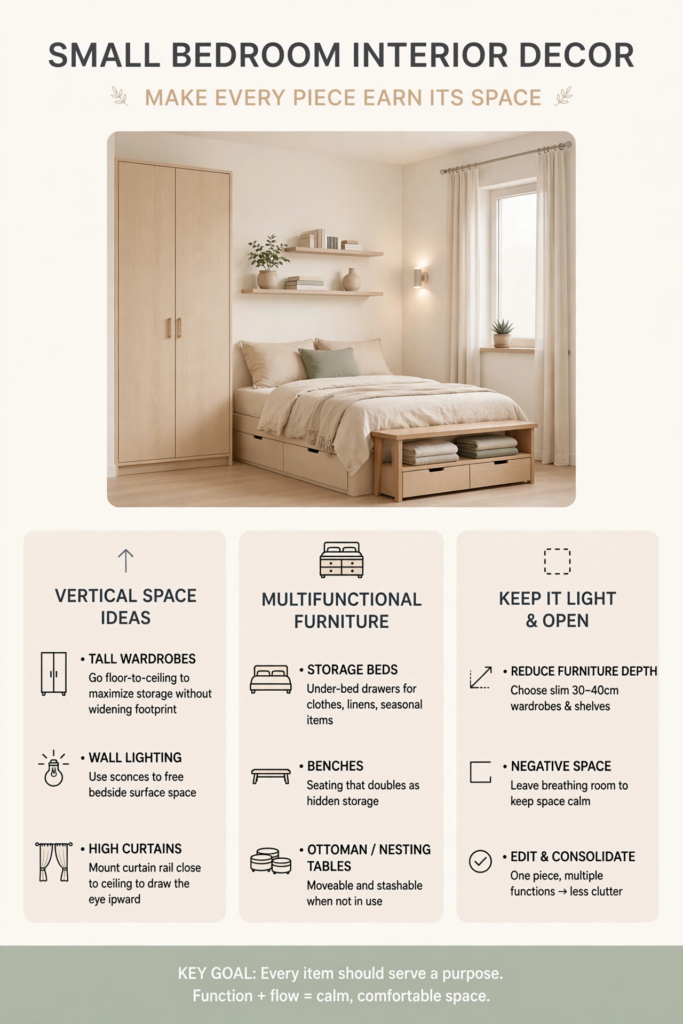
Small Bedroom Interior Decor: Make Every Piece Earn Its Space
Small bedrooms require a different strategy.
Instead of asking:
“What else can I fit?”
ask:
“What does this room actually need?”
Use vertical space
Consider:
- tall wardrobes
- wall-mounted lighting
- floating shelves
- artwork
- high curtain placement
- vertical storage
Reduce furniture depth
A shallow dresser or narrow nightstand can preserve valuable circulation space.
Replace bulky bedside furniture
Depending on the room, alternatives include:
- floating shelves
- wall-mounted nightstands
- narrow pedestal tables
- compact stools
- wall sconces instead of table lamps
Use multifunctional furniture
Examples include:
- storage beds
- benches with storage
- desks that double as vanities
- nightstands with charging/storage
- wardrobes with integrated drawers
Don’t cover every wall
A small room can feel smaller when every surface is occupied.
Negative space is part of the design.
Make a Large Bedroom Feel Intentional
Large bedrooms have the opposite problem: too much empty space.
The solution isn’t necessarily more furniture.
Instead, create stronger zones.
A large bedroom might include:
- bed and nightstands
- dresser
- reading chair
- small side table
- rug
- artwork
- storage
- occasional bench
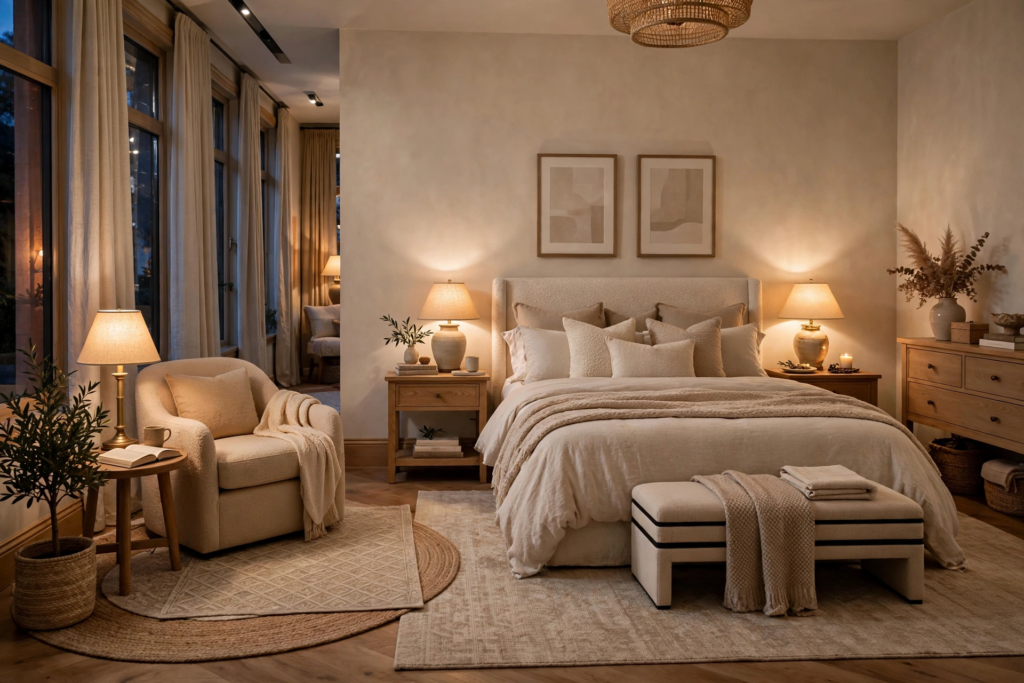
Use rugs, lighting, and thoughtfully arranged furniture groupings to make the bedroom feel more connected and intentional. For example, a single small chair placed in a large, empty corner can often look out of place or accidental. Instead, pair the chair with a side table, lamp, and rug to create a defined destination for reading, relaxing, or getting ready.
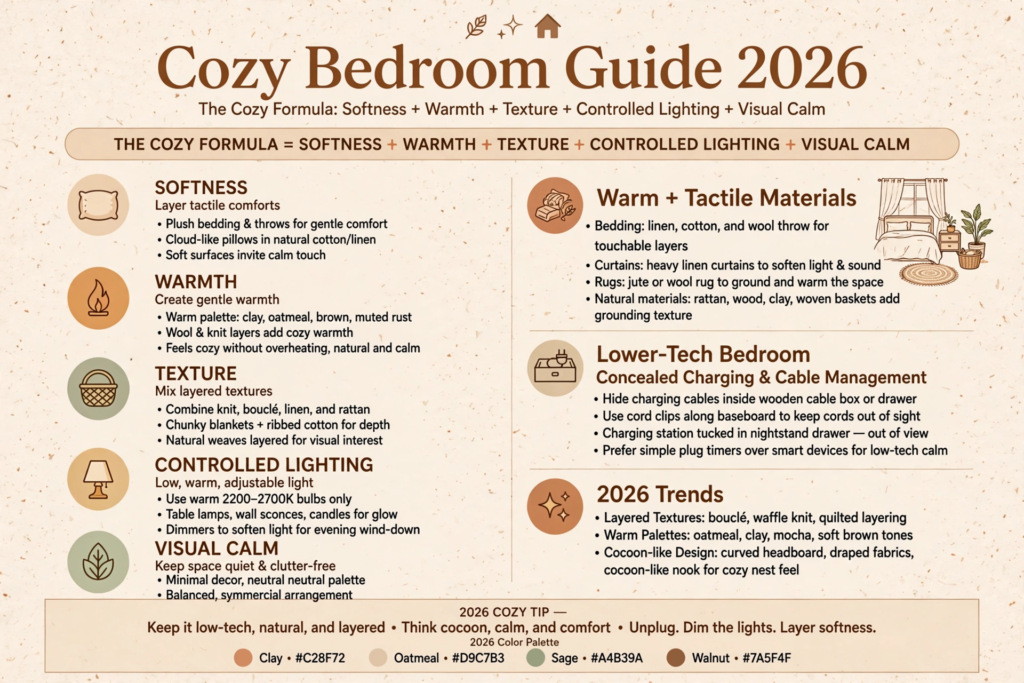
Create a Cozy Bedroom Without Making It Heavy
“Cozy” doesn’t require covering the room in beige or adding dozens of pillows.
Try combining:
- warm lighting
- tactile bedding
- curtains
- rugs
- natural materials
- upholstered elements
- deeper accent colors
- soft seating
Current 2026 bedroom coverage is strongly emphasizing layered textures, warm palettes, upholstered surfaces and cocoon-like environments.
A useful cozy formula
Softness + warmth + texture + controlled lighting + visual calm
That formula is more transferable than copying one particular aesthetic.
Consider a Lower-Tech Bedroom
Technology is increasingly becoming a design consideration rather than something automatically displayed.
Current 2026 design coverage reports growing interest in concealed TVs, integrated charging and bedrooms with less visible technology.
You don’t have to eliminate electronics.
Instead, consider:
- concealed charging
- cable management
- a TV that can be hidden
- closed nightstand drawers
- fewer visible devices
- physical light switches that are easy to use
The objective is simple: make technology serve the bedroom rather than dominate it.
Bedroom Interior Decor on a Budget
You don’t need to replace everything to make a bedroom feel different.
Lower-cost improvements
Start with:
- bedding
- lampshades
- throw pillows
- curtains
- artwork
- paint
- hardware
- decorative objects
- rearranging existing furniture
Mid-range improvements
Consider:
- rug
- nightstands
- lighting
- dresser
- headboard
- larger artwork
- window treatments
Larger investments
These may include:
- bed frame
- mattress
- built-in storage
- custom cabinetry
- flooring
- architectural millwork
- electrical changes
Where should you spend first?
For most bedrooms, prioritize the things you interact with every day:
- Mattress and sleep comfort
- Bed and furniture that fit the room
- Useful lighting
- Storage
- Bedding
- Rug/window treatments
- Decorative accessories
That’s an editorial prioritization, not a universal spending rule.
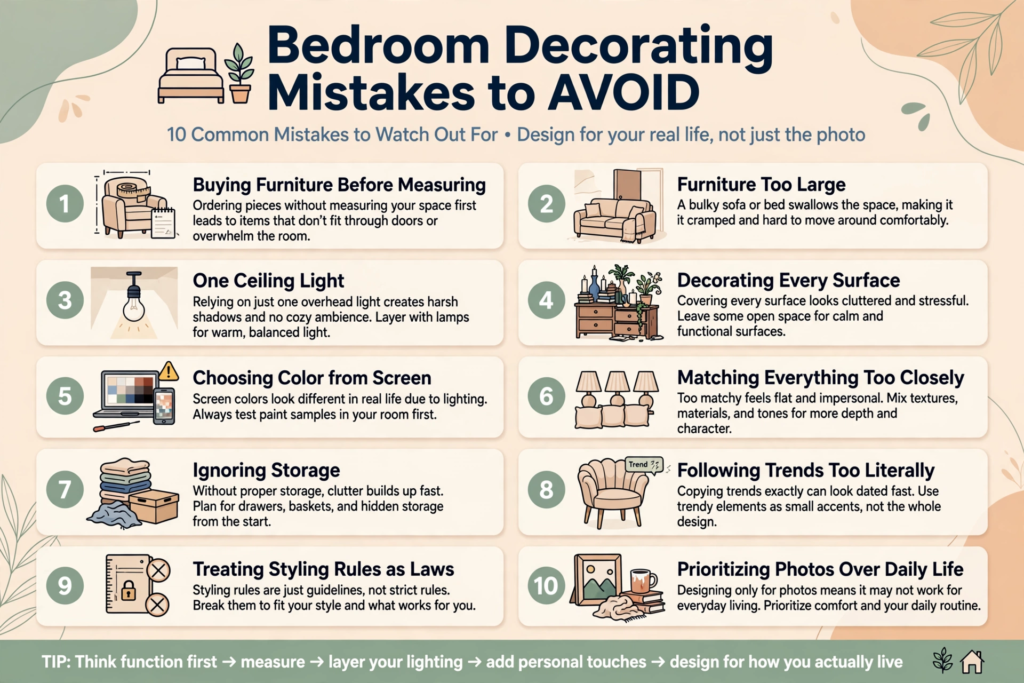
Bedroom Decorating Mistakes to Avoid
1. Buying furniture before measuring
A product can look perfect online and be completely wrong for your room.
2. Using furniture that’s too large
Scale matters as much as style.
3. Relying on one ceiling light
The room may be functional but feel flat.
4. Decorating every surface
Leave breathing room.
5. Choosing color from a screen
Lighting and surrounding materials change how paint and fabrics appear.
6. Matching everything too closely
A coordinated room doesn’t need identical furniture.
7. Ignoring storage
If there isn’t a place for everyday belongings, clutter will eventually become the decor.
8. Following trends too literally
A trendy bedroom should still look like your bedroom.
9. Treating styling rules as laws
Rules such as specific color ratios or exact furniture clearances can be useful starting points, but real rooms require adaptation.
10. Prioritizing photographs over daily life
A bedroom needs to work at 7 a.m., not just look good in a photograph.
A Simple Bedroom Decorating Process
If the entire process feels overwhelming, use this order.
Step 1: Measure
Record the room, doors, windows and fixed features.
Step 2: Define the purpose
Decide what the room needs to accommodate.
Step 3: Place the bed
Start with the largest piece.
Step 4: Establish circulation
Make sure you can move comfortably around the furniture.
Step 5: Add storage
Place dressers, wardrobes and other functional pieces.
Step 6: Choose the palette
Select wall, furniture, textile and accent colors.
Step 7: Add lighting
Plan ambient, task and accent sources.
Step 8: Add bedding and a rug
Layer texture and establish comfort.
Step 9: Dress the windows
Balance privacy, light control and softness.
Step 10: Add artwork
Use scale and color to balance the room.
Step 11: Style surfaces
Add books, objects, plants or personal pieces selectively.
Step 12: Remove something
Once you’re finished, look around and ask:
What doesn’t need to be here?
Good bedroom design isn’t about filling every empty space. It’s about making every major element feel intentional.
FAQs
What is the best way to start decorating a bedroom?
Start with the room’s measurements and layout rather than accessories. Determine how the bedroom will be used, place the bed, establish circulation, add essential furniture and storage, and then choose colors, lighting and decorative details. This order prevents decor purchases from creating layout problems.
How do I make my bedroom look more stylish?
Focus on proportion, layering, and repetition to create a bedroom that feels balanced and cohesive. First, combine different textures and vary the scale of furniture and accessories to add visual interest. Next, repeat a few colors or materials throughout the room to create a sense of continuity. In addition, use lighting at multiple levels to add warmth and dimension. Finally, incorporate personal artwork and meaningful objects to make the space feel more individual and connected to your personality.
How do I make a bedroom feel cozy?
Create a cozy bedroom by layering lighting with tactile bedding, soft rugs, curtains, and upholstered elements. In addition, incorporate warm or earthy colors to create a welcoming and comfortable atmosphere. However, a cozy bedroom does not require a neutral palette. Instead, current bedroom design increasingly embraces richer colors and deeper textures to create a warm, enveloping feel.
How should I arrange furniture in a bedroom?
Begin with the bed because it usually determines the rest of the layout. Then create comfortable circulation, position nightstands where they’re accessible, and place storage where doors and drawers can operate freely. Larger bedrooms can be divided into sleeping, dressing, reading or work zones.
How do I decorate a small bedroom?
Prioritize the bed, circulation, and storage when designing a small bedroom. First, choose appropriately scaled furniture to avoid making the room feel cramped. Next, consider vertical storage, wall-mounted lighting, and multifunctional pieces to make better use of limited space. In addition, floating nightstands and storage beds can help preserve valuable floor space while keeping the bedroom organized and functional.
Should bedroom nightstands match?
No. Matching nightstands create symmetry, but mismatched pieces can also work when they have comparable visual weight or share another characteristic such as color, material or height.