
You use your foundation expecting a smooth, natural-looking finish, but instead it looks thick, dry, patchy, or settles into all the little lines. If you’ve ever wondered, “why does my foundation look cakey?”, the problem isn’t necessarily the foundation itself. It can be caused by too much product, dry skin, improper preparation, too much powder, or the way your makeup layers interact.
There are several reasons you may wonder, “why does my foundation look cakey?” Common causes include using too much foundation or powder, layering incompatible products, poorly prepared skin, choosing the wrong foundation formula, or using an application technique that leaves excess product behind. Modern makeup advice also focuses on the type of cakiness rather than simply counting how many products you use. The issue is often how the layers interact, how much product you apply, or both.
Fortunately, it isn’t necessary to strip off your entire makeup application. The first step is to determine which error is creating the issue, then change a small amount—rather than another thick layer.
If your foundation looks cakey because your skin feels dry, you may also want to explore Why Does My Makeup Look Dry? 11 Causes and Easy Fixes for more tips on creating a smoother, more hydrated-looking base.
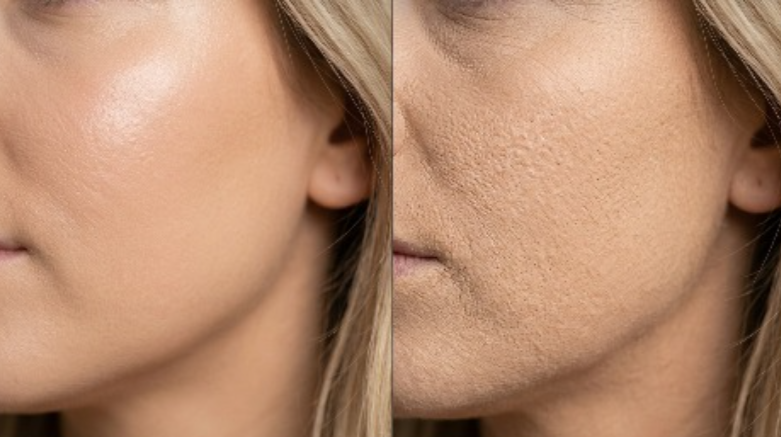
What Does Cakey Foundation Look Like?
Typically the base of cakey foundation appears heavier than the skin beneath it. It may appear:
- Thick or mask-like
- Dry or flaky
- Patchy around the nose or chin
- Settled into fine lines
- Heavy around the eyes
- Uneven across the cheeks
- Separated in oily areas
- Powdery after setting
Cakey, dry, patchy and separated are related problems, but they aren’t exactly the
1. You’re Applying Too Much Foundation
The first thing to do is to stop using too much foundation.
The first step is to stop applying too much foundation. Getting foundation too cakey is often the result of applying too much product in one spot. Extra foundation does not necessarily mean a flawless-looking complexion.
After the initial layers, more layers of coverage may start showing through on the skin. This is noticeable around the nose, mouth, under-eyes and other areas which move naturally throughout the day.
If you’re trying to avoid heavy layers, Makeup Routine With Only 5 Products: A Minimal Beginner Guide can help you create a simple, lightweight makeup routine with fewer products.
How to fix it
Use only enough to get the job done; apply only as necessary. Add another thin application just to areas that require additional amounts.
Rather than wearing heavy layers to cover your face, consider:
layer light → blend → evaluate and only add light where needed
This way you can achieve coverage without getting a dense surface.
Once your foundation looks smooth and natural, complete your makeup with inspiration from Spring 2026 Lipstick Trends: 10 Fresh Lip Looks to Try This Season for fresh lip ideas.
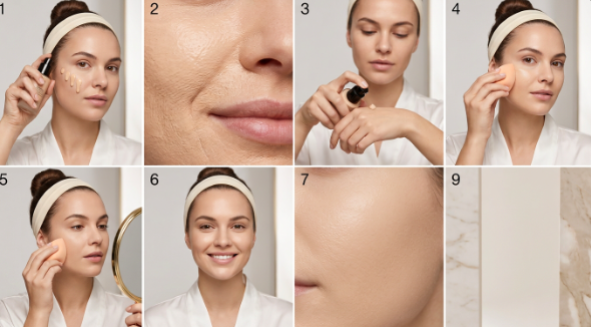
2. Your Skin Isn’t Properly PreppedIf foundation catches on dry patches, it can make those areas much more noticeable.
When foundation catches on dry spots, it can accentuate the dry areas.
You don’t have to use 10 skin care products in your make up. Surprisingly, the more layers, the more layers is not necessarily the better. The American Academy of Dermatology suggests using moisturizer and/or sunscreen first, followed by make-up, as the correct skin care order.
How to fix it
Before foundation:
- Cleanse your face gently.
- Apply your usual skincare products.
- Moisturize according to your skin’s needs.
- Apply sunscreen during the daytime.
- Give the layers enough time to settle before applying makeup.
- Apply foundation in a thin layer.
When the skin is flaky, don’t scrub it too hard right before applying makeup. It’s best to start with a gentle routine.
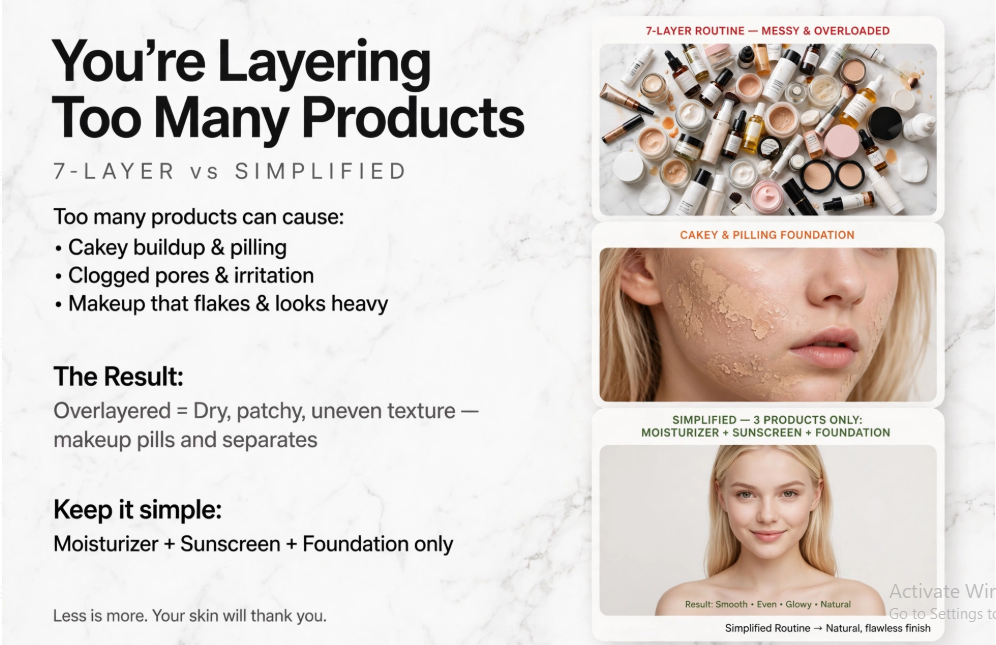
3. You’re Layering Too Many Products
The foundation itself might not be the cause of the problem, but the combination that is below it could be causing too much buildup.
For instance, you can use: The skincare routine consists of serum + moisturizer + sunscreen + primer + foundation + concealer + powder.
None of those products in and of itself is a problem. This can occur when the layers are either too thick, packed poorly, or are placed on the soil surface too thickly. In fact, the AAD reports that some skin types can become irritated from overusing skin care products.
How to fix it
Keep it simple with a base workout for a while.
Try:
moisturizer → sunscreen → optional primer → foundation
Moisturizer – Sunscreen – Primer (optional) – Foundation After which, you can only add concealer and powder to cover up any areas that are needed. If, when you start making your make up routine as simple as you can, it looks better, then one at a time start adding things back in to see which ones are causing the problems.
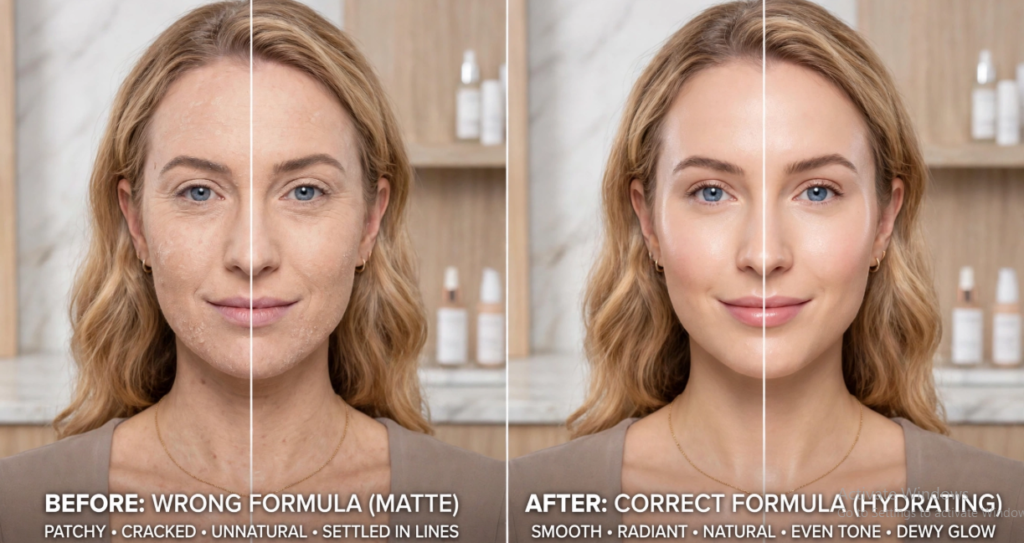
4. Your Foundation Formula Doesn’t Suit Your Skin or Desired Finish
In some cases, it’s just the base of the issue.
A formula may appear stunning on one woman and too dry, heavy, glossy or slippery on another. All of these factors are important for skin type, preferred coverage and desired finish.
If a person’s skin is visibly dry, for instance, they may discover that an exceedingly matte formula highlights the dryness. A very emollient formula may be more prone to move or separate in the T-zone for an individual with an oily T-zone.
How to fix it
After a few hours, think about what your foundation is doing.
If it looks dry: Think of a smoother, softer or hydrating finish. If it becomes very shiny: Think about using a formula or finishing system that provides greater oil control.
If it feels heavy: Use a lighter amount of coverage or a lighter formula of the same.
If it separates: Check the skin care layers and foundation formula instead of just piling on more powder. It’s not a competition to see who can get the “best” finish.
The key is to discover a formula that is good for you and the appearance you are trying to achieve.
5. You’re Using Too Much Powder
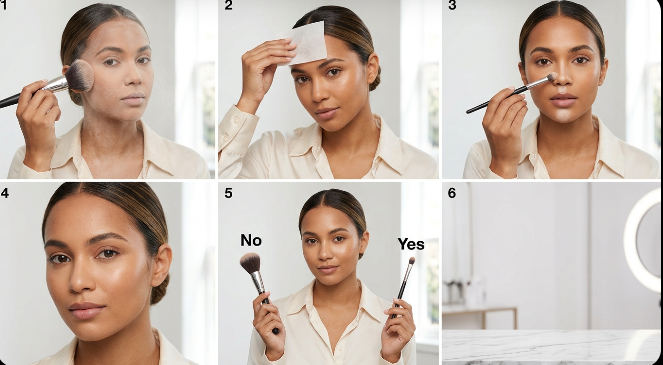
While the powder can help to dull off shine and set some areas, a heavy application all over can create a “powdery” look for the foundation.
This is especially apparent when the powder falls and covers an area that already has a texture.
How to fix it
Use powder strategically. Some additional hydration may be required around oily areas while less hydration may be required for dry areas.
Rather than rubbing something around your face liberally, ask: Should this region really be treated with powder? Otherwise, don’t touch it.
If need be, re-touch later, but blot excess oil first, and do not pile more powder on the oil.
6. You’re Not Blending or Pressing Properly
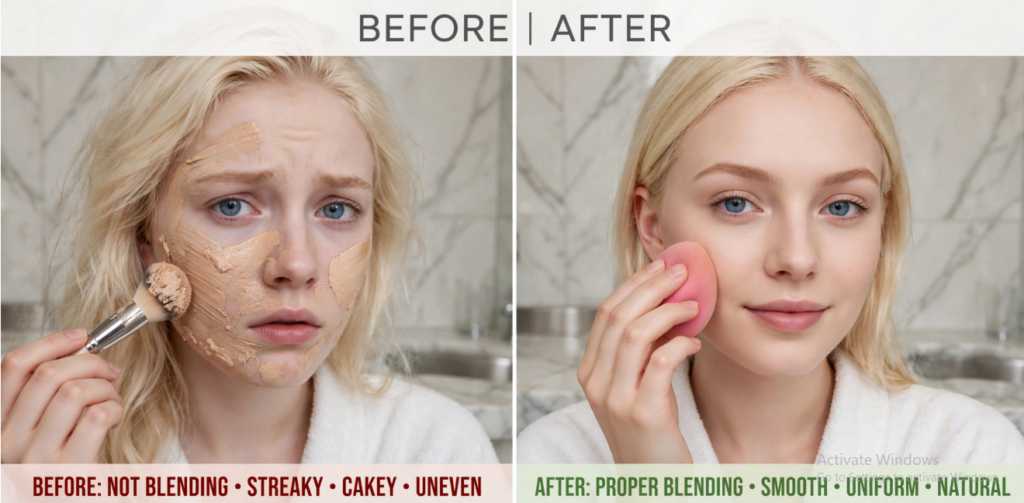
When product is located in one place, it can make foundations look cakey.
Repeatedly rubbing a brush over the skin also can rub the product around the skin instead of making a uniform layer. Any kind of brushes or makeup sponges will do.
There isn’t one universal tool that is correct for everyone.
How to fix it
If applying liquid foundation, apply sparingly and mix in slowly.
A damp makeup sponge can also help you to press down and smooth out the areas where the foundation seems thick. When fine control of application and coverage is desired, a brush can be used effectively. It’s not all about the tool.
This is the pressure and motion you put into the product, and the amount of product.
7. Your Primer, Skincare and Foundation Don’t Work Well Together
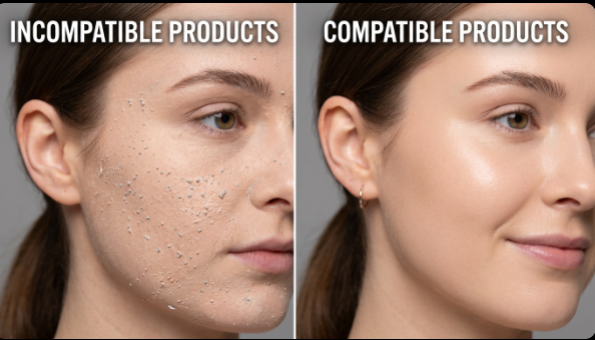
Sometimes the foundation looks fine by itself but becomes strange when combined with your skincare and primer.
You may notice:
- Pilling
- Rolling
- Patchy application
- Slipping
- Uneven texture
- Foundation gathering in certain areas
This can make it tempting to apply more foundation to cover the problem, but that can make the texture even more visible.
How to fix it
Test your base routine in a smaller area before changing everything.
Use your usual skincare, allow it to settle, then apply primer if you use one. Follow with a thin foundation layer.
If the problem appears only after adding a particular product, remove that product from the routine and compare the result.
You don’t necessarily need to eliminate primer forever. It may simply be unnecessary for that particular combination.
8. You’re Trying to Fix Texture by Adding More Makeup
This is an easy mistake to make.
You notice a patch.
So you add foundation.
Then concealer.
Then powder.
Then more powder.
Suddenly the original problem is still there—but now there’s more makeup sitting on top of it.
How to fix it
When texture becomes visible, subtract before you add.
Use a clean damp sponge to gently press over an overly heavy area. If there’s excess oil, blot it first.
For a small blemish or discoloration, use targeted concealer instead of applying another full layer of foundation across your face.
This creates a more natural-looking balance between coverage and visible skin.
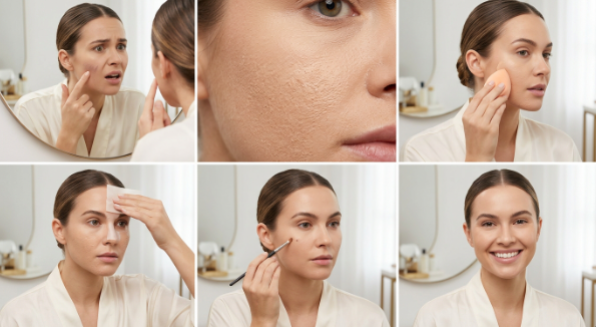
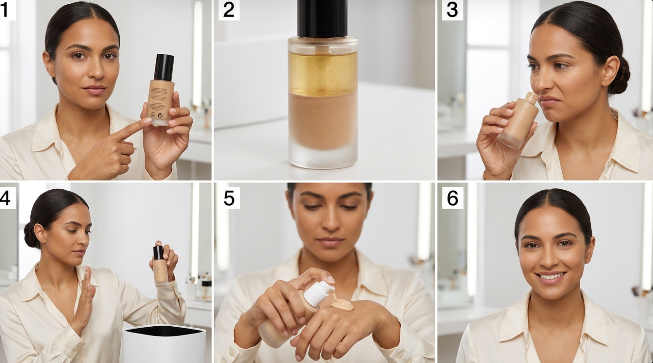
9. Your Foundation or Tools Need Replacing or Cleaning
A foundation that has changed consistency may no longer apply the way it originally did.
The FDA notes that cosmetics can change over time, including changes in texture, color and smell, and that emulsions can separate.
The American Academy of Dermatology also recommends using clean makeup brushes and sponges and replacing makeup when it shows signs such as changes in consistency, smell, color or feel.
How to fix it
Check your foundation for:
- Separation that doesn’t resolve with normal mixing
- A significant texture change
- Unusual smell
- Color changes
- A noticeably different feel
Also clean your makeup tools regularly. The AAD specifically recommends cleaning makeup sponges after every use and makeup brushes every 7 to 10 days.
If a product has clearly changed or you’re unsure about its condition, replacing it is safer than trying to make it work.
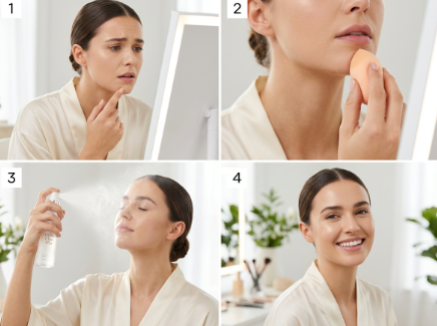
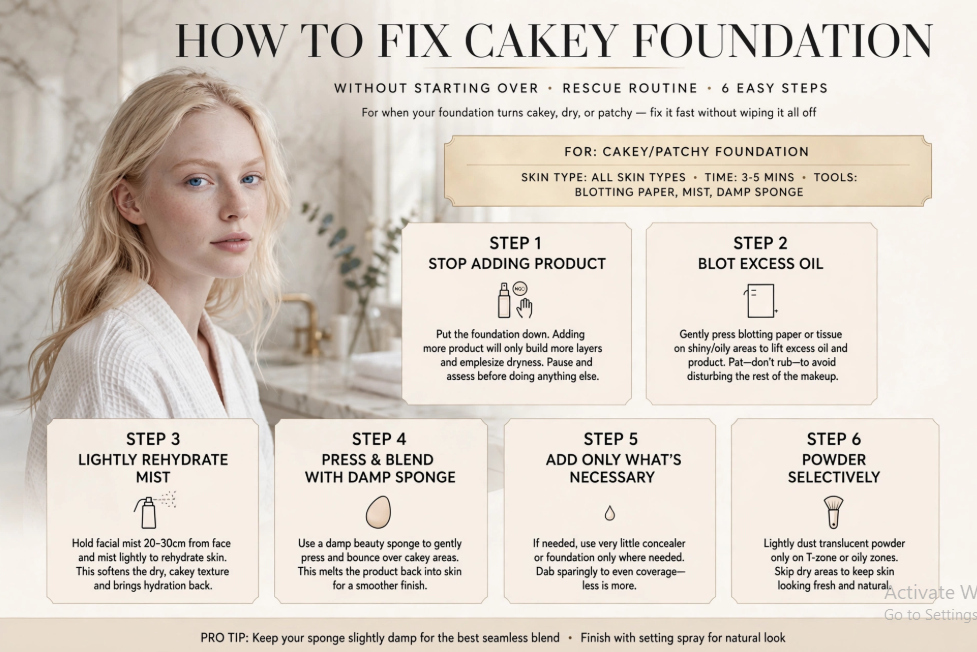
How to Fix Cakey Foundation Without Starting Over
If your foundation already looks cakey, don’t immediately add another layer.
Try this simple rescue routine:
Step 1: Stop adding product
Put the foundation and powder down for a moment.
Step 2: Blot excess oil
If the problem is concentrated in an oily area, gently press with blotting paper or a clean tissue. Don’t rub.
Step 3: Lightly rehydrate the area
A fine facial mist can help soften the appearance of dried-down makeup. Don’t saturate your face.
Step 4: Press and blend
Use a clean damp sponge or clean fingertip to gently press over the affected area.
Step 5: Add only what is necessary
If coverage has disappeared, add the smallest amount of foundation or concealer needed.
Step 6: Powder selectively
Only set areas that actually need it.
This “remove a little, soften, press, then rebuild” approach is also reflected in current professional makeup guidance for rescuing cakey makeup.
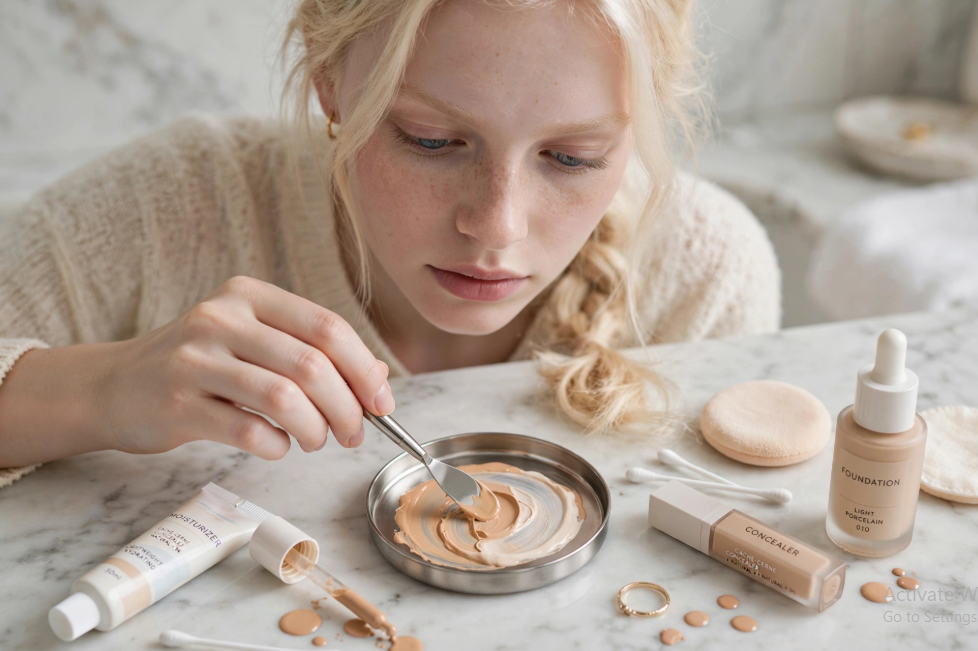
What to Mix With Foundation to Make It Less Cakey?
If your foundation feels too heavy, it’s tempting to mix it with another product.
A better first step is usually to reduce the amount of foundation rather than automatically mixing products together.
If you’re wondering why does my foundation look cakey and want a lighter finish, you can experiment with a compatible moisturizer or lightweight complexion product. However, test the combination first, since different formulas can behave differently when mixed and may affect the final finish.
Another simple option is to apply a thinner layer of foundation and use concealer only where additional coverage is needed.
That gives you more control than making the entire mixture thinner.
A natural-looking base doesn’t require perfectly invisible skin. It requires enough product to even out your complexion while still allowing your skin’s natural texture to look like skin, which aligns with the American Academy of Dermatology’s skincare guidance on maintaining healthy makeup habits.
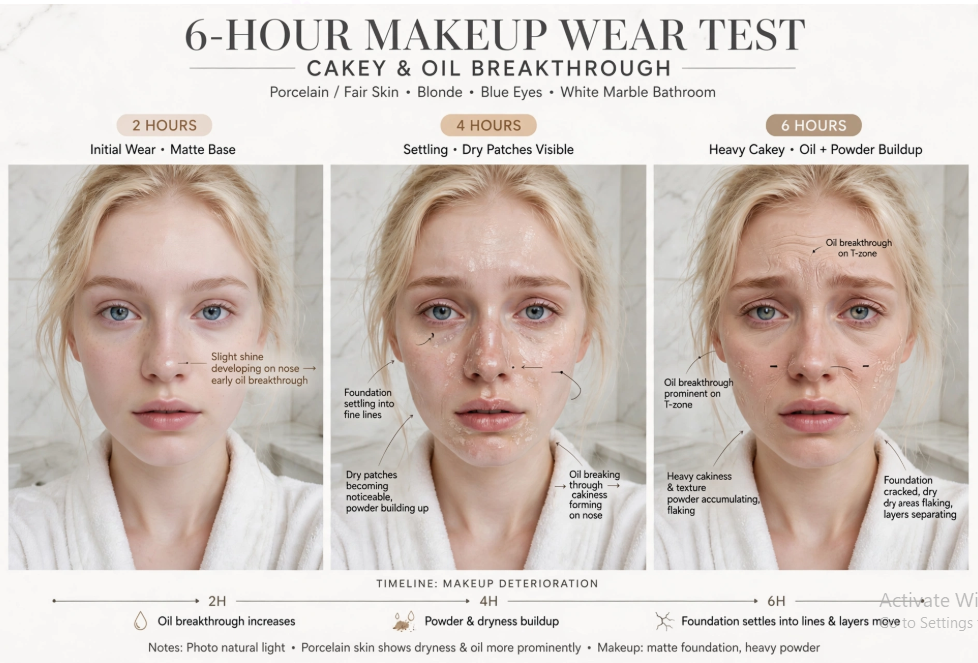
Why Does My Makeup Look Cakey After Only a Few Hours?
If your makeup looks smooth immediately after application but becomes cakey later, look at what changes during wear.
Common possibilities include:
- Oil breaking through
- Foundation settling into lines
- Dry areas becoming more noticeable
- Too much powder accumulating
- Heavy layers moving as your face moves
- Skincare or makeup underneath affecting wear
- Foundation formula not matching your skin or desired finish
Recent beauty discussions also show people troubleshooting cakiness that appears specifically around the nose, particularly after several hours.
Try this test
For your next application, use:
lighter skincare → less foundation → less powder → targeted touch-ups
Then check your makeup after two, four and six hours.
This can help you identify whether the issue is excess product, oil, dryness, or wear rather than changing your entire makeup collection at once.
How to Prevent Cakey Foundation
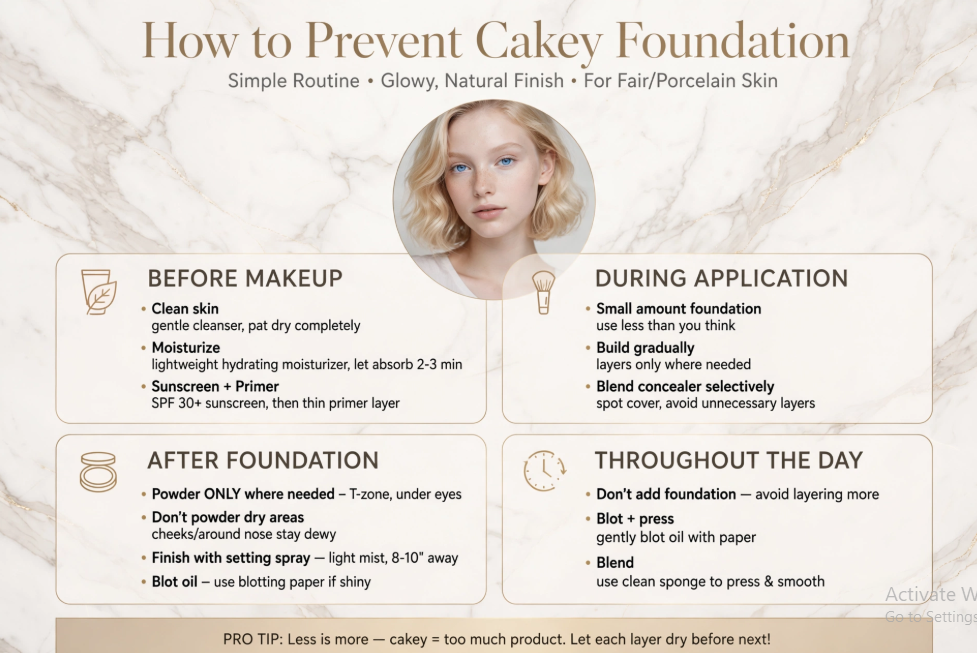
A simple routine can make a big difference:
Before makeup
- Start with clean skin.
- Moisturize appropriately.
- Apply sunscreen during the daytime.
- Allow skincare to settle.
- Use primer only if it benefits your routine.
During application
- Start with a small amount of foundation.
- Build coverage gradually.
- Blend each area before adding more.
- Use concealer selectively.
- Avoid unnecessary layers.
After foundation
- Powder only where needed.
- Don’t automatically powder dry areas.
- Use setting spray if it works well with your routine.
- Blot excess oil instead of repeatedly adding powder.
Throughout the day
If makeup starts becoming heavy, don’t keep adding foundation over it.
Blot, gently press and blend first.
A Quick Cakey Foundation Checklist
If your foundation looks cakey, ask yourself:
Does my skin feel dry?
→ Focus on gentle preparation and moisturizer.
Did I use too much foundation?
→ Remove excess and apply thinner layers next time.
Did I use too much powder?
→ Powder only the areas that need it.
Did I layer several products underneath?
→ Simplify your routine and test again.
Does my foundation separate later?
→ Examine oil, skincare compatibility and formula.
Does it look cakey only in one area?
→ Use less product in that area instead of adding more.
Has the foundation changed texture or smell?
→ Check whether it needs replacing.
Are my tools clean?
→ Clean brushes and sponges regularly.
Final Thoughts
If you’re asking “Why does my foundation look cakey?”, don’t assume you need a new foundation immediately.
Start with the simplest variables: how much product you’re using, how your skin is prepared, how many layers you’re applying, how much powder you’re using, and how you’re blending.
Then look at the formula and the condition of your products.
In many cases, the solution isn’t another product. It’s a thinner layer, better-prepared skin, more strategic powder, or a small midday correction instead of continually adding makeup.
If you’re wondering why does my foundation look cakey, remember that a natural-looking base doesn’t require perfectly invisible skin. It simply requires enough product to even out your complexion while allowing your skin’s natural texture to still look like skin.

FAQs
What to do if my foundation looks cakey?
Stop adding product, blot excess oil if necessary, lightly mist the affected area, and press it gently with a clean damp sponge. If coverage is missing afterward, add a very small amount of foundation.
Why has my foundation gone cakey?
Cakey foundation can result from excess product, dry or poorly prepared skin, too much powder, incompatible layers, unsuitable formula, or foundation that has changed over time.
What to mix with foundation to make it less cakey?
Rather than immediately mixing another product into foundation, try using less foundation and building coverage gradually. If you want to experiment with mixing, test a small amount first because formulas can behave differently together.
Why does my makeup look cakey after only a few hours?
Oil, movement, dry patches, excess powder, heavy layers and formula compatibility can all contribute to cakiness that develops during wear.
Does dry skin make foundation look cakey?
It can. Foundation may become more noticeable over dry or flaky areas, which is why appropriate moisturizing and lighter application can help.
How do you fix cakey foundation without removing it?
Blot excess oil, lightly rehydrate the area, then press and blend with a clean damp sponge. Avoid immediately applying more foundation or powder.
Why does foundation look cakey around my nose?
The nose can be particularly challenging because it may become oily while also having visible pores and movement. Try using less foundation there and powder only if necessary.
Is primer necessary to prevent cakey foundation?
No single primer is necessary for everyone. Primer can be useful for certain makeup routines, but skincare preparation, product amount and foundation compatibility are also important.
How can I make my foundation look more natural?
Use a small amount, build coverage gradually, blend thoroughly and use concealer and powder only where needed.