Starting a skincare routine can feel confusing when there are hundreds of cleansers, serums, moisturizers, exfoliants, and treatments to choose from. However, you do not need a shelf full of products to take good care of your skin. A simple skincare routine for beginners can start with just a few essential steps that help keep your skin clean, hydrated, and protected.
The basis for creating a correct skincare routine should be simplicity and relevance to the skin type. It is essential to study the most needed ingredients and care types for the skin and abandon the less relevant ones for a while.
In this article, you will find out how to create a skincare routine for a beginner, what products to focus on, which ones can be excluded for now, and how to build morning and evening skincare without spending a fortune.
What Is a Simple Skincare Routine for Beginners?
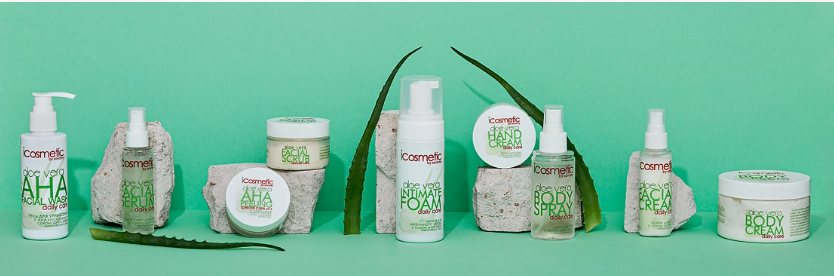
A simple skincare routine for beginners is a basic skin-care plan built around a few essential products rather than a complicated collection of treatments.
For most beginners, the foundation is:
- Gentle cleanser to remove dirt, oil, and makeup.
- Moisturizer to support hydration and the skin barrier.
- Sunscreen to protect exposed skin from UV radiation.
These three steps give you a practical starting point. You can later introduce products such as vitamin C, hyaluronic acid, salicylic acid, or retinol if you have a specific reason to use them.
Most importantly, consistency matters more than having a long routine. A routine that you can comfortably follow every morning and night is generally more useful than a complicated routine that you abandon after a few days.
The 3 Essential Steps in a Simple Skincare Routine for Beginners
If you are completely new to skincare, start here. You do not need to buy ten different products immediately.
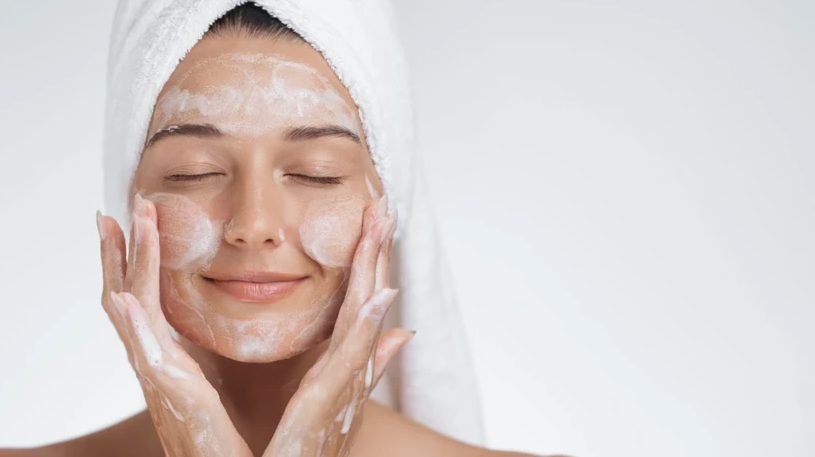
Step 1: Cleanse Your Skin Gently in a Simple Skincare Routine for Beginners
Cleansing is the first step to remove sweat, oil, dirt, and dead cells.
Pick a gentle cleanser that won’t leave skin tight or itchy after cleansing. Cleanser should not unnecessarily strip your skin of oil.
In the morning, a gentle cleanser will loosen up your skin for moisturizing and sunscreens. Nightly cleansing helps remove sunscreens and makeup, as well as other detritus and pollutants.
If your skin feels irritated or particularly dry after cleansing, think about whether your cleanser is being too harsh or if you’re cleansing unnecessarily often.
Step 2: Moisturize and Support Your Skin Barrier
The second important step is moisturizing. A good moisturizer helps reduce dryness and supports the skin’s natural barrier.
Look for ingredients that provide hydration or help support the barrier, such as ceramides, glycerin, and hyaluronic acid. However, you do not necessarily need a long ingredient list. The right moisturizer is one that feels comfortable and works well with your skin type.
If you have oily or acne-prone skin, you may prefer a lightweight, non-comedogenic lotion or gel. If your skin is dry, a richer cream may feel more comfortable.
Apply moisturizer consistently rather than using it only when your skin becomes very dry.
For an effortless everyday look, check out The Minimal Makeup Guide: How to Look Polished With Less Makeup for simple tips on creating a fresh, polished appearance with minimal makeup.

Step 3: Protect Your Skin With Sunscreen Every Day
Sunscreen is a must-have in any daytime skincare routine.
Make sure to use a broad-spectrum sunscreen with an SPF of 30 or higher. A broad-spectrum formula protects against both UVA and UVB radiation.
Apply your sunscreen as the last step of your morning skincare routine on all exposed skin. If you are going to be outside for a prolonged period of time, make sure to reapply the product as directed by the manufacturer, especially after swimming or heavy sweating.
UV rays can cause sunburn and premature aging of the skin, which means that skipping this step will undo all your previous skincare efforts
Want to know which beauty products are worth the investment? Read Beauty Products Worth Buying in 2026: Where to Save and Where to Splurge for smart shopping tips.

Simple Morning Skincare Routine for Beginners: Step-by-Step
A beginner-friendly morning routine does not need to take long.
Follow this basic order:
Cleanser → Moisturizer → Sunscreen
1. Cleanse
Start with a gentle cleanser appropriate for your skin type. If your skin is very dry or sensitive, you may find that a less aggressive cleansing approach feels more comfortable.
2. Moisturize
Apply a suitable moisturizer after cleansing. If your skin tends to feel tight after washing, moisturizing can help restore comfort and hydration.
3. Apply Sunscreen
Finish with broad-spectrum SPF 30 or higher. Make sunscreen a daily habit rather than something you use only during summer or on sunny vacation days.
If you eventually introduce a morning treatment such as vitamin C, it can be placed before moisturizer and sunscreen.

Simple Nighttime Skincare Routine for Beginners: Step-by-Step
Your nighttime routine can be just as simple.
A basic order is:
Remove makeup if needed → Cleanse → Treatment if needed → Moisturize
Remove Makeup and Sunscreen
If you wear makeup or water-resistant sunscreen, use an appropriate makeup remover or cleansing method before or during your cleansing routine.

Cleanse
Use a gentle cleanser to remove the day’s buildup. Avoid aggressively scrubbing your face because excessive friction can contribute to irritation.
Apply Treatment Only If Needed
Beginners do not need multiple treatments. If you eventually add an active ingredient, introduce one product at a time and follow its directions.
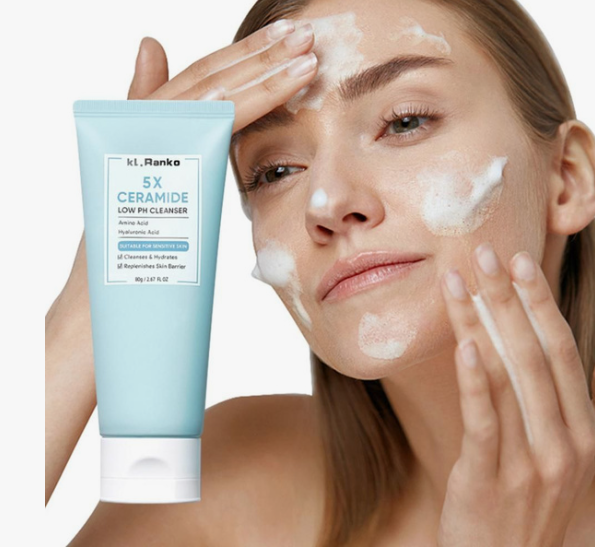
Moisturize
Finish with moisturizer to help maintain hydration and support the skin barrier while you sleep.
For busy days, try Low Maintenance Beauty Routine: A Simple 5-, 10-, and 15-Minute System for quick beauty routines that fit your schedule.

How to Choose Products for a Simple Skincare Routine for Beginners
Your skin type can help you decide which formulas are likely to feel comfortable.
Instead of buying products because they are expensive or heavily advertised, look at what your skin actually needs.
Simple Skincare Routine for Beginners With Dry Skin
Dry skin often feels tight, rough, flaky, or uncomfortable.
Look for:
- Cream-based or gentle cleansers
- Hydrating moisturizers
- Ceramides
- Glycerin
- Hyaluronic acid
- Fragrance-free options if your skin is easily irritated
Avoid unnecessarily harsh cleansing or excessive exfoliation.
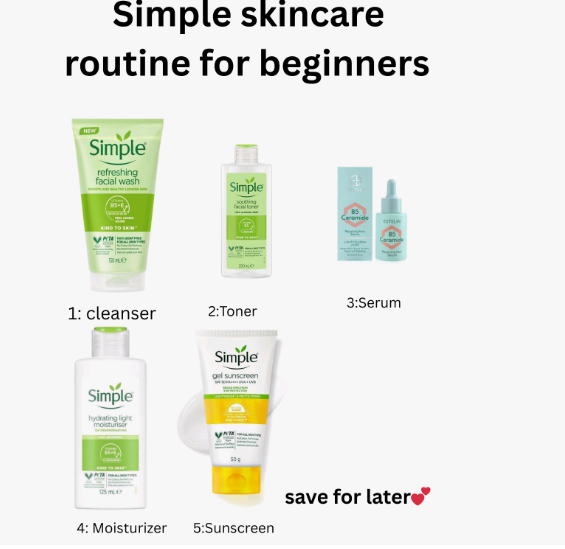
Simple Skincare Routine for Beginners With Oily Skin
Oily skin tends to produce more sebum and may appear shiny, particularly around the forehead, nose, and chin.
A lightweight routine may work well. Consider:
- Gentle cleanser
- Lightweight moisturizer
- Non-comedogenic products
- Broad-spectrum sunscreen
Having oily skin does not mean you should avoid moisturizer. Your skin can still benefit from hydration.
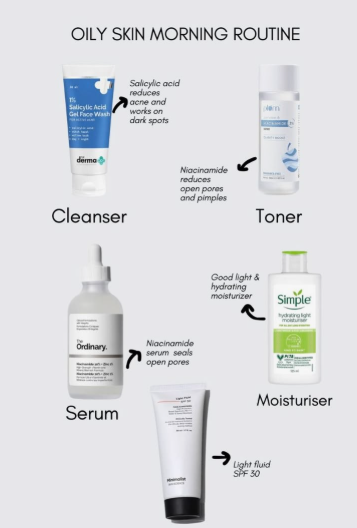
Simple Skincare Routine for Beginners With Combination Skin
Combination skin is sometimes oily, and sometimes dry or normal.
It is best to take a balanced approach to caring for combination skin, rather than trying to treat your entire face as if it were oily or dry.
Use a mild cleanser and a comfortable moisturizer, along with daily sunscreen. You may want to use different consistencies of moisturizer to suit different parts of your face.
Looking for seasonal inspiration? Explore 20 Fall 2026 Beauty Trends: Makeup, Hair & Nail Looks to Try for the latest autumn beauty ideas.
Simple Skincare Routine for Beginners With Sensitive Skin
Sensitive skin may be extra sensitive to new products, fragrances or potent actives.
Stick to a basic routine with fewer products and allow the skin to adjust to new additions. Products that are free of fragrance are often better tolerated by sensitive skin; however, if a product contains fragrance that you know irritates your skin, avoid using it.
Before introducing a new product, perform a patch test as instructed by the product or your dermatologist.
Simple Skincare Routine for Beginners With Normal Skin
Normal skin generally does not experience significant dryness or excessive oiliness.
Even so, you still need the basics. A gentle cleanser, moisturizer, and sunscreen can provide a straightforward foundation.
You do not need to add products simply because they are popular.
Do Beginners Need a Serum in a Simple Skincare Routine?
No, serum is not needed at the beginning of one’s skincare routine
Serums are mostly meant to target specific issues like spots, dryness, discoloration or aging.
For instance, you might add vitamin C to your skincare if you have concerns about lack of antioxidants in your skin, or hyaluronic acid, if you feel like your skin is too dry. However, it is better to build your foundation first (meaning the basic skincare products) and see what concerns you want to address yourself.
Ready for a seasonal makeup refresh? Explore 12 Spring 2026 Makeup Trends That Will Define the Season for fresh, wearable looks to try this spring.
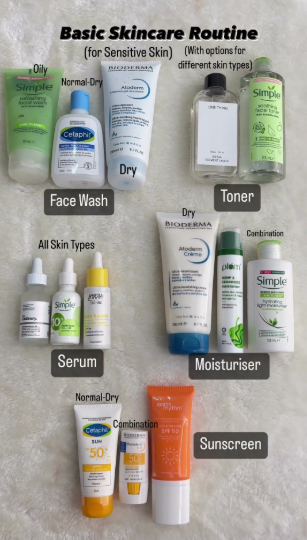
Do You Need Toner in a Simple Skincare Routine for Beginners?
Toner are optional.
Skincare in modern times do not require everyone to have one. Some toners can hydrate your skin while some have ingredients meant to target oily skin or other issues.
If you like one and your skin can handle it, feel free to use it. Just do not let it replace your cleanser, moisturizer, or sunscreen.
As someone who is new to skincare and want to keep things minimal, I can say that it is something you can pick up later.

Should Beginners Exfoliate Their Skin?
Exfoliation can help remove dead skin cells, but beginners should not rush to add it.
Over-exfoliating can leave your skin feeling irritated, dry, sensitive, or uncomfortable. Physical scrubs can also be too aggressive for some people.
If you eventually decide to exfoliate, choose a product appropriate for your skin and introduce it gradually. Avoid combining several strong exfoliating products at the same time.
A simple routine does not become better just because it contains more active ingredients.
When Should You Add Retinol to a Simple Skincare Routine for Beginners?
Retinol is an optional treatment, not a necessity.
Retinoids can be a good treatment option for acne and signs of aging but can cause irritation, dryness, and peeling if not used correctly.
If considering using a retinol product, introduce it slowly and follow package directions. Avoid combining with other irritating topical actives.
For those with a skin condition, prescription strength products, or those who are unsure if a retinoid is right for their skin consult with a dermatologist or other healthcare professional.

Common Mistakes to Avoid With a Simple Skincare Routine for Beginners
Starting skincare is easier when you know what not to do.
Using Too Many Products
More products do not automatically mean better skin. Introducing several new products at once also makes it difficult to identify which product is causing irritation.
Changing Your Routine Too Frequently
Give your routine time to become a habit. Constantly switching products can make your skin-care journey unnecessarily confusing.
Skipping Sunscreen
A good nighttime routine cannot replace daytime sun protection. Make sunscreen part of your everyday routine when your skin is exposed to the sun.
Scrubbing Too Hard
Aggressive scrubbing can irritate the skin. Gentle cleansing is usually a better starting point.
Copying Someone Else’s Routine
A product that works beautifully for another person may not suit your skin type or concerns. Your routine should be based on your own skin rather than someone else’s social media routine.
Adding Strong Actives Too Soon
Ingredients such as retinoids and exfoliating acids can be useful, but they are not necessary for every beginner. Build your foundation first.

How to Build an Affordable Simple Skincare Routine for Beginners
You do not need luxury skincare products to create an effective routine.
When shopping, prioritize the products that perform the most important jobs:
1. Gentle cleanser
Choose something designed to clean without making your skin feel excessively dry or irritated.
2. Basic moisturizer
Look for a formula that feels comfortable and supports hydration.
3. Sunscreen
It is better to choose a broad spectrum SPF 30 or higher cream to protect the skin from the sun’s harmful UV rays during sunny days.
Once the first three products are properly functioning, one can decide whether they may need additional products.
Besides, one should not blindly purchase expensive products since the quality and value depend on several factors, not the price tag. Pay attention to the content, formulation, compatibility, and proven effectiveness rather than the attractive design and higher price.

How Long Does a Simple Skincare Routine for Beginners Take to Show Results?
There are no quick benefits from skincare, as it highly depends on your skin type and what ingredients you are using.
Sometimes it can be noticeable that your oily skin is less oily after moisturizing; however, spots, bumps, and wrinkles require more attention and can take a long time to heal.
The only right thing to do is to take care of your skin regularly and not overload yourself with too many products.
If your skin reacts badly to a product (there may be a burning sensation, a rash, redness, or another irritation), stop using it and consult a dermatologist.
When Should You See a Dermatologist About Your Skincare?
A basic skincare regime is right for most people, but doesn’t always address all of your skincare needs
If you are experiencing chronic acne, extreme irritation, random rashes, excruciating skin conditions, extreme pigment disorder, or something that just doesn’t seem to be getting any better, a trip to the dermatologist is a good idea
They can help to identify what’s going on and prescribe the right treatment to address your unique skincare issues.
Frequently Asked Questions About a Simple Skincare Routine for Beginners
What Is the Simplest Skincare Routine for a Beginner?
The simplest routine consists of a gentle cleanser, moisturizer, and broad-spectrum sunscreen with SPF 30 or higher. These three products provide a practical foundation for most beginners.
How Many Products Should a Beginner Use in a Simple Skincare Routine?
Start with a few essential products rather than buying a large collection. Once your skin is comfortable with the basics, you can gradually introduce additional products for specific concerns.
Should I Follow a Simple Skincare Routine in the Morning and at Night?
Yes. A basic morning routine can be cleanser, moisturizer, and sunscreen. At night, cleanse your skin and apply moisturizer. Treatments can be added later if needed.
Do Beginners Need a Serum?
No. Serums are optional. Your priority should be cleansing, moisturizing, and protecting your skin from UV exposure.
Is Sunscreen Necessary in a Simple Skincare Routine for Beginners?
Yes. Daily sun protection is one of the most important parts of a daytime routine. Choose a broad-spectrum sunscreen with SPF 30 or higher and apply it as directed.
When Should I Add Retinol to My Skincare Routine?
Wait until you have established a consistent basic routine. If you decide to use retinol later, introduce it gradually because retinoids can cause irritation and dryness.
Can a Simple Skincare Routine Improve My Skin?
A consistent routine can help support hydration, skin-barrier health, cleansing, and sun protection. However, results depend on your skin type and individual concerns. Persistent problems may require professional treatment.
Final Thoughts on a Simple Skincare Routine for Beginners
A simple skincare routine for beginners does not need to be complicated, expensive, or filled with dozens of trendy products. Starting with the basics can actually make it easier to understand your skin and build habits that you can maintain.
Focus first on gentle cleansing, moisturizing, and daily sun protection. Once those steps become part of your routine, you can consider adding targeted ingredients such as vitamin C, exfoliants, or retinoids based on your specific skincare goals.
Most importantly, resist the temptation to try everything at once. Introduce new products gradually, pay attention to how your skin responds, and choose products that suit your skin type.
Healthy-looking skin is not about having the biggest skincare collection. It is about finding a routine that works for you and sticking with it consistently.
A simple skincare routine for beginners should focus on gentle cleansing, moisturizing, and daily sun protection rather than using too many products. The American Academy of Dermatology’s basic skincare guide also recommends keeping everyday skincare simple. American Academy of Dermatology’s Skin Care Basics