You don’t need foundation to create a fresh, well-groomed, and put-together look. A makeup routine without foundation can be achieved with good skin preparation, concealer, a touch of blush, nicely defined eyebrows, mascara, and lip gloss or lipstick.
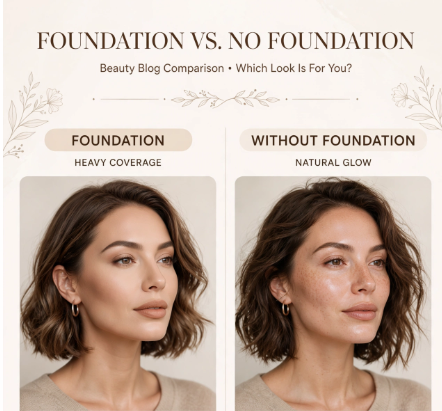
The main difference is that the skin is not covered entirely and some of its parts are left bare. With foundation, one usually tries to make all the skin tone uniform, while with minimal makeup, one uses concealer to highlight some areas and cover the others.
This look is perfect for those who want to look presentable but do not have much time or do not want to bother with a complete look. It is also great for warm weather or when one does not have the intention or energy to do something heavy.
If your makeup tends to look flaky or dry, learn why your makeup looks dry and discover simple fixes to create a smoother, more comfortable finish.
Can You Wear Makeup Without Foundation?
Yes, foundation is not a must to wear the rest of your makeup.
One can simply apply blush, bronzer, mascara, eyebrow pencils or powders, eye shadow and lipstick on one’s already prepped skin. One may even choose to forgo concealer, using it only where one needs it instead of using it all over the face.
In real life, many makeup lovers talk about their makeup routines and products, and some actually do not use foundation. They may still use eye shadow, lipstick, blush, concealer, mascara, and eyebrow pencils or powders, but simply do not use foundation.
It is all up to how much coverage one desires, and how much of the skin one wishes to cover.
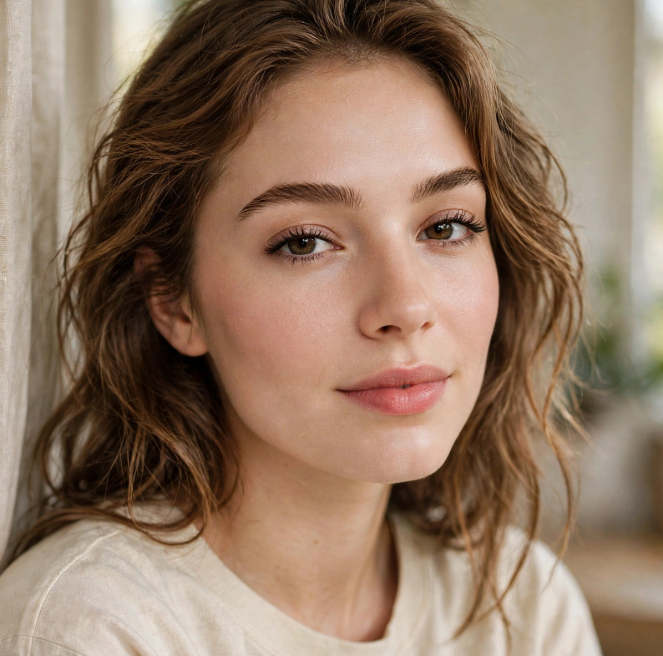
How to Do a Natural Makeup Look Without Foundation
A natural foundation-free routine works best when every product has a purpose. You don’t need to replace foundation with several layers of complexion products.
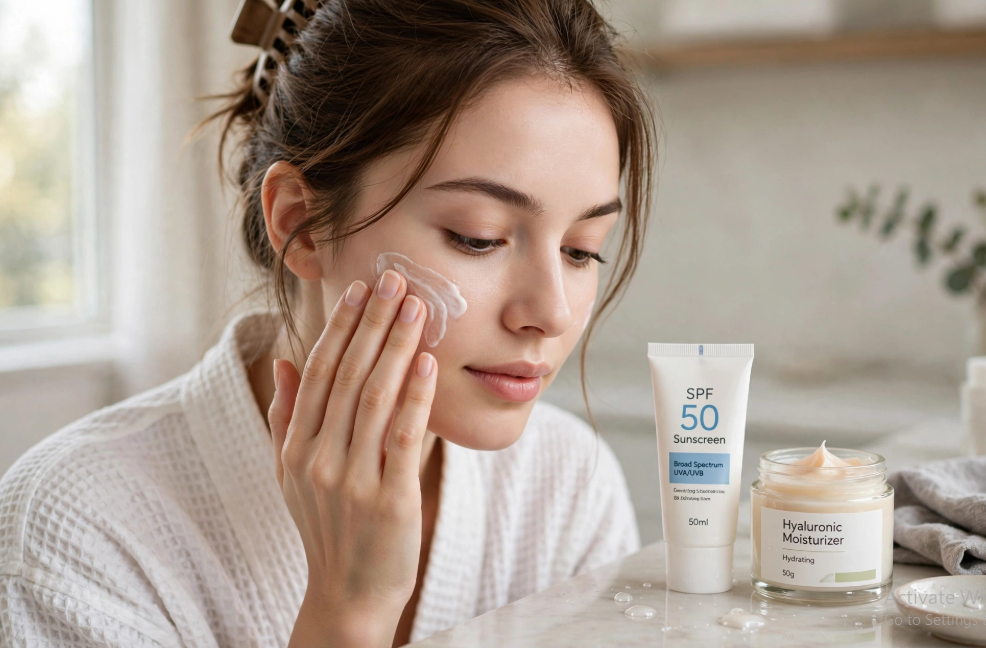
1. Start With Simple Skin Prep for a Makeup Routine Without Foundation
Start with bare skin and apply the skincare products you regularly use before your makeup.
Sunscreen in your daytime skincare is a must.
Let your skincare fully absorb into your skin before putting on makeup to avoid unwanted slips and pilling.
If you have dry skin, you want to hydrate without overdoing it, and if you have oily skin, skip heavy layers before bed.
Your skin should feel comfortable in its own skin, not like a perfect mask.
If your base makeup looks heavy or uneven, check out Why Does My Foundation Look Cakey? 9 Mistakes and How to Fix Them for simple ways to create a smoother, more natural-looking finish.
2. Use Primer Only If You Need It in a Makeup Routine Without Foundation
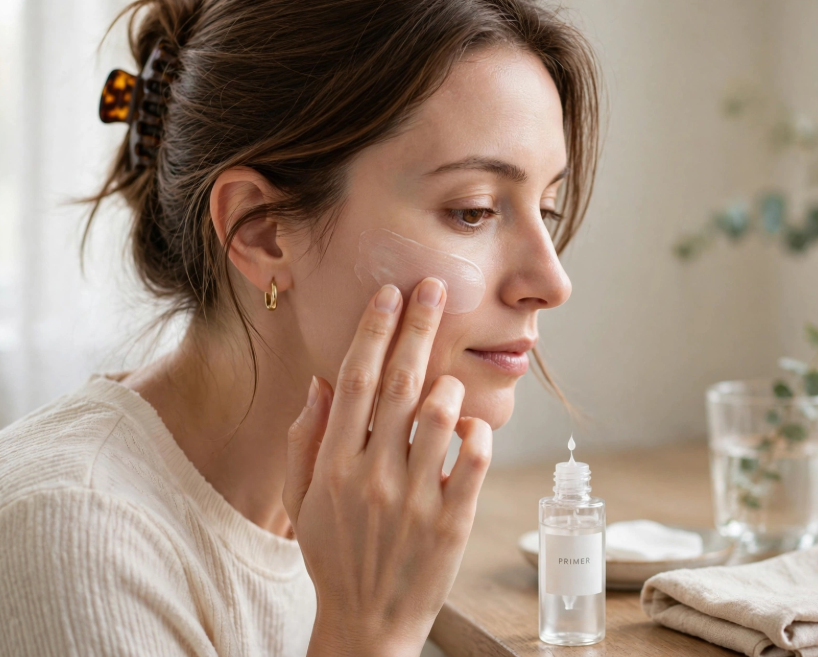
Primer is optional.
If your makeup already sits well over your skincare, you may not need another layer. But primer can be useful if you want a particular finish or need help with makeup application and wear.
For a foundation-free look, a thin layer is usually enough.
3.Spot Conceal Instead of Covering Your Whole Face Without Foundation
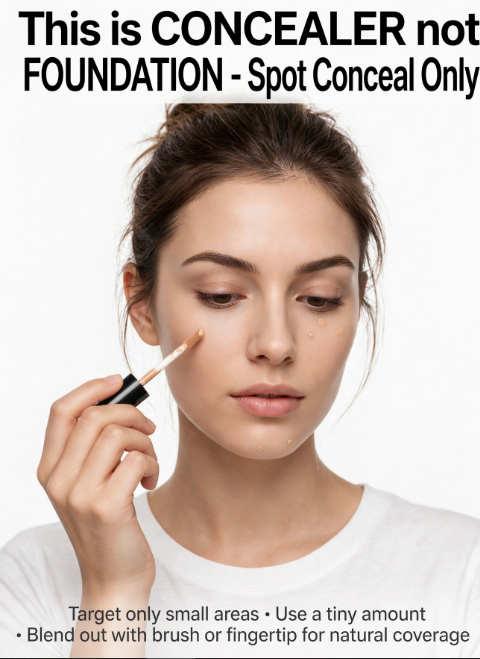
This is the step that makes a foundation-free routine look intentional rather than unfinished.
Apply a small amount of concealer only where you want additional coverage, such as:
- Under the inner corners of the eyes
- Around visible redness
- On an individual blemish
- Over a dark spot
- Anywhere you want a little extra evening out
Then blend the edges into your bare skin.
Don’t automatically spread the concealer over your cheeks, forehead, nose, and chin. If those areas don’t need coverage, let them remain visible.
This selective approach is also common in current foundation-free routines and community discussions.
For an even simpler everyday look, try Makeup Routine With Only 5 Products: A Minimal Beginner Guide to keep your makeup routine quick, easy, and beginner-friendly.
4. Add a Soft Flush of Blush for a Makeup Routine Without Foundation
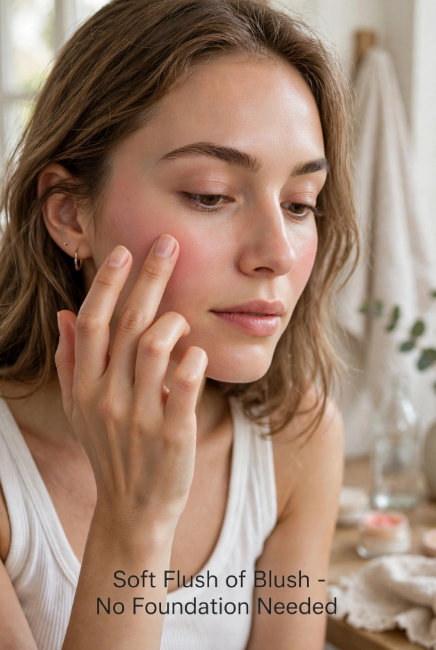
Blush adds color back into the face after strategically covering up sections.
Using either cream or liquid foundation can provide an excellent natural look for those who want a more flesh-toned appearance, though using powder is also okay if you would like to use it.
Less is more when you’re applying.
Gently pat the blush into your cheeks rather than creating a stripe of color across your cheekbones. A soft pink, peach, rose, mauve, or terracotta color may all be good options depending on your skin tone or how the rest of your makeup looks.
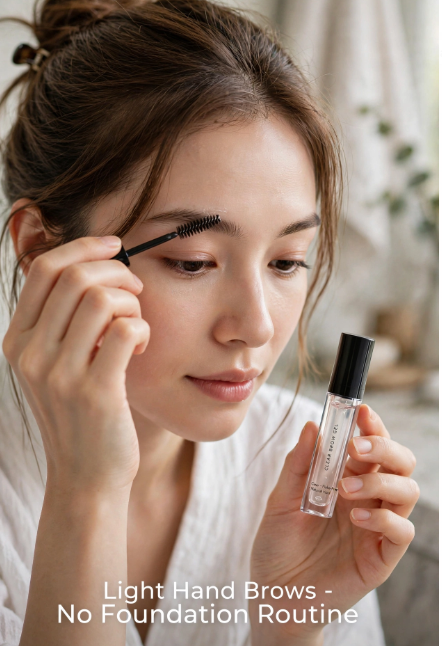
5. Add Brows With a Light Hand for a Makeup Routine Without Foundation
You don’t need to draw on an entirely new brow.
First brush your brows into place and then fill in any sparse spots where you’d like more definition.
A clear brow gel is all you need if you’re happy with the shape of your brows, just use a tinted gel or pencil for extra definition that won’t take the focus away from the star of the show (your eyes).
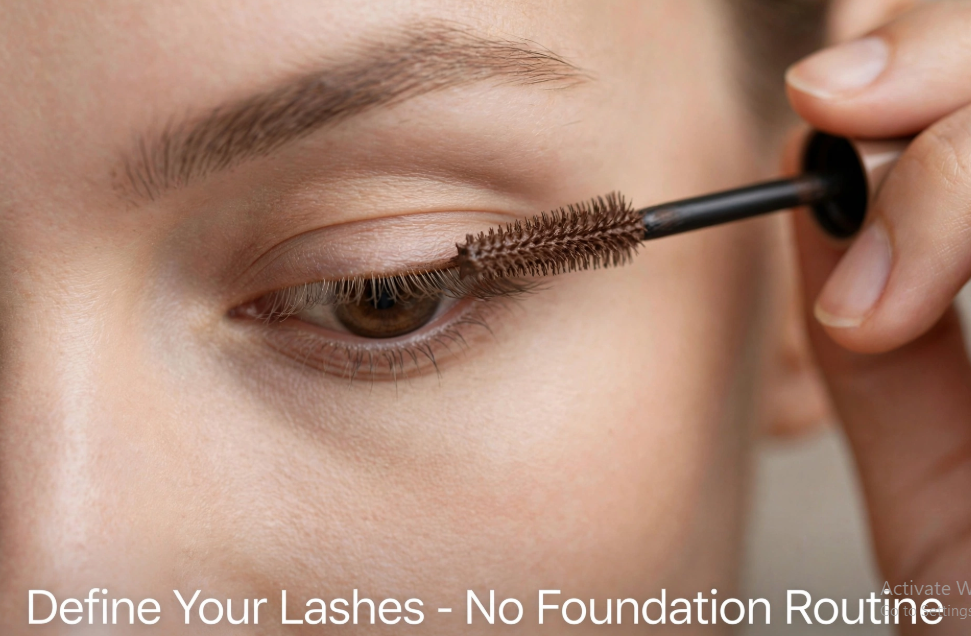
6.Define Your Lashes for a Makeup Routine Without Foundation
Mascara is one of the easiest ways to finish a bare minimum of makeup.
To achieve the most delicate effect, use one layer of mascara and focus on the roots and lashes.
The brown color of the mascara will give the lashes a lighter look, while the black one will make them darker and more noticeable. So, both options are suitable for everyday use, but it depends on the desired effect.
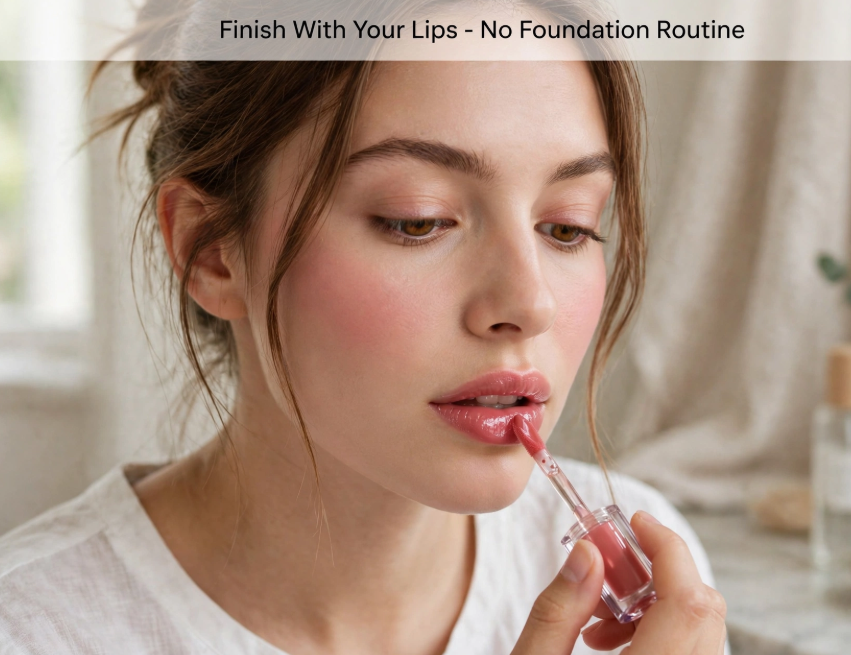
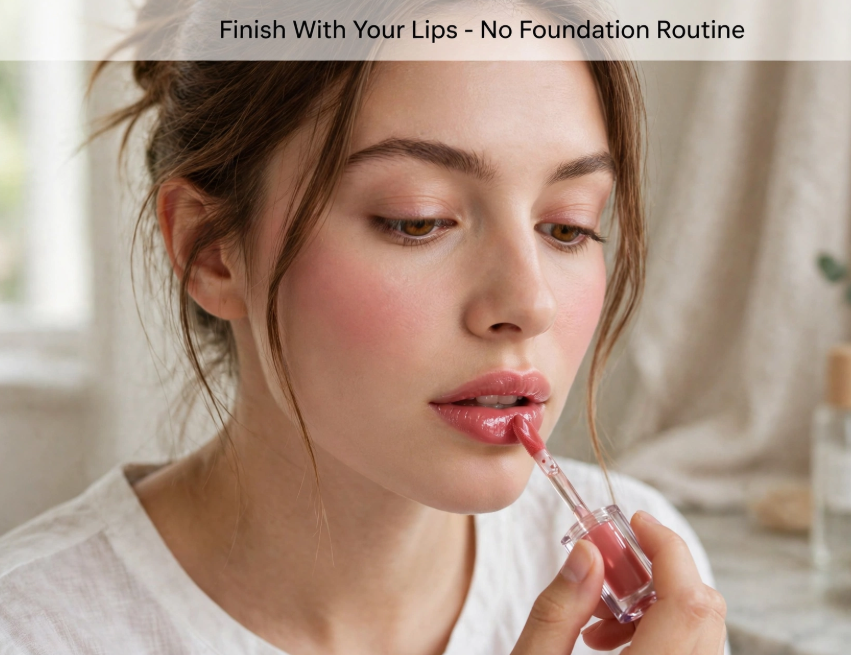
7. Finish With Your Lips
Keep the lips easy.
A tinted balm, lip oil, sheer lipstick, or gloss can add enough color without making the look feel heavily made up.
For a cohesive result, choose a lip shade that relates to your blush—such as rosy cheeks with a rosy lip or peachy cheeks with a warm nude lip.
What Is the Best Makeup Routine for a Natural-Looking Look?
The best routine is usually the one that adds definition without covering every part of your skin.
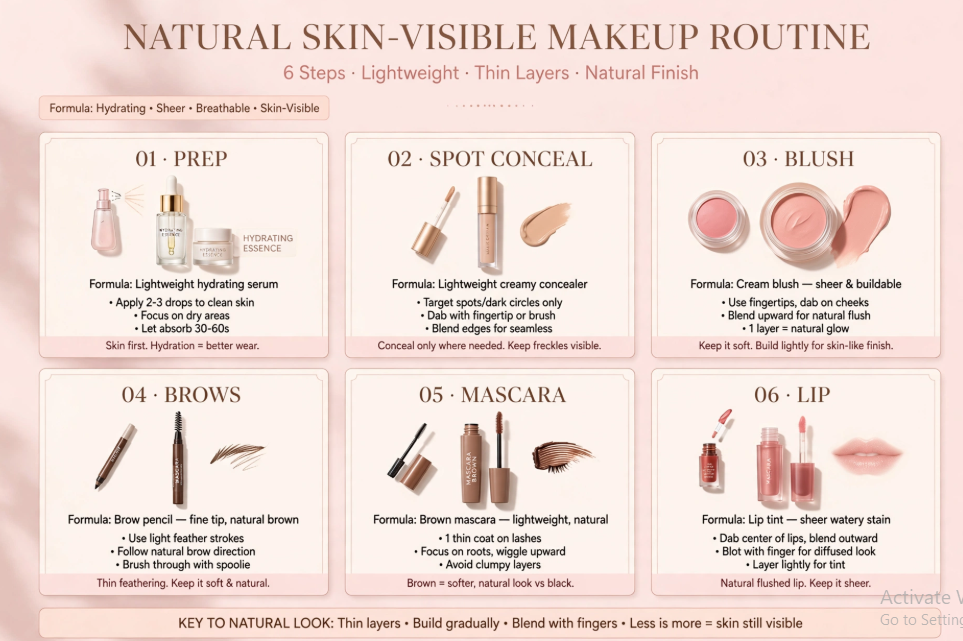
A useful formula is:
Prep → Spot Conceal → Blush → Brows → Mascara → Lip
You can stop there.
If you want more definition, add bronzer, a little eyeshadow, or a small amount of powder where you need it.
The key is not the exact number of products. It’s the amount and placement of each one.
Current no-makeup makeup guides similarly emphasize lightweight-looking skin, selective concealer, soft color, natural brows, mascara, and subtle lips.
Keep Your Skin Visible
One of the biggest differences between a traditional full-base routine and a foundation-free look is that natural variation in your skin remains visible.
Freckles, small areas of redness, pores, and normal texture don’t automatically need to be covered.
Trying to conceal every variation can quickly turn a five-minute routine into a full complexion routine.
Use Thin Layers
Start small and build only if necessary.
It’s easier to add another tiny amount of concealer or blush than to remove a large amount after you’ve applied it.
Coordinate Your Textures
If you want a fresh finish, cream or liquid cheek products can blend naturally into minimally covered skin.
If you prefer a more polished or matte result, powder products can work too. The best choice depends on your skin and preferred finish.
What Is a Good Lazy Makeup Routine?
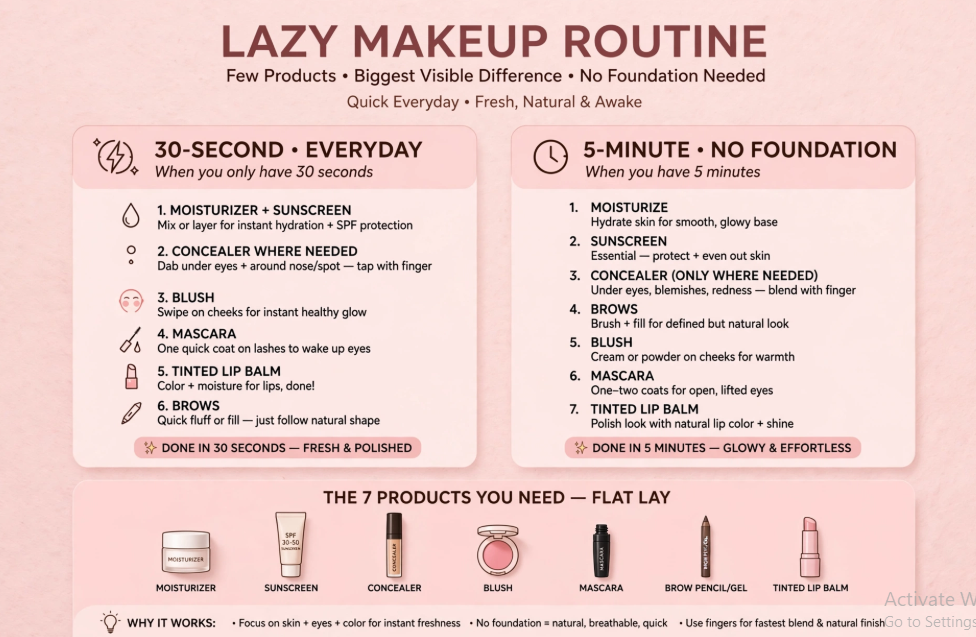
A good lazy makeup routine should focus on the few products that make the biggest visible difference.
For a quick everyday version, try:
- Moisturizer and daytime sunscreen
- Concealer where needed
- Cream or powder blush
- Mascara
- Tinted lip balm
If you’ve got another 30 seconds, swipe your brows into place.
That’s enough time for a fresh, everyday look.
Five-minute no-foundation routines are already a big hit in the search results, so it’s clear that speed and simplicity are key here.
What Is the Simplest Makeup Routine?
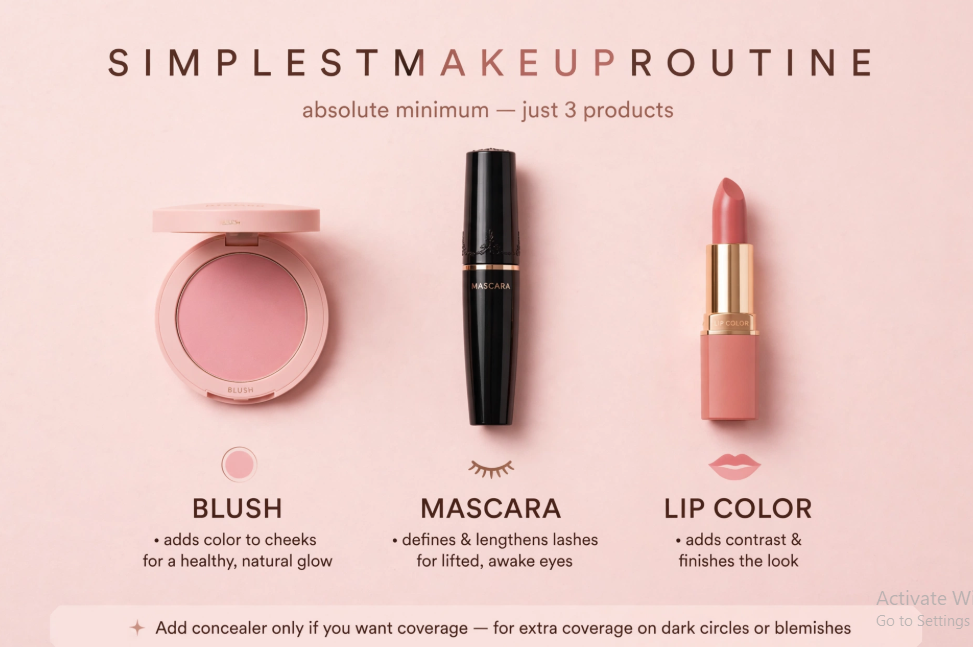
If you want the absolute minimum, start with three makeup products:
Blush + Mascara + Lip Color
Add concealer only if you want coverage.
This works because the three products address different parts of the face:
- Blush: adds color
- Mascara: defines the eyes
- Lip color: adds contrast and finishes the look
If you don’t want concealer, you don’t have to use it. You can leave your complexion completely bare after skincare and still wear other makeup.
For more guidance on creating a natural-looking finish, you can also explore Bobbi Brown’s no-makeup makeup tips.
What Can You Use Instead of Foundation?
There isn’t one mandatory replacement.
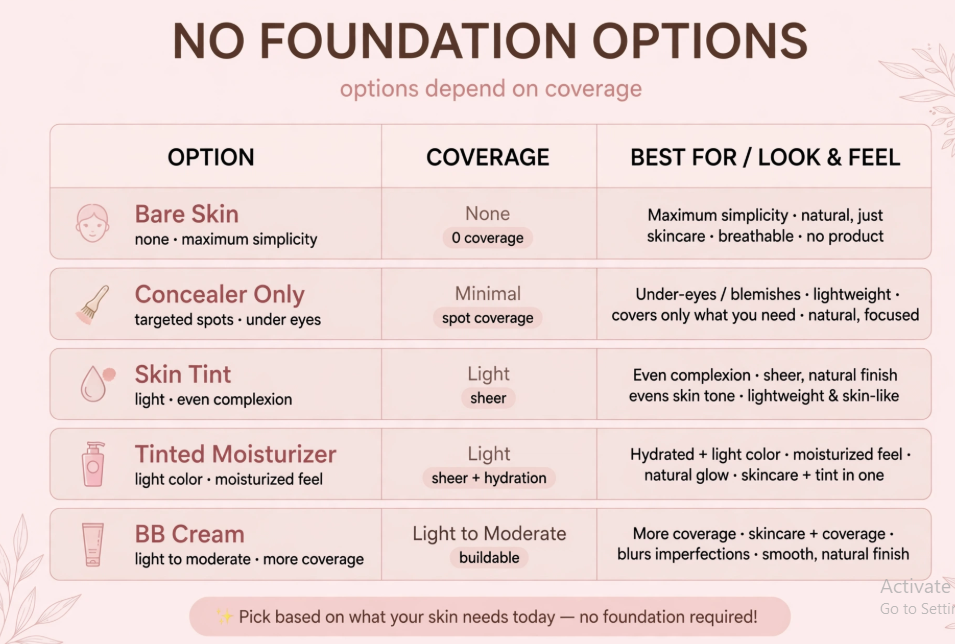
Your options depend on how much coverage you want.
| Option | Coverage | Best for |
|---|---|---|
| Bare skin | None | Maximum simplicity |
| Concealer only | Targeted | Spots and under-eyes |
| Skin tint | Light | More even-looking complexion |
| Tinted moisturizer | Light | Color plus a moisturized feel |
| BB cream | Light to moderate | People who want a little more coverage |
If your goal is specifically no foundation, you can absolutely choose bare skin plus spot concealer.
If you simply dislike the heavier feel of traditional foundation, a skin tint or tinted moisturizer may be another option.
That distinction matters because “without foundation” can mean two different things: no foundation specifically or no traditional full-coverage base.
Makeup Without Foundation for Different Skin Types
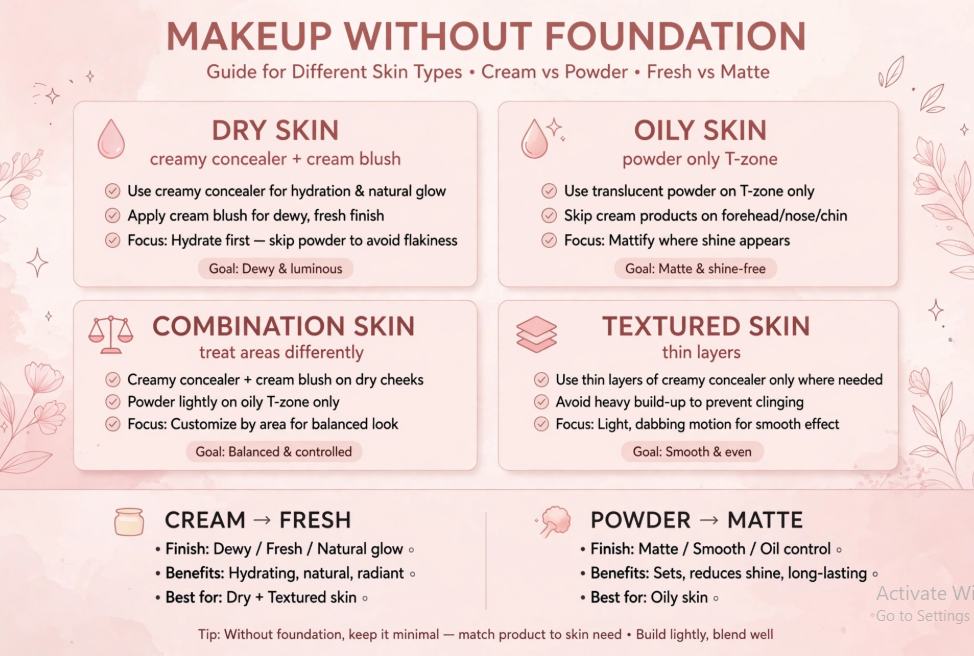
Dry Skin
Keep the skin prep comfortable and avoid automatically covering dry areas with lots of powder.
A creamy concealer and cream blush can create a softer-looking finish, but the amount of skincare underneath matters too. Too many rich layers can cause makeup to move, so use only what your skin needs.
Oily Skin
You don’t have to powder your entire face.
Instead, apply a small amount of setting powder where shine tends to become distracting, such as the center of the forehead, sides of the nose, or chin.
Leave the cheeks less powdered if you want some natural dimension.
Combination Skin
Treat different areas differently.
You might use less powder on the cheeks while controlling shine around the T-zone. There’s no reason every part of your face needs the exact same finish.
Textured Skin
Avoid trying to erase texture with more product.
Heavy layers can sometimes make texture more noticeable. A thinner layer of concealer placed only where necessary often keeps the overall finish lighter.
Should You Use Cream or Powder Products Without Foundation?
Either can work.
Cream products can be useful when you want a fresh, skin-like effect because they can be blended directly into minimally covered skin.
Powder products are useful when you want more oil control or prefer a matte finish.
You can also combine them. For example, use cream blush for color and a small amount of translucent powder only in areas where you need it.
There isn’t a universal rule that makeup must have a foundation underneath it.
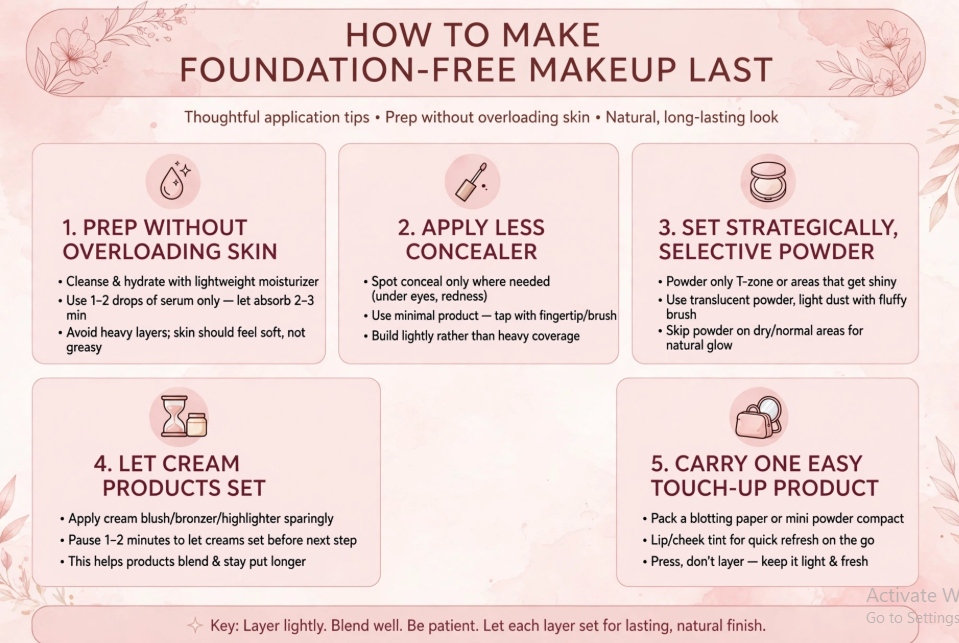
How to Make Foundation-Free Makeup Last
A foundation-free routine can still benefit from thoughtful application.
Prep without overloading your skin
Too many skincare layers can interfere with makeup. Use the products your skin actually needs and allow them to settle.
Apply less concealer
Large amounts of concealer can crease, move, or become noticeable. Start with a small amount and add more only where necessary.
Set strategically
If you get oily, use powder selectively rather than automatically coating the entire face.
Let cream products set
Give cream blush or other complexion products a moment to settle before layering additional products over them.
Carry one easy touch-up product
A pressed powder, lip balm, or blush can be more practical for a quick refresh than carrying your entire makeup bag.
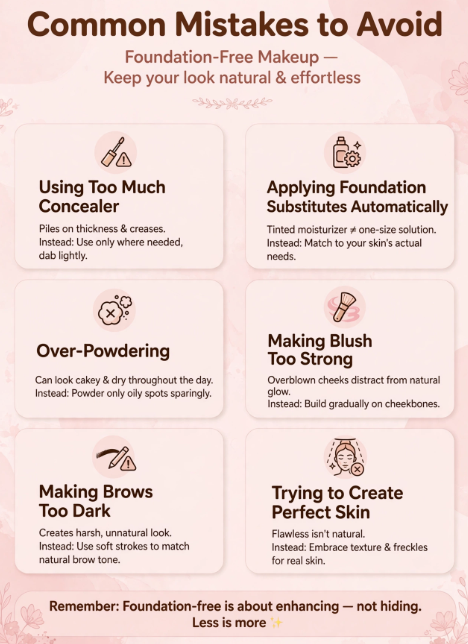
Common Mistakes to Avoid
Using too much concealer
Spot concealing doesn’t mean putting a large dot of concealer on every area you dislike. Start with a tiny amount.
Applying foundation substitutes automatically
You don’t have to use a skin tint just because you’re skipping foundation.
If you like your bare skin, leave it bare.
Over-powdering
Powder can be useful, but covering the entire face can take away the dimension you’re trying to preserve.
Making blush too strong
When the rest of your complexion is relatively bare, blush can become more noticeable than expected.
Build it gradually.
Making the brows too dark
Strong brows can overwhelm a minimal look. Start by brushing them into shape before deciding whether you need additional pigment.
Trying to create “perfect” skin
A foundation-free routine works partly because it allows your natural skin to remain part of the look.
You don’t need to hide every pore, freckle, mark, or variation in tone.
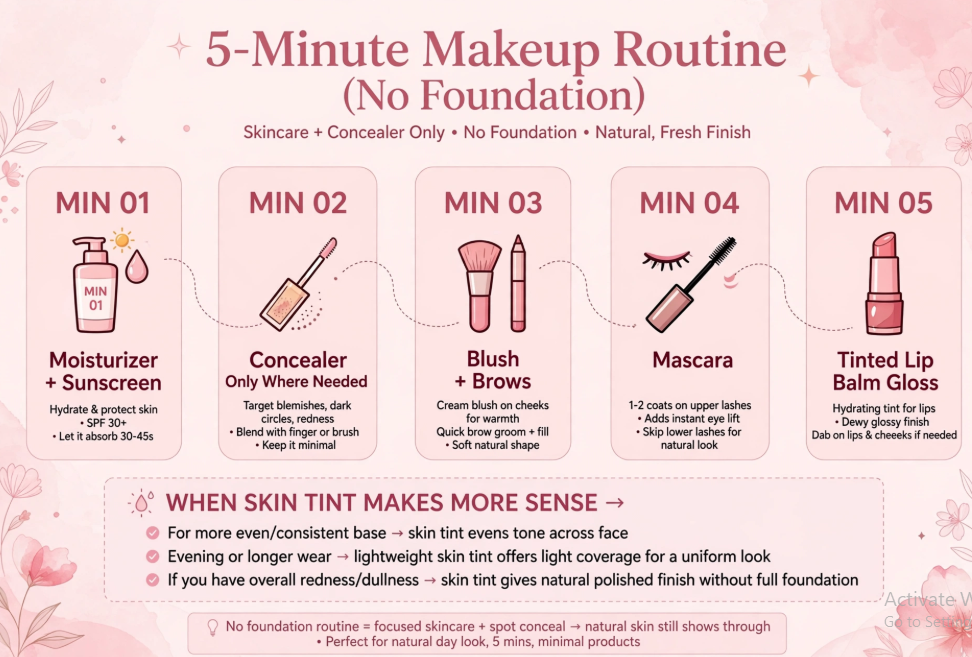
A 5-Minute Makeup Routine Without Foundation
When you’re running late, use this order:
Minute 1: Moisturizer and sunscreen
Minute 2: Concealer only where needed
Minute 3: Blush and brows
Minute 4: Mascara
Minute 5: Tinted lip balm or gloss
Skip anything that doesn’t serve your particular look.
If you don’t need concealer, use that time to blend your blush or add a little brow gel.
A No-Foundation Routine Without Concealer
You can make the routine even simpler.
Start with:
Skincare + sunscreen → blush → brows → mascara → lip balm
This is especially useful if you don’t want complexion makeup at all.
You may notice more natural skin variation, but that’s part of the look rather than a problem that needs correcting. Community discussions around foundation-free makeup show that many users intentionally leave freckles, redness, and other natural features visible.
When a Skin Tint Makes More Sense
If you like the idea of skipping foundation but still want a more even complexion, a skin tint can be a middle ground.
Choose one when you want:
- Light overall evening
- A more uniform base
- Less coverage than traditional foundation
- A quick application
- A skin-like finish
Just remember that a skin tint is still a complexion product. If your goal is truly no base makeup, stick with skincare and targeted concealer—or skip concealer altogether.
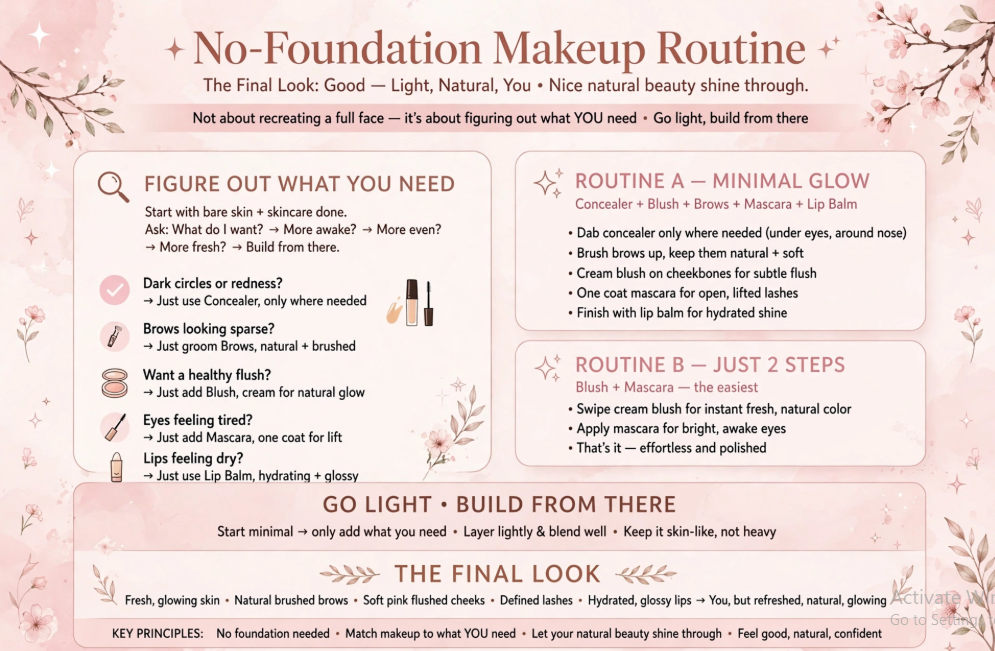
The Final Look
A good no foundation makeup routine is not about recreating a full face of makeup without it.
It’s about figuring out what you need makeup for.
For some people it might be concealer, blush, brows, mascara, lip balm. For some it might be just blush, and mascara.
Go light and build from there so that you look nice, but still have your natural beauty shine through.
FAQs
How to do a natural makeup look without foundation?
Prep your skin, apply concealer only where needed, add a soft blush, groom your brows, apply mascara, and finish with a tinted lip product. You can skip concealer entirely if you prefer bare skin.
What is the best makeup routine for a natural-looking look?
A simple routine is skincare, targeted concealer, blush, brows, mascara, and lip color. Use thin layers and allow some natural skin texture to remain visible.
What is a good lazy makeup routine?
For a quick routine, use concealer where needed, blush, mascara, and tinted lip balm. Add brow gel if you have another minute.
What is the simplest makeup routine?
The simplest version can be just blush, mascara, and lip color over your normal skincare. Concealer is optional.
Can you use concealer without foundation?
Yes. Apply a small amount only to areas that need additional coverage and blend the edges into your natural skin.
What can I use instead of foundation?
You can use concealer selectively, a skin tint, tinted moisturizer, BB cream, or nothing at all. The best option depends on how much coverage you want.
Can I wear blush without foundation?
Yes. Blush can be applied directly to properly prepped skin. Cream, liquid, and powder formulas can all work.
How do I make makeup look good without foundation?
Focus on good skin preparation, use small amounts of makeup, blend the edges carefully, and avoid trying to cover every natural variation in your complexion.